EN
 ไทย


Customers Also Purchased
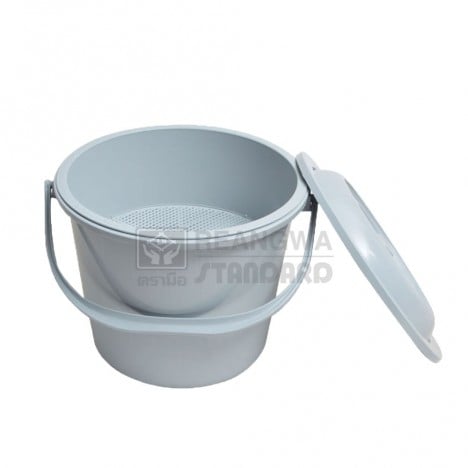


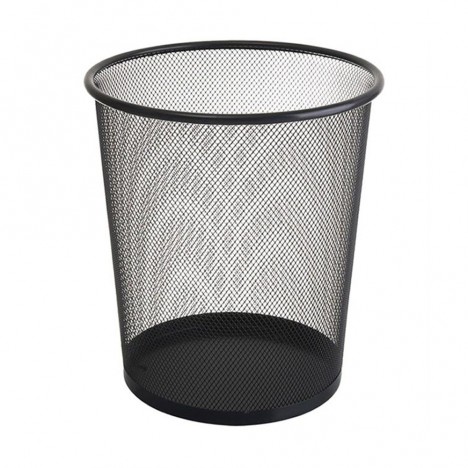
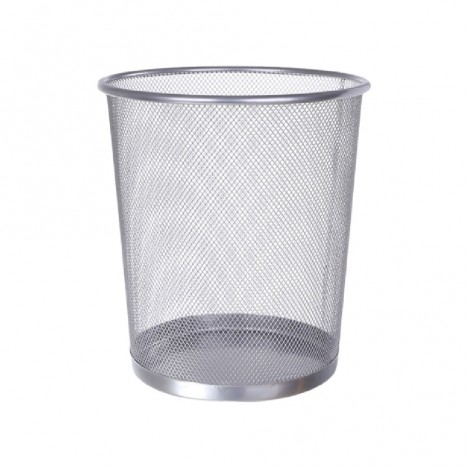
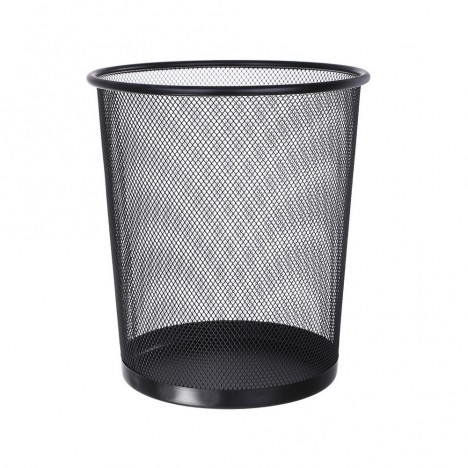
Trash Cans & Bins One placed in a home kitchen can last for years, but why does the lid break within a few months when placed in front of a restaurant? Some households buy step cans to avoid touching the lid, but in the end, foul odors still leak out, forcing them to leave the lid open. And in some places, there is a full set of color-coded bins, yet the trash inside each one still ends up mixed together.
These problems cannot always be solved by buying expensive bins, because a good trash can is one that matches what is disposed of, where it is placed, and the frequency of use or lid opening. An expensive bin placed in the wrong spot or used for the wrong task will stink and break down just as easily as a cheap one.
Let's explore everything you need to know about trash cans all in one place—from choosing the type, color, material, and size to cleaning methods, placement locations, signs that it's time for a replacement, key takeaways, and other related topics.
Why Does the Same Trash Can Work Well in One Place but Break in Another?
Every trash can has to handle three simultaneous burdens:
First is the weight and moisture of the waste. Second is the surrounding environment, including sunlight, rain, and heat. Third is the daily repeated opening and closing of the lid and dumping.
A bin designed for one type of load will deteriorate quickly when faced with another. A front-of-house store bin does not need to be as thick as a back-of-house restaurant bin that handles wet food scraps several times a day, and an outdoor bin must be UV-resistant, which an indoor bin does not need to be.
Choose and maintain trash cans based on the type of waste, location, and frequency of opening/closing, not just appearance or price alone.
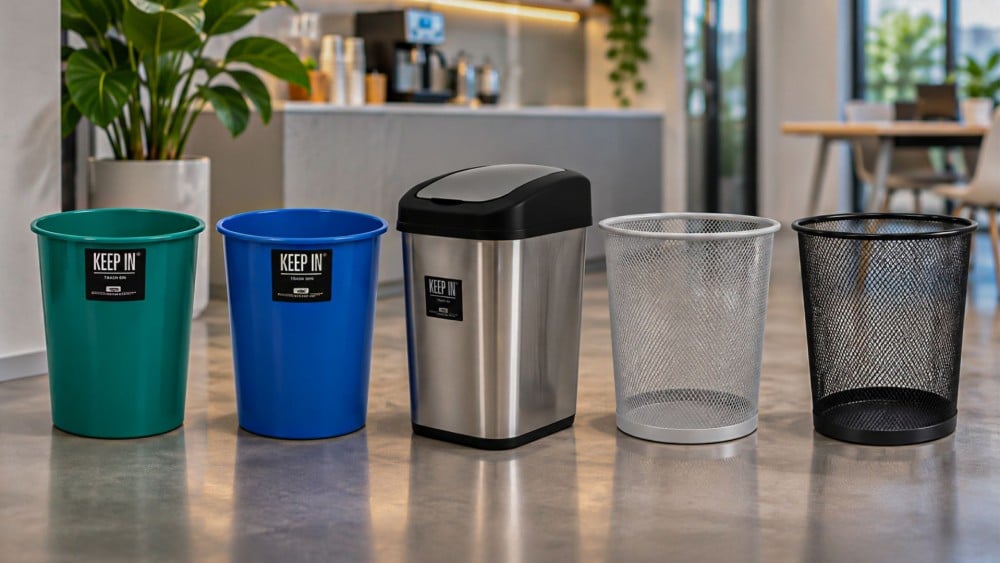
Choose Trash Can Types by Location: Homes, Shops, Factories, and Offices May Require Different Solutions
In the home, the most frequently used bin is the kitchen bin, which holds wet waste and requires a tight-sealing lid to keep out odors and pests. Bins in other rooms mainly handle dry waste, so open-top or swing-lid bins are sufficient. Shops and restaurants open and close bins very frequently, requiring sturdy lids, easy cleaning, and capacities suited to waste collection cycles.
Factories and warehouses often require large wheeled bins to roll to waste consolidation points, and must separate general waste from manufacturing scrap or liquids. Offices, on the other hand, require bins that do not emit odors or obstruct walkways. The key is to start by asking what the primary waste at that spot is, then choose the bin style. If you want a detailed guide by location, check out How Many Types of Trash Cans Are There? How to Choose the Right One for Homes, Shops, Factories, and Offices
Sorting Trash Cans Only Work If People Understand Them the Same Way
Color-coded recycling bins indicate the type of waste to be disposed of, such as general waste, recyclables, organic/wet waste, and hazardous waste. However, having all the colored bins does not mean sorting will succeed; if users do not know what each color represents, or if the bins are placed inconveniently far away, waste will still end up mixed together.
Understand the Meaning of Each Color
The first solution is to place text labels or pictograms on every bin rather than relying solely on color, as color standards may not be 100% consistent everywhere. For color standards, see the article Waste Sorting Bins: How many colors are there, and what goes into each color?
The number of bins must fit the space
Most homes do not need every single color. Having separate wet and dry bins in the kitchen and another recycling bin is usually more practical than cluttering the space with a full set. The key is placing bins closest to where that type of waste is generated most, such as a wet waste bin next to the sink and a recycling bin near the back door.
Trash can lids: Pedal, swing, or sensor—choose based on disposal frequency
A trash can lid affects odor control and hand cleanliness more than many people realize. Open-top bins without lids are the easiest to toss into, but odors escape and insects can enter immediately, making them suitable for dry waste like paper. Swing-top lids allow quick disposal but do not seal completely. Pedal bins close tightly and require no hand contact, but the foot pedals and hinges are common failure points with forceful daily stepping.
Sensor bins open automatically when your hand approaches, making them the most convenient and hygienic option for kitchens where hands are often messy, though they require battery and sensor maintenance. The rule of thumb: if disposal is frequent and hands are often soiled, pedal or sensor lids are more worthwhile; if disposal is infrequent and consists of dry waste, an open-top or swing lid is sufficient. If you are torn between pedal and sensor lids, compare them at Pedal Trash Can vs. Sensor Trash Can: Which is more worth it?
Trash can materials: Plastic vs. stainless steel differ in durability and care
Plastic bins are lightweight, affordable, easy to wash, and rust-free, making them suitable for general use both indoors and outdoors. However, plastic exposed to strong sunlight for prolonged periods can fade and become brittle. Stainless steel bins look clean, sturdy, and resist fire from cigarette butts better, making them popular in lobbies, restaurants, and visible public areas.
Stainless steel requires care too
Many people assume stainless steel bins need no maintenance at all, but letting leachate, saltwater, or chlorine-containing cleaners linger on the surface for a long time can cause localized rust spots. The rule is to wipe them dry after washing and avoid using steel wool, because stainless steel trash cans can also rust
Choose based on the placement location
If placed outdoors in direct sunlight all day, choose a plastic bin rated by the manufacturer for outdoor use, or place it in the shade. If placed indoors where appearance matters, stainless steel is more cost-effective in the long run.
If you want to know how to choose a stainless steel bin based on application, read more at Which stainless steel trash can is best?
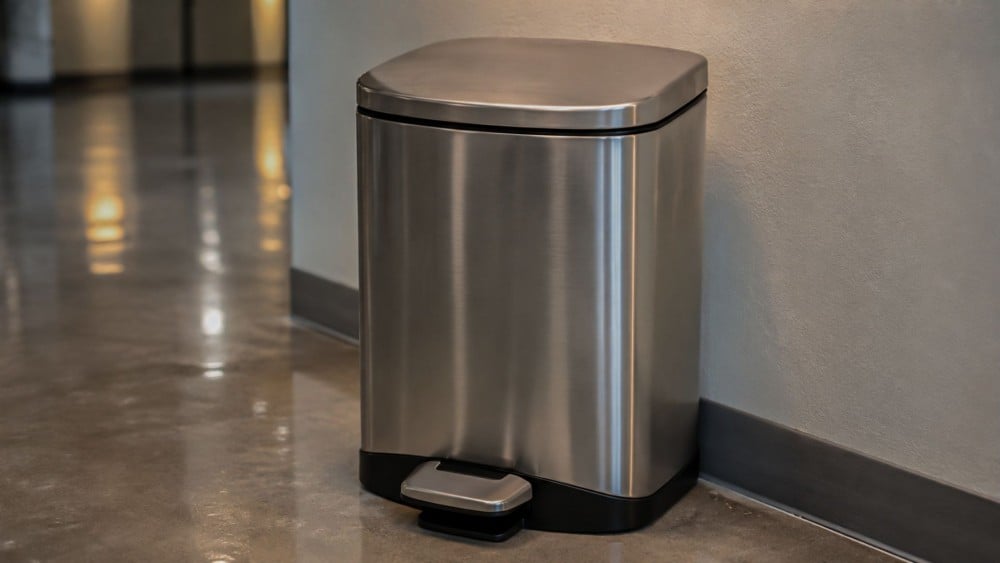
Trash can size must match the collection schedule, and trash bags must fit the bin
What size trash bag fits this bin size? A bin that is too small fills up before the collection cycle, leading people to leave trash bags beside the bin or force waste down until the bag tears. A bin that is too large allows wet waste to sit inside for too long, causing foul odors. The key is to see how fast waste accumulates in that spot and choose a size that fills up just in time for collection. For wet waste, a small bin emptied frequently is better than a large bin emptied rarely.
Trash bags must also fit the bin properly. Bags that are too small slip to the bottom, while oversized bags sag, bunch up around the lid, and prevent it from closing tightly. If you are unsure which bag fits your bin size,
Most trash can odors come from leachate lingering at the bottom of the bin, not the waste inside the bag
Garbage bags that leak or have even minor seepage will leave leachate at the bottom and along the edges of the bin. Even after changing to a new bag, the smell lingers because the root cause remains inside the bin.
The solution is to drain liquids from food waste before disposal, tie bag openings tightly, place newspaper or absorbent paper at the bottom of the bin to soak up seeped liquids, and wash the bin routinely without waiting until it stinks. Never mix bleach with other cleaning agents in the same bin—especially those containing acids or ammonia—as dangerous gases may form. Use one cleaning agent at a time and rinse with clean water before switching products.
Trash bin placement causes premature damage and discourages people from using it
Bins placed in direct sunlight all day become hot, develop stronger odors, and experience rapid plastic degradation. Bins placed in rainwater drainage paths let water in and keep the base constantly wet. Bins placed too far from the point of use cause people to miss the bin or dump everything into a single pile.
The rule of thumb is to place trash bins in shaded areas, under a roof or with rainproof lids, on flat and unsloped ground, away from blocking walkways or fire exits, and close to waste generation points. For wheeled bins, place them on level ground and engage the wheel brakes every time if placed on a slight incline. When large bins are full and very heavy, push them instead of lifting, and do not lift them alone if it feels beyond your strength.
Can a single trash bin be used to dispose of batteries, light bulbs, and aerosol cans mixed with other garbage?
Only when the area lacks a separate hazardous waste collection point, and the item is separated into its own bag or box with clear labeling indicating the contents so that waste collectors are aware and avoid breaking it.
It should not be done when dealing with lithium batteries from phones or cordless power tools, swollen or leaking batteries, broken light bulbs, or aerosol cans with leftover contents. Crushed or punctured lithium batteries inside a bin can overheat and catch fire, broken bulbs cause cuts, and heated aerosol cans may explode. This waste should be separated into a hazardous waste bin or taken to take-back collection points at retail stores or local authorities.
Signs that it's time to replace the trash bin, not just wash it
If the bottom is cracked causing leachate to leak out, the lid or hinge is broken preventing it from closing tightly, the rim is cracked with sharp edges, wheels or axles are broken causing the bin to tip easily, the plastic becomes brittle and cracks under light pressure, or persistent odors and mold stains remain after washing, replace the bin with a new one.
Leaking bins allow leachate to seep onto the floor, becoming breeding grounds for pathogens. Sharp edges can cut the hands of users and waste collectors, while large bins with broken wheels may fall onto feet while being pushed. A bin costing just a few hundred THB is not worth the risk of forced use leading to injury. For parts like foot pedals or batteries in sensor bins, try replacing them before discarding the entire bin.
Steps to clean a trash bin cleanly and safely: before, during, and after washing
Before washing, wear rubber gloves and a mask, remove the trash bag, and pour remaining leachate into an appropriate drain. During washing, use one cleaning agent at a time according to its label, scrubbing with a long-handled brush all over the bottom, edges, and under the lid, where grime accumulates most. Do not mix multiple cleaning agents in one bin, and wash in a well-ventilated area. For sensor bins, remove the batteries or the circuit-containing lid unit first, and prevent water from entering the sensor components.
After washing, rinse with clean water, invert the trash bin, and air-dry it in a well-ventilated area. Wipe stainless steel bins dry before inserting a new bag.
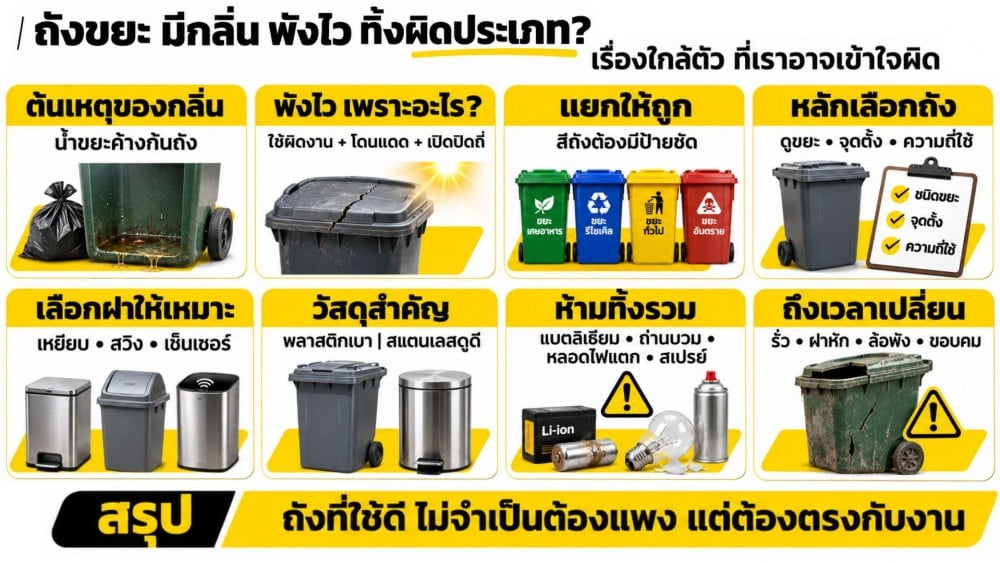
Conclusion: Trash bins work well and last long if chosen according to the waste disposed, placement location, and lid opening frequency
Trash bins that quickly smell, break down prematurely, or cause improper waste sorting are usually not of poor quality, but rather bins that are unsuited for the task. Whether in a home kitchen, behind a restaurant, or as a large bin in a warehouse, choosing bins tailored to the waste received, placement location, and actual usage ensures longer service life and easier maintenance.
What should be done is choosing the right type according to the location Label waste sorting bins clearly, choose lid types based on disposal frequency, select materials suited to the placement area, choose capacities that match collection cycles, and use properly sized bags. Drain liquid and food waste before disposal, wash bins on a regular schedule, and position bins in shaded, level areas near waste generation points.
Never mix bleach with other cleaning agents, never dispose of lithium batteries, swollen batteries, or aerosol cans mixed with general waste, and replace bins that leak, have sharp cracked edges, or broken wheels without hesitation.
If you are looking for a bin suitable for your home, shop, or factory, check out the category Trash Cans & Bins at iToolmart