


 EN
 ไทย


Customers Also Purchased


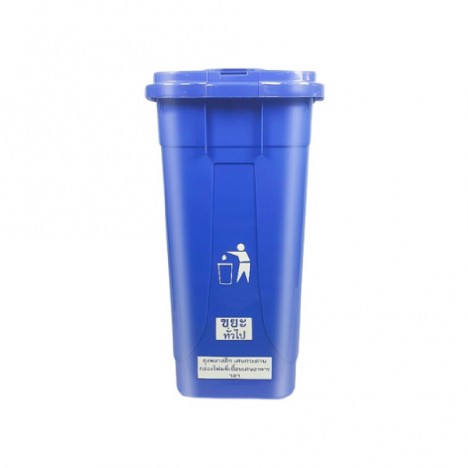
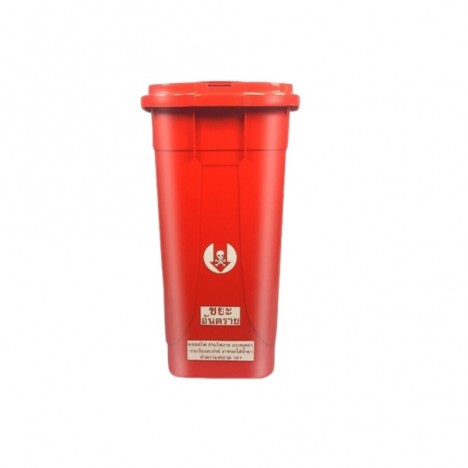
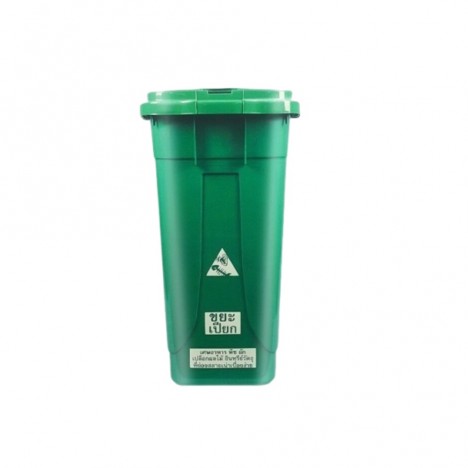
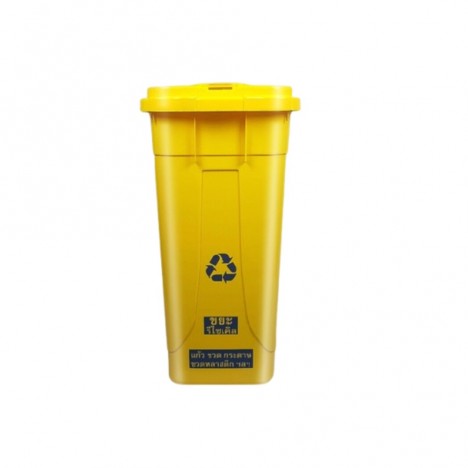
Trash Cans & Bins They are a basic essential found in almost every space—be it homes, shops, restaurants, offices, schools, factories, or warehouses. Yet, many people think any trash bin will do as long as it holds garbage.
In reality, different trash bins are suited for different uses. Some spaces need bins that reduce odors, others require neat aesthetics, and some need large bins that are easy to move. In environments like factories or healthcare facilities, waste sorting must be much more defined than in standard settings.
Choosing the wrong trash bin can cause issues like rapid overflow, unpleasant odors, difficult cleaning, hard maneuverability, or an untidy appearance. Selecting the right bin for your location, waste type, and volume makes waste management easier and keeps your space clean and pleasant.
How Many Types of Trash Bins Are There?
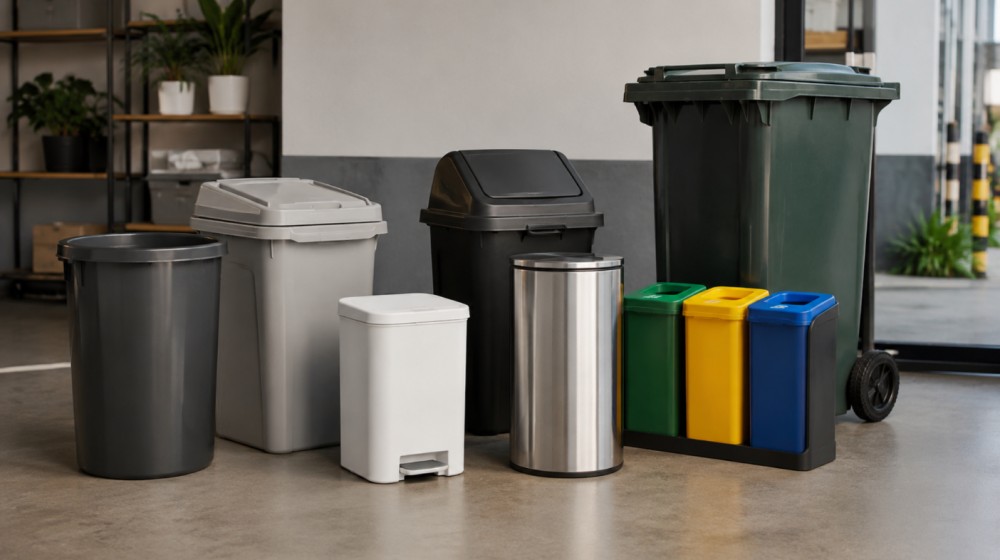
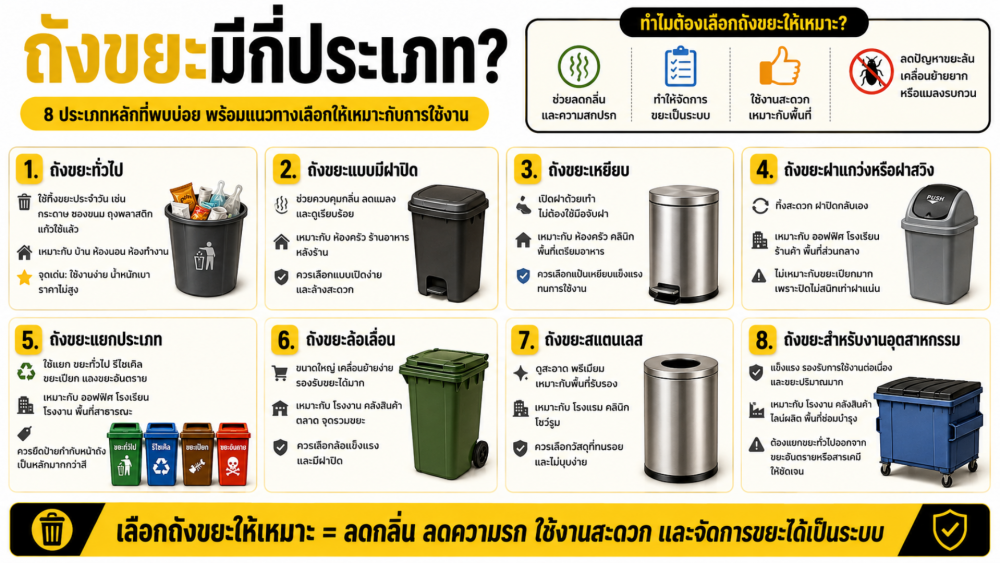
There is no fixed number of trash bin types, as they can be classified by material, shape, lid style, size, or intended waste category. However, the most common types found in everyday use can be categorized into the following main types:
- General Waste Bins
- Trash Bins with Lids
- Step Pedal Trash Bins
- Swing Lid Trash Bins
- Recycling Bins
- Wheelie Bins
- Stainless Steel Trash Cans
- Industrial Trash Bins
Each type has its own strengths and is suitable for different spaces. Therefore, choosing one shouldn't just be based on size or price, but also on what type of waste it will hold and what kind of space it will be placed in.
Why Choose the Right Trash Bin for Your Needs?
The right trash bin doesn't just hold waste; it also helps keep the area cleaner, minimizes odors, reduces clutter, and makes waste management more organized.
For example, kitchens should use bins with lids because wet waste easily generates odors; bathrooms should have small lidded bins for tidiness and hygiene; offices should feature waste sorting bins in central areas; and factories should opt for durable, easy-to-move bins that can handle large volumes of waste.
If you choose a bin that is too small, waste might overflow during the day. If you choose an open bin for wet waste, you risk foul odors and insect pests. And if you choose a bin without wheels in an area with heavy waste, moving it becomes difficult and adds unnecessary burden to your work.
1. General Trash Bins
General trash bins are used for everyday waste, such as paper, snack wrappers, plastic bags, used cups, or various packaging scraps. They are commonly found in homes, bedrooms, offices, or general-use areas. Their key advantages are ease of use, lightweight design, and affordable price. However, if used for wet waste or food scraps, it is best to choose a model with a lid or use a trash bag liner to reduce odors.
2. Trash Bins with Lids
Ideal for areas that require odor control, concealing unsightly trash, and keeping insects away, such as kitchens, restaurants, or back-of-house areas. Lids come in various styles, including standard lift-off lids, swing lids, or push-open lids. Choose a model that is easy to open and convenient to clean, as a difficult lid may discourage people from disposing of their trash properly.
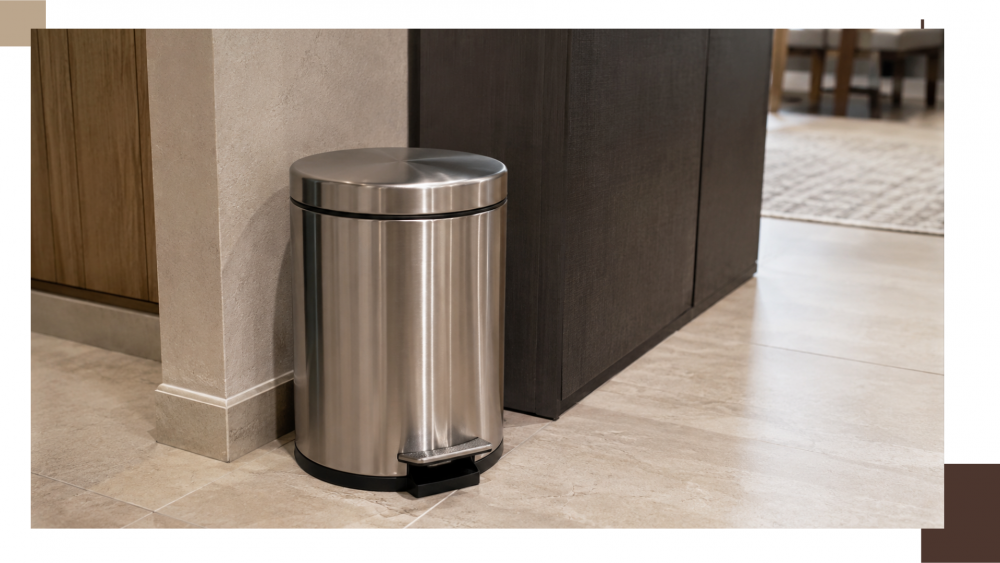
3. Step Trash Bins
The lid opens with a foot pedal at the base, eliminating the need to touch the lid directly with your hands. Ideal for areas that demand high cleanliness or hygiene, such as kitchens, clinics, or food preparation areas. Choose a sturdy pedal—especially for high-traffic areas—as the lid mechanism can wear out if the materials are not sufficiently durable.
4. Swing Top Trash Bins
The top lid swings open when pushed and closes automatically, making trash disposal convenient without having to lift off the lid each time. Popular in offices, schools, shops, or high-traffic communal areas. However, they are not suitable for large amounts of wet waste, as swing lids do not seal as tightly as step bins or bins with tight-fitting lids.
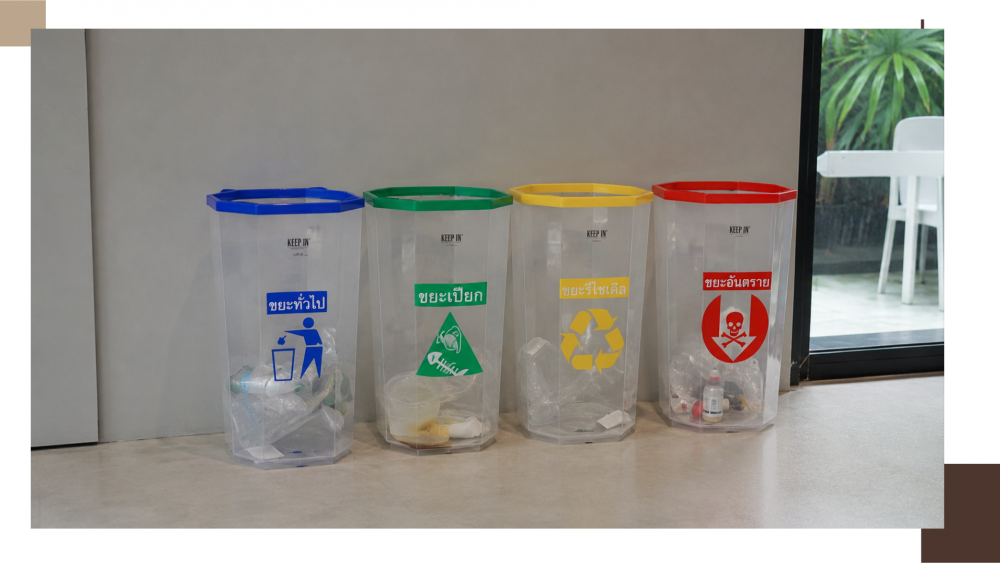
5. Waste Sorting Bins
Designed for sorting waste at the source, such as general waste, recyclables, wet waste, and hazardous waste. Ideal for offices, schools, factories, or public spaces aiming for systematic waste management. Bin colors may vary by organization, so it is best to rely primarily on the labels on the bins rather than just the colors.
6. Wheeled Trash Bins
Large-capacity bins equipped with wheels for easy mobility, accommodating high volumes of waste and reducing heavy lifting. Suitable for factories, warehouses, markets, or waste collection points with high daily waste output. Opt for durable materials, smooth-rolling wheels, and a reasonably tight-fitting lid.
7. Stainless Steel Trash Bins
Ideal for areas requiring a clean, professional aesthetic, such as hotels, clinics, showrooms, or customer reception areas. They offer a more premium look than standard plastic bins. However, choose the appropriate material grade for your application, as some models easily show fingerprints or can dent under heavy use.
8. Industrial Trash Bins
Emphasize durability, large capacity, and support for continuous use. Suitable for factories, warehouses, production lines, or maintenance areas. A key precaution is to clearly separate general waste from hazardous waste, chemically contaminated waste, or specialized industrial waste, and comply with the regulations of the facility or relevant authorities.
Choosing the Right Trash Can for Your Home
Choosing a trash can for the home should be based on the area of use, as each room generates different types of waste.
Kitchen Lidded bins or pedal bins should be used because there are often food scraps, wet waste, and packaging that easily cause odors. If possible, wet waste should be separated from dry waste—for example, separating food waste on its own, while bottles, plastics, or cans are sorted for recycling.
Bathroom Suitable for small lidded or pedal bins for cleanliness and tidiness. Overly large bins should not be used, as they can cause waste to sit for too long and develop musty odors.
Bedroom or Home Office A small general-purpose bin is sufficient, as most waste is light, such as paper, tissues, snack wrappers, or small packaging.
Front of the House or Outdoor Areas Choose a bin with a lid made from sun- and rain-resistant materials, sized appropriately for the volume of waste. If there is a large volume of trash or frequent movement is required, opt for a wheeled model.
Choosing the Right Trash Can for Shops and Restaurants
Shops and restaurants should choose trash cans with consideration for cleanliness, odor control, and image, as trash cans are easily visible to customers.
For general retail shops, swing-top bins or lidded bins can be used in the storefront area to allow convenient disposal for customers while keeping the space tidy. Meanwhile, a larger bin should be placed in the back of the shop for collecting waste throughout the day.
For restaurants, bins should be clearly separated into food waste bins, general waste bins, and recyclable packaging bins. This helps reduce odors, minimizes mess, and makes back-of-house management easier.
If the shop generates a large volume of waste, a wheeled bin should be chosen for waste collection points to facilitate easy transport and reduce the need to lift heavy bins.
Choosing the Right Trash Can for Offices
Offices should choose trash cans that look neat, are easy to use, and do not make the space appear cluttered, dividing them into desk-side bins and waste sorting bins in common areas.
Under-desk bins can be small bins for paper or general waste, while pantries, meeting rooms, copy stations, or dining zones should have clearly sorted bins for paper, plastic, general waste, and wet waste.
For offices where clients visit, choose bins with a sleek design—such as stainless steel or minimalist-profile bins that match the interior—to maintain a clean and professional overall look.
Choosing the Right Trash Can for Factories and Warehouses
Factories and warehouses should choose trash cans based on waste volume, collection frequency, waste type, and placement locations.
If the waste consists of general packaging like cardboard boxes, plastics, bags, or scrap materials, opting for large bins or wheeled trash cans accommodates high volumes and enables easy transport.
For production areas, maintenance zones, or areas with specialized waste, separate bins clearly into general waste, recyclables, scrap materials, hazardous waste, and dedicated containers for waste requiring special handling.
Importantly, factory trash cans should be placed in convenient locations without obstructing walkways, cart paths, forklift routes, or fire exits.
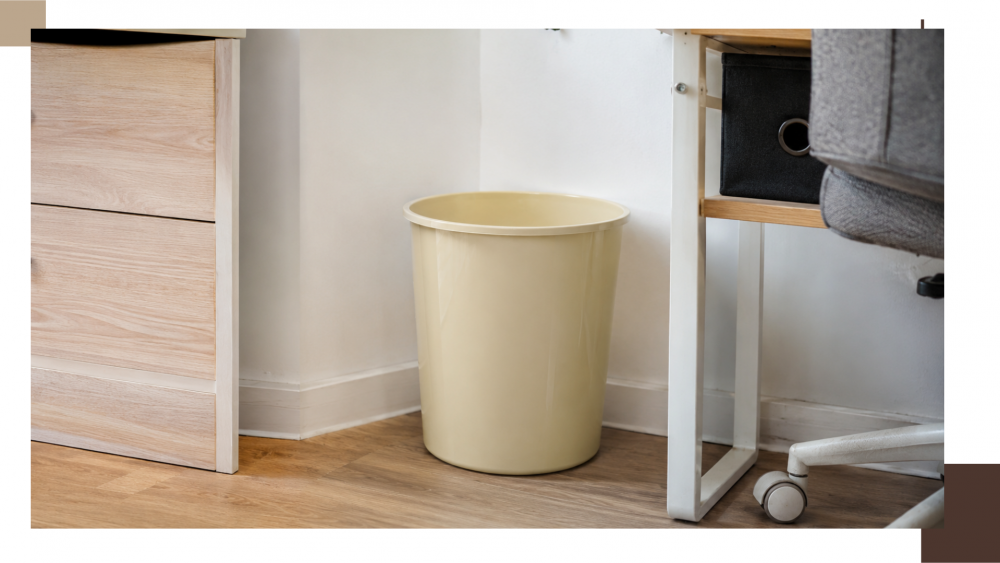
Does the trash can material matter?
The trash can't material affects durability, weight, cleaning ease, and the overall look of the space, so choose one suited to its intended application.
Plastic Trash Cans This is the most common type because it is lightweight, affordable, easy to move, and available in various sizes. Suitable for homes, shops, offices, and general factories. For outdoor or heavy-duty use, choose thick plastic with good resistance to sun and rain.
Stainless Steel Trash Cans Suitable for areas requiring cleanliness and a polished appearance, such as offices, hotels, restaurants, clinics, or reception areas. It looks neat and premium, but usually costs more than plastic cans and requires maintenance for water stains, fingerprints, or scratches from use.
Metal Trash Cans Suitable for specific applications requiring strength, but be mindful of rust, weight, and suitability for the space, especially when used in wet or outdoor areas.
Precautions When Using Trash Cans
No matter how good the trash can is, improper use can still cause issues.
- Avoid mixing wet and dry waste unnecessarily Because it easily causes odors and contaminates recyclable waste.
- Do not let trash overflow the bin Because it makes the area look messy and can attract insects or pests.
- Do not place bins where they obstruct walkways Fire exits, or key work areas, especially in offices, factories, and warehouses.
- Do not use general trash cans for hazardous waste Infectious waste, chemicals, or specialized waste, because these types of waste require specific disposal methods.
Which trash can should you choose?
Choosing Trash Cans & Bins A good choice starts with considering where it will be used, what types of waste will be generated, how much volume is expected, and the level of neatness or durability required.
- Home — Choose trash cans that are easy to use, well-sized, and provide good odor control, especially in kitchens and bathrooms.
- Retail Stores — Choose trash cans that look neat, are convenient for customers to use, and fit well in storefront areas.
- Restaurants — Prioritize trash cans with lids, wet waste bins, and separating food scraps from general waste.
- Offices — Choose trash cans that look clean and tidy, with sorting bins available in common areas.
Factories or Warehouses — Choose bins that are sturdy, easy to move, and clearly separate general waste from hazardous or specialized waste.
Ultimately, the right trash can isn't just one that holds trash; it should help keep the area cleaner, make waste management easier, reduce odors and mess, and be suitable for practical use in each specific location.