


 EN
 ไทย


Customers Also Purchased




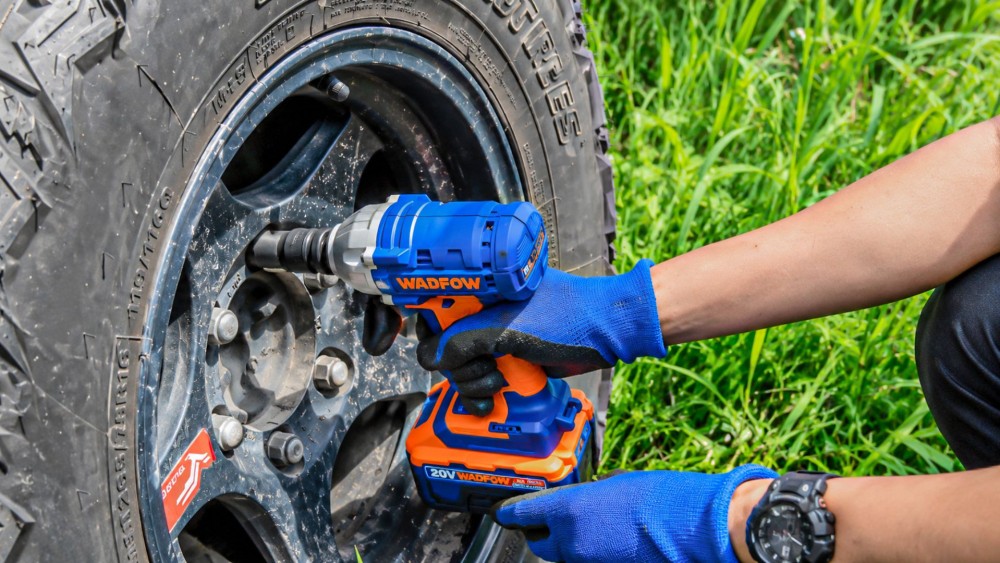
Changing tires, rotating tires, or removing wheels to check brakes are tasks that Electric block are made much faster, removing lug nuts in just a few seconds. When reinstalling the wheel, many people squeeze the trigger until the tool stops hammering and consider it tight enough. Shortly after, some vehicles develop steering wheel vibrations while braking, some cannot remove the lug nuts next time, and some experience stretched wheel studs or stripped threads.
The follow-up question is: With an impact wrench that powerful, tightening it all the way should make it the tightest and most secure, right? In reality, wheel lug nuts do not need to be as tight as possible; they need to be tightened to the vehicle manufacturer's specified value and evenly tightened across all nuts—something an impact wrench cannot do on its own.
Let's explore why tightening lug nuts all the way with an impact wrench causes problems, at which stage of the job an impact wrench should be used, when a torque wrench must be introduced, what tightening sequence to follow, and at what points you should stop and consult a mechanic.
Why can't an impact wrench accurately control lug nut tightness?
An electric impact wrench (or cordless impact wrench) does not turn nuts with continuous torque like a wrench, but uses an internal hammer or anvil to deliver rapid, rhythmic blows that turn the socket bit by bit. The resulting tightness depends on multiple factors simultaneously: the set torque level, battery charge, trigger pull duration, thread condition, and the socket used.
Compare it to driving nails with a hammer: you can drive a nail flush, but you cannot tell if each nail is bearing the same load. A torque wrench is like a scale; it tells us when each nut has reached the required value.
An impact wrench is meant for jobs that require speed, while the final tightness of the lug nuts is the job of a torque wrench.
What problems occur when tightening lug nuts all the way with an impact wrench?
Overtightened nuts do not make the wheel safer; they subject the surrounding components to loads beyond their design limits.
Stretched Wheel Studs and Damaged Threads
Wheel studs are designed to stretch slightly like a spring when tightened to the correct value. This clamping tension is what actually holds the wheel in place.
If over-tightened significantly with an electric impact wrench, the studs may stretch beyond their elastic limit. Threads will begin to strip, and stretched studs may snap later—either during the next tightening or while driving.
Uneven Clamping Force Around the Wheel Hub
If the lug nuts are tightened unevenly, the pressure holding the wheel to the hub will not be uniform around the circumference. Many people link steering wheel vibrations during braking to uneven lug nut torque. Some alloy wheel models also risk crushed lug seats or surface damage from excessive force.
Impossible to Remove Next Time
Lug nuts that are over-torqued and left for a long time will be extremely difficult to loosen. If you face this situation with a flat tire on the side of the road with only the factory lug wrench provided with the car, a simple task can quickly turn impossible.
Using an Electric Impact Wrench at the Right Stage: Quick Removal, Quick Installation, but Never Final Tightening
An electric impact wrench is still a great, worthwhile tool for wheel work if used at the proper stage of the job.
When removing, you can freely use an electric impact wrench to loosen the nuts, as loosening does not damage the threads. If loosening by hand with a wrench, break each lug nut loose while the wheel is still touching the ground before jacking up the car, so the wheel won't spin.
When installing, start by threading the nuts on by hand for two or three turns to ensure they are not cross-threaded. Then, use an electric impact wrench set to a low power level to run the nuts down until they just seat against the wheel rim. The rule is simply to seat the nuts, not to tighten them down. Final tightening to the specified torque should always be done with a torque wrench after lowering the car to the ground.
Set the Power Level of the Electric Impact Wrench Before Installing Lug Nuts
Many models of electric impact wrenches feature multi-stage power or speed adjustments, and some even have dedicated modes for nut removal and installation. Check your tool's manual to understand how each mode works, and set it to the lowest setting that can still seat the nuts. Leaving the tool set at maximum torque from the removal step is the most common cause of over-tightened lug nuts, as people often forget to dial it down before reinstalling.
Torque Limiting Extensions Help, but Still Do Not Replace a Torque Wrench
Many tire shops use torque-limiting extension bars (Torque Sticks) connected between the electric impact wrench and the socket. These bars flex to absorb excess torque once the nut approaches the stick's rated value, significantly reducing the chance of over-tightening. However, accuracy still depends on the tool and user technique. You can use torque sticks instead of driving nuts all the way down with full power, but you must still finish with a torque wrench as usual.
A Torque Wrench Must Follow the Electric Impact Wrench Every Time, in the Correct Sequence
The proper torque specification for your lug nuts can be found in your vehicle owner's manual or by asking an authorized service center for that vehicle model. This value varies by vehicle model and wheel type; the same setting should not be used on every car. Read more at 5 Common Misconceptions About Torque Wrenches
Tighten in a Star Pattern, Not Around in a Circle
The principle is to tighten in a star/criss-cross pattern—tightening one nut, then crossing over to the opposite side, and continuing until finished, rather than tightening in a clockwise circle. Tightening in a star pattern ensures the wheel is drawn evenly against the hub from all sides. If the nuts are not yet snug, tighten them in two stages: the first round at a lower torque, and the second round at the full specified torque.
Lower the car to the ground before final tightening
If you perform the final tightening while the wheel is still off the ground, the wheel will turn with the wrench's force and may cause the vehicle to shift on the jack. Lower the car until the wheel bears the weight first, then finish tightening all lug nuts with a torque wrench.
The sockets used with an electric impact wrench affect lug nuts more than you think
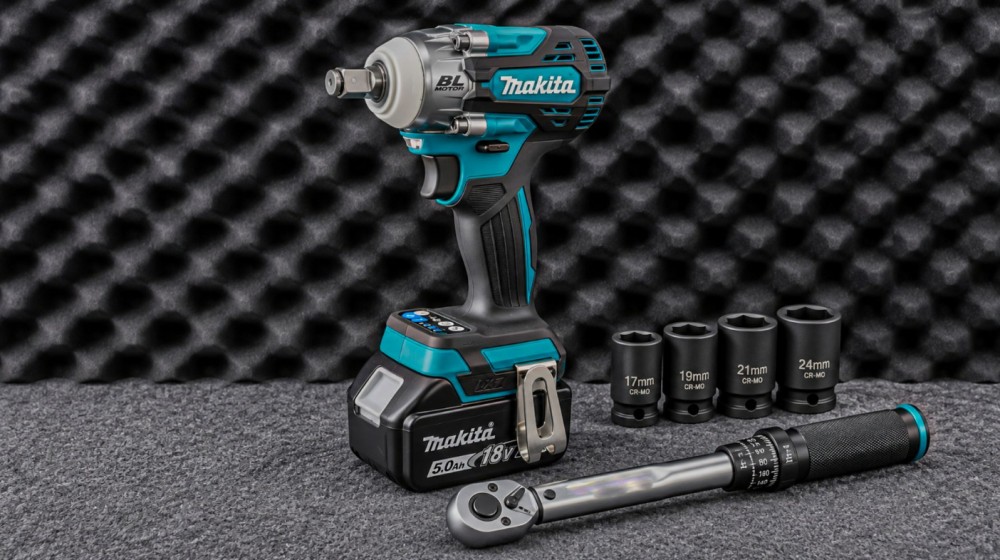
Sockets used with electric impact wrenches must be impact sockets, which are typically black and have thicker walls.
Chrome-plated sockets intended for hand wrenches are not designed to withstand repeated impact forces and may shatter or fly apart. For detailed reasons, read more at Can you use standard sockets instead of impact sockets on an air impact wrench?
The socket size must match the lug nut precisely and should ideally be a 6-point design that fully grips the flats. A loose socket will round off the nut edges from the very first use. For alloy wheels, sockets with an outer protective plastic sleeve help prevent scratching the wheel surface.
Alloy wheels and newly changed wheels must be rechecked after using an electric impact wrench and torque wrench
After installing new wheels or changing alloy wheels, the contact surfaces between the wheel and the hub will settle slightly during the initial driving period. The nut tightness may decrease from the initial torque.
The solution is to recheck the torque with a torque wrench after driving a short distance as recommended by the tire shop or vehicle manual. Use the original torque spec, tighten in a star pattern as before, and if any nut turns unusually far, inspect the threads and the lug seat before driving further.
Can a compact cordless electric impact wrench be used to remove and install car lug nuts?
Yes, because Buying an electric impact wrench doesn't mean you need more power than necessary For passenger cars or small vehicles where lug nuts are torqued to normal specs and the tool has sufficient breakaway torque according to manufacturer ratings, a compact electric impact wrench is lightweight, easily accesses wheel wells, and shares the same battery platform with your other tools.
Do not force it when nuts have been over-torqued by a shop, are rusted, or on pickup trucks and commercial trucks where lug nuts are much larger and tightened significantly tighter. A compact tool will hammer for a long time without moving the nut, causing both the tool and battery to overheat. Break them loose with a long-handled breaker bar first, then use the tool to spin the nuts off.
Signs that you must stop using an electric impact wrench and have a technician inspect the lug nuts
If a nut spins freely without tightening, the stud appears stretched or the threads stripped, the nut is unusually hard to turn from the very first thread, the lug seat or wheel bore shows indentations, or you hear clunking noises from the wheel after driving—these symptoms indicate that the wheel fastening components are damaged.
Never force an electric impact wrench to drive them tighter to mask the symptoms, as excessive impacting causes even more damage to the studs. Stop driving and have a mechanic replace the damaged studs or lug nuts. Wheels are critical safety components; the cost of a few studs and nuts is never worth the risk of a wheel coming loose while driving.
Steps to safely remove and install wheels using an electric impact wrench
Before starting, park the vehicle on a flat, solid surface, engage the parking brake, set the transmission appropriately for the vehicle type, and chock the opposite wheels with wheel chocks. Jack the car at the manual-specified lift points and always support it with jack stands. Never crawl under a vehicle supported only by a jack. If the ground is uneven, read more about the risks at Can you use a floor jack to lift a car on an inclined surface?
During the process, wear safety glasses and gloves. Remove the battery from the cordless impact wrench every time you change a socket. Seat the socket completely before pulling the trigger, and hold the tool aligned straight with the lug nut without tilting to prevent the socket from slipping or stripping the nut head.
After finishing with the cordless impact wrench, apply final torque with a torque wrench in a star pattern, remove the jack stands and wheel chocks, check the tire pressure, and remind yourself to re-check the lug nut tightness after driving a short distance.
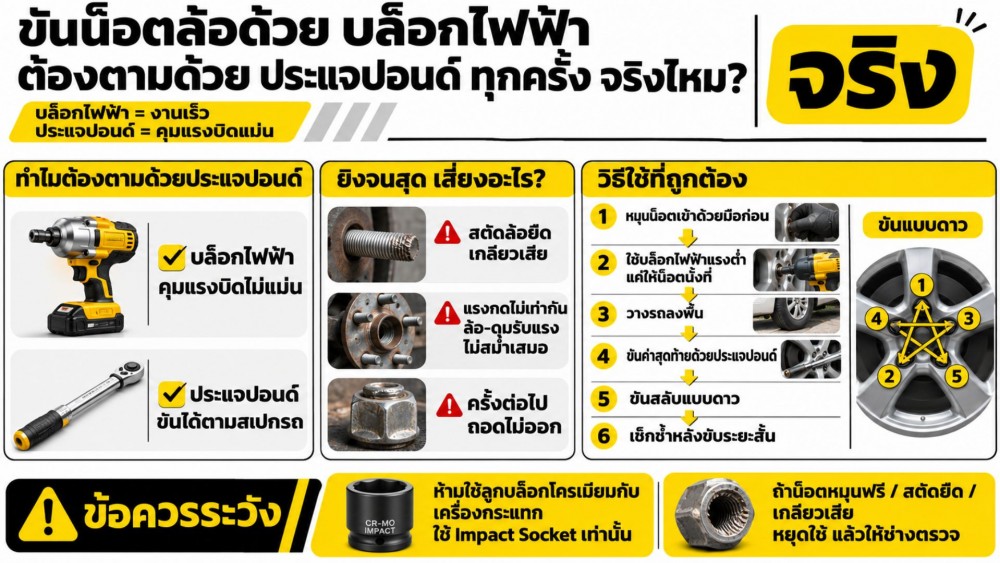
Conclusion: "True" because a cordless impact wrench is meant for speed, while the final tightness of the lug nuts is the job of a torque wrench.
Safe lug nuts are those tightened to the vehicle's specified torque and tightened evenly across all nuts—not the tightest possible. A cordless impact wrench operates with impact force, so it cannot control this torque specification for you. Whether changing tires, rotating tires, or removing wheels to check brakes, if you let the tool hammer all the way, the consequences are stretched wheel studs, uneven clamping force, and lug nuts that cannot be removed when you really need to.
What you should do is use a cordless impact wrench fully to loosen lug nuts. When installing, thread the nuts on by hand first, use a low power setting just to seat the nuts, use the correct size impact socket, lower the car to the ground, and finish with a torque wrench according to the vehicle manual specifications. Tighten in an alternating star pattern, and re-check after driving a short distance.
Never use chrome sockets with impact tools. If a lug nut spins freely, a stud is stretched, or the threads are damaged, stop driving and have a mechanic replace the part—do not force it tighter.
If you are putting together a power tool set for wheel work, check out tools with adjustable torque settings in the category Electric block at our iToolmart right away.