


 EN
 ไทย


Customers Also Purchased


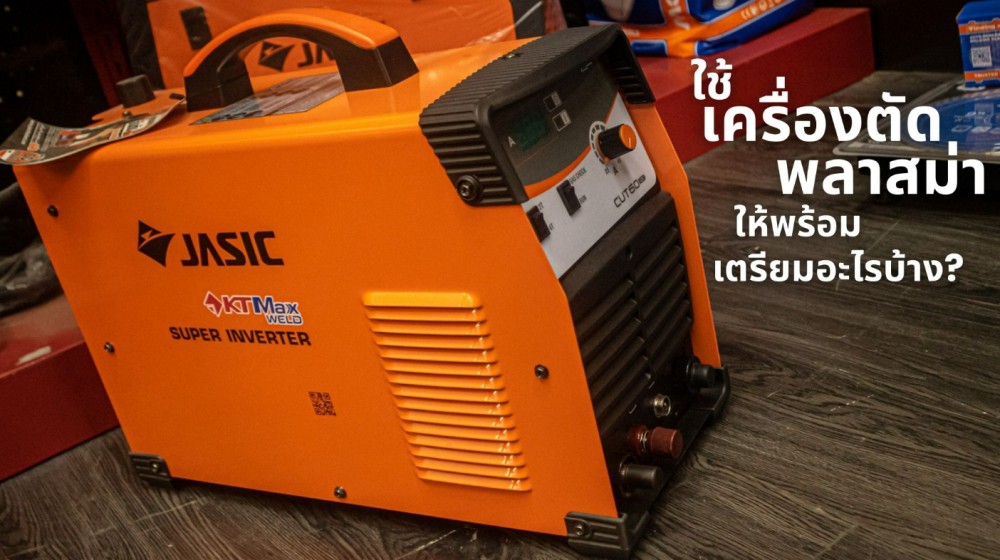
The term “Plasma Cutting Equipment” might be words that make you picture flying sparks and cutting steel that looks effortless, fast, and razor-sharp, right? As if metal cutting with just a plasma cutter could be done easily and instantly. But what people rarely talk about is that behind such effortless-looking work usually lies thorough and consistent preparation.
Moreover, technicians who produce clean, beautiful cuts with a plasma cutter aren't necessarily more talented or skilled; it's because they know what to check before starting and don't overlook seemingly minor fundamentals.
In this article, I’d like to invite you to walk through each question just like an on-site technician: Before using a plasma cutter, how should we prepare? What needs to be checked? And what do beginners often overlook? Covering everything from steps many accidentally skip, right through to the details that give your cutting work a more professional finish.
What should you ask yourself before using a plasma cutter?
Let's start with the very first question. "A plasma cutter is just plug in, connect the air line, and press the trigger to cut—why is there so much preparation?" The answer is because plasma cutting involves controlling electrical energy, heat, air pressure, and extremely high temperatures—all working simultaneously in a fraction of a second.
Therefore, before we get ahead of ourselves adjusting machine settings or picking up the torch, asking a few simple questions early on can mean the difference between a clean, one-pass cut and a botched job requiring rework, wasted time, and unnecessary wear on materials or equipment.
A plasma cutter is not a tool to be used by guesswork. The clearer your questions are from the start, such as: How to Choose the Right Plasma Cutter? 6 Essential Factors You Shouldn't Overlook the smoother the workflow on the job will be, and the more control you will have.
What is the workpiece to be cut, and how thick is it?
The first question you should ask yourself is, "What are you cutting?" Plasma Cutters: What Can and Cannot Be Cut? Along with Reasons You Should Know Because different types of metal and varying thicknesses directly affect plasma cutter settings.
How many amps do you need for a plasma cutter? The most powerful isn't always the best! If you cut thin sheet metal with the current set too high, the edges will burn, and the torch consumables may wear out quickly. Conversely, if you cut thick steel with the current set too low, the plasma cutter might not pierce through completely, forcing you to make multiple passes—wasting time and straining the cutting torch. Therefore, knowing the thickness of the workpiece doesn't just ensure a clean cut; it visibly extends the lifespan of your plasma cutter.
Is the plasma cutter you're using really suitable for this job?
Many people may already have a machine, but never stop to ask themselves: "Was the plasma cutter I'm using designed for this level of work?" Each plasma cutter model has limits regarding thickness, duty cycle, and compatible power supply. If you push a small machine on heavy-duty work, it may not break down immediately, but heat and stress will build up in the system, ending in repairs that cost more than you think.
Is your electrical system truly ready before plugging in a plasma cutter?
A point that deserves special attention is "electricity." Many issues that appear to stem from the machine, air supply, or cutting torch often turn out to be caused by an inadequate electrical system.
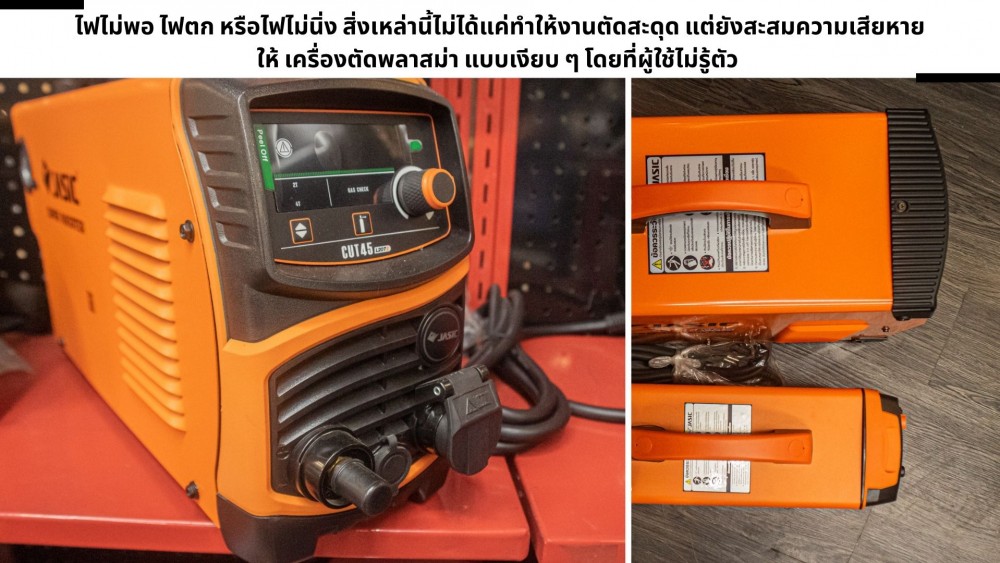
Checking the electrical system before plugging in serves as a solid foundation to keep the entire plasma cutting operation safe and under control.
Residential power vs. Industrial power: What's the difference for plasma cutters?
One of the most common problems is: Insufficient power without the technician even realizing it. Plasma cutters require relatively stable power, especially during arc initiation. If the voltage drops, the cut will sputter, power surges will occur, and internal circuit boards will be overloaded.
Before using a plasma cutter, you should make sure that:
- The electrical outlet supports the current specified by the machine.
- No heavy electrical appliances share the same circuit.
- Power cables are not undersized and not unnecessarily long.
These things may seem trivial, but on actual job sites, plasma cutters failing due to voltage drops happen far more often than you'd think.
Ground wire: Is it truly important, or just textbook theory?
The answer is It is truly important—and extremely critical. Plasma cutters operate on high voltage. Without a proper ground wire, the risk of electrical leakage and shock increases immediately. Furthermore, a good ground helps stabilize the arc, delivers consistent cuts, and reduces unexplained machine glitches.
The air system: Without it, a plasma cutter simply "cannot cut"
Why does using a plasma cutter require an air compressor? If the electrical system provides the power, the air system is what transforms that power into actual cutting. This is the aspect most people overlook, assuming that having air flowing out is enough. In reality, an improper air system directly affects the plasma cutter—ranging from rough cuts and accelerated torch wear to unexplained machine stuttering. Understanding and properly setting up the air system lays the foundation for smooth, uninterrupted plasma cutting operations.
Air must not only be powerful, but also clean.
Just having an air compressor isn't enough. In fact, air quality is just as important as air pressure. Air containing moisture, oil, or dust will cause plasma cutting consumables to wear out faster than normal.
Before using a plasma cutter, you should ensure that:
- There are water filters and air filter elements installed.
- Moisture is regularly drained from the air tank.
- Air pressure matches the machine's specifications.
A cutting torch burning out rapidly after cutting just a few pieces is usually due to contaminated air rather than the quality of the machine.
How does air pressure affect a plasma cutter?
If the air pressure is too low, the plasma arc won't be sharp, cut edges will be rough, and molten metal can blow back into the torch head. If the air pressure is too high, the arc becomes unstable, cutting will stutter, and consumables wear out faster. Setting and calibrating proper air pressure is a key skill that elevates plasma cutting to a truly professional level.
Are the torch and consumables ready?
Issues like poor cut quality, beveled cuts, or machine malfunctions are often caused by worn consumables that the operator hasn't noticed.
How important is inspecting the torch before use?
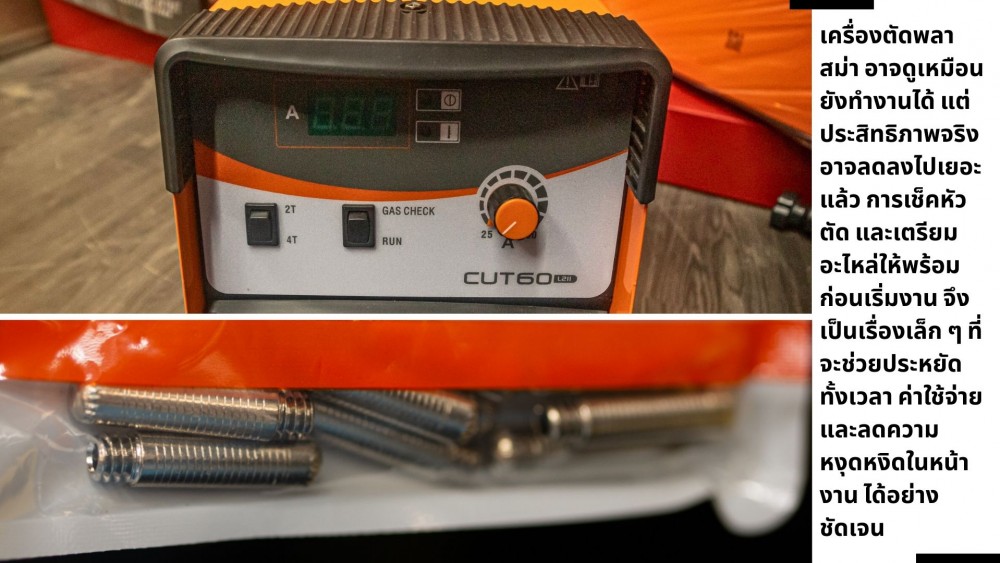
Don't wait until the torch head fails before replacing parts. Before using the plasma cutter each time, disassemble the torch to inspect the condition: check if the nozzle/tip orifice is still round or starting to widen, if the electrode has a deep burn pit, and if there is soot or metal slag buildup. A worn consumable will cause slanted cuts, uneven edges, and higher power consumption.
Do you have spare parts on hand?
On an actual job site, nothing is more frustrating than a plasma cutter running smoothly only to stop because the consumables have worn out and there are no spare parts on hand. Having backup nozzles and electrodes ready is a small detail that prevents costly work interruptions.
What protective equipment is required?
If there is one thing that should never be compromised, rushed, or dismissed as minor, it is personal protective equipment. A plasma cutter generates extremely high energy in a split second. The intense glare, heat, and flying metal sparks leave no room for second chances. Safety isn't just about expertise; it is about thorough preparation before starting work every single time.
How important are glasses, face shields, and gloves?
Plasma cutting continuously produces both intense glare and flying hot metal sparks. Safety glasses, anti-glare welding face shields, and high-quality leather gloves must never be overlooked. Many accidents happen because of the mindset that "it's just a quick cut, it'll be fine," but a single stray spark is enough to cause injury.
How do clothing and footwear affect safety?
Thick long-sleeve shirts and safety shoes reduce the risk of hot sparks and falling metal scraps far more than you might think. Therefore, even though plasma cutting isn't welding, you should still dress as if you are welding, rather than wearing casual light DIY clothing.
Is your workspace ready for a plasma cutter?
Sometimes issues do not stem from the plasma cutter, the air supply, or the power, but from the user's surrounding workspace. A cramped area, tangled cords, an unstable table, or nearby flammable materials are all variables that turn an otherwise simple task into an inherently risky one. Before you begin cutting, properly organizing your space clears the field so that every movement during cutting remains fully controlled and as safe as possible.
- Cutting table and workpiece support The table surface should be sturdy, dissipate heat well, and be free of flammable materials nearby. Properly supporting the workpiece ensures consistent cuts and reduces spark deflection.
- Cable routing and standing position Before cutting, organize power cords, air hoses, and your footing to prevent tripping. Falling just once while holding an active cutting torch can lead to a severe accident.
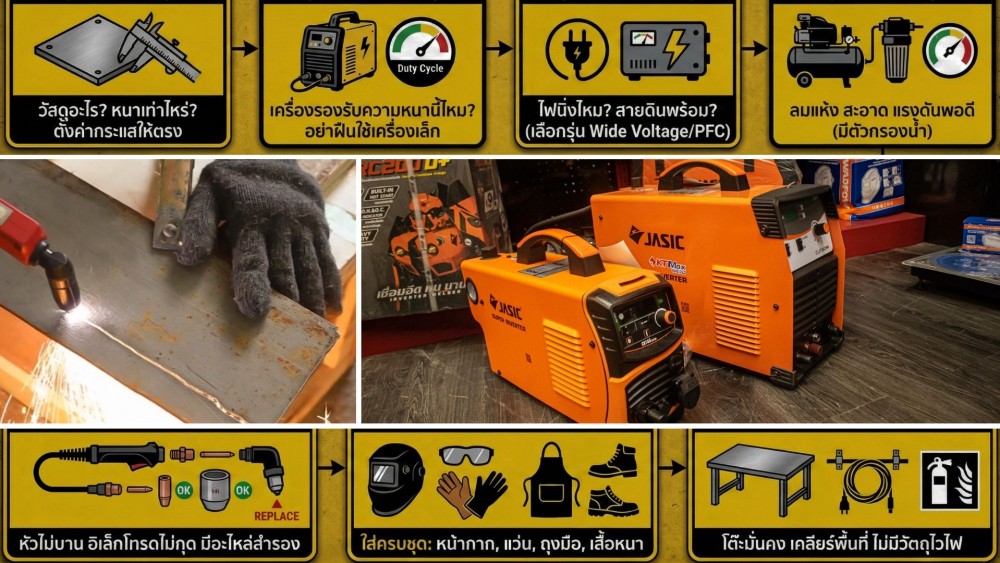
Summary: Good preparation makes plasma cutting easy and safe
A plasma cutter is a highly powerful tool. When used with proper understanding, it speeds up metal cutting and delivers easier quality control in ways that saws or grinders cannot match. On the flip side, that same power can become a hazard if used carelessly or if basic setup steps are skipped.
Preparation before use is not about being fussy or overly demanding; it is about managing risk and unlocking the full potential of your plasma cutter to get the greatest value.
Taking just a few minutes to carefully review each point will make the subsequent work noticeably smoother.
- Is the current set appropriately for the machine and workpiece thickness? Make sure it is not set too high or too low, which could cause poor cut quality or wear out consumables prematurely.
- Is the air supply truly stable? Ensure there is no water or moisture mixed in, and that the pressure stays within the machine's required range throughout the entire cut.
- Is the cutting torch in ready-to-use condition? Check that there are no blown-out burn marks, the orifice is not misshapen, and no metal slag is stuck inside.
- Are all protective items worn? Check glasses, face shield, gloves, and appropriate clothing—do not just wear the bare minimum to get by.
- Is the surrounding area safe? Ensure there are no flammable objects, cables are not obstructing you, and you have enough space to move with confidence.
Checking these things takes just a few minutes, but it can reduce cutting problems, decrease mid-job frustration, and help your plasma cutter perform at its full potential more than many people think.
Before Use Plasma Cutting Equipment Always remember: a good cut starts before you even pull the trigger.