


 EN
 ไทย



Customers Also Purchased


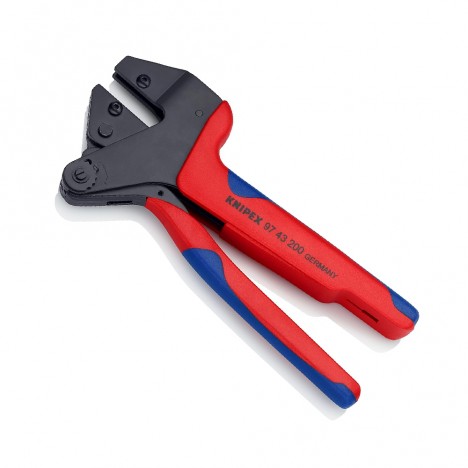


We have previously talked multiple times about wire crimpers, terminal crimping pliers, and cable crimpers of various types, from the basics to in-depth details. This time, we will make things clearer through crimp terminals, cable lugs, connectors, or whatever is used to connect conductors to circuit receptacles. Let's explore which crimp terminals are used for what applications. Is it the same type of work you are currently doing? And are you using the right crimping pliers? This article has the answers for you.
Why use crimp terminals?
A long time ago, circuit connections were made by directly attaching conductors to another circuit terminal, which was not very efficient. Besides looking untidy and frayed, it was neither sturdy nor durable, breaking or pulling loose easily. Furthermore, the current did not flow as well as it should have. Sometimes burning or short circuits occurred due to airborne impurities or high heat.
The conductors in electrical wires that we see as numerous tiny copper strands bundled together affect the flow of charge or current. Therefore, every single small strand gathered in the wire is extremely important. If these fine strands do not all make mechanical contact with the circuit terminal, the current flowing through will decrease. When inserting the conductor into a crimp terminal, do it carefully so that these fine strands do not flare out in different directions.
In addition to protecting the circuit and reducing the risk of explosions, burns, shorts, or oxidation, crimp terminals ensure neat, durable work, allowing current to flow smoothly, seamlessly, and with high efficiency.
Different Types of Crimp Terminals
1. Ferrules or Cord End Terminals (Insulated/Non-Insulated Ferrules)
Many people often twist conductors into a spiral before inserting them into a crimp terminal to prevent the ends from fraying or splaying and becoming difficult to insert. But with ferrule crimp terminals, twisting copper strands does more harm than good. You can strip the wire and insert the conductor straight into the crimp terminal, then use crimping pliers. The pliers will compress the conductors tightly inside the ferrule, improving current flow efficiency and allowing an effective connection to other circuit terminals.
Ferrule crimp terminals are used with screw-clamp and spring-clamp circuit connectors. Because they are small and slender, they are popular for small electrical circuits, light switches, appliance switches, or general wiring.

Ferrules can be crimped into various profiles, including square, trapezoidal, and hexagonal, to match the shape of the connector on the circuit board. They also come in insulated and non-insulated forms. Non-insulated ferrules are used when crimping multiple wires together at once or in tight spaces, such as 13A plugs and RCBOs. Insulated types facilitate inserting the conductor into the terminal and make small wires easier to see.
Additionally, ferrules are available in dual-wire styles that assist in wire branching, known as Twin wire ferrules. These are commonly used to connect two conductors to the same terminal or to wire power supplies in control panel pushbuttons. They are also available in both insulated and non-insulated types.
Ferrules come in various lengths. Longer types provide better reach for recessed PCB terminals inside electrical enclosures that sit deeper than other terminals.
The collar color of ferrule terminals helps differentiate their functions, but because there are many colors and intricate details, most people may not be aware of them. You can scroll down below to understand and learn about them. Color coding is divided into the French system (T) and the German system (W), which can be used alongside the international DIN standard.

★ Ferrule Crimping Pliers
➤ KNIPEX 97 53 09 SB 190 mm (Square) for wire sizes 0.08 - 10 mm²
➤ SATA 91102 GS (Trapezoid) for wire sizes 0.5 - 6 mm²
➤ ASAKI AK9123 0.5 - 6 mm (Trapezoid) for wire sizes 0.5 - 6 mm²
➤ ASAKI AK9124 BNC 1.7 - 6.5 mm (Hexagon) for wire sizes 1.7 - 6.5 mm²
➤ ASAKI AK0618 (YQ-300) (Hexagon) Hydraulic crimping pliers for wire sizes 16 - 300 mm²
★ See more crimping pliers
2. Insulated/Non-Insulated Ring and Fork Terminals
Ring terminals and fork terminals are ideal for permanent circuit connections tightened with screws, providing exceptional strength, stability, and a long service life suitable for heavy-duty applications. They are available in both insulated and non-insulated types, or can be used with heat shrink tubing to prevent circuit overheating.
Ring terminals offer higher safety, preventing disconnection during machine operation or high vibration. They are widely favored because they are easy to install and easy to crimp, used to connect wires to studs, busbars, or other electrical components in machinery and systems frequently subjected to severe vibration.

Fork terminals help reduce the hassle of screwing in and out. Unlike ring terminals, where the screw must be removed completely to modify the circuit, fork terminals only require the screw to be loosened slightly to pull the terminal out. Naturally, they offer less retention strength and durability than ring terminals, so screws should be tightened securely. However, some types also offer secure locking with two small upturned tips that latch onto the screw head.
The crimping method for these tubular terminals is mostly Oval Crimp or Mandrel/Indent Crimp, followed by applying hot air to the sleeve (when using a clear insulated type) for added strength and stability.
★ Ring and Fork Terminal Crimping Pliers
➤ FUJI ICE 5 in 1 (Oval Crimp and Mandrel or Indent Crimp) for wire sizes 10 - 22 AWG
➤ KNIPEX 97 32 240 SB (Oval Crimp and Mandrel or Indent Crimp) for wire sizes 1.5 - 6 mm
➤ RENNSTEIG 619 1389 3 215 mm (Oval Crimp) for wire sizes 0.5 - 6 mm²
★ See more crimping pliers
3. Rolled and Stamped Contacts
Featuring a long tubular shape with a pointed or rounded tip, they have two protruding wings for clamping onto wires. Made of metal alloys (copper, nickel, tin, zinc, and others), they are strong and highly heat-resistant. They are used in large-scale applications requiring numerous wire connections and high-density pin panels, such as Positronic ATCA, Molex Backplane Connectors, ESTONE China Stamping, Military Industrial Connectors, or Allen Electric MilSpec Connectors, among others.
They can be used for wire-to-board or board-to-board connections. Supporting heavy-duty applications, they are utilized in aerospace, industrial oil and mineral drilling, and military-industrial sectors, ensuring confidence in durability, current transmission efficiency, and high-voltage handling.
Crimping styles include B-crimp, W-crimp, or Indent Crimp pressed down from two lateral corners, as well as O-crimp for applications requiring an additional wrap around the wire.

Learn more about crimp profiles for various pliers --> Crimp Profiles of Wire Crimpers and Terminal Crimpers: Let's see which type suits your work
★ Crimping Pliers for Bullet Terminals
➤ KNIPEX 97 21 215 B SB 200 mm (B Crimp) Multi-Purpose Crimping Pliers for Wire Sizes 0.5 - 2.5 mm²
➤ ONISHI Crimping Pliers mini no.150 (B Crimp) for Wire Sizes 0.3 - 0.75 mm²
➤ ASAKI AK9112 Heavy Duty (W Crimp) for Wire Sizes 1.25 - 16 mm²
➤ RENNSTEIG MC4 624 105-55 Crimping, Stripping, and Cutting Pliers Set with Interchangeable Dies (B Crimp)
★ See more crimping pliers
4. Non-Insulated Tab Terminals or Non-Insulated Female Disconnect Terminals
What we are referring to here is not just a flat tab terminal, but a type where both sides are rolled upward and the base features two extending wings to grip the wire. Made from a variety of materials including silver, steel, copper, brass, nickel, tin, etc., these are low-cost crimp terminals widely used in the automotive, machinery, and electrical appliance industries.
This type of terminal is female and is used in applications where connections are frequently plugged and unplugged, such as temporary installations or field operations, making wire relocation or circuit modifications much easier and more convenient. It is a terminal-to-terminal connection commonly fitted with a rectangular casing known as TE Connectivity or Terminal Housing, which enhances safety, prevents electric shocks, keeps wires from pulling loose, and facilitates easy disconnection.
Non-insulated terminals withstand voltage better than insulated ones, but if not used in conjunction with a TE Connectivity housing, they should not be used in applications where they may be easily touched or prone to oxidation.

Crimping this type of terminal uses a B Crimp or C Crimp profile so that both wings of the terminal bite into the wire core and clamp down securely. This ensures that the wire will not easily pull loose when tugged or relocated.
★ Crimping Pliers for Non-Insulated Tab Terminals
➤ ASAKI AK9122 (AK-344) (B Crimp) for Wire Sizes 0.15 - 6 mm²
➤ ONISHI Crimping Pliers mini no.150 (B Crimp) for Wire Sizes 0.3 - 0.75 mm²
➤ KNIPEX 97 21 215 B SB 200 mm (B Crimp) Multi-Purpose Crimping Pliers for Wire Sizes 0.5 - 2.5 mm²
★ See more wire crimpers
5. Shielded/Unshielded Modular-plug Connectors for LAN, Telephone, and Cable Lines
This type of crimp connector is likely something everyone is extremely familiar with; just hearing the name brings it to mind immediately. Naturally, these connectors are used for connecting to telephones, CPUs, laptops, Wi-Fi routers, servers, modems, or other telecommunications equipment. They are commonly referred to as jacks, RJ connectors, ISDN plugs, or modular plugs, and are further categorized by size configurations such as 4P4C, 8P8C, 6P2C, etc.
Modular plugs come in two main types: shielded and unshielded. This shielding is not an accessory bought separately and slipped on afterward for protection or to make pressing the retaining latch and unplugging easier, or to prevent the latch from snagging on cables or edges (which could cause it to bend or snap)—that accessory is called a Locking Plug Boot. Instead, this shield is an integral part of the modular plug itself, constructed of silver-colored metal and featuring a rear tab for clamping onto the cable.
So, should you choose a shielded or unshielded plug?
The answer is to check whether your cable is shielded or not. If it is unshielded, you can use the standard clear plastic type (on the right in the illustration). But if the cable is shielded, use the metal-shielded type (on the left in the illustration). Identifying a shielded cable is very simple: when stripped, you will see a braided mesh or cord shielding the inner wires as an additional layer.

Crimping this type of connector requires dedicated pliers due to its unique shape unlike others, sometimes called Western plug crimping pliers. They are categorized by size, such as 4P, 6P, and 8P.
Because this type of crimping connector connects multiple wires simultaneously in parallel, if you are not yet experienced, you should have a network cable tester to verify correct connection. The tester is inexpensive, costing only a few hundred THB.
★ LAN, telephone, and cable crimping pliers
➤ ASAKI AK9003 Professional 8” For 4P, 6P, and 8P connectors; comes with stripper and cutter
➤ KNIPEX 97 51 10 SB 190 mm For 6P and 8P connectors
➤ ASAKI AK336 Professional 8” For 8P8C connectors
➤ ASAKI AK9170 Cable Tester RJ45 and RJ11 network cable tester
★ See more crimping pliers
6. Coaxial Connectors (COAX-plug Connectors)
Coaxial cable is a type of cable that has an electrical conductor layer and insulation in the center with multiple thick layers to prevent electrical interference with signal transmission. It is used for connecting TVs, antennas, telephone towers, or microwave towers.
Coaxial connectors are cylindrical with a small conductor pin in the center. Connectors come in male and female types and exist in a wide variety, such as BNC, TNC, SMB, RCA, MCX, QMA, or 7/16 DIN, etc. The one most familiar to everyone is the RCA (Radio Corporation of America) connector, as it is the red, white, and yellow A/V cable plugged into the back of televisions.
Crimping coaxial connectors can be done using specialized pliers such as CATV crimpers, or hex crimping pliers can be used on the female terminal, such as with MCX, SMB, or 7/6 DIN connectors.

★ Coaxial crimping pliers
➤ ASAKI AK9124 BNC 1.7 - 6.5 mm (Hexagon) for wire sizes 1.7 - 6.5 mm²
➤ ASAKI AK0618 (YQ-300) (Hexagon) Hydraulic crimping pliers for wire sizes 16 - 300 mm²
★ View more crimping pliers
7. Solar Panel Connectors (Solar or MC4 Connectors)
As the name implies, these connectors are used for connecting solar panel cables. They feature heat and UV resistance and are made of electrical leakage-preventing insulation such as plastic or PVC. Available in male and female types, they can be connected yourself using minimal tools.
Crimping utilizes B-crimp style pliers. Connector components consist of multiple layers, but the part that needs crimping is the innermost slender metal tubular pin, which functions to join the conductors. The other layers serve as protective shielding, because solar panels are installed outdoors, requiring connectors that can withstand both sunlight and rain.

★ Solar panel cable crimping pliers
➤ KNIPEX 97 21 215 B SB 200 mm (B Crimp) Multi-Purpose Crimping Pliers for Wire Sizes 0.5 - 2.5 mm²
➤ ONISHI Crimping Pliers mini no.150 (B Crimp) for Wire Sizes 0.3 - 0.75 mm²
➤ ASAKI AK9112 Heavy Duty (W Crimp) for Wire Sizes 1.25 - 16 mm²
➤ RENNSTEIG MC4 624 105-55 Crimping, Stripping, and Cutting Pliers Set with Interchangeable Dies (B Crimp)
★ See more crimping pliers
8. Fiber Optic Connectors
Optical fiber consists of high-quality glass or plastic strands that are flexible and bendable, with a diameter of only 8-10 microns. It transmits light from one end to the other at speeds close to the speed of light. Used in the telecommunications industry, it enables rapid data transmission and carries more capacity at a time than copper cables. We see fiber optics connected to various data receivers such as computers, fax machines, telephones, CCTV cameras, etc.
Data transmission over fiber optics is immune to interference and does not conduct electricity, so it is not subject to electric shocks that damage data. However, it is more expensive and less durable than copper cable. Repairs are also complex and require extreme care, as stripping the cable leaves the internal fibers virtually invisible.
Fiber optic cable crimp connectors come in many types, both round and square, such as LC, SC, ST, FC, or MPO/MTP, among others.

Fiber optic crimping is done by specialists because a single strand is smaller and thinner than a human hair, hard to see, and requires extreme caution. Specialized tools are used, and after terminating to a connector, testing is required to verify it works and wasn't cut too short or too long. For connecting 1 strand of fiber optic to 1 connector, a small O-crimp style crimping tool can be used, but it's best to use dedicated pliers so errors don't occur.
★ Fiber optic pliers
➤ RENNSTEIG 8002 0004 3 MOST Safety Cutting Fiber optic cable strippers
★ View more crimping pliers 
Read article Terminal crimpers, wire crimpers and more other crimping pliers -->>>

-->>> Crimp Profiles of Wire Crimpers and Terminal Crimpers: Let's see which type suits your work
-->>> What are wire crimpers and terminal crimpers? What types are there? Pros and considerations