


 EN
 ไทย


Customers Also Purchased


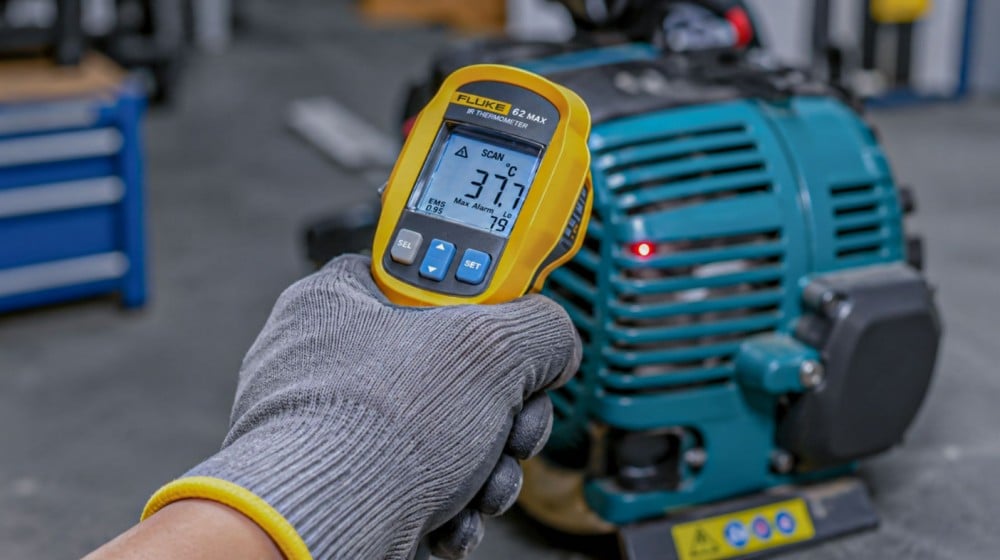
In a small factory where water pumps, exhaust fans, and conveyor belts run all day, a maintenance technician grabs Moisture Meter You shoot the motor, get a reading, and stand there wondering for a long time whether this value is normal. The following week, the bearing of the same motor starts squealing loudly, and the machine shuts down mid-operation.
In reality, what truly reveals a problem is: Comparing with adjacent points, comparing with identical machines, and comparing with baseline values from when it was operating normally.
Let's see how to use a thermometer to inspect motors, bearings, belts, and electrical connections—what kind of readings indicate an abnormality, and which spots you shouldn't measure yourself even with the tool in hand.
A single reading from a thermometer cannot tell if a machine is abnormal?
Heat in machinery is caused by energy loss. A motor cannot convert all electrical energy into rotational force; the rest turns into heat. Friction in bearings, slipping belts, and loose electrical connections cause increased resistance. Every point that "starts to fail" loses more energy, and heat will rise before abnormal sound or vibration becomes obvious.
The problem is that the "normal" heat read by a thermometer fluctuates constantly. A fully loaded motor is hotter than one running idle. A hot day yields higher readings than a rainy day. Shiny metal surfaces cause infrared thermometers to read lower than matte painted surfaces. A single reading is thus a mixture of both signal and noise.
A thermometer can reveal machinery problems when readings are compared, but it might not tell you anything from a single standalone number.
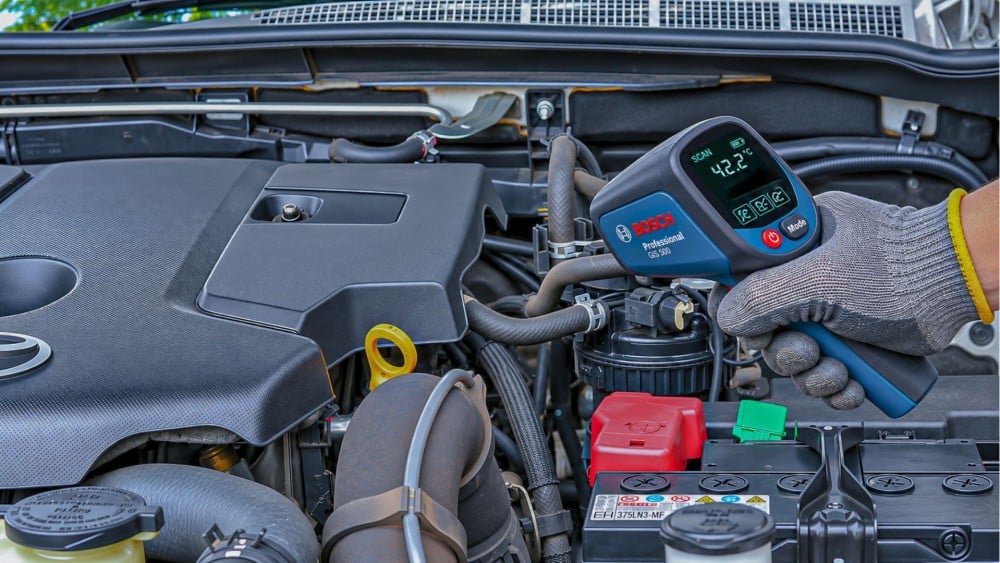
Establish fixed measurement points and re-measure at the same spot: thermometers reveal trends
Many technicians just aim wherever is convenient that day. The next day, aiming at a different spot yields a different reading simply because of the location, not because the machine changed. The data collected cannot be compared.
Mark measurement points on the machine
The solution is to designate fixed measurement points for each machine, such as the center of the motor housing, the drive-end bearing housing, and the non-drive-end bearing housing, then mark them with paint or heat-resistant matte stickers. The marked spot also keeps the surface emissivity consistent for every measurement.
Measure under identical conditions every time
The key principle is to measure at similar times and load conditions, such as after the machine has run for a while until thermal stability is reached. Measure from the same distance and record the ambient room temperature as well. If the reading at a certain spot rises noticeably higher than its baseline while ambient temperature and load remain unchanged, that is your signal to investigate.
Motor running hot: use a thermometer to distinguish whether the heat comes from the load, ventilation, or the motor itself
A motor running hotter than usual does not always mean the motor is failing. The heat could stem from a heavier load driven by the motor, clogged air vents, or internal windings and bearings. Each cause requires a different fix.
Check the cooling fins and fan first
A motor with fins packed with dust, oil sludge, or a damaged fan cowl will heat up uniformly across its entire body. The remedy is to stop the machine, disconnect power and lock out the switch before cleaning the fins and ventilation slots, then re-measure once the machine reaches stable operating temperature. If the reading returns close to its baseline, the root cause was ventilation.
Compare with identical motors
If the plant has two identical pumps running identical workloads, use a thermometer to measure the same spot on both units at the same time. The one running significantly hotter under equal load should be inspected first. For winding temperature limits, refer to the insulation class on the motor nameplate and the manufacturer manual—never use numbers from a different motor for comparison.
Bearings and shaft housings: Compare the drive end to the non-drive end using a thermometer
Bearings that are starting to fail often heat up before making noise. Common causes include insufficient grease, excessive grease causing churning and overheating, the wrong type of grease, or shaft misalignment with the driven machine.
Reading values by comparing both ends
The principle is to use a thermometer to measure the bearing housings on both the drive end and non-drive end of the same motor. If one side is significantly hotter than the other and shows an increasing trend with each measurement, inspect that bearing first. If it heats up immediately after greasing, consider over-greasing as a cause, and always grease according to the amount and intervals specified in the equipment manual.
Use alongside sound and vibration
Heat indicates that something is wrong, but it doesn't always tell you why. If a bearing runs hot while producing whining noises or increased vibration, a vibration meter can help distinguish whether it is a bearing issue or shaft misalignment.
Belts, pulleys, and couplings: Use a thermometer from a safe distance only
Loose or worn belts will slip on the pulley; the resulting friction heats up the pulley surface and belt. For couplings, shaft misalignment causes heat in the rubber element or torque-transmitting components.
Aim the thermometer from outside the guard, or from a distance where hands or instrument cables cannot get near rotating parts. Never remove belt or coupling guards while the machine is running. If you need a closer look, stop the machine, cut the power, lock out the switch, and measure immediately once parts come to a complete stop. If the pulley is abnormally hot, inspect belt tension and condition according to the manual.
Plugs, extension cords, and electrical panels: Where a thermometer helps, but you must know its limits
Loose electrical connections, corroded terminals, or loose plug connections will develop localized heat, which can lead to melted plugs and fires. Areas general users can measure safely are external touchable surfaces, such as plugs, sockets, and extension cords used with high-power tools.
Compare phase-to-phase, point-to-point
The same principle applies: normal connections should have similar temperatures when carrying similar currents.
If the thermometer shows that one prong of a plug or one terminal is noticeably hotter than adjacent ones, that point has higher resistance than normal. Stop using that receptacle or cord immediately.
Electrical panels are a job for electricians
Opening an electrical panel door to aim and measure breaker terminals or busbars while energized poses risks of both electric shock and arc flash. This type of work must be performed by a qualified electrician using standard protective equipment. General users should only scan the outer surface of the panel door. If the door feels unusually warm or smells burnt, call an electrician immediately without opening it yourself.
Shiny metal surfaces cause thermometers to read low: Correct this before trusting the numbers
Aluminum bearing housings, polished copper terminals, or stainless steel surfaces reflect ambient thermal radiation rather than emitting their own. An infrared thermometer will therefore read lower than the actual temperature, making hot spots appear normal.
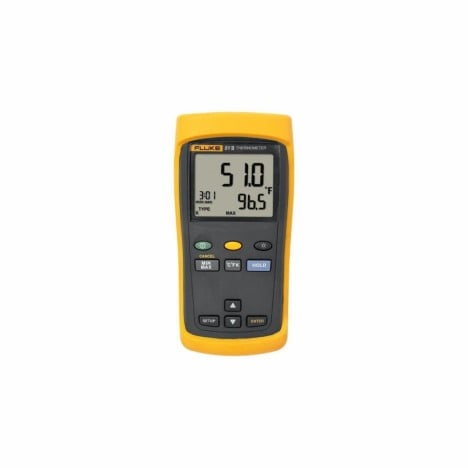
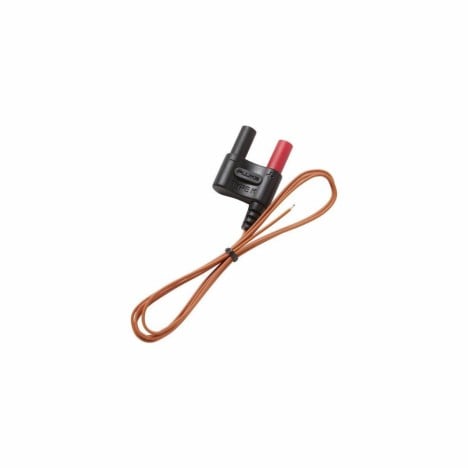
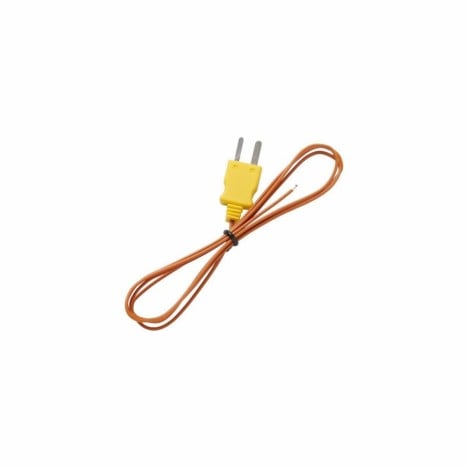
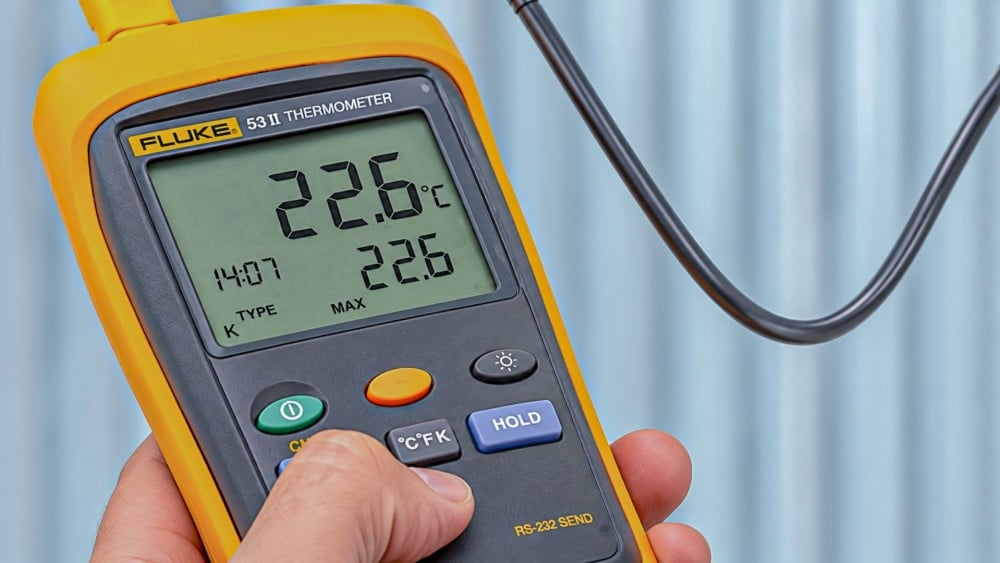
The solution is to measure on a pre-applied matte paint mark or heat-resistant tape, or adjust the emissivity setting to match the surface if the instrument supports it. Another option is to use a contact thermometer with a thermocouple probe after stopping the machine and cutting the power.
Learn more about emissivity at What is Emissivity? One reason why infrared thermometers give inaccurate readings. and If measuring from too far away so that the measurement spot is larger than the workpiece, read more at In-Depth: How Far Can an IR Thermometer Really Measure? What Does It Depend On?
Thermometers vs. Thermal Imaging Cameras in Machinery Inspection
Spot thermometers are suitable for routine walkthrough inspections of known locations, are affordable, and quickly record numerical values. The limitation is that you only see the targeted spot; if the hot spot is just a few centimeters away, you might miss it.
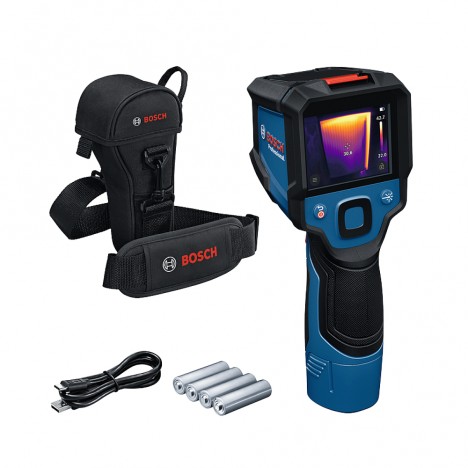
Thermal imaging cameras capture the entire area in a single image, making them ideal for multi-circuit electrical panels, long cable runs, or machinery where you don't yet know where to look. Teams managing a large number of machines often use a camera to initially survey for hot spots, then use a spot thermometer for routine logging.
Read the comparison at How do thermometers and thermal imaging cameras differ? Which one is right for you?
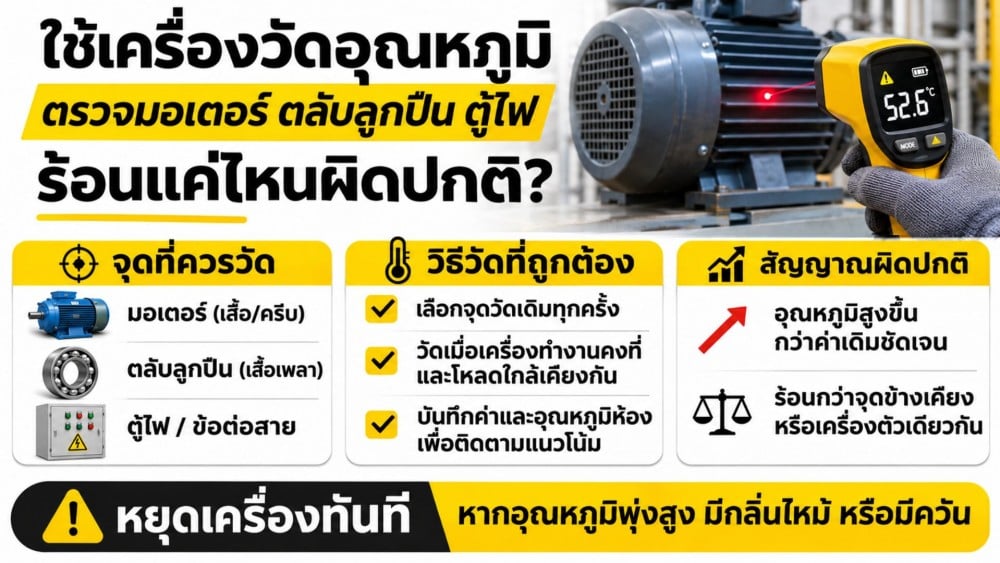
Conclusion: A thermometer identifies machinery problems when readings are compared, not just by looking at a single number.
A thermometer showing a seemingly fine number doesn't necessarily mean the machine is running normally. Heat only becomes meaningful when compared to adjacent points, identical machines, and baseline values recorded when the machine was in good, new, or normal operating condition. This principle applies to water pump motors, bearings, or heat-generating electrical equipment like welding machine plugs.
Select regular measurement points and mark them, measuring under similar load conditions and times. Record the ambient temperature each time. Clean cooling fins before concluding a motor is failing, compare drive-end to non-drive-end bearings, shoot belts through openings outside the guard, correct shiny metal surfaces before trusting readings, and use a thermal imaging camera when unsure where to check.
Never remove guards on rotating parts while the machine is running, and never open electrical panels to take measurements yourself unless you are a qualified electrician. If you see temperatures spiking rapidly, smell burning, or see smoke, shut down the machine immediately without worrying about interrupted work.
If you need tools to measure heat or diagnose overload issues for machinery inspection,
you can explore the category Moisture Meter on iToolmart, including thermal cameras, infrared thermometers, contact types, and probes.