


 EN
 ไทย


Customers Also Purchased


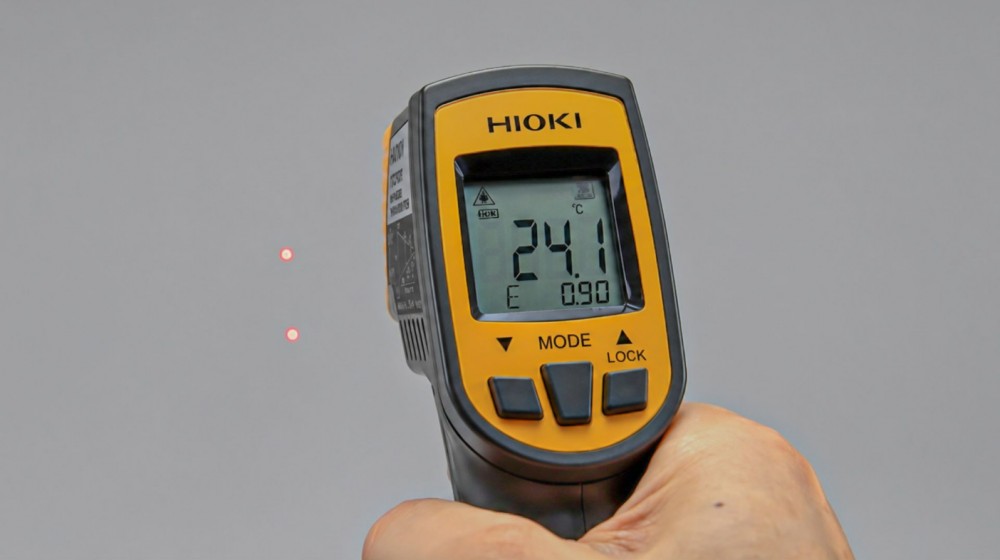
When we take an Moisture Meter Infrared infrared thermometer and aim it at an object's surface, we might expect the number displayed on the screen to be the actual temperature of that object. But in actual practice, it is well known that two items placed in the same area can give very different readings, or using different models of thermometers on the exact same spot might yield conflicting numbers.
A common occurrence is measuring shiny metal surfaces and getting readings lower than actual temperatures. This difference is largely driven by a factor of critical importance to non-contact temperature measurement, namely Emissivity (the material's ability to emit or radiate thermal energy) itself.
Therefore, we will explore what emissivity is, why infrared thermometers have a harder time measuring shiny metals compared to ordinary materials, and other factors that can cause inaccurate readings—helping us select the right tools and interpret thermometer display values with greater precision.
Infrared thermometers do not emit light to measure heat
Besides 5 Things You Need to Know Before Choosing a Thermometer to Use Another common misconception is that infrared thermometers shoot a laser at an object and measure the heat reflected back. The laser we see is merely a visual aid for approximate aiming. The laser itself is not the part that measures temperature.
The actual operating principle is:
- The radiation detector in the thermometer detects infrared energy emitted from the surface.
- All objects with a temperature above absolute zero can emit energy in the form of electromagnetic radiation.
- As an object's temperature rises, the amount of emitted energy increases accordingly.
- The thermometer then processes the detected infrared energy and converts it into a temperature reading on the display.
The thermometer needs to know how the detected infrared energy should be interpreted in order to calculate back to a surface temperature close to reality.
What is Emissivity?
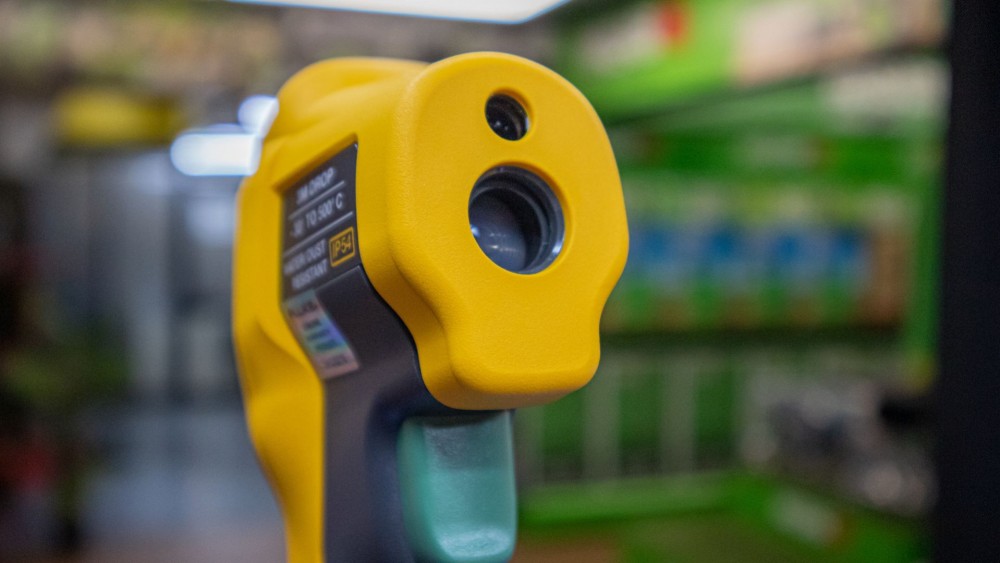
Emissivity refers to the ability of a surface to emit thermal radiation compared to an ideal blackbody at the same temperature. This value is dimensionless and is generally represented in a range from 0 to 1 (such as 0.10, 0.19, 0.20…), and some thermometer models can adjust these values to suit different materials.
If a surface has an emissivity value of 1, it means the surface can emit radiation equivalent to an ideal blackbody. A surface with a low emissivity value, such as 0.10, means the surface emits only a small amount of radiation compared to a blackbody at the same temperature. However, virtually no real-world object has a surface value of completely 1. Common materials have values between 0 and 1, where dark, matte, rough, or non-reflective surfaces have high emissivity, while smooth, shiny, and reflective metallic surfaces typically have low values.
Importantly, visible color does not always directly determine emissivity. A black object does not mean it will have high emissivity in every case, and a white object does not mean it will emit less infrared radiation. This is because visible color lies in a light wavelength range different from the infrared spectrum used by thermometers. A material that looks white to our eyes can also have high emissivity in the infrared spectrum.
Why does an incorrect emissivity setting lead to an incorrect temperature reading?
An infrared thermometer must assume what emissivity value the surface being measured has in order to calculate temperature from the detected infrared energy. Standard thermometer models typically have a fixed emissivity set to around 0.95 because it is a value suitable for many common materials, such as: Wood, paper, plastic, rubber, painted surfaces, concrete, and organic surfaces
If we use a thermometer set to 0.95 to measure a surface with a similar value, the results are usually acceptable for use. But if it is used to measure Polished aluminum, shiny stainless steel, or clean copper, which may have a much lower emissivity value, the instrument will interpret the received energy based on an incorrect assumption. Part of the energy captured by the sensor may be radiation reflected from the surrounding environment rather than energy emitted by the surface itself.
As a result, the reading on the display may be lower or higher than actual, depending on the object's temperature, the ambient temperature, and the amount of radiation reflected into the device. For example, if a hot object reflects a cold surrounding environment, the thermometer may display a reading much lower than the actual temperature.
Therefore, Emissivity is a parameter that helps the device better distinguish between the energy emitted by the surface and the energy reflected from the surroundings.
Emissivity does not depend on the material type alone
Knowing this, we might try to look up emissivity values simply by material name to use with a thermometer—such as checking what the value is for steel, how stainless steel should be configured, or whether this value should be used for aluminum. However, there is no single number that applies to every piece, because emissivity can change depending on surface conditions.
- Freshly polished, shiny steel may have a low Emissivity value.
- The same piece of steel, when rusted, oxidized, covered with soot, or painted over, may have a significantly increased value.
- Polished stainless steel and sandblasted stainless steel may exhibit different radiation emission behaviors, even though they are fundamentally the same material.
- A rough, matte, stained, or coated surface usually helps reduce reflection and increases emissivity, making infrared temperature measurement easier.
- Smooth and shiny surfaces act like mirrors in the infrared spectrum, reflecting a large amount of radiation from the surroundings into the device, making them difficult surfaces to measure.
For this reason, emissivity tables should be used as a starting reference, not as fixed figures. If the task requires high accuracy, you should test and compare with a contact thermometer or create a reference area on the workpiece before taking actual measurements.
Why are shiny metals difficult to measure with a thermometer?
Shiny metals have low emissivity and high infrared reflectivity, acting like mirrors that reflect heat from the surroundings. If you point the sensor at a shiny metal sheet, you might sometimes detect thermal reflections of the person measuring it, even if no clear reflection is visible to the naked eye.
The confusing part is that the thermometer may display a stable and seemingly reasonable reading. A stable reading does not always mean it is correct; the device may detect relatively constant reflected radiation and consistently calculate an inaccurate temperature reading. This is one of the Precautions when using a non-contact thermometer
How to measure shiny metals to get near-accurate readings
An easy-to-use method is to create an area on the metal surface that has high and approximately known emissivity—such as applying matte black heat-resistant tape, painting with temperature-resistant matte black paint, or using a suitable reference coating material. Then, wait for the tape or coating to reach thermal equilibrium with the surface before aiming and measuring.
Applying tape alters the surface properties in that area to emit radiation better, making it easier for the thermometer to evaluate the temperature. However, keep in mind that you are obtaining an approximate temperature value by measuring the temperature of the tape.
Emissivity is not the only cause of incorrect readings
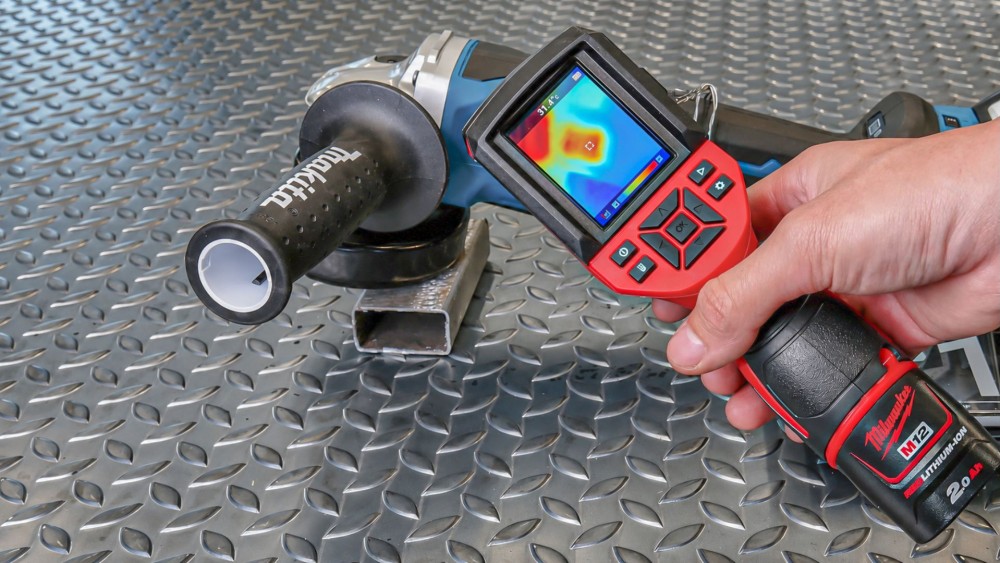
Many people may assume that setting this value correctly is all it takes to make the thermometer accurate. In reality, there are several other factors that affect the readings obtained by the thermometer, such as:
- Measuring from too far away so that the measurement spot size is larger than the workpiece
- The laser dot is not the measurement spot size
- Measuring through glass may result in measuring the glass temperature
- Steam, dust, smoke, and flames can interfere with measurements
- Dirty lenses and unstable instrument temperature
Temperature and wavelength also have an effect
What should be understood further is that the emissivity of a material may change with temperature and the wavelength range used for measurement. Not all infrared thermometers receive radiation across the same wavelengths. General instruments used in maintenance work may detect radiation in the long-wave infrared range, while instruments for high-temperature work or metal measurement may opt for a shorter wavelength range.
Therefore, the emissivity value that works well with a particular thermometer or thermal detector model may not match the appropriate value for another type of industrial-grade thermometer, especially when measuring hot metals, furnaces, heat treatment processes, or workpieces with very high temperatures.
In general applications, this difference may not be noticeable enough to cause much concern. However, for process control, quality inspection, or safety-critical decisions, knowing the instrument's spectral response and the properties of the surface being measured will help reduce errors much more effectively.
Comparative measurement is more important than finding the most exact absolute value
In technician or maintenance work, the purpose of temperature measurement is not to determine whether a device is at 72.3 or 73.1 degrees Celsius, but to identify which device is abnormally hot compared to others, or how much the temperature has increased from normal operating conditions.
However, directly comparing values from different types of surfaces—such as comparing the temperature of a shiny copper terminal to black plastic insulation—can lead to false conclusions because both materials have different emissivity values. The thermometer may show that the plastic is hotter than the copper, even though their actual temperatures are nearly the same.
Conclusion: How does emissivity matter to an infrared thermometer?
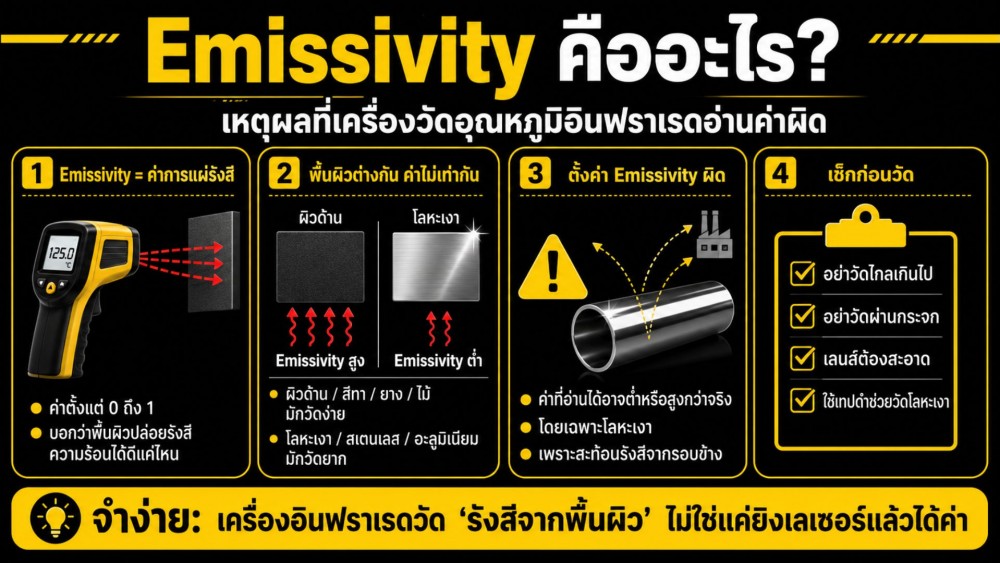
Emissivity is one of the key variables that an infrared thermometer uses to calculate temperature from detected radiant energy. If the preset value is not suitable for the surface, the reading on the display can be much higher or lower than reality, especially when measuring smooth, shiny metals.
The key takeaway is that emissivity depends not only on the material itself, but also on surface condition, coatings, oxide layers, roughness, temperature, wavelength range, and viewing angle. Reference tables are therefore best used as a starting point rather than a definitive answer.
Moisture Meter Infrared is a fast, safe, and highly useful tool for non-contact temperature inspection. However, simply pulling the trigger and reading the value immediately may not be enough. Once we understand emissivity and measurement limitations, the numbers on the display become data that we can analyze, verify, and utilize much more logically.