


 EN
 ไทย


Customers Also Purchased


When we talk about "temperature measurement," many people usually think of Moisture Meter the types we commonly see, right? Such as digital fever thermometers, forehead infrared thermometers, kitchen thermometers used for precise food doneness checks, or even in maintenance, construction, and industrial work where thermometers play a crucial role.
However, when hearing the term "thermal imaging camera," many people might start wondering, "Isn't it just a type of thermometer?" How do these two actually differ? Are they used for different tasks? Is a thermal camera just a thermometer with extra features? And ultimately, which one is right for you?
In this article, I will dive deep into how they work, their practical applications, and the clear differences between standard infrared thermometers and thermal imaging cameras. If you're wondering how they differ, whether they can be used interchangeably, if it's worth the price, and which one is right for you, let's find the answers together.
Getting to know thermometers first
Before we compare them to thermal imaging cameras, I'd like to invite you to understand thermometers first. How to use a thermometer to get accurate readings Many people are used to picking one up when they are sick or cooking, but in fact, this small digital tool plays a much more important role than that—in medical applications, household tasks, and industrial work alike.
A thermometer is a device designed to give a numerical temperature reading of an object or area you want to measure. Familiar examples include the digital thermometers doctors often use with patients, or infrared thermometers used to aim at skin or object surfaces without direct contact.
What are the key advantages of a thermometer?
- Thermometers provide clear numerical readings. Whether measuring body temperature, food, or machinery, they display values accurately and easily understood, giving you confidence in the results.
- Easy to use for household, medical, and industrial applications. You don't need much specialized knowledge to pick one up and use it right away. Plus, they come in a wide variety of formats—from mercury and digital to infrared thermometers.
- They range from affordable models for measuring fever (measuring up to 45 degrees Celsius) to thermometers built for technical tasks, heavy-duty applications, or machinery inspection.
- Thermometers are considered easily accessible to the general public, ranging in price from hundreds to thousands of baht to meet industrial-grade needs.
What is a thermal imaging camera?
When talking about a "thermal imaging camera," many people might wonder what it actually is—is it just a special kind of thermometer? In fact, thermal cameras differ from conventional thermometers that provide clear numeric readouts in one key way: they are designed to visualize thermal energy that is invisible to the naked eye. This difference makes them stand out and play a crucial role in many situations where a thermometer might not cover every angle.
How does a thermal imaging camera work?
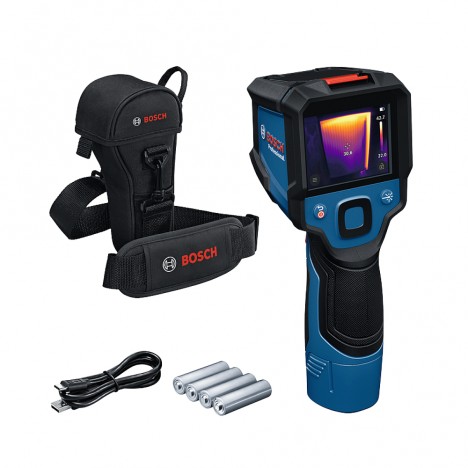
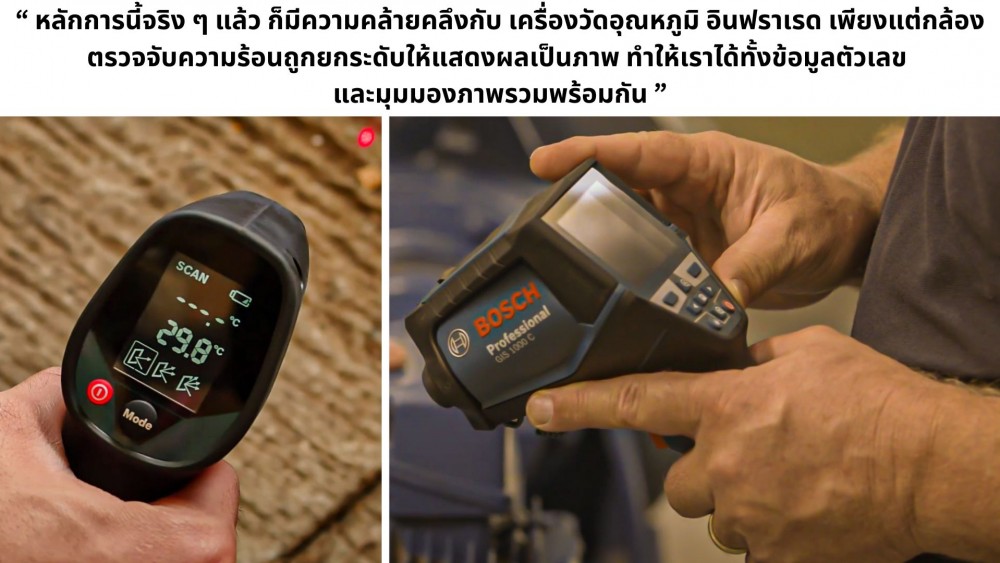
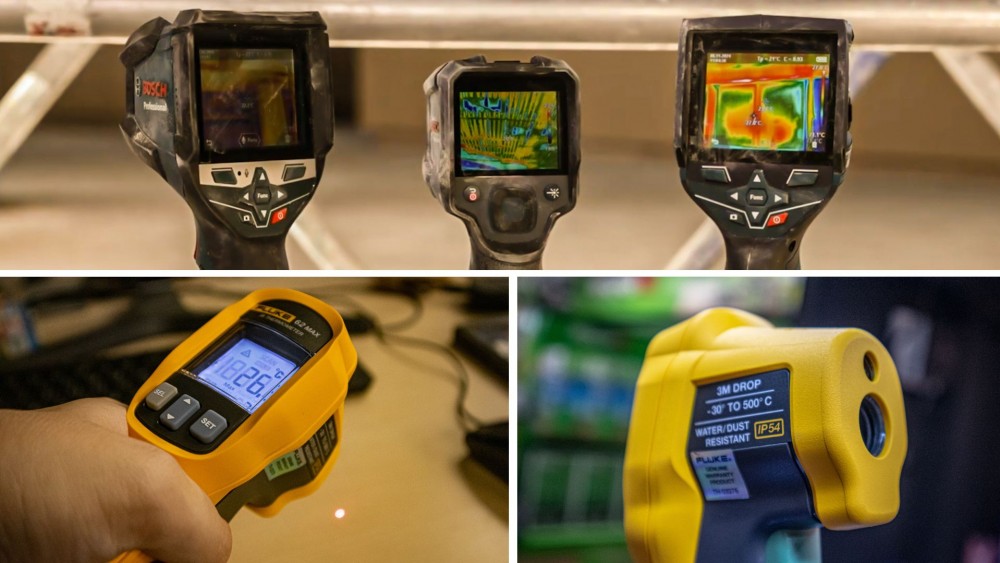
A thermal imaging camera, or Thermal Imager, is a device that can do much more than simply read a temperature. It converts heat into an "image" by using infrared sensors to detect the thermal radiation emitted by all objects. Its internal system then processes and displays this as a colored image or varying shades on the screen, allowing you to clearly see the temperature distribution across the area or object you are aiming at—instantly revealing which spots are extremely hot and which are cooler than their surroundings.
Examples of thermal camera applications
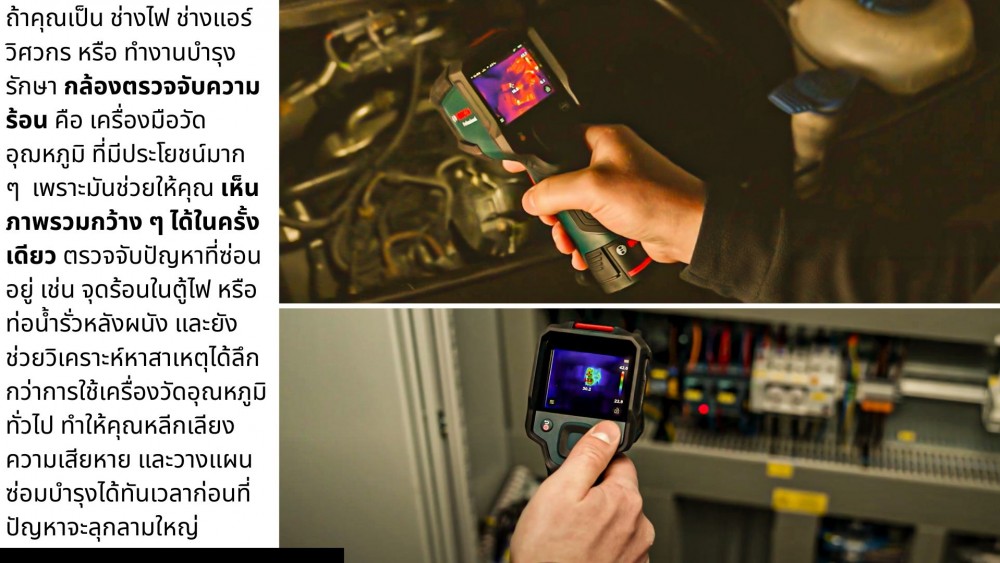
- Detecting leaks or degraded insulation in walls
- Inspecting electrical panels and machinery to detect heat buildup before problems occur
- Used in construction to detect leaks in water pipes or air conditioning ducts
- Used in search and rescue operations to locate people or animals in dark or smoke-filled areas
Key advantages of thermal imaging cameras
- Displays results as easy-to-understand color images
- Quickly inspects large areas without needing to measure point by point
- Ideal for professional work, engineering, construction, and maintenance tasks
Thermometer VS Thermal Imaging Camera
By now, you're probably starting to see the picture, right? Both thermometers and thermal imaging cameras have their own distinct strengths. One provides numbers, while the other provides images. However, many people might still wonder what key factors to consider when it comes to actual selection and use. When compared head-to-head, it becomes very clear that they are designed to meet completely different needs. So, let's take a look at what makes thermometers and thermal imaging cameras function differently.
1. Display Format
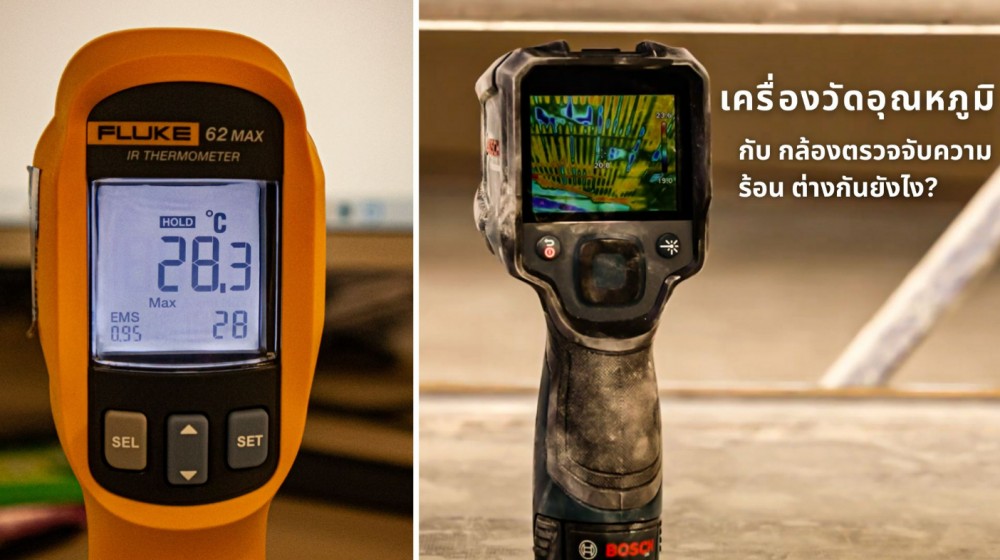
Thermometers usually display readings as clear numeric values, such as 37.5°C or 150°C, which helps us know the exact value and immediately compare it against standards. The advantage is its straightforwardness. However, the limitation is that we only see a single number for the specific spot being measured; we do not know what the surrounding temperature is like.
On the other hand, thermal imaging cameras display results as a thermal image by using "colors" instead of "numbers." This allows us to see different colors on the screen representing hot and cold temperatures, helping us understand the overall conditions quickly and detect anomalies much more easily.
2. Inspection Scope
A standard thermometer must measure point by point. For example, aiming infrared at a machine only gives you the reading for that specific spot. If the machine is large and has multiple inspection points, you have to measure each position one by one, which can be time-consuming and risks missing problematic spots. In contrast, a thermal imaging camera can capture an overview of a wide area all at once, providing more comprehensive inspection and detecting hidden anomalies—such as heat build-up hotspots in electrical panels or leaking water pipes behind walls—without the hassle of scanning point by point.
3. Practical Application
If you just want to know whether you have a fever and what the temperature is, or whether food has reached the desired cooking temperature, an infrared thermometer is more than enough. This tool provides clear, straightforward numbers and is easy to use for general daily life applications, whether for health monitoring or cooking.
Don't forget to check the measurable temperature range! A thermometer designed for industrial machinery might not be able to measure temperatures below 50 degrees Celsius. Therefore, using it to measure human body temperature definitely won't work. Which digital thermometer should technicians choose?
Why is there such a big price difference?
In terms of price, thermometers are available starting from just a few hundred THB up to several thousand THB for dust- and water-resistant models. For use as a basic measurement tool in industrial applications, this budget is considered very accessible and comfortable.
However, thermal imaging cameras are much more expensive, typically starting from tens of thousands up to hundreds of thousands of THB. The price depends on image resolution, temperature measurement range, and additional functions such as Wi-Fi connectivity, video recording, or data transmission to digital, online, or cloud systems.
Therefore, thermal imaging cameras are more suitable for those who need them for serious work in engineering, maintenance, and construction.
Can a thermal imaging camera be used as a thermometer?
If you ask whether having a thermal imaging camera means you can completely replace a thermometer, the answer is: Thermal imaging cameras can also provide temperature data in numeric values.
The difference is that they focus more on displaying an overall visual image and capturing heat distribution, whereas general thermometers still hold advantages in being easier to use, offering point-specific accuracy, and having a more accessible price. Therefore, even though their functions overlap, the choice still depends on the user's context and objectives. While these two tools can substitute for each other to some extent, I believe they may not be suitable for every situation. It is better to choose based on your context and primary requirements.
Which One is Right for You?
After diving deep into the differences in operation, measurement range, and price, we come to the crucial question that most people want to know. Between a thermometer and a thermal imaging camera, which one fits your application better?
- For general users and industrial applications requiring numerical data A thermometer is the answer: easy to use, affordable, portable, and fulfills everyday needs.
- Technical or engineering work You might consider a thermal imaging camera. Even though it's much more expensive, it helps you work more accurately, faster, with fewer errors, and in a more professional manner.
- Want to use both? That works as well. Many companies choose to use standard thermometers—both infrared and contact types—for initial inspections, and keep a thermal imaging camera for cases requiring greater detail.
Conclusion
Although thermometers and thermal imaging cameras share the common purpose of inspecting temperature or heat, their capabilities and objectives are distinctly different. Thermometers are suitable for spot measurements focusing on numerical values, while thermal imaging cameras are ideal for professional work requiring an overview of heat across an area or object, used for analysis, prevention, and maintenance.
Therefore, the question "Which one is right for you?" depends on your intended application. For daily routine tasks, choose a thermometer. But for professional work requiring precision and a comprehensive overview, a thermal imaging camera can elevate your work through clear visual insight.
Therefore, whether you choose Moisture Meter or a thermal imaging camera, the answer lies in your budget, your application, and the format of data you need.