


 EN
 ไทย


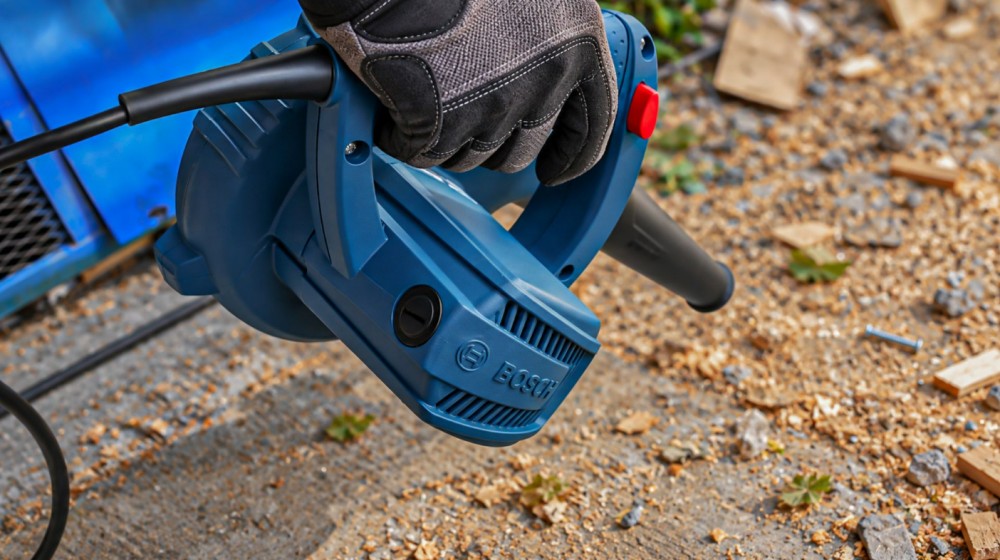
Customers Also Purchased


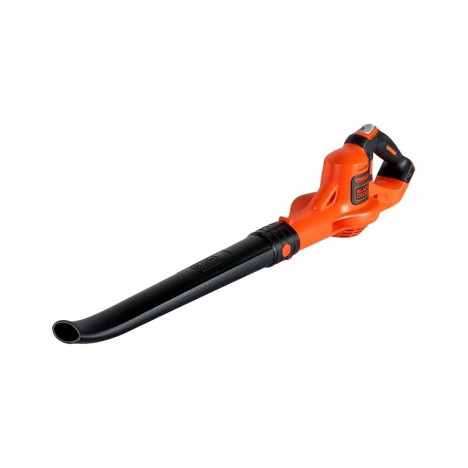

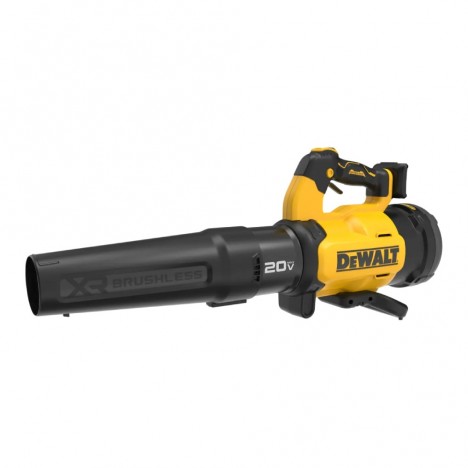
Have you ever noticed that when using a Blowers blower to clean off a workbench or floor after woodworking, some types of dust blow away almost instantly, while other debris barely moves—even when using the same tool, at the same power setting, and standing roughly the same distance away?
Sometimes, a large pile of sawdust seems easier to blow away than tiny metal shavings, while dry leaves blow far away, but wet leaves stick to the ground as if the airflow lacks power. This doesn't mean the blower has inconsistent power, but rather that the airflow must overcome the differing properties of each material—whether weight, shape, wind-catching surface area, friction, or the surface condition on which the debris rests.
Therefore, saying a blower model is "powerful" or "blows well" might not be enough without knowing what you intend to blow. Blowing fine dust, sawdust, grass clippings, or metal chips from a workbench all involve different conditions. Some tasks require high air speed to dislodge debris from crevices, while others require high air volume to sweep away large amounts of debris at once. Understanding this can help you choose and use a blower that better fits the job.
Blowers Don't Push Debris with "Airflow" Alone
When seeing dust or debris moved by an airflow, we might simply explain it as "strong airflow moves it, weak airflow doesn't." In reality, what happens simultaneously is that the airflow creates a pushing force on the debris while other forces resist it. Is a Bigger Blower Really Stronger? What Should You Look At?
Debris has weight, friction between the debris and the floor, and in some cases, adhesion from moisture, oil, or static electricity. If the force from the airflow is strong enough to overcome these resisting forces, the debris will move, roll, slide, or lift off the ground. But if the airflow isn't strong enough, the debris may stay put, even if the air coming out of the nozzle feels extremely powerful.
When testing two blower models, one might feel more powerful, but in actual use, the results may not differ much for certain tasks. What matters isn't just the feeling of power at the nozzle tip, but the force that remains once the airflow reaches the debris, and whether that force is sufficient to overcome the material's resistance.
More Weight Means the Blower Needs More Power, Right?
Generally, debris with greater mass requires more force from the blower to move. However, "heavier debris is harder to blow" isn't a rule that applies directly in every case, because shape and surface contact also have a clear impact.
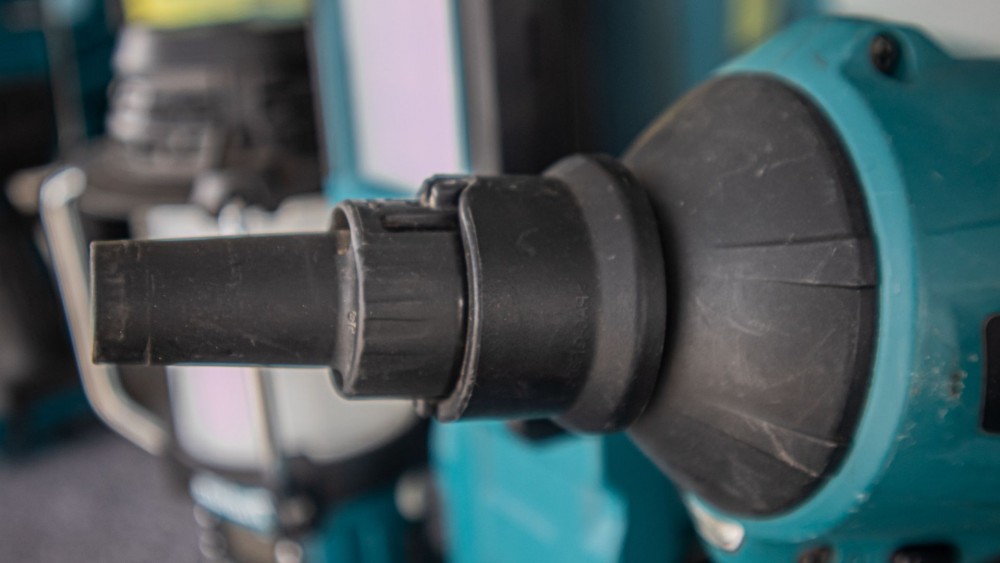
Heavy Debris Doesn't Always Mean It's Hard to Blow
Consider comparing a small nut to a thin piece of rubber sheet. The nut may be heavier, but if it sits on a smooth floor and has a shape that rolls, air hitting its side can get it rolling more easily than you might think. Meanwhile, the lighter rubber sheet sits flat against the floor, creating a large contact area of friction that makes it difficult to slide away.
Friction: The Variable Many Overlook
Even with the same type of debris, the same weight, and the same blower, the results can be vastly different when the surface changes.
Try placing sawdust or plastic chips on a smooth tile floor and compare that to rough concrete. On a smooth surface, debris slides or rolls easily because there are few snag points or rough textures. But on concrete, some pieces get caught in tiny pits or rough crevices.
When you turn on the blower and direct the airflow, part of the force is spent overcoming friction and catching on the surface before the debris even begins to move.
Rough surfaces can make a blower feel like it has lost power.
In many situations, the blower hasn't lost power; rather, the debris is encountering higher resistance. A clear example is blowing wood chips on a rough factory floor: you may need to hold the nozzle closer or adjust the angle so the airflow is nearly parallel to the floor, generating the force needed to slide the debris along the surface instead of blowing down from above.
On the other hand, on smooth surfaces such as epoxy floors, tiles, or metal sheets, a lot of debris can be moved with noticeably lower airflow. This is why testing a blower in a store on a smooth floor can feel quite different from actual use on a construction site or outdoors.
The shape of debris also affects blower performance.
Another key variable is the surface area where the airflow impacts the debris. Materials with a large surface area but light weight are generally easier to blow away than small, dense objects with minimal surface area.
The simplest example is a sheet of paper compared to a small steel ball. The paper may weigh more than many specks of dust combined, but because of its large surface area, the airflow generates high pushing or lifting force against it, causing it to blow away easily. In contrast, small spherical metal pellets may catch very little force from the wind relative to their mass.
Flat, round, and stringy debris respond differently to airflow.
Thin, flat debris, such as: Leaves, paper scraps, or plastic sheets catches a lot of airflow. If the angle of the wind is right, the air can slip underneath and create lift, raising it off the ground. Once off the surface, friction is virtually eliminated, making blowing much easier.
Spherical or cylindrical debris, such as plastic pellets, round metal scraps, or screws, may not lift easily but can roll along the ground. Meanwhile, fibrous or stringy debris, such as wire scraps, grass clippings, or long wood shavings, can tangle together or catch on the floor, making their behavior harder to predict.
Therefore, materials that appear to have similar weights can respond to a blower in completely different ways.
Why is some fine dust hard to clear with a blower, even though it's very light?
Many people might think that the lighter the dust, the easier it is to blow away with a blower. However, some types of fine dust adhere more tightly to surfaces. One reason is that the particles are so small they settle into grooves or pores on the surface. Additionally, some dust can adhere due to moisture, oily residue, or static electricity.
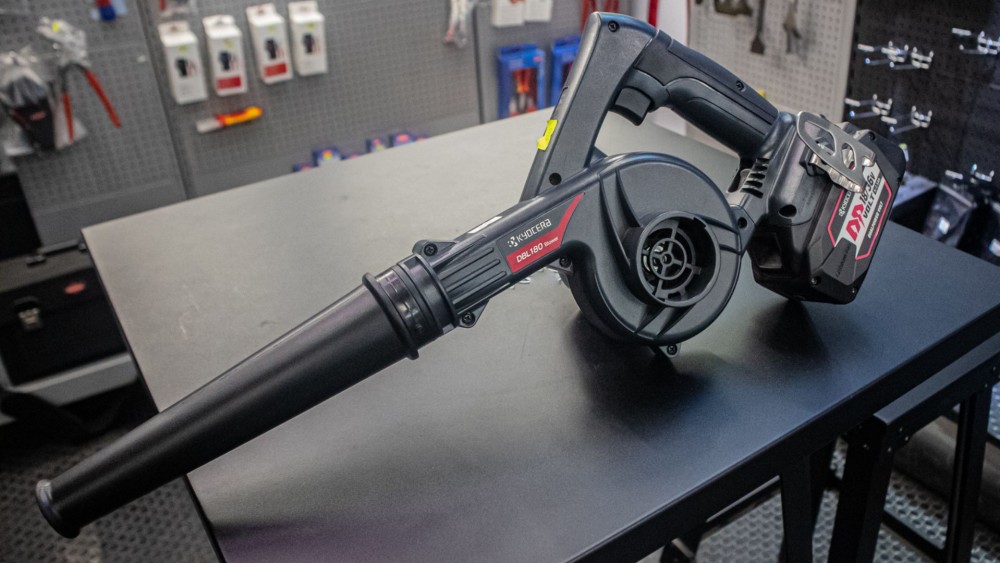
Consider wood dust on a dry, smooth surface, which blows away very easily, compared to dust clinging to an oily surface around machinery. Even if the dust is equally light, the oil residue acts as a binder holding it down. Increasing the airflow may dislodge some of it, but it won't leave the surface as clean as wiping or vacuuming would.
In this case, the issue isn't that the blower lacks power, but that the adhesive force between the dust and the surface plays a greater role. Why are blowers not suitable for fine dust? What should you do if you really need to use one?
Distance from the blower nozzle changes the airflow force.
The airflow exiting the nozzle does not maintain the same speed and intensity over distance. As it moves further from the nozzle tip, the air disperses and mixes with the surrounding air, reducing the airspeed at the target.
Easily movable debris, like light dust or dry leaves, can still be blown away from a distance, but debris with high friction or heavier weight may require you to get closer to the nozzle. However, holding it as close as possible isn't the answer for every job because the airflow coverage area becomes smaller, requiring multiple sweeping passes. For large amounts of debris, stepping back slightly to allow the airflow to spread wider may get the job done faster.
Blower Angle Matters Just as Much as Blowing Force
If you want to clear debris off the floor, pointing the nozzle straight down from above might not be the most effective, because part of the force presses the debris against the floor instead of pushing it forward. Angling the nozzle along the floor creates force in a direction that helps debris slide or roll away much better. Moreover, in the case of thin sheet debris, the airflow can get underneath the material and help lift it off the surface.
Sometimes, just changing the angle of the blower without increasing the speed makes a clearly noticeable difference, especially on rough surfaces or when dealing with leaves or paper scraps.
Sawdust is easy to blow, but metal shavings from drilling can be tough
Most sawdust has low density, is lightweight, and has a large surface area exposed to the wind. When an airflow passes over it, it moves easily, especially when dry. On the other hand, metal shavings from drilling or milling have a higher density. Even though they are small, their mass per size is relatively high, so they require more force to move.
Metal shavings can also have sharp, spiral shapes or catch onto worktable surfaces and workpieces. Using a powerful blower therefore doesn't necessarily mean clearing them all away. In some jobs, blowing metal shavings can also cause them to fly toward operators or into unintended areas, so safety must be taken into account as well. Clarifying the doubt: Why shouldn't blowers be used near flammable materials?
Before choosing a blower, you should ask: What will be the main material blown?
If you plan to use it for dust, sawdust, or light workshop debris on a workbench, a moderately sized tool may be sufficient. But if you want to blow leaves over a wide area, clear large amounts of debris, or clean factory floors, air volume and continuous runtime become much more important.
Therefore, when blowing debris that is heavy or has high friction, you should look at both Airspeed, nozzle profile, and airflow sustain capability in actual operation, without judging by any single number alone.
Different tasks thus require different blowers, even if they are collectively referred to as "cleaning and blowing" jobs all the same.
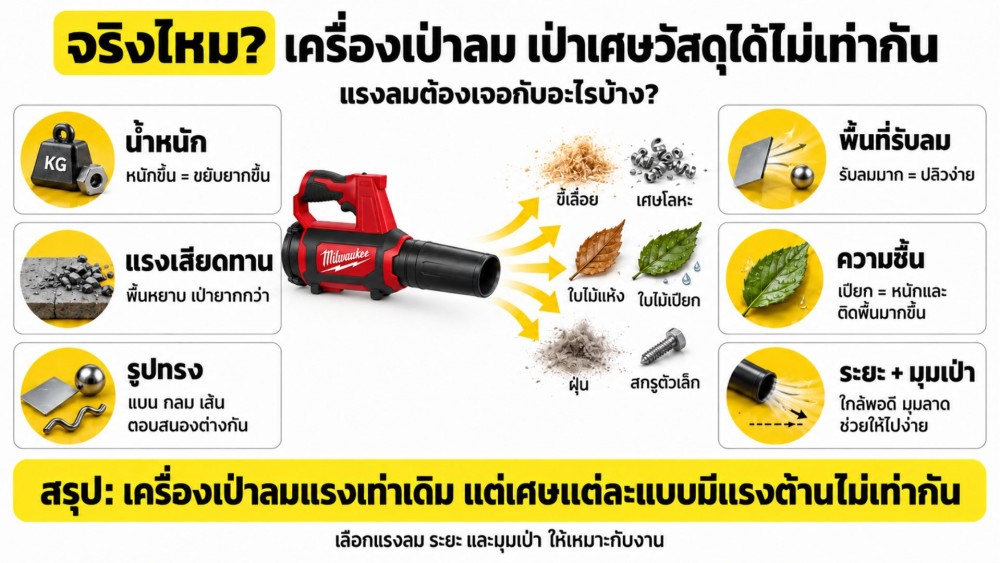
Conclusion: It is true that blowers do not blow all debris equally
That's right. And the reason doesn't lie solely with the blower. What determines whether debris moves or not is the contest between the force of the airflow and the resistance of the material—which includes weight, friction, shape, surface area exposed to wind, moisture, and surface conditions.
Light and fluffy sawdust can blow away easily; small but dense metal shavings might require more force. Dry leaves can blow far away, while wet leaves stick firmly to the ground. Thin, flat debris can lift off when hit by wind from the right angle, whereas spherical debris might roll around instead of becoming airborne.
Therefore, if a blower cleans dust well but seems ineffective on another type of debris, it doesn't mean the tool is faulty; it's simply because each type of debris has different "resistance."
Ultimately, using a Blowers effectively is not just about cranking it to maximum power. It's about selecting the right airflow force, distance, nozzle angle, and sweeping pattern suitable for the material in front of you—especially its weight, friction, and shape.