


 EN
 ไทย


Customers Also Purchased


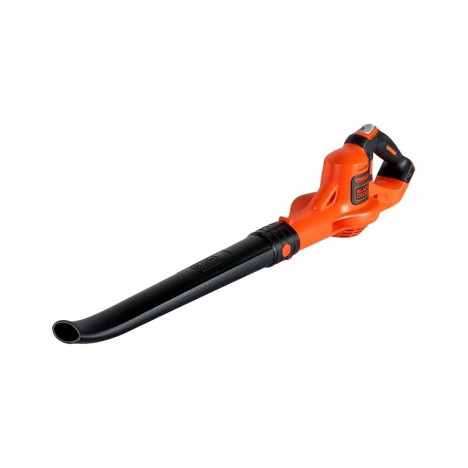

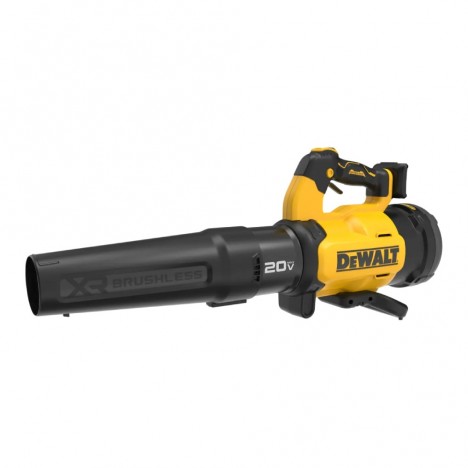
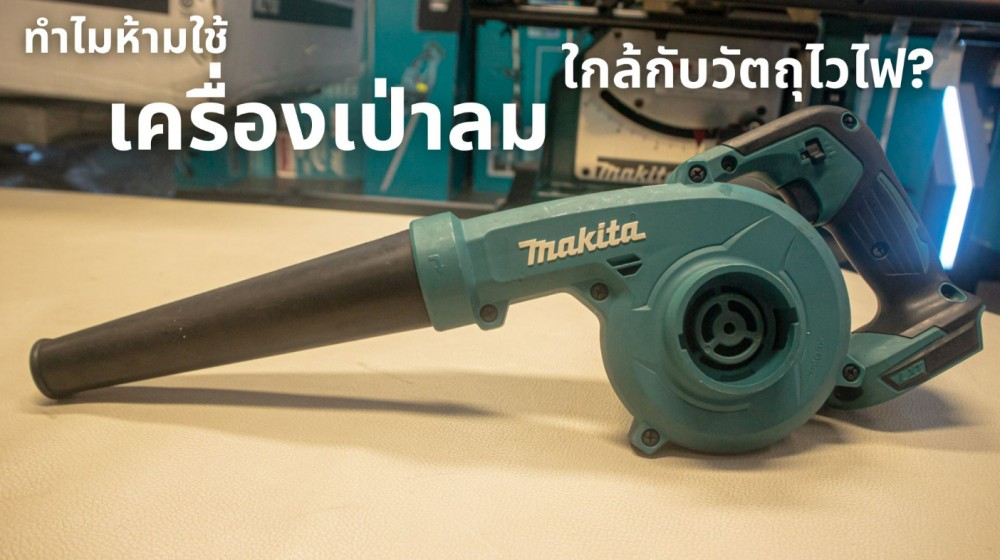
When it comes to Blowers Many people might think of it as a power tool handy for almost any situation—from blowing dust out of tight corners, clearing wood shavings off workbenches, removing sawdust from machinery, to clearing metal debris after grinding, or sometimes just simply using it to dry things off faster after washing or getting wet. I personally admit that I used to be one of those who didn't think much of this tool, simply assuming, "It's just air, how dangerous could it be?"
Once I got to know blowers better, I began to realize that this seemingly harmless tool—if used in the wrong place, at the wrong time, or in an unsuitable environment, especially near flammable materials—can unwittingly become the source of serious accidents. What is most terrifying is that it often happens without warning.
That is why, in this article, we will find out together: Why is there always a warning never to use a blower near flammable materials? Even though at first glance a blower doesn't show obvious sparks like a cutoff machine or grinder, and has no flying sparks to make you wary, the real reason why this tool is classified as a hazard lies in the little details around us more than you might think. Let me walk you through it.
Does a blower really just blow air?
Know before you choose: the working principle of air blowers that makes them so versatile A blower is a versatile power tool, sometimes even used in place of a vacuum cleaner. But what we might overlook is that its internal mechanism is not just an ordinary fan, but an electric motor spinning at extremely high speeds to generate a high volume of air in a short period.
A blower is not just a powerful fan.
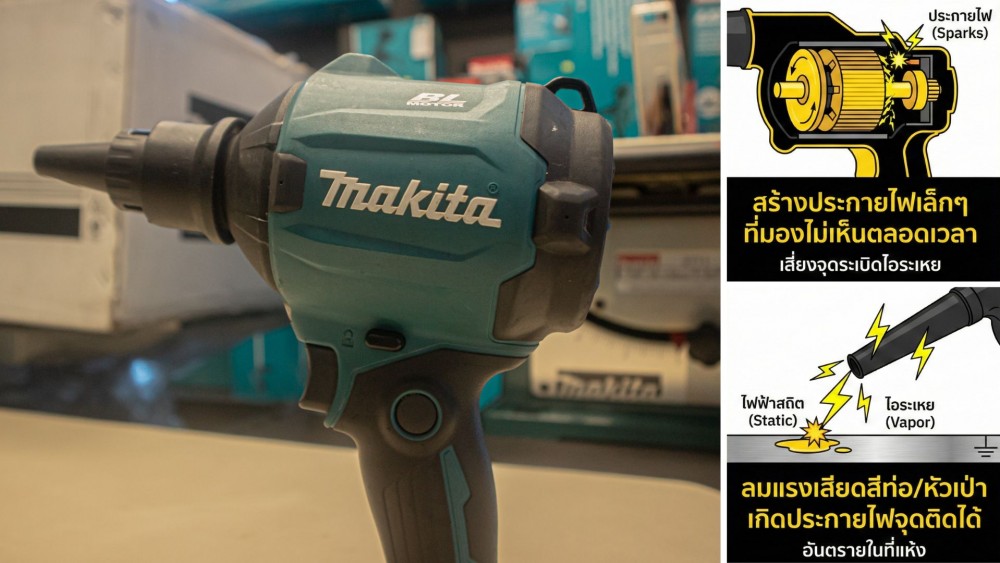
Technically, many blowers use brushed motors. During operation, the carbon brushes constantly rub against the commutator, which theoretically can generate tiny sparks inside the motor even if they are not visible from the outside. This is where the risk begins—one that many people never think about.
What should be understood about the construction of blowers, whether brushed or brushless, is that they are designed to operate at high RPMs and deliver continuous power. And this is one of the reasons why: Why blowers weighing under 2 kg can blow with surprising power which is completely different from ordinary household fans.
- The motor spins at high RPM to generate a large volume of air.
- Internal electrical components can generate sparks within the unit.
- Heat accumulates during continuous use.
- Not designed for use in environments with flammable vapors.
Familiarity with tools is where carelessness begins
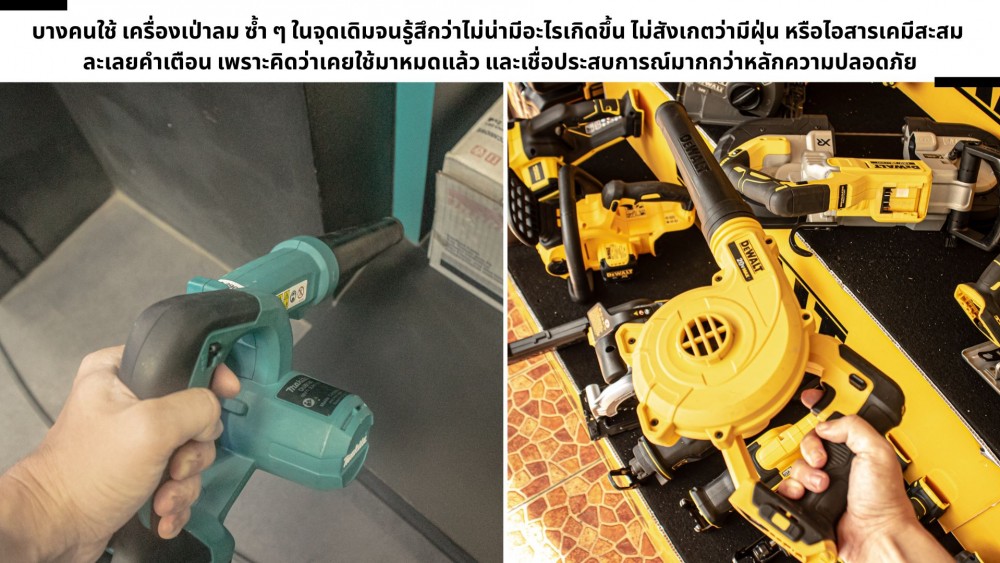
And if you think, "Nothing has ever happened, I've used it for a long time," always remember that many accidents don't happen on day one, but when we become overly comfortable with the tool. Familiarity makes us stop questioning our surrounding environment and start overlooking small warning signs—and that's precisely what can lead to disaster.
Flammable materials when using a blower: closer than you think?
When talking about flammable materials, we might picture gasoline, benzene, thinner, or gas, which look obviously hazardous at first glance. But in reality, there are far more flammable substances than that, and many are things we use every day until we're so used to them that we don't realize the hidden risks.
Some items may seem ordinary, without strong odors or alarming appearances, but in the right conditions, they can become a source of ignition much more easily than many realize.
Harmless-looking items that ignite easily
Wood powder, sawdust, fine wood dust This is a classic example commonly seen in woodworking. Sometimes we use a blower to clear sawdust off tables, floors, or machinery, without realizing that wood dust dispersed in the air is extremely flammable. If there is even the slightest ignition source, it can flash into flames instantly.
Additionally, there is metal dust, such as aluminum or magnesium, which in fine powder form ignites much more easily than most people think. Using a blower to disperse this dust is effectively spreading fuel into the air.
Invisible vapors
Another equally dangerous hazard is vapors from chemicals like thinners, paints, oils, or various aerosol sprays. These vapors are invisible, linger in the air, and are highly flammable. A blower can disperse these vapors over a wide area, and if there is an ignition source anywhere nearby, the fire hazard can escalate very rapidly.
Strong airflow spreads risk rather than reducing it
Many people think, "Just blow it away so it doesn't accumulate." Sounds logical, doesn't it? We might feel that dispersing dust or vapors so they don't gather in one spot reduces the danger.
In reality, the strong airflow from a blower acts like a catalyst that spreads the risk over a wider area and makes it harder to control. This is where many people are completely mistaken, and it's often the root cause of sudden, unexpected accidents.
1. From a Small Spot to a Hazardous Area
If flammable dust or vapors are gathered in small piles, the risk may be limited to that specific spot. However, using a blower to disperse them creates an optimal air-fuel mixture for ignition, which is considered the most hazardous condition in safety terms.
Just imagine: simply turning on a blower in a small workshop where thinner vapors linger, and in less than a minute, a flash fire ignites—even though no one is welding or grinding anything.
2. Strong Air and Fire: Blowing Doesn't Put It Out
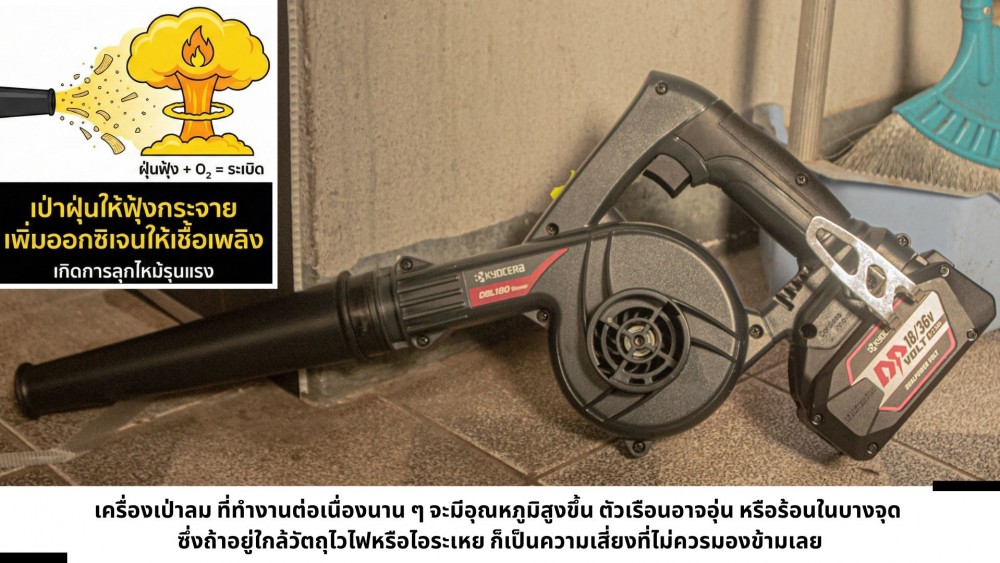
In physics, airflow plays a crucial role in feeding oxygen into the combustion process. The stronger the wind, the more oxygen is supplied to the flames, making the fire burn faster, hotter, and harder to control. A blower does not just disperse fuel into the air; it also acts as an accelerator, causing combustion to expand and spread rapidly in an instant.
3. Invisible Yet Very Real Sparks
Many may argue that "blowers don't emit sparks outside the housing," which is true to some extent. However, the real danger lies in internal sparks that we cannot see. As mentioned earlier, brushed motors can produce tiny internal sparks during operation.
Blowing strong air can also generate static electricity, especially in dry or dusty environments. Even a tiny static spark is enough to ignite certain flammable substances.
4. Changed Environment, Changed Risk
Same job, same place, but on a different day, the risk may not be the same. Using a blower on a day when painting is being done, solvents or oils are in use, or there is an unusually high buildup of dust can turn a safe situation into a hazardous one instantly.
What Precautions to Take When Using a Blower
I am not saying that blowers are inherently hazardous tools that should never be used or strictly avoided, because they remain extremely useful tools for many tasks.
But if you ask, How to Use a Blower Safely? The key is understanding its operational limitations. Use a blower in the right context and right situation, and clearly know which environments to avoid, so that the convenience it offers does not turn into an unseen risk.
Inspect the Area Before Using a Blower
Before turning on a blower, I recommend pausing for a moment to inspect your surroundings. Look closely to see if there are any flammable liquids, chemical vapors, or accumulated dust, as these hazards are not always immediately obvious.
If hazards are present, address them using other methods first—such as sweeping, vacuuming, or letting vapors dissipate naturally—to make the area safer before deciding to use a blower.
Avoid Using Blowers in Enclosed Spaces
Poorly ventilated enclosed spaces are among the top hazards that many overlook. Although they may seem small and easy to control, using a blower in such an environment quickly builds up a dense concentration of flammable vapors or fine dust, dramatically increasing the risk of unexpected incidents before you even realize it.
Use the Blower Appropriately for the Job
In some situations, opting for an industrial vacuum cleaner specifically designed for flammable dust or particulate matter can be a much safer alternative to using a blower. Even though it might take longer, seem more complicated, and feel less convenient, the safety you gain is always worth it compared to the potential risks.
Conclusion
After reviewing all these reasons, I would like you to see blowers in a new light. They are not just simple dust-blowing tools or compact, powerful fans, but power tools with enough force to turn their surrounding environment into a hazardous area in less than a minute.
Therefore, the warning that says "Do not use blowers near flammable materials" is not an exaggeration or irrational fear. It is a reasonable warning rooted in real-world lessons from past mistakes. And I believe no one wants to learn safety lessons from their own accidents or those of people close to them.
If given the choice, I'd rather we "know first" and "be careful first" before picking up Blowers a blower to use, because the damage from a single fire can cost far more than the price of the entire tool kit combined.