


 EN
 ไทย


Customers Also Purchased


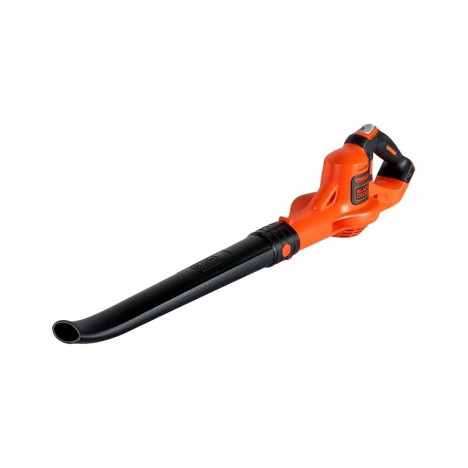

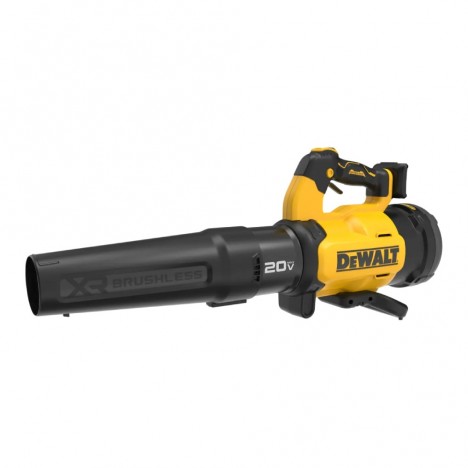
Whenever I walk into a tool shop or browse through various online platforms, another product category that raises the most questions is probably Blowers blowers, a power tool that intrigued me from the very first time I saw it. It looks simple enough to use, yet it comes in so many shapes and sizes that, as a beginner back then, I was quite confused. It felt like an item you couldn't pick without specialized knowledge, or one of those "choose wrong, waste money" products, even though back then I thought a blower should be straightforward and uncomplicated.
Blowers come in both large and small sizes. It's not surprising that anyone walking in and taking a superficial look would think, "A bigger machine must definitely be more powerful." But in reality, size and shape don't seem to determine whether it will be heavy, light, or powerful. I once picked up a rugged-looking model thinking it would blow air with satisfying force, but my first "wait a minute" moment was that it was much lighter than expected. The second "wait a minute" was when I actually tested it: it felt weaker than an even smaller machine.
So what should we look at instead? What does the machine's size really tell us? And what factors actually indicate whether a blower is "powerful" or "weak"?
In this article, I'll dive deep into what you should really focus on when buying a blower. Whether you're using it at home, in an auto repair shop, for heavy industrial work, or for blowing leaves on the lawn, reading this will ensure you choose with greater confidence and get long-term value.
Does a bigger blower equal more power? Fact or misconception?
"If the machine is bigger, the motor must be bigger, and the airflow must be stronger." That sounds logical, but in reality, it's not always the case, because choosing a blower for use involves severalfactors, and the airflow produced by a blower depends on far more factors than just its visible exterior size. These factors include wattage (W) or voltage (V), rotation speed (RPM), impeller design, airflow direction, and even the design of the blower nozzle.

What determines whether a blower is "powerful or not"?
Many people might think that when choosing a blower, you should judge by its external size or pick one that looks powerful. But in fact, there are several things that affect airflow performance far more than just size. In this section, I will explain the various factors used to choose a blower. Let's see what these factors are.
1. Wattage (Watt)
The electrical power consumed by a blower is one of the specifications many people look for. While wattage may not directly dictate blowing force, it determines how much power the motor can generate to drive the impeller. However, I must add that high wattage does not guarantee high airflow. It also depends on the internal design of the machine; for instance, some models draw high wattage but lose more energy to heat rather than airflow, resulting in suboptimal blowing performance.
2. Voltage (Volt) in cordless models
For cordless blowers, the battery voltage (Volt) directly affects the power the tool can output as well. The higher the voltage, the more powerfully the motor can operate, maintaining consistent RPM effectively. However, this comes at the cost of heavier battery weight. For instance, an 18V model might be lighter and suitable for light-duty jobs, while a 36V or 40V model delivers greater blowing force, suited for heavier and more continuous work.
3. Motor Speed (RPM)
This is what directly indicates how powerfully a blower can discharge air, because higher motor RPM means the impeller rotates faster, allowing air to be compressed and blown out with greater force. However, be cautious that excessively high RPM causes the tool to heat up quickly and shortens its service life.
4. Air Volume (Air Flow)
The common units you will encounter are CFM (cubic feet per minute) or m³/min (cubic meters per minute). To put it simply, it tells you how much air volume the machine can deliver in 1 minute. A higher CFM or m³/min means a larger volume of airflow, which affects both blowing power and wide-area coverage.
5. Air Speed
The units typically used are km/h or m/s, indicating the true velocity of the expelled air. A higher air speed translates to better blowing force, even if the tool is not particularly large.
6. Structure and Design
Beyond raw specifications like wattage, motor RPM, or air volume and speed ratings, an aspect many people overlook is the tool's internal design, because Impeller structure that is well-balanced ensures that air is compressed and discharged efficiently without losing power to vibration.
At the same time, cooling system also affects performance. If the tool dissipates heat effectively, the motor can run continuously for longer periods without power drops midway, while also extending its operating lifespan.
Some blower models also feature Additional Functions such as multi-directional airflow adjustments or a vacuum mode, making them more versatile rather than limited strictly to blowing. These small details are precisely what make blowers—whether smaller, larger, or similar in size—differ distinctly in quality and user experience.
Which blowers are most commonly misunderstood?
When choosing a blower, external appearance or price can often easily mislead our decision.
Sometimes we assume bigger means more powerful, cheaper means better value, or seeing a compact size makes us hesitant. All of these are misconceptions, and this is why we should clarify which types of tools confuse users the most.
Large unit, but lacking in power
Sometimes manufacturers design tools for prolonged continuous use rather than extreme blowing force. Because of this, the tool may look large, but in actual use it provides only moderate airflow and cannot handle high-demand tasks or heavy debris as expected. This scenario stems from the misconception that size is everything.
In reality, internal structural factors and engineering design matter far more than mere tool size.
Small tool, but punches above its weight
Many cordless blowers, despite their compact size, utilize brushless motor technology that produces surprisingly powerful airflow—often rivaling or outperforming much larger machines. Many users are surprised at how easily these compact units handle thick layers of dust or large wood shavings beyond expectations.
This is a clear example showing that size is not the only factor in determining how well a blower performs.
Cheap tools that look large
Sometimes budget-friendly tools are designed to look rugged and bulky, but in actual use, they feature standard impellers and low-RPM motors. While functional, the resulting blowing force cannot compete with much smaller units. Moreover, some smaller machines even come with higher-capacity batteries and deliver higher RPMs.
So, what should you look for when choosing a blower?

If you only need it for general dust blowing—such as cleaning around the house or blowing out computers—a moderate Air Flow rating in CFM or m³/min is sufficient. However, for heavy-duty applications like auto repair shops or construction sites—especially over wide areas or with large debris—this value should be as high as possible so the airflow disperses thoroughly and cleans faster.
If you need intense blowing force—picture blowing wood chips, metal shavings, or thick dust across large spaces—look at Air Speed. A higher number will make the job much easier, especially for tasks requiring a spotless clean, such as factory floors, warehouse floors, or expansive yards scattered with heavy debris.
Blowers VS Leaf Blowers
I believe many people might get confused about this. What is the real difference between a general blower and a leaf blower? Can they be used interchangeably? The simple answer is: Blowers are designed to blow dust, wood chips, particles, or for use in auto garages, workshops, and household chores. Meanwhile, Leaf Blowers & Vacuums Leaf blowers focus on a wider spread of airflow to move leaves or grass clippings across lawns and expansive outdoor areas. They are rarely used in mechanical or workshop trades; instead, they are aimed at agricultural, garden, or landscaping work that requires handling large piles of leaves and cut grass.
If you need to blow dust off workbenches or machinery, a workshop blower is the better choice. But if you are clearing a lawn, a leaf blower is the right answer. Therefore, before buying, ask yourself what kind of work you will be doing to avoid confusion and choosing the wrong type.

Conclusion: A bigger blower does not always mean a more powerful one
In simple summary, when choosing to buy a blower, don't just look at the machine's size. Instead, consider Air Flow, Air Speed, wattage, and motor speed altogether, along with the machine's design and materials.
Some small blowers blow with surprising power, while some large units may not be as strong as you think. Therefore, it is better to choose one that fits the job.
Choosing Blowers Don't just choose by appearance; you need to know what you will use it for and choose specifications that match the task. This way, you get the best value and better performance.