


 EN
 ไทย


Customers Also Purchased
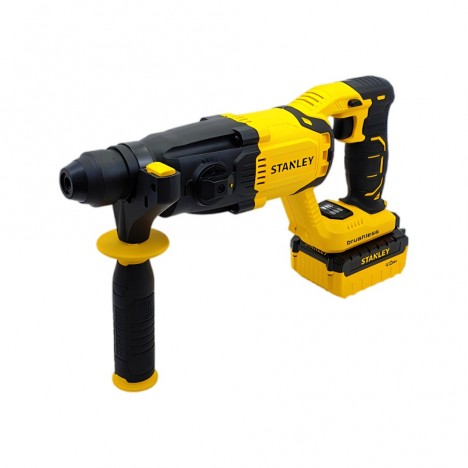
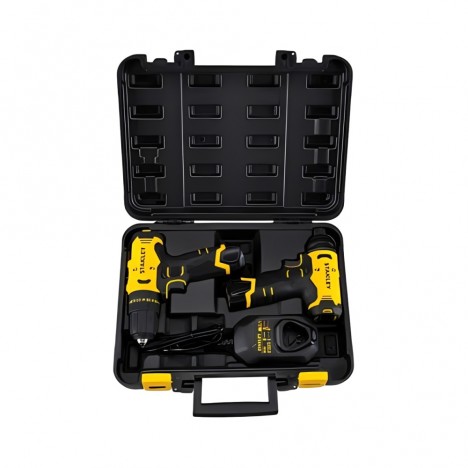
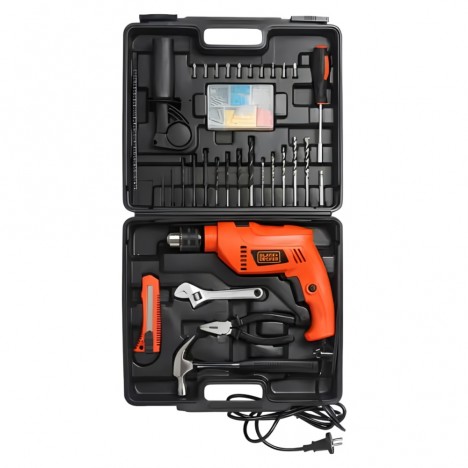


Speaking of Electric drills For corded models, the very first advantage that easily comes to mind is probably "continuous use." As long as there is power supplied, it's no surprise that installation work, maintenance tasks, or continuous drilling in areas with available electrical outlets still widely favor corded drills, especially for jobs that require running the tool for long periods.
However, the advantage of "never running out of battery" can also lead to another misunderstanding: since it's plugged in all the time, an electric drill should be able to run continuously without stopping. In reality, that might not be the case, and it is one of the misuses of corded electric drills that many people commit from the very first day of purchase.
Even though power from the wall outlet won't run out, the internal components of the electric drill itself still have heat limitations. And in some situations, a corded electric drill is even more prone to heat buildup during continuous use because there are no natural pauses for swapping or recharging batteries.
An electric drill never runs out of battery, so why shouldn't it be used continuously for a long time?
It is true that the power outlet can constantly supply electricity to the drill, but when the motor converts electrical energy into rotational force,
- not 100% of the energy is converted into power at the chuck.
- A portion is lost as heat across the motor windings, carbon brushes, gear sets, bearings, and other internal components of the machine.
- When drilling just a few small holes, the generated heat may dissipate quickly enough that you barely notice it.
- During continuous use, heat is generated faster than the tool can dissipate it. As you keep going, the internal temperature gradually rises even though power is still flowing normally from the outlet.
A corded drill doesn't mean you can hold down the trigger indefinitely without paying attention to the temperature. What limits an electric drill's operating time may not be its power source, but rather the tool's own heat dissipation capability.
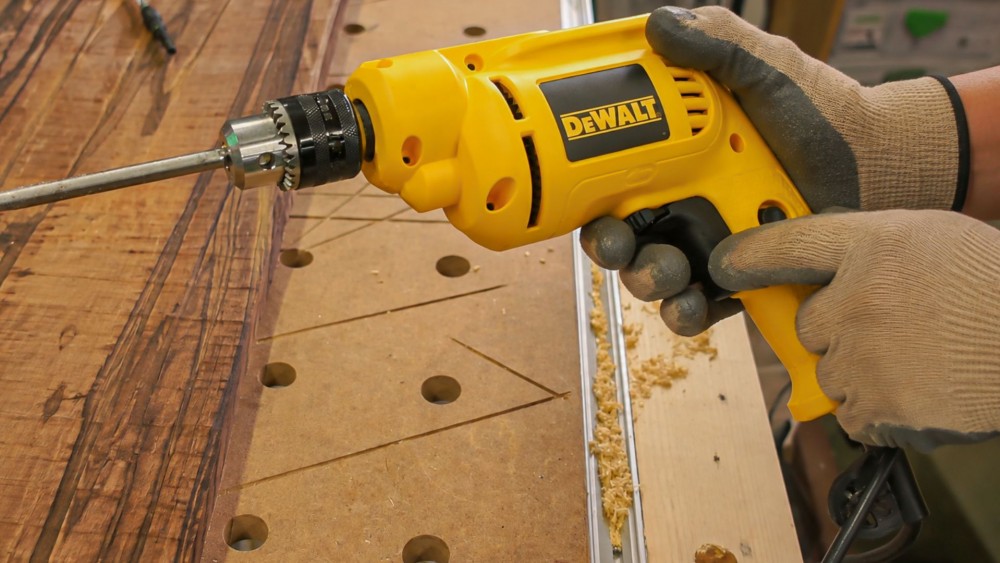
Corded drills have no battery swaps, leading to longer continuous work without realizing it.
- Cordless drills have natural pauses built into their use.
- When the battery runs low, you have to remove it, swap in a fresh one, or stop to recharge.
- During that time, the tool gets a chance to dissipate some of its heat.
- For a corded electric drill, if there are 50 or 100 holes waiting to be drilled, you can simply pick it up and keep drilling with virtually nothing forcing you to pause.
Therefore, you should Focus more on the tool itself rather than remaining power Because the corded drill may still spin normally, but internal heat is continuously accumulating. If you wait until there is a burning smell, a severe RPM drop, or the tool stops working, that might mean you have operated it well past the point where it should have been rested.
What Causes Corded Drills to Heat Up?
A corded drill getting warm during operation is normal to a certain extent. The motor and drivetrain naturally generate heat. Therefore, what you should focus on is not “whether the tool is hot or not,” but rather “is it heating up unusually fast, and what is causing it to get hot?”
High load causes the motor to draw heavy current
As soon as the drill bit contacts the workpiece, resistance increases. If it is a hard material, a large drill bit, or a dull bit, the resistance becomes even higher. The motor must generate more torque to maintain rotation, resulting in higher current flowing through the system and subsequent heat generation.
Easily noticeable signs are a strained motor sound, a noticeable drop in RPM, or needing to push the corded drill progressively harder to make the bit cut into the workpiece. If this happens continuously, not only will the job slow down, but the motor will also have to operate under heavier strain.
The more the RPM drops, the more heat may accumulate
Another common habit is that when the corded drill feels like it is slowing down, you might apply more pressure hoping to drill faster. However, the result may be the opposite. Excessive pressure overburdens the motor, causing RPM to decrease while heat continues to rise.
Most corded drill ventilation vents rely on the rotation of the motor and an internal fan to draw air through the tool. When the motor's RPM drops significantly, cooling efficiency decreases as well. This creates a situation where the motor is under a high load yet cannot dissipate heat as effectively as it should.
This is why using a drill correctly does not mean "pressing as hard as possible," but rather letting the bit cut the material at the proper RPM and feed pressure. If using the corded drill requires force to the point where the tool's sound noticeably changes constantly, that indicates it's time to re-evaluate your technique.
Where on a Corded Drill Is Getting Warm Considered Normal?
After working for a while, it is normal for the drill's motor housing or gear housing to become warm, especially on compact corded drills that have limited internal space for heat dissipation. However, we should distinguish between “warm from normal operation” and “unusually hot from overloading”
If the tool is warm but still comfortable to hold, the motor sounds normal, RPM does not drop abnormally, and there is no burning smell, it is generally not a major concern. But if the motor area heats up rapidly, smells like hot insulation or plastic, shows abnormal sparking through the vents, has fluctuating RPM, or makes unusual noises, stop using it immediately. Do not assume that just because it is plugged in, you can push through and force it to finish the job.
For electric drills using carbon brushes, when operated for extended periods, the carbon brushes and commutator are another source of heat buildup. If the carbon brushes are worn, the contact is poor, or excessive sparking occurs, heat and wear will also increase.
What Makes an Electric Drill Overheat Faster Than Usual?
An electric drill that heats up quickly is often caused by external conditions, such as using the wrong type of bit, dull bits, unsuitable speed settings, clogged air vents, or using a tool too small for the job.
A simple example is drilling metal with a large-diameter bit: if run at high RPMs and pushed continuously without coolant, the bit accumulates heat quickly, degrading the cutting edge. Once the bit dulls, more force is required, resulting in both the bit and drill overheating simultaneously.
In woodworking, using a large bit without clearing wood chips efficiently increases friction inside the hole, forcing the tool to work harder than necessary.
For electric drills used with wood, masonry, or in dusty environments, thick dust buildup over intake or exhaust vents restricts airflow across the motor, causing a drill that previously operated normally to overheat faster.
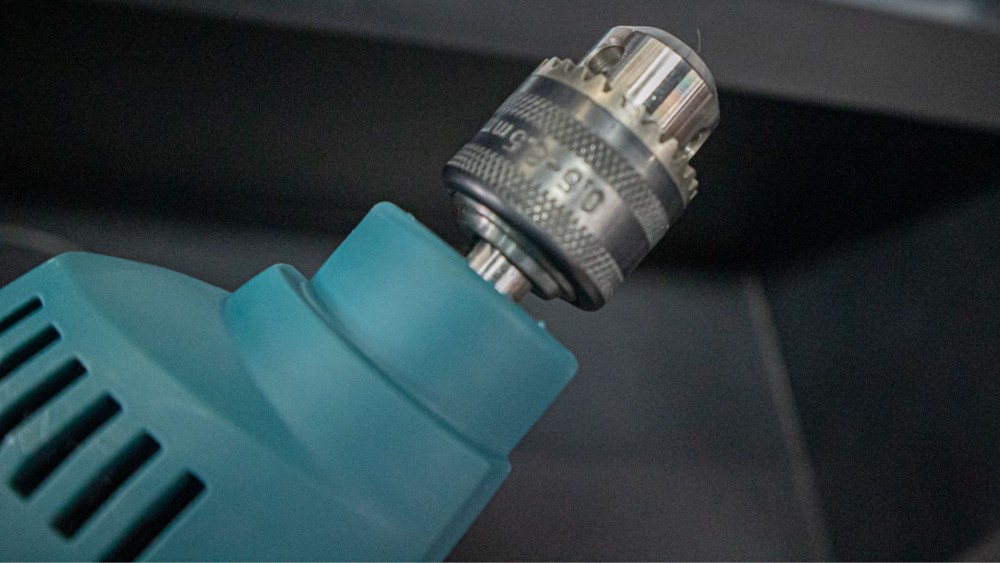
How Long Can You Run a Corded Electric Drill Continuously?
There is no single number that applies to all electric drills. The continuous run time depends on motor power, tool size, cooling system, operating load, ambient temperature, and manufacturer specifications. A compact drill intended for light installation work should not be operated in the same manner as a heavy-duty tool designed for continuous heavy drilling.
Instead of memorizing rules like "run for 10 minutes, rest for 5 minutes" or setting fixed numbers, the better approach is to: Read the manual for your specific model and observe the tool's actual behavior. If the tool begins to heat up faster than usual, drops RPMs, changes motor pitch, or requires more downward force, stop to identify the cause first.
For high-volume tasks, such as drilling dozens or hundreds of holes, breaking the job into intervals is better than running the tool continuously until finished. This also provides opportunities to inspect the drill bit, clear away debris, and verify that the vents remain unobstructed.
How to Use a Corded Electric Drill Without Overheating
- Match the drill bit to the material: Use wood bits for wood, metal bits for metal, and masonry/concrete bits with the appropriate tool and hammer mode settings.
- Do not block the ventilation slots: Hand positioning can inadvertently cover side or rear motor vents, especially on compact drills where vents are close to the handle. Check the vent locations, avoid blocking them with hands or materials, and periodically clean external dust buildup.
- Do not force the tool when the bit binds: A major source of severe motor overload is a stuck or binding bit. Continuing to squeeze the trigger when the chuck barely turns causes the motor to draw very high current, generating rapid heat buildup.
- When the drill bit starts binding, you should release the trigger, withdraw the bit, check for debris or jammed material, and then start again: Forcing the trigger in an attempt to push through the cut might save a few seconds, but it places an unnecessary load on the motor.
Does a higher-power tool run cooler?
Corded electric drills for heavy-duty work: How to choose the best fit? Selecting a drill with adequate power for the job prevents the machine from constantly operating near its limit. For example, if you frequently drill large holes, using a small drill designed for light installation work may require pushing down hard and spending more time per hole, whereas a machine suited to the workload can maintain its RPM much better.
How powerful must a corded drill's "wattage" be to drill into your work (and drill into your heart)? You shouldn't judge based on the wattage alone, because motor efficiency, gear sets, supported RPM ranges, chuck sizes, and the manufacturer's specified duty types are just as important.
What you should look at is the maximum drilling capacity and the intended application for which the electric drill is designed, rather than just picking the highest power rating and assuming it will suit every job.
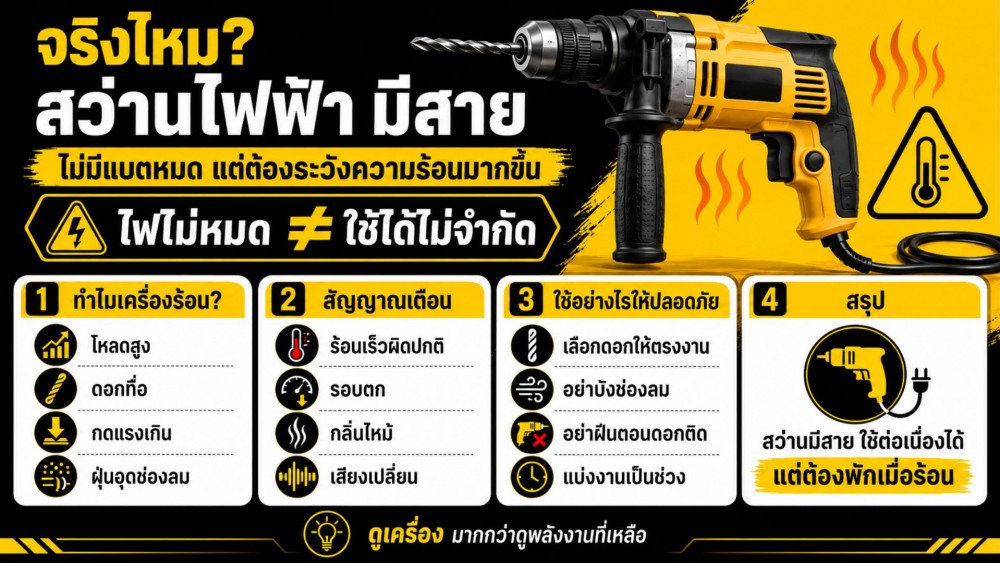
Conclusion: Never running out of battery doesn't mean unlimited continuous use
The strength of a corded electric drill is that it draws continuous power from an electrical outlet, eliminating worries about batteries running out mid-job or the need to prepare spares, making it ideal for tasks performed in one fixed location for long periods. However, this advantage can lead to inadvertently overusing the machine continuously, since there are no battery changes or charging cycles to break up the work.
What you should keep in mind is: The wall outlet supplies power continuously, but the motor's heat tolerance is still limited.
Therefore, when using a corded electric drill, especially for continuous drilling tasks, don't assume that "if the power is still on, you can keep going." Instead, listen to the motor sound, observe the RPM, monitor the motor temperature, and ensure the drill bit is still cutting efficiently. If the tool becomes unusually hot, pausing for a few breaks during the job is far better than pushing through severe heat buildup.
The key feature of Electric drills corded models is not the ability to work "without any rest." How long the machine can run continuously still depends on the workload, heat dissipation, and whether the tool's capacity matches the task at hand.