


 EN
 ไทย


Customers Also Purchased
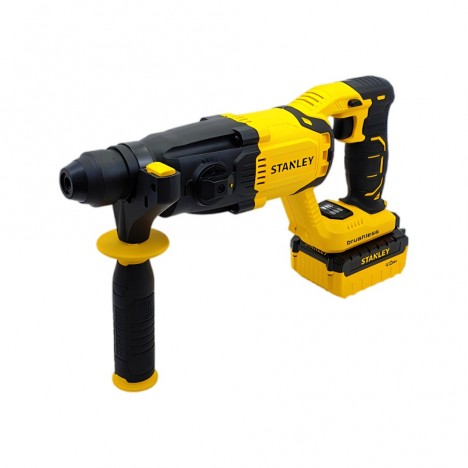
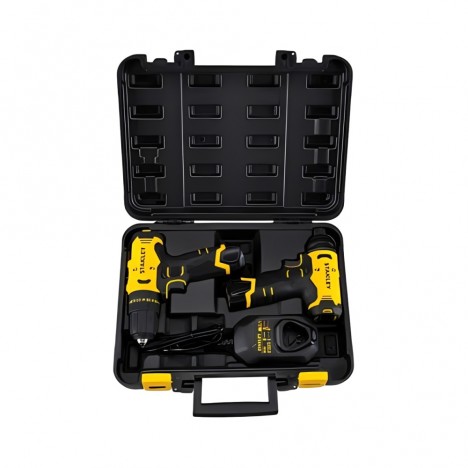
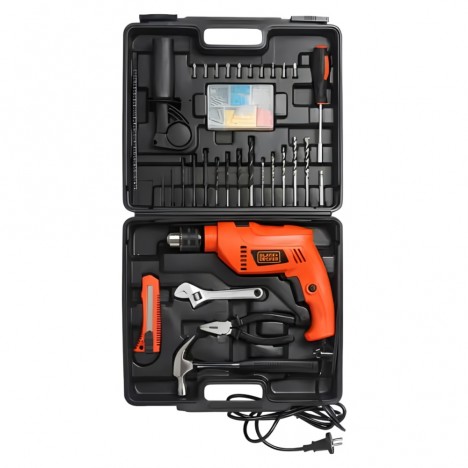


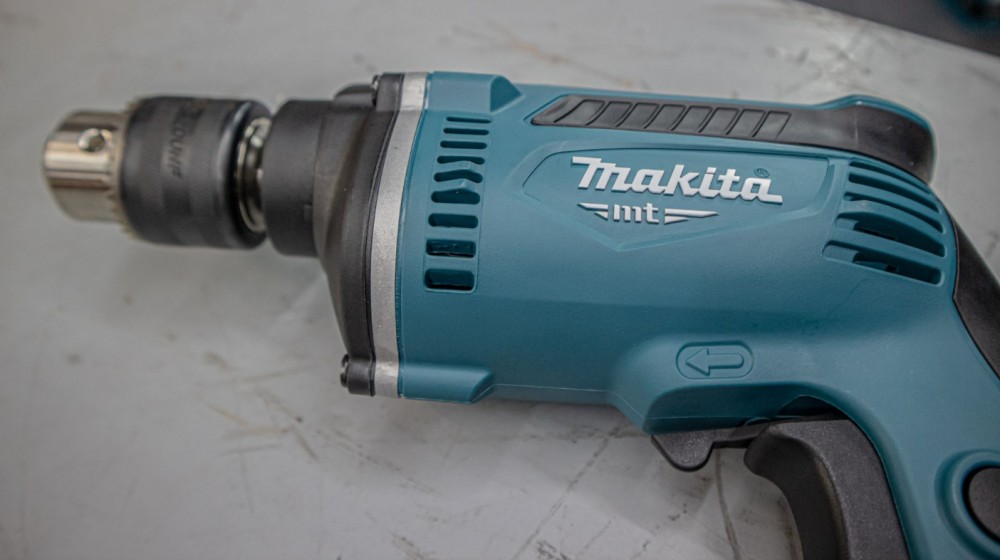
For those who want a power tool for home maintenance or serious drilling tasks, Electric drills is still a trusted choice for many, generally delivering excellent continuous power. 5 Reasons Why Corded Electric Drills Are Still Essential in Today's Cordless Era
Even though electric drills seem simple and straightforward to use—just plug in, insert the bit, press the trigger, and start drilling—there are actually several mistakes people often make from day one, assuming that a corded tool must be more powerful, more durable, and capable of non-stop use without any special precautions.
Unlike cordless drills, corded electric drills rely constantly on a power source. Therefore, power cords, extension cords, outlets, cord routing distance, and workspace tidiness are critical—along with choosing the right drill bit, adjusting the speed to suit the material, holding the tool firmly, avoiding excessive downward pressure, and giving the tool a rest during continuous heavy-duty drilling.
1. Assuming that because it's a corded electric drill, it can be run continuously without limits
One of the most common misunderstandings is that when it is a corded electric drill, it means you can run it continuously for long periods without having to wait for a battery to charge like a cordless tool. Many people immediately use it non-stop, drilling multiple holes in succession, drilling walls in multiple spots, drilling steel, or drilling wood, thinking that because it is plugged in, the tool can run continuously indefinitely.
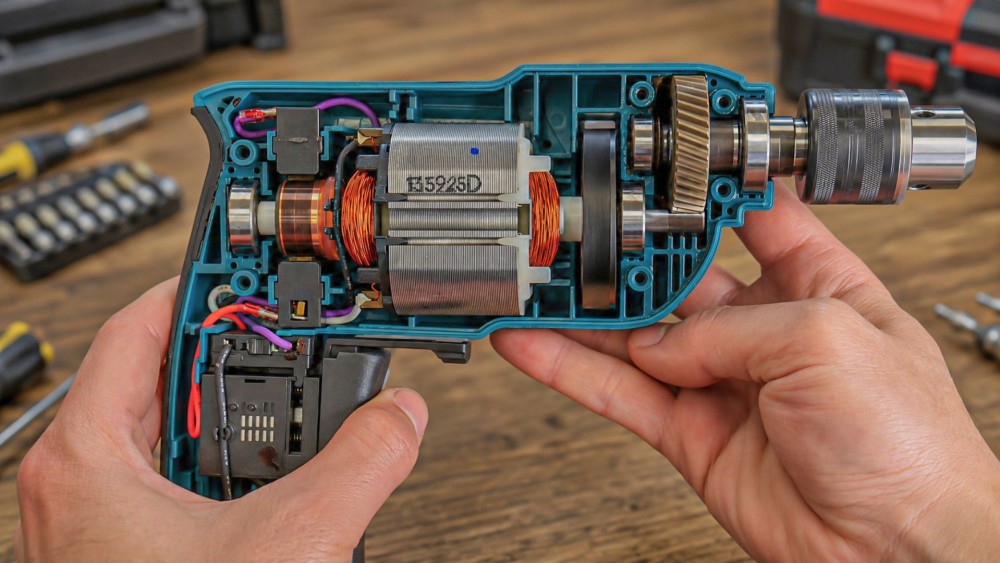
Some people might wonder: Is a corded electric drill more suitable for beginners or professionals? However, the reality is that an electric drill still has a motor, gears, a chuck, and a cooling system that requires rest intervals just like any general power tool. If subjected to continuous heavy use, the tool can overheat, lose RPM, sound different, or emit an unusual smell.
A corded electric drill may have the advantage of not needing to stop for a flat battery, but that does not mean the tool can handle an unlimited heavy load—especially on jobs involving drilling multiple holes continuously for a long time. If you do not monitor the tool's condition and keep forcing it just to finish the job quickly, it can cause premature wear or damage the drill bits as well.
Having a cord does not mean "no rest needed"
- Pace the operation of a corded electric drill just like any other power tool.
- If the tool starts feeling very hot, the motor sound becomes strained, the RPM drops, or the tool struggles while drilling, you should stop, let it rest, and inspect it first.
- Pausing the tool periodically does not slow down your work; instead, it helps the tool perform better, reduces heat buildup, and lowers the risk of premature breakdown from overloading.
- For tasks requiring extensive drilling, plan your work in advance, such as marking all hole locations beforehand, organizing the sequence of work properly, choosing the right type of drill bit, and resting the tool periodically.
Even though an electric drill receives continuous power from a wall outlet, the tool still generates heat and has load limits against overloading, just like any other power tool.
2. Using extension cords or power cables that are unsuitable for the job
Another very common mistake with corded electric drills is neglecting extension cords and power cables. For instance, plugging it into just any extension cord after buying it, sometimes using a thin-gauge extension cord, sharing it with multiple electrical appliances, or using a very long extension cord that causes an unnoticed voltage drop. The result is that the drill does not run at full power, the RPM fluctuates, or the tool and extension cord overheat abnormally. This should not be overlooked because an electric drill consumes a relatively high amount of power compared to ordinary household appliances.
A corded electric drill requires a fairly stable power supply to operate, especially when starting up or when the drill bit encounters resistance from the material. Some might think the tool lacks power, when in fact the issue may stem from a power supply setup that is unsuitable for power tools.
In addition, running long power cords haphazardly across the workspace increases the risk of tripping, stepping on the cord, tangling it around table legs, or having the cord get too close to the spinning drill bit—risks that can be prevented before starting work.
Before plugging in, check the condition of the cord and the work area first
Before using an electric drill, inspect the tool's power cord for cracks, bulges, tears, cuts, or damaged insulation. Also check that the extension cord is in good condition, not overheating, not loose, and suitable for power tool use. If an extension cord must be used, select one appropriate for the tool's power rating and avoid sharing it with multiple high-draw appliances simultaneously, as this can overload the electrical system.
Using a corded electric drill safely does not start with pressing the switch, but begins with checking the plug, power cord, and surrounding workspace before every use.
3. Using the wrong drill bit and blaming it on "lack of power"
Many people choose a corded electric drill for more reliable drilling power, but when actually using it, they simply grab whatever drill bit is available without checking if it suits the material. When it fails to drill through, overheats, or leaves a rough hole, they quickly conclude that the drill isn't powerful enough. In reality, the problem may not be the tool itself, but rather the drill bit and how we choose to use it.
The drill bit is the part in direct contact with the material, so it affects work quality more than many people think. Even if a corded electric drill has plenty of power, if the bit is dull, incorrect, or oversized for the tool's capacity, the results may still be poor—just like using the wrong tool altogether.
Using the wrong bit also puts more strain on the tool because the motor has to force the bit through material it wasn't designed to cut. Forcing it continuously can burn the bit, ruin the tip, cause chuck slippage, or make the tool overheat quickly.
A good drill must be paired with the right bit
To ensure your electric drill operates at peak efficiency, always match the drill bit to the material: use wood bits for wood, metal bits for metal, and masonry bits with an appropriate mode or tool for concrete. For tiles or certain hard-surface materials, choosing the correct bit and carefully controlling the RPM is even more crucial, as these materials can crack or chip more easily than standard surfaces.
Besides choosing the right bit type, you should also inspect the bit's condition before use. Bits that are chipped, dull, bent, or heavily scorched should not be forced into important work, as they slow down the job and risk damaging the tool. Having a good corded electric drill isn't enough; you also need drill bits suited to the job. This makes drilling easier, produces cleaner holes, and significantly reduces unnecessary pushing force.
4. Running at maximum speed all the time and using the wrong mode for the material
Many electric drill models come with variable speed control, a switch lock button, or an impact mode. However, some people treat the tool the same for every job—pulling the trigger all the way, running at maximum speed, and ignoring what material they are drilling.
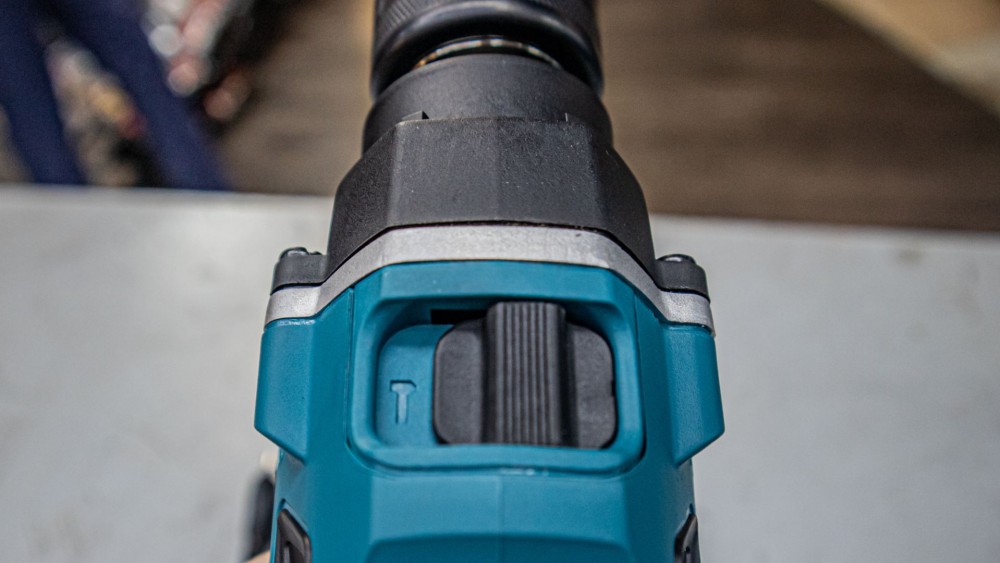
- Some types of wood can handle high speeds, but for thin wood or workpieces requiring a clean finish, starting at low speed helps prevent bit wandering and makes it easier to control the hole.
- Drilling metal should not be done at excessively high speeds, as it can cause extreme heat buildup and quickly dull the bit.
- For masonry drilling, check whether the tool is an impact/hammer drill. Using a standard drill on hard concrete can result in subpar performance.
- Turning on impact mode for jobs that shouldn't use it, such as wood or thin metal, can ruin the workpiece or cause rough, uneven holes.
Start at low speed, then increase with the work pace
Start by controlling the speed steadily rather than going full throttle the moment the bit touches the workpiece. This helps center the bit properly and prevents it from slipping off the mark. Once the bit starts biting into the material, gradually increase the speed as appropriate.
For corded electric drills with a lock-on button, use it with caution. Do not lock the switch on jobs requiring close control or where binding is likely. If the motor continues running when the bit jams or the workpiece shifts, it can make the tool much harder to control.
5. Pushing too hard, holding insecurely, and neglecting power cord safety
Many people think that when a drill isn't biting in, applying more force will make it cut faster. In reality, excessive pressure causes the drill bit to overheat quickly, drops the tool's RPM, and makes it harder to keep the hole straight. What's more, the tool may kick back, throwing off your grip.
An insecure grip also makes it easy for holes to become crooked or misaligned, especially when drilling walls, working overhead, or drilling multiple aligned holes. Additionally, corded drills involve a power cord. If the cord runs across your footing or where it might get pulled while drilling, you could lose balance or trip over it. These issues often happen from rushing to start without properly preparing the workspace first.
Apply moderate pressure, use two hands when necessary, and keep cords out of the way
Before starting work, route the power cord clear of walkways, areas where it might get pulled, and away from tangling with table legs, ladders, or workpieces. If you need to change positions frequently, stop the tool first and then rearrange the cord. Do not walk around holding a plugged-in drill without paying attention to the cord position, as this can cause tripping or accidentally pull the plug out.
Using a corded electric drill safely requires considering the tool itself, the drill bit, the workpiece, and the power cord all at the same time.
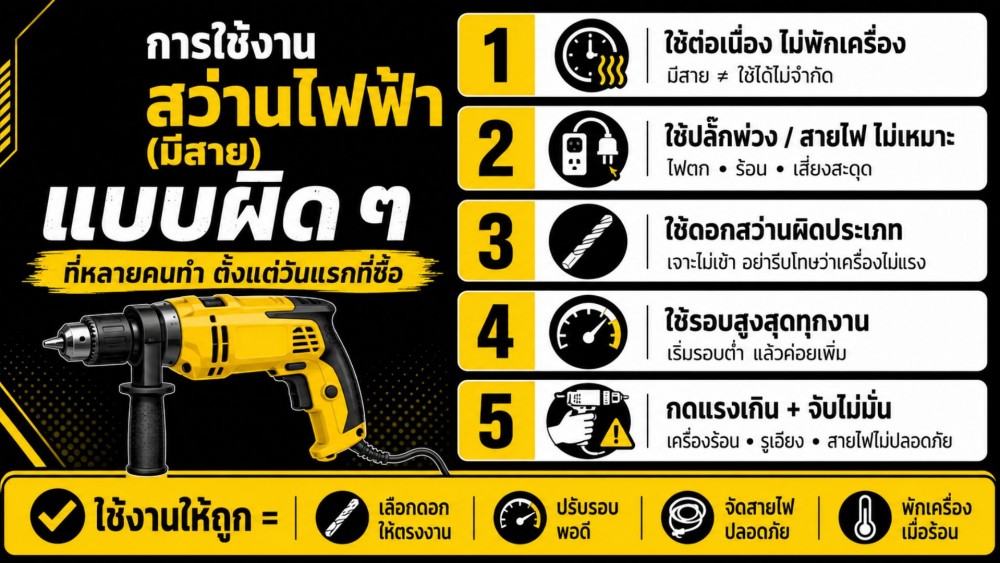
Summary: Electric Drill Misuses You Should Stop Doing
For general users, the key thing to keep in mind is that a corded electric drill isn't a tool that always requires heavy force, but you must:
- Use it appropriately for the job
- Choose the right drill bit
- Adjust the speed properly
- Route the power cord safely
- Let the machine rest during heavy use 2
If you follow all of these, the tool will run smoothly for you, deliver better results, and prevent issues that many people often encounter.
Using an electric drill under the assumption that a corded tool can run continuously without limit, using an unsuitable extension cord or power cord, using the wrong type of drill bit, running at maximum RPM or in the wrong mode for the material, or pressing down too hard while routing the cord unsafely may seem like minor mistakes. However, they are all major causes of messy drill holes, an overheating motor, premature bit wear, or safety risks during operation.
Using a corded electric drill effectively isn't difficult; it simply starts with understanding the tool in your hands, such as knowing: Drilling Concrete with an Electric Drill: What to Look For, and Does It Need an Impact System? What kind of work the tool is suited for, what bits to use, how to plug it in properly, when to let it rest, and how much speed and pressure to apply.
When used correctly, Electric drills It will be a worthwhile tool for DIY home tasks, installation work, and general technician jobs alike—making drilling easier, saving time, and giving you more confidence in its long-term use.