


 EN
 ไทย


Customers Also Purchased


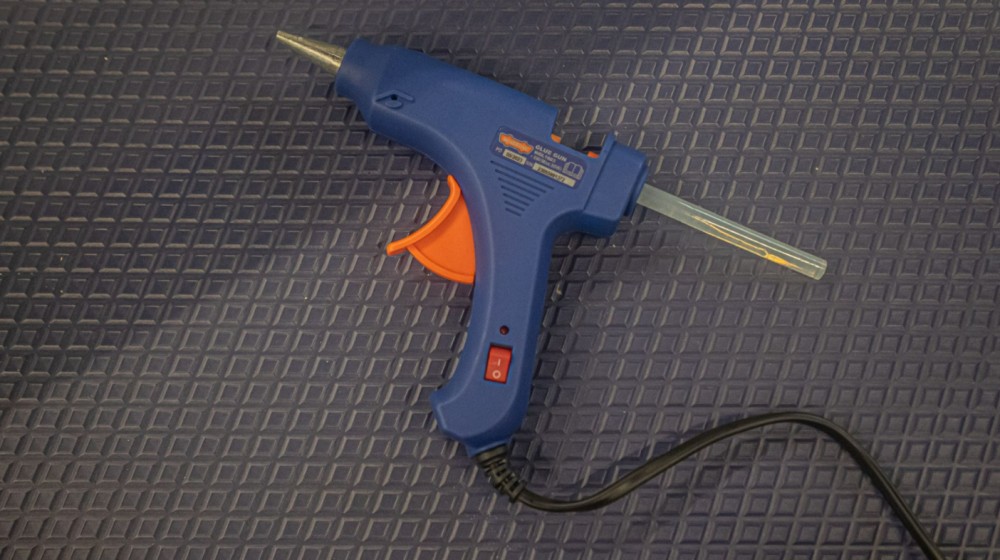
Anyone who has used Glue Gun You've probably encountered this situation where glue slowly drips out of the nozzle tip even though your hand isn't touching the trigger at all. Sometimes it's just a small drip after resting it on the stand, but other times it flows continuously, making a mess on the table, staining workpieces, or wasting glue sticks. This issue makes many wonder: Is the glue gun broken? Is the trigger stuck? Or is it because the wrong glue sticks were chosen? Glue guns for DIY projects and different types of glue sticks: What are the differences?
In fact, the issue of a glue gun dripping on its own without pulling the trigger can occur due to several causes, ranging from the natural working principle of hot melt glue, temperature, and residual pressure inside the melt chamber, to placing the gun at an incorrect angle, nozzle malfunctions, feeder issues, and temperature control systems. In some cases, it is considered normal behavior that is hard to avoid, but in others, it is a warning sign to stop use and inspect the tool before more damage occurs.
Glue pressure remains trapped in the melt chamber
One of the most common causes of glue oozing on its own is residual pressure inside the glue gun. While we squeeze the trigger, the feed mechanism pushes the solid glue stick forward, forcing molten glue in the melt chamber out through the nozzle. Even after releasing the trigger, the glue stick and feed mechanism may not immediately retract. This lingering pressure can continue pushing molten glue out of the nozzle for a little while longer.
This symptom is often noticeable when pulling the trigger hard or repeatedly in rapid succession to dispense glue quickly. Once the trigger is released, glue may continue to flow for anywhere from a moment to several seconds, depending on the tool's size, temperature, glue viscosity, and the feed system's design.
Pulling the trigger too frequently causes pressure buildup
One of misconceptions about glue guns is that many people pump the trigger repeatedly in hopes of getting more glue out, even though the glue inside hasn't had time to melt yet.
Doing this forces the glue stick tightly into the melt chamber, building up pressure behind the molten glue. As more glue begins to melt, that accumulated pressure gradually pushes glue out through the nozzle even when the trigger isn't being pulled.
Ways to reduce this problem include:
- Squeeze the trigger steadily
- Avoid pumping or slamming the trigger too rapidly
- Pace yourself to give the glue gun time to melt the glue stick, especially with small glue guns or low-wattage models that have limited melting rates.
- If you continuously use large amounts of glue, choose a glue gun with power and output rates better suited to your workload.
Glue gun temperature is too high
As hot melt glue reaches higher temperatures, its viscosity decreases—simply put, the glue becomes runnier and flows more easily than usual.
If the glue gun generates more heat than the glue stick is rated for, the glue can become so fluid that it drips out of the nozzle continuously on its own, with virtually no pressure needed from the trigger.
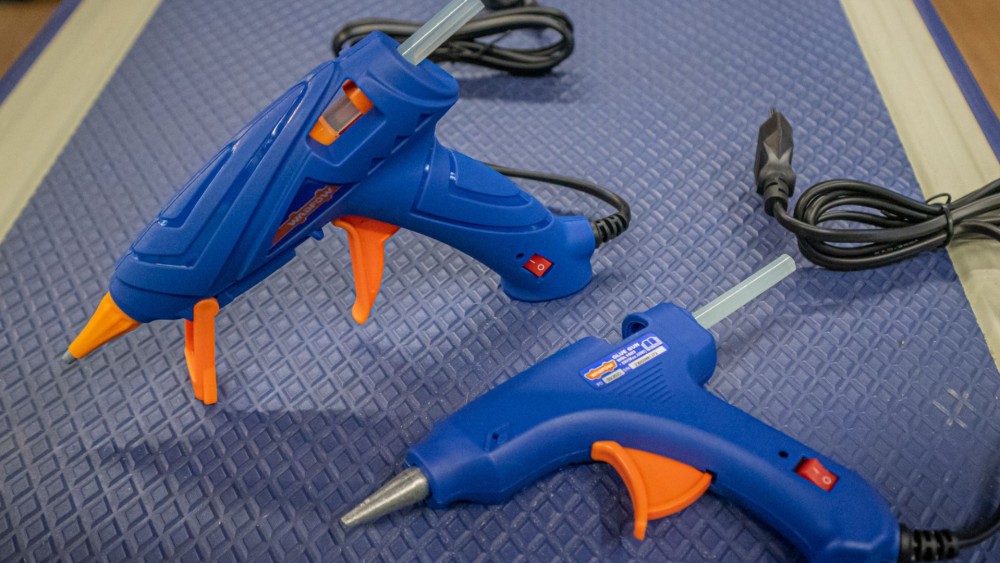
Excessive temperature can result from leaving the tool powered on for too long, using a model without temperature control, a malfunctioning thermostat, or using low-temperature glue sticks in a high-temperature tool.
This issue is mostly noticeable by unusually runny glue, rapid dripping, a stronger odor, discoloration of the glue, or light smoke emitting from the nozzle.
Leaving the glue gun turned on for too long
Typical glue guns use relatively simple heating systems. When plugged in, the heating element runs continuously to generate heat. If left turned on and unused for an extended period, internal heat can accumulate to high levels, causing the glue to become much runnier than normal.
Leaving a glue gun on for prolonged periods can also degrade the glue, cause burnt residue in the melt chamber, clog the nozzle, and shorten the heating element's lifespan. If pausing work for an extended time, you should unplug it or use a glue gun equipped with a standby mode and auto shut-off function.
Temperature control system malfunction
Some glue gun models have a thermostat or temperature control circuit to keep the heat within an appropriate range. If this system fails, the tool's temperature may rise continuously without shutting off, making the glue excessively runny, causing a burning smell, or making it flow continuously from the nozzle. Clearing the Doubt: Glue Gun Has a Burning Smell—What's Normal, and When Should You Stop Using It Immediately?
Selecting glue sticks that do not match the temperature
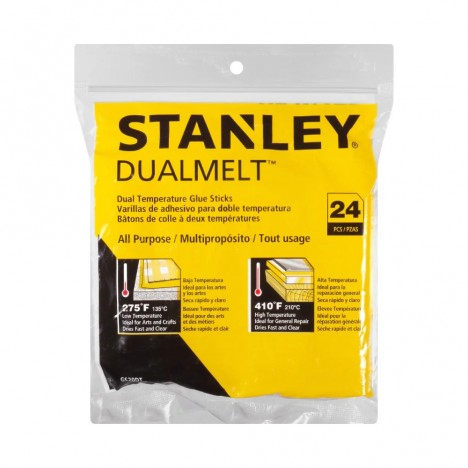
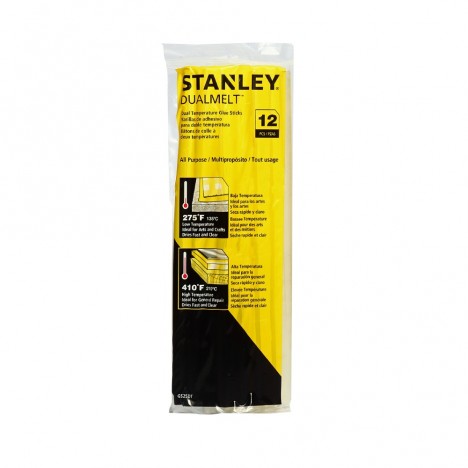
Some glues are designed for low-temperature glue guns, while others must be used with high-temperature guns to melt and bond with full efficiency.
If you insert a low-temperature glue stick into a high-temperature tool, the glue may melt excessively until it becomes runny like syrup and easily leaks out of the nozzle on its own. Conversely, if you use high-temperature glue with a gun that does not provide enough heat, the glue may be very thick, hard to dispense, and put too much stress on the feed mechanism.
Before buying glue sticks, check whether your glue gun is a low-temperature, high-temperature, or adjustable-temperature model, and review the instructions on the glue stick packaging. Glue sticks of the same size may have different formulas and operating temperature ranges.
Glue stick size does not fit the gun
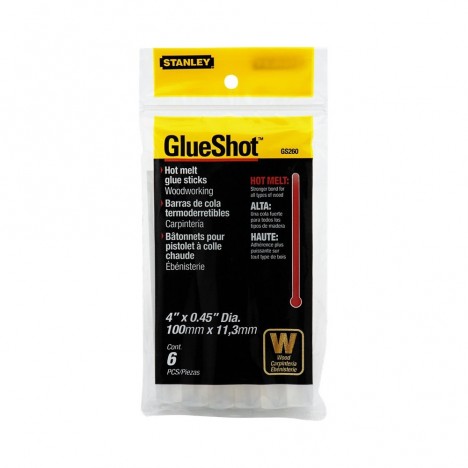
The size of the glue stick also affects feeding and internal pressure. Common glue guns accommodate small sticks around 7 mm or large sticks around 11–12 mm, but actual sizes can vary by manufacturer and model.
Always choose glue sticks according to the manual or the specifications printed on the glue gun itself. Forcing the wrong size into the tool can damage the feed mechanism and increase the risk of hot glue leaking inside the housing.
Incorrect resting angle or laid flat
How you rest the glue gun affects glue flow more than you might think. When the glue is in a liquid state, gravity naturally pulls it downward.
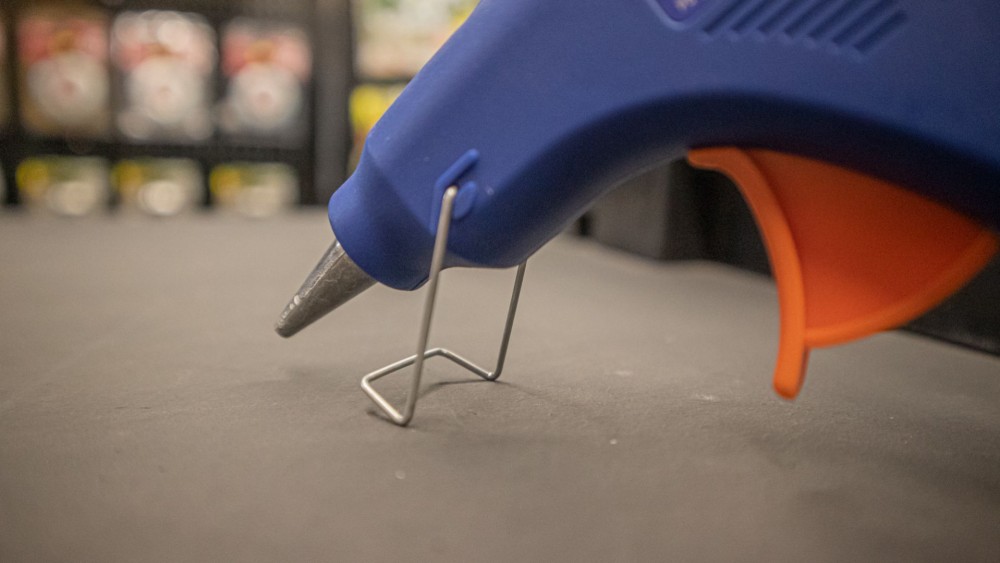
Resting a glue gun with the nozzle pointing downward too steeply makes it easier for glue to leak from the tip, especially when the tool is at high temperatures or lacks an anti-drip valve.
During breaks, place the glue gun on its dedicated stand and use a silicone mat, cardboard, or heat-resistant material underneath to catch drips. Do not place the nozzle directly on surfaces, and do not use flammable materials underneath while the gun is hot.
Worn or jammed nozzle valve
Glue guns with a flow-control valve may use a metal ball, spring, or sealing component at the nozzle to stop the flow when there is no trigger pressure. If these parts wear out, accumulate glue buildup, have a weakened spring, or trap burnt glue debris, the valve may not seal properly, allowing glue to constantly leak from the nozzle.
This issue commonly occurs with glue guns that have been used for a long time, left powered on frequently, or used with inconsistent-quality glue sticks. Old glue residues subjected to repeated heating cycles can harden and stick inside the nozzle, preventing the valve mechanism from moving smoothly.
- Nozzle cleaning should follow the manufacturer's recommendations.
- Do not poke hard, sharp objects into the nozzle while the tool is plugged in.
- Never touch the nozzle with bare hands, as the high temperature can cause severe burns.
- If the nozzle is replaceable, wait until the tool is in the condition specified by the manufacturer and only use the appropriate tools for removal.
Loose nozzle, degraded seal, or damaged nozzle threads
When glue does not flow out from the center hole of the nozzle but seeps out along the joints, threads, or base of the metal tip, it may be caused by a loose nozzle, a degraded internal seal, or damaged threads. This issue can occur after the glue gun has been dropped, the nozzle has been pried, or it has been improperly disassembled and assembled.
Hot glue leaking from the joints poses a greater risk than normal dripping from the nozzle tip, as the glue may seep under the rubber sleeve or into the housing, leading to accidental contact with hot glue. If leaks are found around the base of the nozzle, unplug and stop using it immediately. Do not tighten the nozzle while the tool is completely cold or while the internal glue is solidified, as this may crack the threads or melting chamber.
Stuck trigger or glue feed mechanism
Releasing the trigger without the internal mechanism fully returning can be caused by the trigger jamming from glue residue, dust, debris, or internal plastic parts deformed by heat. When the feed mechanism continues to grip and push the glue stick, the pressure continues to be transmitted to the melting chamber, causing glue to continuously flow from the nozzle.
Observe whether the trigger springs back freely to its original position, or if there is stiffness, unusual noises, or a feeling that the trigger is caught midway. If the trigger does not return, do not force it repeatedly with excessive force, as this may break the feed teeth or internal plastic components.
Some glue gun models have a feed mechanism that can be inspected and cleaned externally. However, if the housing must be opened, it should be inspected by a technician or service center, especially for mains-powered corded models, due to the risk of electrical hazards and hot internal components.
Degraded glue inside from repeated heat cycles
Glue remaining in the melting chamber that has been cycled through multiple power cycles can deteriorate. When glue is subjected to heat for extended periods, some components within the glue formula may change, altering its viscosity, color, odor, and bonding properties. Sometimes the glue becomes abnormally runny, while other portions turn into hardened residue or charred debris inside the nozzle.
Degraded glue residue can interfere with the valve seal, causing continuous dripping or partial nozzle clogging. As the outlet narrows, internal pressure can build up and force glue out through other seams instead.
Do not leave the glue gun turned on unattended, and always use consistent, quality glue sticks from reliable sources.
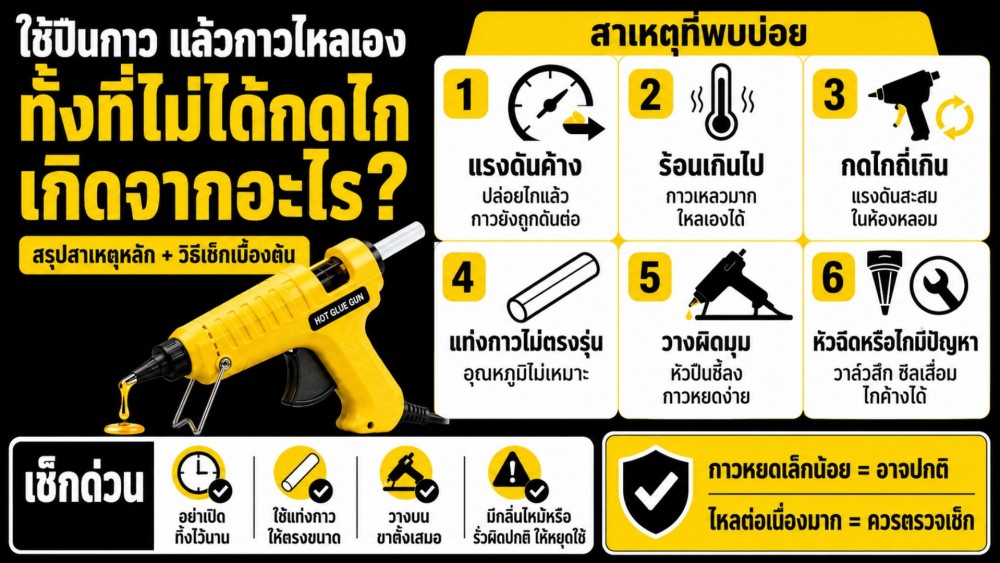
Conclusion: A glue gun that leaks on its own might not mean the tool is broken.
Symptom Using a glue gun and glue flows on its own even without pressing the trigger This can be caused by residual pressure in the melting chamber, heat liquefying the glue, gravity, and a glue gun design lacking an anti-drip valve. If only a small amount of glue drips after releasing the trigger, this can be considered normal behavior for certain glue gun models.
However, if the glue continues to flow heavily, check whether it has been left on for too long, if the glue sticks are of the correct type and size, and if the trigger returns normally. Also inspect the nozzle, valve, seals, and temperature control system. If there is abnormal heat, odor, or leakage, discontinue use and have the tool inspected by a specialist.
Choosing Glue Gun and choosing the right glue sticks for the job, as well as applying it at the correct pace, helps reduce glue dripping issues while also producing neater glue lines, better adhesion, less waste, and extending the lifespan of your equipment.