


 EN
 ไทย


Customers Also Purchased


From then on, my perspective on glue guns changed completely. And as I started researching more, I realized the world of glue guns is far wider than I thought. It's not just one single type, nor can you use just any glue stick as I previously assumed. Each model has its limitations, and different glue types have distinct properties—to the point where choosing the wrong one could leave your workpiece messy or failing to hold, which is utterly frustrating.
This article was born out of my own curiosity. I intended to write it as simple, straightforward information for anyone wondering whether they should buy a glue gun, whether it's suitable for small household tasks, or how much to invest for it to be worthwhile. I hope this article gives you a clearer overview of glue guns and glue sticks, making your decision easier—whether you're just fixing toys, repairing household items, or tackling small weekend projects.
Types of Glue Guns: First, Understand That "Glue Guns" Don't Come in Just One Form
Before we look into each model's features, I think we should start by understanding that glue guns aren't all identical. In the real tool world, glue guns are far more diverse than you might think—ranging in form factor, operation, heating type, down to specific features designed to best meet user needs. Most importantly, they aren't just for kids or light crafts as once thought; many glue gun models are professional-grade tools actually used in industrial applications.
If you've only ever seen small, colorful glue guns in stationery stores and thought that was all there is to the world of glue guns, I can tell you... you're missing out on a powerful tool with plenty of hidden capabilities.
Hot Glue Gun
This is the most common type and is widely used in trades, DIY, and general arts and crafts. Especially in Thailand, a hot glue gun is often one of the first tools people reach for when bonding different materials together. Its working principle is quite straightforward: the unit houses a heating element that gradually melts solid glue sticks into liquid, and the user squeezes the trigger to dispense the hot glue through the nozzle onto the desired surface.
What makes hot glue guns popular isn't just their ease of use, but also how fast the glue cures and its bonding strength, which is strong enough to hold materials firmly in a short time. Moreover, they work with a wide range of materials—from wood, fabric, plastic, and paper to thin metals. This makes the hot glue gun a versatile tool that almost anyone keeps on their workbench for crafts, light repairs, or prototyping.
Pros:
- Works on a wide variety of materials, such as wood, plastic, fabric, paper, and thin metals
- Easy to find and available in various sizes
- Glue sets quickly, saving time
The downside:
- Requires plugging in and waiting for the glue to heat up before use
- Not suitable for heat-sensitive materials, such as certain foams or thin plastics
Who it is suitable for:
- General users doing household repairs, DIY crafts, or art projects

Glue Pen
If a standard hot glue gun is a basic, versatile tool that meets all-around adhesive needs, a glue pen can be considered a version designed specifically for precision and easy control. Its body is much more compact than a regular glue gun, shaped like a pen, allowing for a comfortable grip. It is ideal for high-precision tasks such as decorative work, crafts, or bonding small materials in hard-to-reach spots.
Although it operates on the same principle as a hot glue gun—using heat to melt glue sticks—the nozzle of a glue pen is typically smaller, offering much better control over the glue volume. Simply put, if you need just a tiny dot of glue in a small area, a glue pen is the ideal choice without the worry of excessive glue overflow like with larger models.
The limitation of a glue pen is that its wattage is usually not very high, making it compatible only with mini glue sticks and unsuitable for tasks requiring continuous, heavy glue dispensing, such as securing furniture or load-bearing pieces. However, when it comes to neatness, precision, and comfort for close-up work, it must be admitted that a glue pen outperforms many other models.
Cordless Glue Gun
Many modern DIYers and handymen might start considering a cordless glue gun because of its sheer convenience. There are no tangled cords or the hassle of finding a power outlet. You can use it anywhere without worrying about wall sockets or dragging long extension cords around, especially when working in tight spaces, at heights, or outdoors without electricity. A cordless glue gun is a no-brainer answer. These tools typically run on lithium-ion batteries just like standard cordless power tools, providing decent runtime and convenient recharging. Some newer models feature fast charging systems or battery level indicators, taking planning and ease of use to another level.
Admittedly, cordless glue guns also have their limitations. For example, some models take longer to heat up than corded ones, and as the battery depletes, heating performance may slightly drop. Additionally, their price is generally higher than traditional glue guns. However, considering mobility and freedom of movement, it is definitely worth it for many situations, especially for tradespeople who move between work locations frequently or do not always have access to a power outlet.
Pros:
- Easy to carry, usable anywhere
- No need to worry about dangling power cords
Disadvantage:
- Usage time limited by battery life
- Some models heat up more slowly than corded glue guns
Who it is suitable for:
- Those who need on-site work or light repairs without continuous, heavy glue dispensing
Types of Glue Sticks: Choose Wisely, or Even a Good Gun Won't Help!
If the glue gun is the primary tool driving the bonding process, glue sticks can be compared to the vital raw material that determines whether the outcome succeeds or fails. That might sound like an exaggeration, but I believe anyone who has used them seriously understands that no matter how good the gun is, choosing the wrong glue will completely ruin the expected results. Glue sticks do not just “melt and stick”; they vary in viscosity, drying time, bonding capability on different materials, or even unique properties like heat resistance or waterproofing. These details make a world of difference in the final result.
I used to think that the difference between clear and colored glue was just about "looking good or not." But once I actually did some research, I realized that some formulas bond exceptionally well, while others barely stick at all, or some dry so fast that they harden before you can even position the workpiece. Diving deeper, I discovered that the world of "glue sticks" is far more complex than expected, truly on par with the world of power tools.
Glue Stick Sizes
Before discussing the types of glue, we need to know that the “size” of the glue stick is the very first factor that must match your glue gun.
Mainly, glue sticks come in 2 sizes:
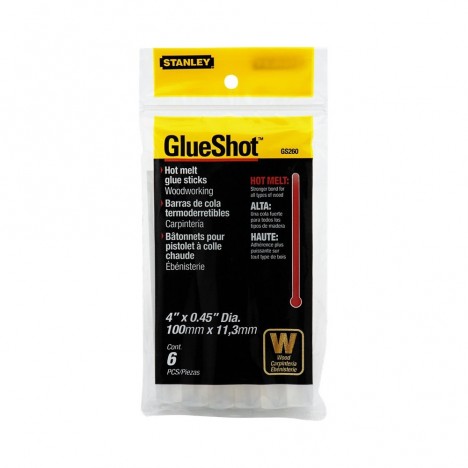
- Standard size: Diameter approximately 11 mm
- Mini size: Diameter approximately 7 mm
Each glue gun model accommodates different sizes. Be sure to check before purchasing which stick size it takes. Forcing a large stick into a mini glue gun will not only waste materials but could also permanently damage the gun.

Types of Glue Sticks (Categorized by Application)
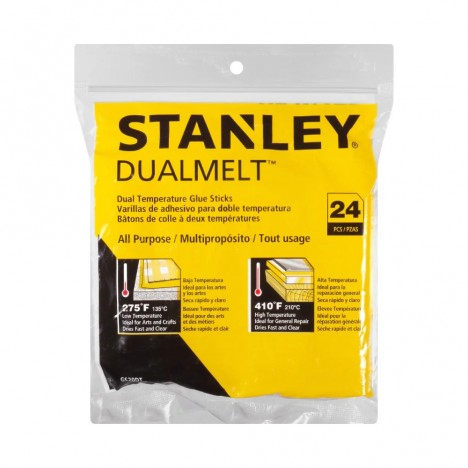
The hot melt glue sticks we commonly see in stationery or hardware stores actually offer far more choices than many people think. When I first started using a glue gun, I never paid attention to how each glue stick differed; as long as I inserted it into the gun and it melted out, that was enough. But after trying them out on various projects, I realized that glue sticks that look virtually identical produce clearly different results.
For some jobs, clear glue holds wonderfully, while for others, it peels off so easily that you need a different glue formulation. Or sometimes, when you just want to add a playful touch to decorative crafts, glitter glue adds color without needing any extra paint. That's why I want to invite everyone to learn a bit more about the types of glue sticks, because they are an essential component that allows your glue gun to truly perform at its full potential.
1. Clear Glue Sticks
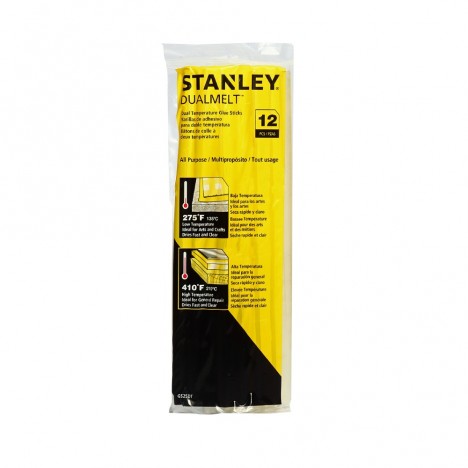
This is the most common basic type widely used because it suits almost all general tasks, such as minor furniture repairs, home decor DIYs, wrapping gifts, or even bonding materials like plastic and wood together. The glue turns clear when dry, making it ideal for jobs where visible glue marks are undesirable. With its fast-drying and standard bonding strength, it is a household essential, especially for glue gun beginners.
Pros:
- Versatile for various applications including repairs, decoration, and DIY projects
- Clear glue; invisible stains when dry, suitable for work requiring a neat finish
- Dries fast, easy to use, saves time
- Widely available and economical
2. Craft Glue Sticks (Coloured / Glitter Glue Sticks)
Available in various colors or with sparkling glitter that adds beauty and dimension to art and craft projects. Ideal for anyone wanting to create standout DIY projects such as greeting cards, handmade scrapbooks, or handmade gifts. The glue delivers a glossy or sparkling finish depending on the chosen color. However, this type of glue is not formulated to support high bonding loads, making it unsuitable for heavy-duty bonding. It should primarily be used for decorative purposes or for adding a charming, vibrant touch to pieces that don't bear weight or endure significant pulling forces.
Pros:
- Adds creative flair to make DIY or art projects look interesting
- Suitable for visible surface applications
Disadvantage:
- Less bonding strength than clear or high-strength glue sticks

Conclusion
From once thinking that "a glue gun is just a glue gun" and "all glue sticks are the same," I now admit I was completely wrong. After truly studying them and going through trial and error multiple times, I began to understand that choosing the right glue gun and the right glue stick can turn a project from a flop into a massive success.
Sometimes, simply switching from a standard corded hot glue gun to a cordless one allows us to work in tight spaces or areas without power outlets. Other times, switching from colored glue to clear glue stops pieces from frequently falling apart.
I hope this article helps you better understand the world of glue guns and glue sticks, allowing you to choose accurately whether for craftwork, art projects, or simply fixing household items. If anyone has further questions about glue guns, I am always happy to share, because to me, it's not just a budget-friendly tool, but an "essential item" that genuinely makes the DIY experience more enjoyable.
If you are looking for an introductory tool for simple DIYs, Glue Gun is the right answer in terms of price, functionality, and long-term value.