


 EN
 ไทย


Customers Also Purchased


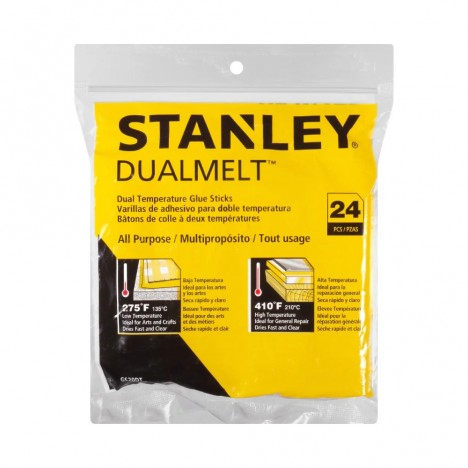
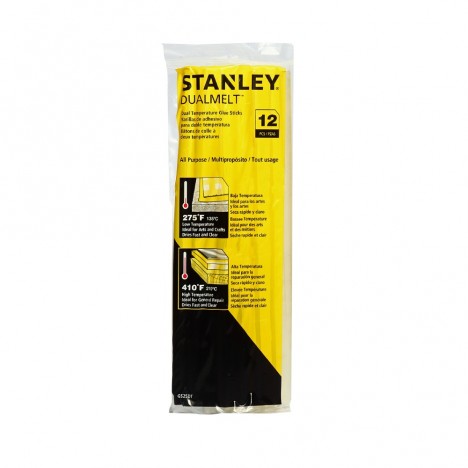
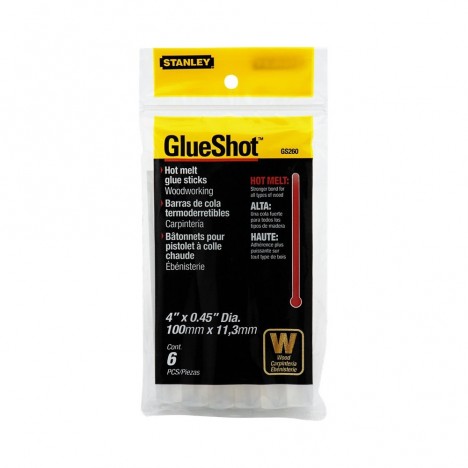
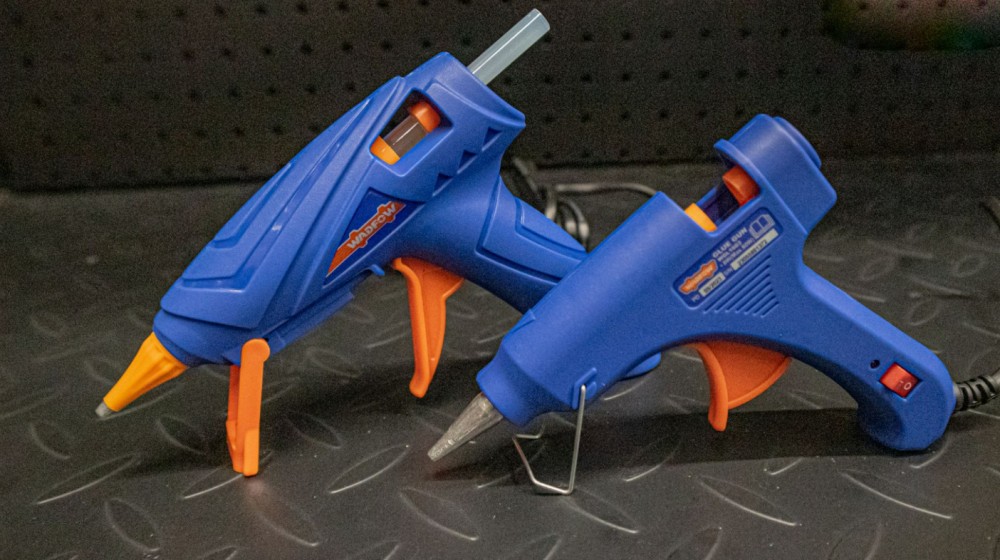
“ Glue Gun " falls into the category of crafting tools and accessories that are considered very easy to use, reasonably priced, easy to find glue sticks for, and helpful for fixing many types of small tasks. Many people may have used a glue gun and felt that it "holds really well," leading them to think it can replace all types of glue, but in reality, that is not the case.
Common Misconceptions About Glue Guns: Use Them Right, Use Them Well, Bond Easily Without Ruining Your Work Glue guns have both strengths and limitations. Some materials bond very well, some only hold temporarily, and certain types of materials should never be used at all because they may easily come off, get damaged, or pose risks during use.
Therefore, before grabbing a glue gun to bond everything around the house, you should understand which materials a glue gun is suitable for, what types of work it performs well on, and which materials should strictly be avoided. This article will provide an in-depth, easy-to-understand look at the reasons so you can apply them right away.
What is a Glue Gun and What Can It Bond?
A glue gun, or what we might call a Hot Melt Glue Gun, is a tool that uses hot melt glue sticks as a bonding material. The unit has an internal heater to provide heat. When plugged in or turned on, the machine gradually melts the glue stick, and you squeeze the trigger to push the liquid glue out through the nozzle tip.
When the glue comes into contact with air and the temperature drops, it solidifies and bonds the workpieces together. This makes the glue gun a very popular tool: no mixing required, no need to spread it thoroughly like some types of glue, and no need to wait hours for it to set. What Temperature of Glue Gun is Enough? For Fabric, Wood, Plastic, or DIY Work?
The reason glue guns are so well-suited for household tasks is that they are versatile and highly flexible, especially for decorative work, tasks that do not require high durability, and many lightweight applications.
Paper, Cardboard, and Crafts
The first group of materials that glue guns work exceptionally well with is paper, boxes, certain types of corrugated plastic boards, and general craft materials. The surface of paper has a slight porosity, allowing the hot glue to penetrate and adhere well. Once the glue cools down, it helps the pieces bond quite firmly, making it ideal for model making, board decoration, packaging, photo prop making, or DIY projects that do not need to support much weight.
The advantage of using a glue gun with paper is that it dries quickly and sets into shape very fast. If you need to make prototype boxes, build small backdrops, or assemble multi-layered workpieces, it saves a lot of time compared to using liquid glue or latex glue.
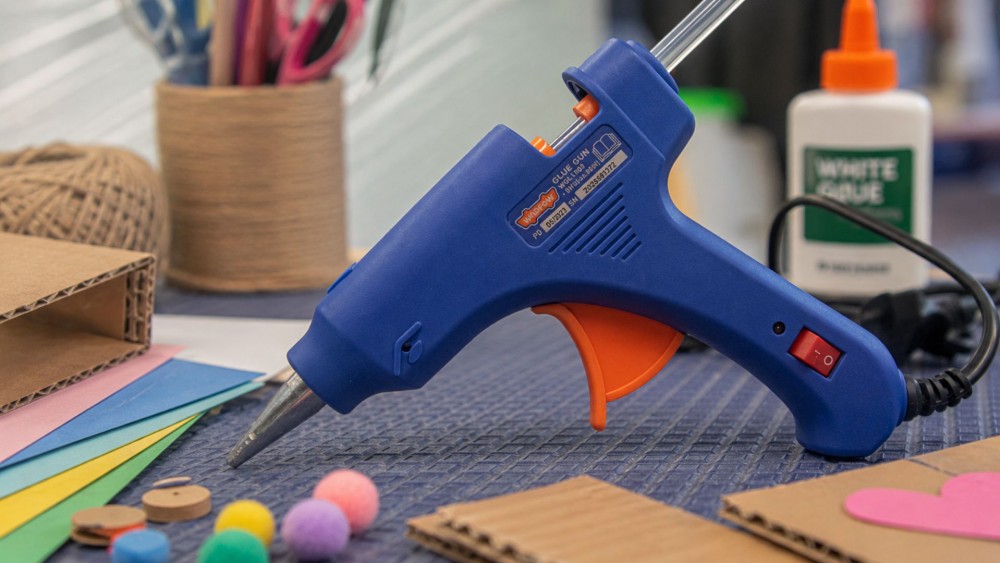
With a glue gun, you don't have to wait long for the glue to dry, but you must be careful about the amount of glue used. If you apply too much glue on thin paper, the heat and thickness of the glue might cause the paper to bulge, warp, or look messy. For work that requires a neat finish, apply the glue in small dots or choose spots that are not exposed on the front.
Fabric, Ribbon, Rope, and Decorative Materials
Glue guns are suitable for fabric work at the level of crafts, decorations, and temporary fastening, such as:
- Attaching ribbons to gift boxes
- Attaching felt fabric
- Attaching twine, ribbons, and lace
- Attaching decorations onto fabric
Hot glue can penetrate fabric fibers reasonably well, providing a fairly good bond—especially on materials with rough surfaces or gaps for the glue to grip. However, actual wearable garments may be better suited to sewing or using specialized fabric glue.
Thin wood, light woodwork, and wooden decorations
Wood is another material where glue guns perform well in many cases, especially thin wood, popsicle sticks, thin plywood, small MDF sheets, or lightweight wooden decorations. The natural porous surface of wood allows hot glue to bond well. Wooden crafts, model making, decorating wooden boxes, or positioning small wooden parts can therefore be done conveniently with a glue gun.
However, for woodwork that needs to bear actual weight, such as assembling furniture, repairing table legs, fixing shelves, or joining workpieces subjected to tension, torsion, and impact, a glue gun should not be the primary choice because hot glue does not provide the same bonding strength as wood glue.
A glue gun can be used to hold workpieces temporarily before driving screws or to help position them before clamping, but it should not replace wood glue or structural fasteners in serious work.
Can be used with certain types of plastic, but choose carefully
Many people like using glue guns on plastic because hot glue seems to bond instantly. However, plastic actually requires great care. Certain plastics bond passably well with a glue gun, especially those with surfaces that are not too slick, have a matte finish, or have grooves for the glue to grip. On the other hand, glossy, slick, flexible, or coated plastics will not adhere well; the glue might seem secure initially, but with slight peeling, it comes off in sheets.
Plastics that often cause issues with glue guns are highly slick types like PP and PE. Hot glue does not adhere well to these surfaces because the adhesive does not truly bond with the material. For serious plastic repairs, use a glue specifically formulated for that plastic type, or use mechanical fastening methods such as bolts, clips, or zip ties instead of relying on a glue gun to bear all the load.
Certain types of foam, but be cautious of heat
Glue guns can be used on certain types of foam, especially craft foam, EVA foam, and foam sheets with moderate heat resistance. Decorative work, sign making, prop crafting, or model making often use glue guns with foam because the glue sets quickly and bonds parts instantly. The problem, however, is that heat from the glue and the nozzle can melt, collapse, or deform certain types of foam, especially low-density and extremely heat-sensitive varieties.
Before gluing foam, you should
- Always test on scrap material first
- Avoid prolonged direct contact between the gun nozzle and the foam
- The gun nozzle is hotter than the dispensed glue itself
- For detailed work, use a small amount of glue applied in dots and join the pieces immediately
- If the foam melts or collapses easily, switch to a dedicated foam adhesive instead
Ceramics, stones, and decorations in light-duty applications
Glue guns can be used to attach decorations made of ceramic, faux stone, seashells, or certain hard-surfaced materials in light-duty applications, such as attaching decorations to picture frames, affixing decorative stones to handicrafts, or mounting decorations onto wooden bases and cardboard. However, understand that the bond strength of a glue gun on hard, smooth surfaces is generally not as strong as on porous materials like paper, fabric, or wood.
What materials should you strictly never use a glue gun on?
The first thing to keep firmly in mind is that a glue gun is not suitable for heavy load-bearing tasks or applications directly related to safety. Examples include mounting shelves, hanging heavy-duty wall hooks, repairing chair legs, fastening furniture components, installing overhead equipment, or any situation where a failure could cause an object to fall onto someone.
The hot melt glue used with a glue gun may seem strong at first, but when subjected to continuous tension, accumulated weight, heat, or moisture, the glue can gradually relax and come detached.
Metals subjected to stress or exposed to heat
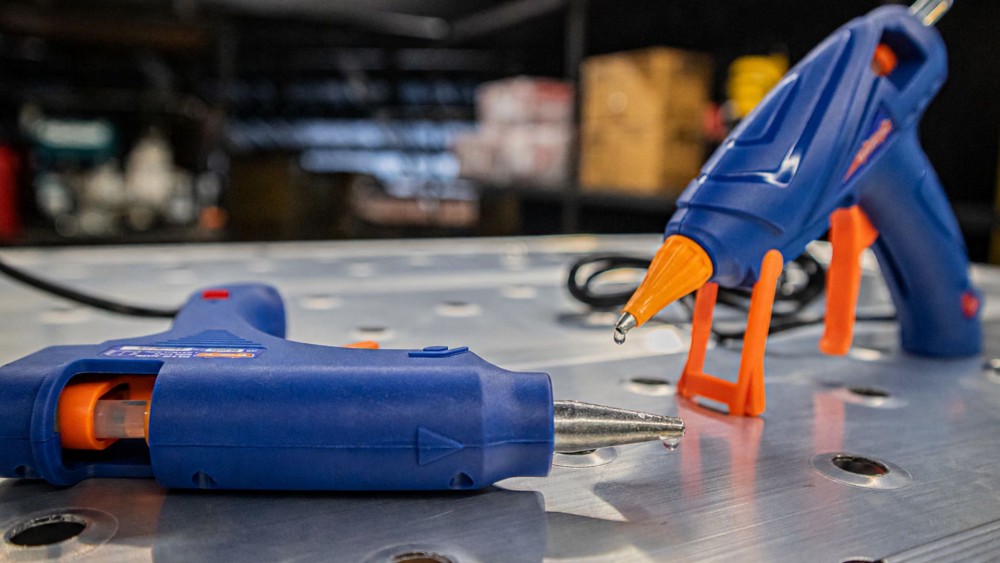
Metal is harder to bond with a glue gun than many people realize because metal surfaces are smooth, rigid, and lack the porosity for the glue to penetrate. Even if hot melt glue adheres to the metal surface initially, the bond strength remains low. Furthermore, if the metal has oil stains, dust, rust, or moisture on its surface, the glue will peel off even more easily.
Importantly, metal is a thermal conductor. If you use a glue gun on metal located near heat sources, such as:
- Hot electrical appliance parts
- Metal pipes near heat sources
- Certain types of lamps or light fixtures
- Outdoor equipment exposed to intense sunlight
These items can soften the glue and cause it to fail very easily.
Glass, mirrors, or extremely slick surfaces for permanent applications
Glue guns can bond glass or mirrors for temporary decorative tasks, but they are not suitable for permanent applications. Because glass and mirrors have extremely smooth and slick surfaces, hot melt glue can only cling to the outer surface without penetrating the material's texture like it does with paper or wood. When subjected to pulling or torsional forces, the glue easily peels off in a single chunk.
Wet, damp, oily, or dusty surfaces
A glue gun works best when surfaces are dry, clean, and provide texture for the glue to grip. If the surface is wet, damp, oily, or dusty, the glue cannot fully bond to the material. Often, the glue hardens on top of the layer of dirt rather than adhering to the actual surface. The result looks bonded at first, but soon detaches entirely.
Materials regularly exposed to water
Glue guns for DIY projects and different types of glue sticks: What are the differences? Even though hot melt glue solidifies into a solid mass and does not dissolve easily in water, that does not mean it is suitable for wet applications. Uses in bathrooms, outdoors, under rain, during washing, or in continuous humidity can degrade bond strength. If the underlying material expands, contracts, or continuously accumulates moisture, the glue may begin to peel from the edges and eventually fail completely.
Food-related items or containers that come into contact with food
A glue gun should never be used to repair food-contact containers, cookware, drinking glasses, plates, bowls, food containers, or items exposed directly to heat and food. Hot melt glue is not certified as a food-safe material. When exposed to heat from hot food, boiling water, or repeated washing, the glue can soften, detach, or degrade.
Electrical work requiring genuine insulation or safety
Some people use a glue gun to secure wires in place or organize small cables neatly, which is acceptable for light-duty work not directly involving conductive points. However, a glue gun should never be used as a replacement for electrical insulation, electrical tape, heat shrink tubing, or safety devices specifically designed for electrical applications.
Electrical work requires extra caution. If wires are damaged, insulation is cracked, terminals are loose, or there are short-circuit risks, do not use a glue gun to fill or coat them as a quick fix. This can obscure the actual damage and create hazards later. Electrical work must use the right materials for the job; if you are unsure, having an electrician inspect it is much safer.
Therefore, glue guns are not suitable for heavy-duty, load-bearing, high-temperature, or specialized applications. Epoxy adhesives, welding, bolting, or appropriate mechanical fasteners should be used instead.
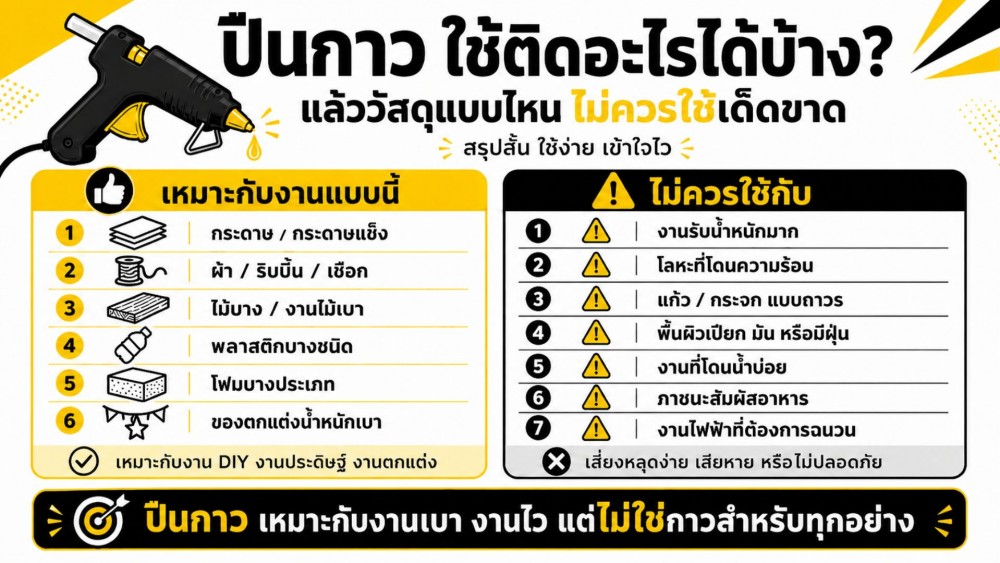
Conclusion: Glue guns are great for light, quick tasks, but for critical jobs, you must choose the right tool for the application.
In conclusion, glue guns are very useful for household tasks, DIY projects, crafts, decorations, and small, quick repairs. Suitable materials include paper, cardboard, fabric, rope, thin wood, foam, and lightweight decorations, as these surfaces allow hot glue to adhere well without bearing excessive loads.
Viewed correctly, a glue gun is not an all-purpose adhesive that replaces everything. But when used appropriately—for light, quick, decorative tasks without heavy loads—a glue gun saves time and makes small home repairs much more convenient.
For critical, heavy-duty, or safety-related tasks, always choose specialized adhesives or proper mechanical fasteners. Only this way can you use it Glue Gun worthwhile, safely, and without having to redo the work later.