


 EN
 ไทย


Customers Also Purchased


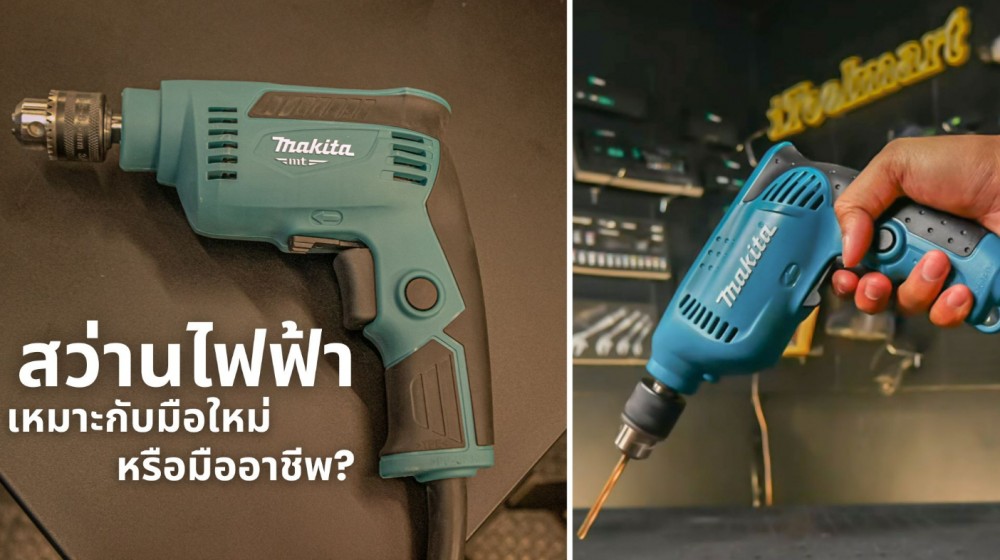
When talking about Electric drills Many wonder whether corded drills are better suited for beginners who want an easy-to-use tool they can just plug in and run, or for professionals who need continuous power. Many still hold the impression that "corded is outdated" and that "everyone uses cordless drills now" because they are simpler and more agile.
However, in real-world use—especially for continuous drilling, tasks demanding consistent torque, or locations where power is readily available—corded electric drills still excel and may even be a better choice than cordless models in certain situations. There are also many Craftsman jobs where electric drills clearly outperform cordless tools without question
Let's take a closer look at whether an electric drill is more suitable for beginners or professionals by considering real-world use, power continuity, value for money, and the nature of the work. Ultimately, the answer doesn't depend solely on skill level, but rather on what type of jobs you'll be using the electric drill for.
Why is this question more intriguing than it seems?
When people ask whether a corded electric drill is better for beginners or professionals, it's not just about skill level—it also involves budget, frequency of use, and the nature of the job. Some beginners want a durable, cost-effective machine that lasts, while some professionals work away from power outlets, where a cordless drill is clearly the better choice over a corded electric drill.
Another factor causing hesitation is that "beginner" is often associated with easy-to-use tools, while "professional" is tied to powerful, heavy-duty machines. This leads many to assume that corded electric drills must be strictly for professionals. In reality, many beginners benefit greatly from them because they don't have to worry about running out of battery or dealing with complex battery systems.
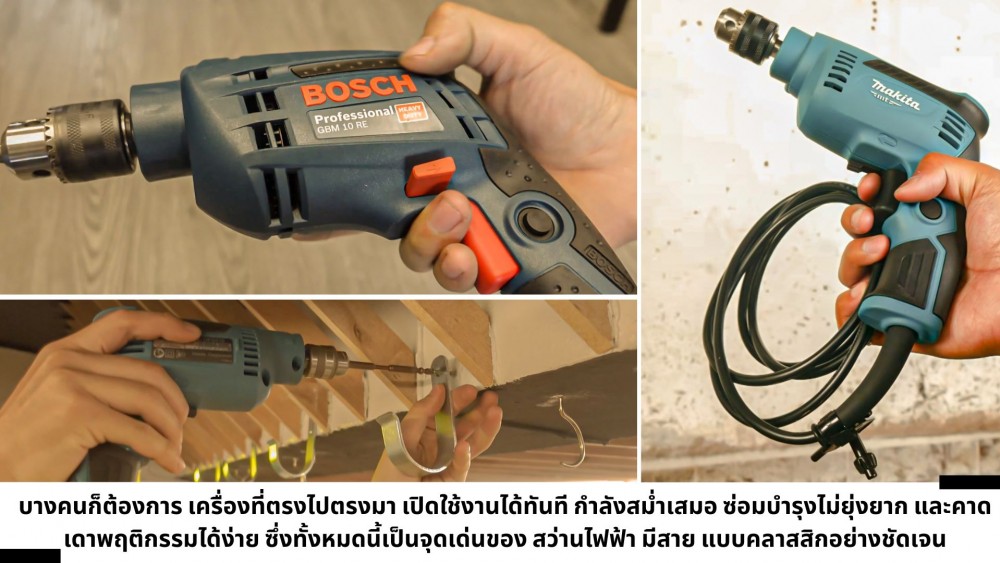
Is a corded electric drill really easier for beginners?
From a beginner's perspective, I think corded electric drills have advantages that many people overlook: they genuinely make starting out less complicated. Many people aren't just worried about whether they can drill, but start worrying right from choosing the tool: Do I need to buy anything extra? Which models share the same battery? If I buy my next tool, does it have to be on the same platform? What is the difference between a 2.0Ah, 4.0Ah, or 5.0Ah battery? And how necessary is it for my own work?
Once you switch to a corded electric drill, these issues virtually disappear. Just plug it in, insert the bit, hold it with the right posture, and start using it right away. This simplicity is crucial because it helps beginners focus on "drilling skills" rather than managing the tool's power system.
1. Learn the basics in a straightforward way
For those who have never used an electric drill before, what you really need to practice is controlling the drilling alignment, selecting the right bit for the material, applying proper hand pressure, and reading the tool's behavior while working—not battery management. A corded drill is therefore like a tool that introduces beginners to the "real fundamentals" of drilling without unnecessary complexity.
An electric drill makes it clear to see: if you push too hard, does the tool struggle? If the bit isn't sharp, how does it slow down drilling progress? If you hold it crooked, how does the drilled hole deviate? These are essential lessons that, even if you eventually switch to a cordless drill one day, you can still apply that understanding.
2. No worries about running out of battery midway
One common frustration beginners face is being in the middle of continuous work only to have the battery run out or find that the available battery isn't charged. When this happens, a small task that should take 10 minutes gets dragged out and makes the tool feel difficult to use, when the real issue is battery management.
A corded electric drill directly eliminates this problem. As long as power is available, you can work as long as you want. This might sound minor, but for beginners, it makes the first-time experience much better. And when you feel the tool doesn't disrupt your workflow, you'll be more confident picking it up to use more often.
3. Electric drills are suitable for home projects where power is readily available
Looking at real-life scenarios, most people use drills for home repairs or small DIY tasks, which usually have a power outlet nearby. In these situations, the cord drawback of an electric drill isn't as burdensome as you might think, and the benefits of continuous power and immediate readiness immediately shine through.
Why do professionals still need corded electric drills?
Electric drills are still essential in many scenarios, even though cordless tools have advanced tremendously nowadays. When talking about professionals, we aren't just talking about those who need mobility, but also those who need stability, endurance for continuous use, and controllable long-term costs. All of these are found in 5 Reasons Why Corded Electric Drills Are Still Essential in Today's Cordless Era
Certain groups of technicians or professional users—especially for workshop installations, factory assembly, workbench drilling, or areas with a dedicated power supply—greatly prefer corded tools because you can just turn them on and work continuously for long periods without stopping to swap batteries, while having total confidence in consistent power.
Continuous, long-duration work is still the domain of corded drills
Heavy-duty corded electric drills: How to choose the most suitable one? When jobs require drilling multiple holes in succession or involve repetitive tasks throughout the day, corded electric drills show a clear advantage. Especially for workshops or facilities with dedicated workbenches, corded tools often become the most practical and hassle-free choice to grab in the long run.
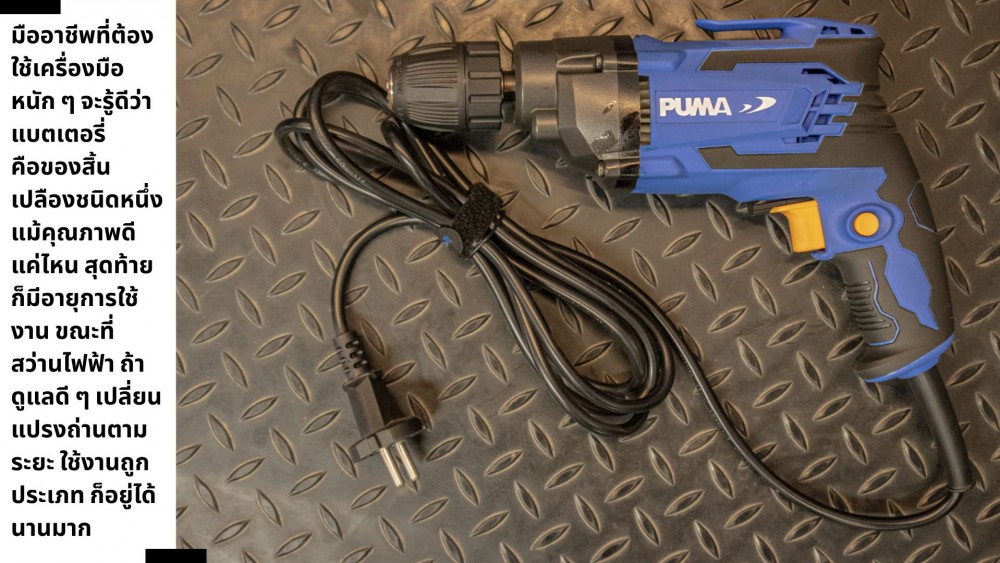
Do many people mistakenly think electric drills are only for professionals?
The main reason comes from the perception that corded tools look serious, look professional, and seem harder to use. In reality, the opposite is often true in many aspects. Many corded models don't have complicated settings at all; their switches are straightforward, maintenance isn't complicated, and beginners can often learn to use them faster because there are fewer systems involved.
Another factor is that people often think “high power means hard to control,” which is partly true, but not entirely. How easy or difficult an electric drill is to control doesn't just depend on whether it's corded or cordless; it also depends on tool weight, handle balance, RPM, trigger control, and the type of application. If you choose a tool suitable for the job, one that isn't too heavy, and know how to hold it properly, a corded drill isn't as hard to use as you might think.
Why should beginners choose a corded electric drill?
If you ask why beginners should consider a corded electric drill, I would summarize the practical reasons as follows:
- Easy to start with—no need to learn about battery systems
- Consistent operating power, ideal for practicing tool control
- More cost-effective for the initial budget in many cases
- Suitable for home use and general repairs where power outlets are readily available
- Reduces the chance of work interruptions from forgetting to charge the battery
The important thing is that many DIYers don't need jobsite-level mobility; they just need a tool that can handle the task when it's time to get to work. And here, a corded electric drill does an exceptional job.
What should beginners watch out for when starting to use an electric drill?
Even though it's easy to use, that doesn't mean there are no precautions. With this kind of tool, you need to pay close attention to the power cord: don't let the cord run across the drilling line, don't step on it, and ensure it isn't pulled too taut while working. In addition, you should start with lighter tasks first, such as drilling wood or assembling items, to practice controlling the tool, centering it, and applying the right amount of downward pressure.
Another thing to remember is not to treat an electric drill as a one-size-fits-all tool. If you plan to do heavy-duty concrete drilling, you need to check whether that electric drill model is an impact drill or not, and what level of materials it is suitable for. Choosing the right tool for the job is always essential.
Why might professionals also choose a corded electric drill?
On the professional side, the reasons are slightly different. They don't just look at ease of starting out, but also consider on-site efficiency, continuous operation, and overall total cost of ownership.
An electric drill is suitable for professionals under conditions like these:
- Stationary work Constant access to power outlets
- Need continuous, long-duration use Don't want to stop and swap batteries
- Require consistent power and predictable tool behavior
- Want to reduce costs No need to buy multiple spare batteries
- Focus on durability and long-term maintenance over mobility
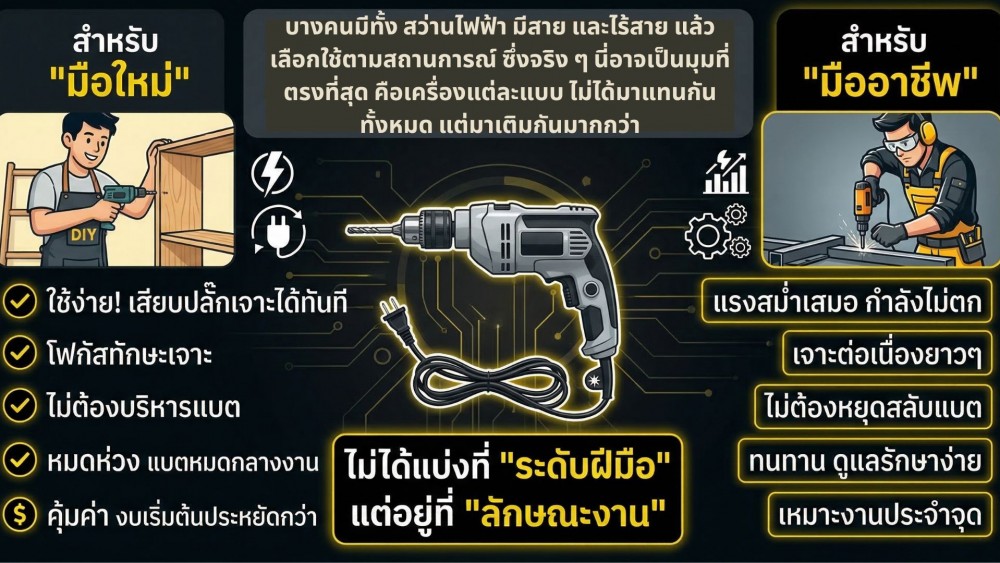
Conclusion: Is a corded drill better suited for beginners or professionals?
To answer most directly, I would say that Corded electric drills are not clearly "better suited" for beginners or professionals over one another. Rather, it is suitable for anyone who needs stability, cost-effectiveness, and continuous readiness for use, whether you are a beginner or a professional.
I think the real question to ask might not be "suited for beginners or professionals?", but rather:
- Is your work near a power outlet?
- How long will it be used continuously?
- Do you prefer mobility or stability?
- What is your starting budget?
- Will you use it occasionally or heavily and frequently?
If your answer leans towards household tasks, stationary workstation jobs, jobs demanding value for money, and wanting a tool that is always ready to use Electric drills is the answer. It is neither old nor outdated, and it is not limited to only professionals to be worth using.