


 EN
 ไทย


Customers Also Purchased
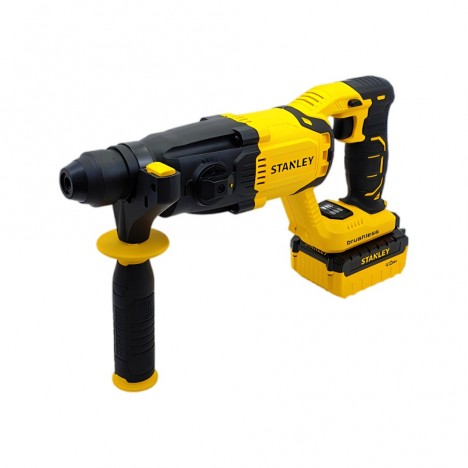
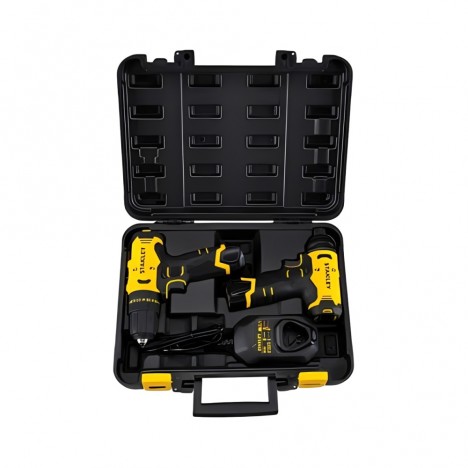
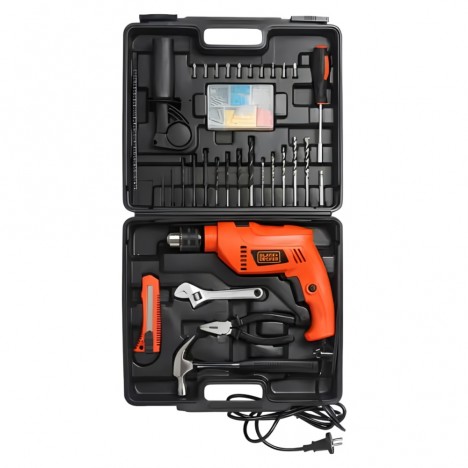


Nowadays, whenever anyone walks into a tool store, one of the most common questions we hear is, “ Electric drills versus cordless drills: which is better?”
I'm sure many people have wondered about this, whether you're about to buy the first drill of your life or a seasoned craftsman who already owns both but is wondering which one to grab. Even today, there are still tasks where corded electric drills distinctly outperform cordless drills—beyond any shadow of a doubt.
From a veteran tradesman's perspective, a corded electric drill is a trusted go-to tool that feels more solid and reliable in many aspects. The steady hum of the motor, the unwavering torque, and the confidence felt when pushing the drill bit into a wall keep it as a primary tool for many, especially when demanding tasks require both brute force and precision at the same time. It's like an old friend: scuffed and scratched, but always trustworthy.
In this article, we'll dive deep into 7 jobs where corded electric drills clearly perform better than cordless tools on actual job sites. Many might not know why corded drills have never vanished from the trades. When we talk about corded drills, we're not talking about obsolete antiques; we're talking about reliability proven through decades of actual use.
Let's start with key observations about corded electric drills first.
Besides power consistency, corded electric drills are generally lighter than cordless drills of comparable power. This provides both power and better control over applied pressure. In certain situations, the lighter tool weight helps the drill bit stay firmly against the surface without requiring much effort. This is a small tip that results in a cleaner, safer job, as the drill bit is much less likely to kick back.
On the other hand, the younger generation might prefer cordless drills because they are portable and look modern. And in real-world use, it must be admitted that cordless tools have indeed come a long way. But when it comes to heavy-duty tasks—such as drilling concrete, drilling steel, or drilling hardwood continuously for hours—the difference in torque and durability becomes immediately obvious.
Corded electric drills deliver steady power that keeps work progressing smoothly without interruptions, which in real-world jobs is what tradespeople value far more than convenience. This continuity and reliability make them superior to cordless tools for certain applications. Let's look at what these jobs are to help you choose more appropriately.
1. Continuous, Long-Duration Drilling: Electric Drills Are Clearly More Durable
Have you ever imagined using a cordless drill only to have to stop midway because the battery died? And what if you haven't bought a spare battery or forgot to charge one? Does work grind to a halt? When working on long jobs—such as installing furniture for an entire room or drilling dozens of holes for curtain tracks—a corded electric drill is the absolute hero in these situations.
With a corded electric drill, there is no worry about dead batteries and no waiting for recharging. You can use it continuously all day long as long as there is a power outlet nearby. Furthermore, its power remains constant without fading out like a cordless drill when the battery runs low.
Additional highlights of corded electric drills in continuous work:
- No need to worry about swapping batteries mid-job
- Ideal for tasks requiring consistent torque for several consecutive hours
- No heat buildup from a battery system, making the tool more durable
- Constant motor sound aids in more precise drilling control
- Ready to use instantly upon plugging in—no waiting to charge or prepare batteries

2. Drilling Hard Materials: When Torque Is Everything
There's no denying that modern battery technology is impressive. New-generation lithium-ion batteries can deliver high discharge currents for much longer, equipped with cooling systems and smart power management, making modern cordless drills nearly neck-and-neck in many situations. However, for jobs demanding maximum torque over extended periods, corded electric drills still hold the upper hand in stability and endless power. Drilling Concrete with an Electric Drill: What to Look For, and Does It Need an Impact System?
Drilling Steel and Concrete: Corded Electric Drills Are Clearly Superior
In steel or concrete drilling, high torque and consistent RPM are the core essentials. How powerful must a corded drill's "wattage" be to drill into your work (and drill into your heart)? Most corded electric drills offer more powerful motors (ranging from roughly 500–1000W), allowing for deeper and faster drilling without the worry of motor overheating like cordless drills.
Picture drilling into a 20 cm thick concrete wall to install metal anchors. If using certain cordless drill models, you might have to take frequent breaks due to heat from the tool and the battery. With extended use, the battery charge also drops, causing power to dip. But with a corded electric drill, just plug it in and finish the job in one go.
3. Tasks Requiring Continuous High RPM: Such as Paint Mixing
Some might think mixing paint or stirring mortar is simple—just attach a mixing paddle and spin it until blended. But this type of work demands very stable torque and speed; if the RPM drops, the paint or mortar won't blend properly, causing air bubbles or an uneven texture. Corded electric drills have a major advantage here because they deliver continuous, uninterrupted power from start to finish throughout an entire bucket.
Use confidently with mixing paddles or paint mixer bits without power drops
Electric drills are often used for tasks requiring continuous torque, such as light paint mixing or surface sanding, because they deliver consistent power and are not prone to overheating from heavy workloads.
If anyone has ever tried using a cordless drill to mix paint, it might seem strong and fast at first, but after less than 10 minutes of use, you will clearly notice the tool heating up to the point of needing a rest. However, if you switch to a 750 W electric drill, it will spin continuously without any interruption at all.
Corded electric drills are engineered to withstand high temperatures generated by continuous maximum power draw, thanks to features like side ventilation vents or internal motor cooling fans.
As for cordless drills, even though they utilize motor technology that generates less heat, they are still limited by battery power capacity, making them unsuitable for heavy-duty tasks that require sustained maximum output over long periods.
4. High-precision tasks that require consistent power at every stage
When it comes to delicate work such as woodworking, furniture making, or assembling frameworks that require exact alignment, even a slight fluctuation in torque can distort the workpiece or cause hole dimensions to deviate. That is why many craftsmen still choose electric drills for this type of work, as they deliver continuous, steady, and easier-to-control power throughout every drilling step.
No RPM drops, no stalling
When drilling precision holes, such as for built-in furniture or dowel joints, even a slight drop in rotational speed can result in skewed holes or incorrect sizing that fails to fit properly.

5. Installation work in areas with existing power outlets—no battery worries
Electric drills come in rotary, impact, and rotary hammer drill models that are lighter than their cordless counterparts. Many job sites, such as installations in factories, homes, or office buildings, already have nearby power outlets. Using an electric drill in these locations is far more convenient—no need to carry multiple batteries, no need to constantly swap tools, and it helps reduce long-term costs by eliminating the need to purchase spare batteries costing thousands of baht each, which typically degrade within a few years.
Electric drills thus remain a top choice for stationary tradesmen, such as factory maintenance technicians who work at a bench or fixed workstation, because they are always ready to use—just plug them in and start working immediately.
6. High-speed applications such as sanding, trimming, or using rotary grinding burrs
Tasks requiring high rotational speeds, such as metal polishing, deburring, or delicate workpiece shaping, are another category that demands tools with the most consistent RPM possible. Just a slight drop in speed can immediately affect the surface finish. In this regard, the electric drill serves as a specialized tool that maintains a constant RPM throughout use without worrying about power fading midway.
Consistent RPM makes the difference in surface finish
Some electric drill models deliver speeds up to 3000 RPM, ideal for buffing, grinding, or using small cone-shaped grinding burrs that require constant RPM to achieve a smooth finish without burning the workpiece.
Many cordless drills still cannot reach this performance level due to battery limitations and internal thermal management systems. Therefore, if you require smooth, flawless finishes—such as polishing stainless steel or detailed craftsmanship—electric drills remain the undisputed superior choice.
7. Repetitive, multi-hour daily tasks in workshops or factories
In industrial production lines or assembly workshops, electric drills are still considered the primary tool because they deliver continuous power with no downtime for recharging, no battery maintenance hassles, and typically longer motor service life.
Significantly eliminates the burden of battery maintenance
For factory technicians, using a cordless drill can be much more complicated and troublesome. Constantly swapping batteries and cycling through charges wastes minutes or even hours a day without realizing it. But with a corded drill, just plug it in and get right back to work.

Summary: Corded electric drills remain an ever-reliable tool
In an era where cordless tools dominate the market, many might assume corded electric drills are on the verge of extinction. But in reality, they endure because they don't have the power limitations of cordless drills, alongside lower prices, easier maintenance, and durability. If your work is stationary, requires heavy drilling, and runs continuously, a corded electric drill remains an excellent choice.
Summary of corded electric drill advantages
- Continuous power that never drops during use
- Good heat resistance, capable of sustained heavy-duty use
- Consistent torque, resulting in neat and precise workmanship
Because in the end, quality work isn't judged by "corded or cordless," but by "whether the job gets done, how well it is finished, and how ready your tools are to tackle it."
Electric drills effortlessly delivers on this need.