


 EN
 ไทย


Customers Also Purchased


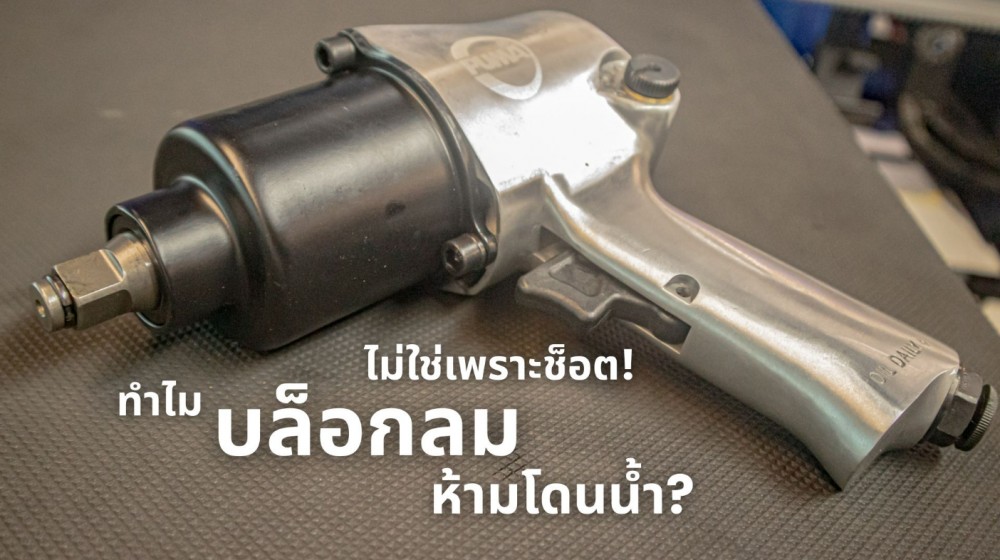
You're working along just fine when rain catches you completely off guard. Air Impact Gun held in your hand gets hit by just a little water spray, and you might think, "It's fine, it has no electricity anyway," right? But before long, you start to feel that the once solid sound turns into a dry, shaky rattle. The full-force impact seems to weaken; bolts that used to come off easily now require higher pressure, holding down the trigger longer, and repeating effort. This kind of issue frustrates many mechanics, and the same question keeps coming back: Is the air impact wrench broken? Or is the entire compressed air system starting to have problems?
The truth is that water and moisture gradually penetrate and destroy internal parts. Rust begins to form in tiny, unseen spots, lubricating oil films get washed away, internal components become stiff, and the power that should be delivered at full force is slowly reduced bit by bit—until the tool feels sluggish, loses torque, and doesn't impact fully, even though everything looks perfectly fine on the outside.
So let's take a look at how water gets into an air impact wrench and how it damages the tool to cause rapid wear, from common misconceptions to the real causes, along with simple preventive methods to keep a small issue like water from turning into a painful, costly expense right when work is urgent.
Air impact wrenches don't use electricity, but why are they "weak against water"?
Water doesn't cause an air impact wrench to short-circuit like power tools or electrical appliances, but it destroys silently through 4 major issues: Rust, lubricant washout, dirt/contaminants, and degraded compressed air quality, all four of which directly affect air impact wrenches.
When Air Turns into Torque: Let's See How Air Impact Wrenches Work An air impact wrench has internal mechanisms operating at very high speeds, with steel/metal parts constantly rubbing against one another: the valve assembly, rotor assembly, vanes, or the hammer mechanism.
Once water enters the system, whether into the "tool body" or via the "air supply", it starts acting like a catalyst—causing rust, deposits, wear, and making lubricants dissipate faster than usual.
Where does water enter an air impact wrench from?
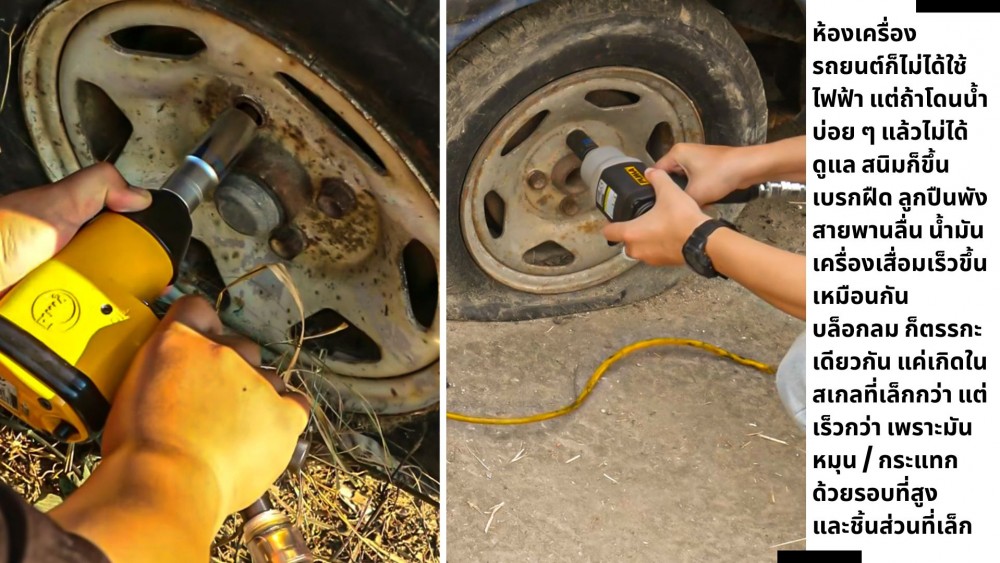
Water can enter an air impact wrench in many ways. Some are very close to daily routines and easily overlooked, such as rain splashing while working outdoors, constantly damp car-wash floors, wet hands holding the tool where water runs down seams, or tiny water droplets lingering on air hose couplers when disconnecting, connecting, or swapping tools. Most importantly, it often slips in seamlessly with the "compressed air" itself.
External water: rain, splashes, puddles, or wet hands
If an air impact wrench is exposed to rain, water splashes, or placed on a wet surface, water can seep through seams, covers, exhaust vents, and especially the "air inlet". If the air hose is attached or the inlet port is not properly sealed, water can genuinely reach the internal mechanisms.
What's alarming is that it doesn't even need to be "submerged"; fine mist and high humidity are enough. Inside an air impact wrench, there is steel, high pressure, and flowing air, which causes moisture to settle in hidden spots.
Water from compressed air: Condensate in the air system
Even if an air impact wrench has never been exposed to external water, if your air compressor system has moisture mixed into the compressed air, the air impact wrench is still considered exposed to water.
Compressed air naturally contains water vapor drawn from the atmosphere. When pressurized, this vapor condenses into water droplets inside the air tank, pipes, and air hoses—especially during rapid temperature changes, such as working in cool early mornings followed by hot afternoons, or during the rainy season with extremely high humidity.
Air tanks that aren't drained, air lines lacking water traps (filter / regulator), or installed units that aren't maintained—all of these allow water to travel with the air and quietly enter the air impact wrench.
Water from improper cleaning of the air impact wrench
Many people like to spray water to wash away oil stains or dust, assuming that blowing it dry with air afterwards is enough. But with an air impact wrench, it’s not that simple. Water can seep past seals/O-rings and remain trapped in tiny internal cavities. When left stagnant, it causes corrosion and rust, gradually manifesting as unusual symptoms like power loss, strange noises, or stuttering.
How does water "ruin" an air impact wrench?
At this point, let's look at the actual damage technicians encounter. Just in case you're wondering why your tool is having issues—whether it stems from the air impact wrench itself or from the upstream compressed air system—and want to pinpoint the root cause before wasting time replacing spare parts or doing guesswork repairs.
1. Rust: The silent enemy eating the tool from the inside
When mentioning water and metal, the first word that comes to mind is "rust", right? In an air impact wrench, rust doesn't just ruin appearances; it changes the "friction value".
The mechanism of an air impact wrench contains parts that must slide, rotate, and impact with precise timing. Once even a thin layer of rust forms, it creates an uneven surface with hesitation, causing mechanisms that should move smoothly to become stiff.
An air impact wrench has very tight clearances between the rotor and cylinder (in microns). Just a tiny bit of rust can cause a sharp drop in power. The result? The tool consumes more air while torque drops—like stepping harder on the gas pedal, but the car won't accelerate.
2. Stripping lubricant: From "smooth" to "worn"
An air impact wrench requires a thin film of oil coating internal parts to prevent friction and rust. Water is very effective at destroying this oil film, especially if water mixes in to form cloudy oil or an emulsion.
Once the lubricant is washed away or deteriorates rapidly, internal parts begin to wear out quickly. This is the reason why an air impact wrench suffers a sudden loss of power and symptoms will appear faster than expected, such as:
- Air impact wrench RPM drops quickly
- Sometimes it becomes intermittent—requiring a tap to start spinning
- A dry, harsh sound as if lacking lubrication
- Heats up unusually fast under heavy use
3. Impact Hammer and Trigger Mechanism: Corrosion causes "irregular timing"
The highlight of an air impact wrench is its impact force, but delivering great impact force requires the hammer mechanism to work in harmony with the anvil and the air supply system.
Once water gets inside, friction and rust disrupt the hammer's engage-and-release timing. Sometimes you'll feel that the tool isn't hitting with full impact, seems to stutter inside, or strikes with an inconsistent rhythm.
This is precisely what brings up the question: What air compressor size is really needed for an air impact wrench? What happens if it's too small? leading many to mistake it for an insufficient compressor problem, when in fact, the air impact wrench is simply being compromised by water.
4. Debris coming with water: Turns into "sand" inside the tool
Water coming through the pipes/air hoses is usually not clean. It carries dust, rust from the air tank, debris from the pipes, and old residue along with it. Once it reaches the internal mechanisms of the air impact wrench, it acts like tiny grains of sand scratching the surface of the parts. As a result, the air impact wrench wears out two to three times faster and sometimes clogs small air passages, leaving the tool unable to "breathe freely."
Some might say: Why did my air impact wrench get exposed to water and "nothing happened"?
I get this question often, and the answer might sound a bit cheeky: sometimes it just hasn't shown symptoms yet, or perhaps it isn't being used in heavy enough tasks to notice the difference.
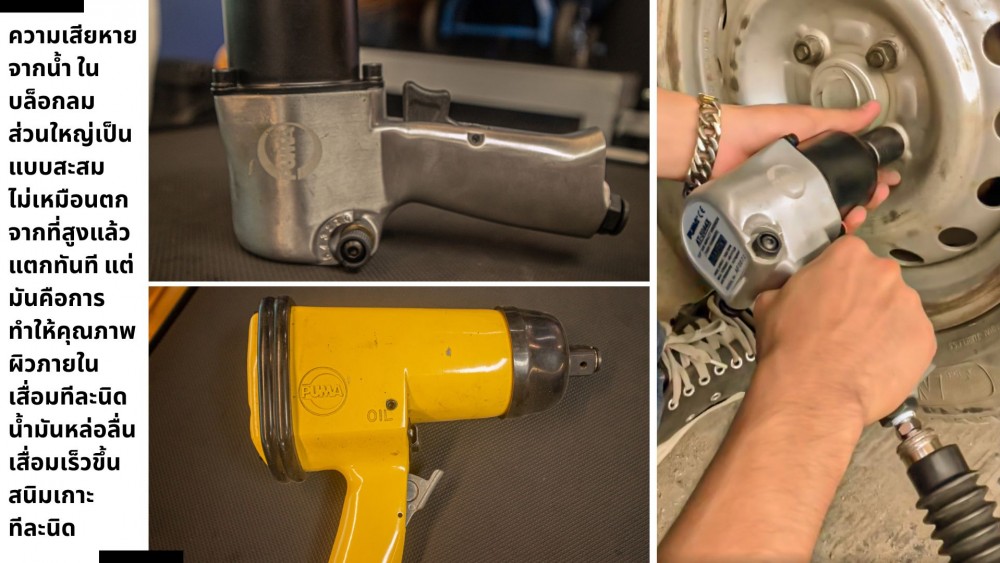
Then one day, we might start to notice that
- Used to loosen easily, now requires increased pressure
- Used to run fine on just 6–7 bar, now requires 8–9 bar
- Used to run for a long time, now heats up quickly
- Used to sound smooth, now sounds dry and impacts harshly
And when that day comes, many people blame the air compressor, the air hose, or the sockets, but forget that it might actually come from: the air impact wrench accumulating water to the point of becoming dirty, rusted, or having its lubricating oil washed away.
What should you do if you MUST work in wet conditions?
Real work isn't always as pleasant as in an air-conditioned room. Sometimes you have to work in the rain, in a wash bay, on freshly washed vehicles, or on damp floors all day long. No matter how careful you are, there will always be times when water splashes on it, wet hands grip the tool, or the air hose accidentally drags through a puddle. Therefore:
- Protect the air inlet well: The air inlet is the "gateway for water." If the ground is wet or there is water mist, avoid placing the tool facing down on the floor. When not in use, disconnect the air hose and cap/plug the inlet (or temporarily wrap it with a clean cloth).
- Add lubrication after wet jobs: Add air tool oil into the air fitting and run the tool briefly so the oil coats internal parts, reducing the chance of rust formation.
- Drain the air tank daily during the rainy season: Moisture accumulates rapidly in the rainy season. If you use an air impact wrench frequently, drain the tank daily, or even more frequently depending on usage.
- Use an air filter, regulator, and lubricator (FRL) unit: If you want a truly complete solution, an FRL unit helps immensely—especially the water separator and the lubricator, which ensures consistent lubrication and reduces wear caused by moisture.
We might not be able to avoid water 100%, but we can significantly "reduce the risk" for the air impact wrench if we know where to protect it. It’s like putting your guard up first—never giving water the chance to enter through the air inlet, and then replenishing lubrication and storing the tool properly so no moisture remains trapped inside.
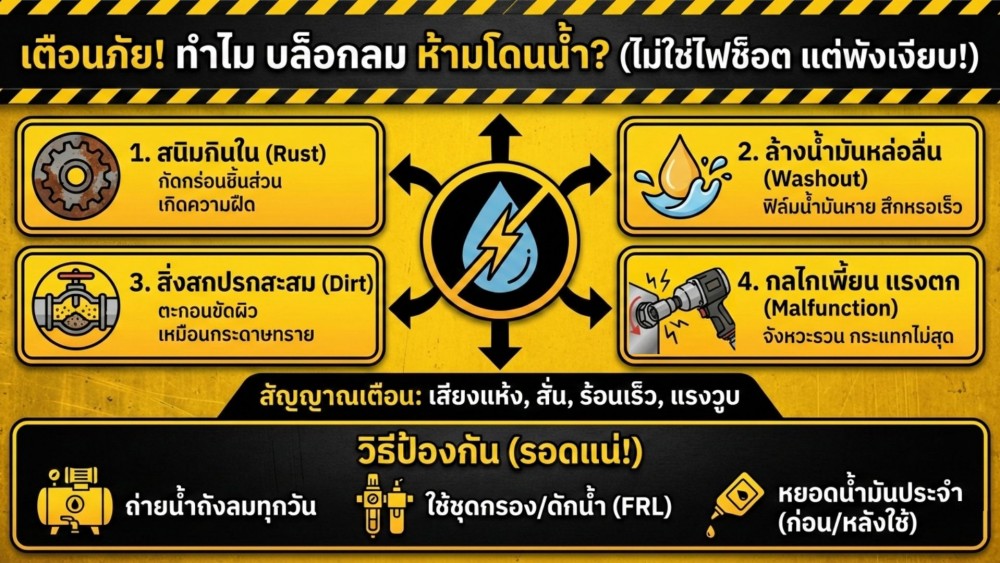
Conclusion: Why should an air impact wrench never be exposed to water?
An air impact wrench doesn't need an electrical short to get ruined. Water gradually causes rust in unseen places, washes away lubricating oil faster, carries dirt and sediment from the air tank and piping to abrade internal surfaces, and makes internal mechanisms stiff and prone to rapid wear—ultimately causing power loss, incomplete impact force, and a quiet breakdown before you even realize it.
Simple checklist to protect your air impact wrench from water
- Drain the air tank regularly
- Use a water separator / air filter before it reaches the tool
- Lubricate air tools regularly (according to usage)
- Avoid placing air impact wrenches on wet surfaces or washing the entire body with water
- If wet work cannot be avoided, increase lubrication after work and store in a dry place
- If it gets heavily exposed to water, deal with it immediately; do not leave it unattended
Invest in Air Impact Gun a good one, and treat it like a "machine" that needs clean, dry air and regular lubrication. Then it will reward you with stable impact power, smooth operation, and last you a long time.