


 EN
 ไทย


Customers Also Purchased


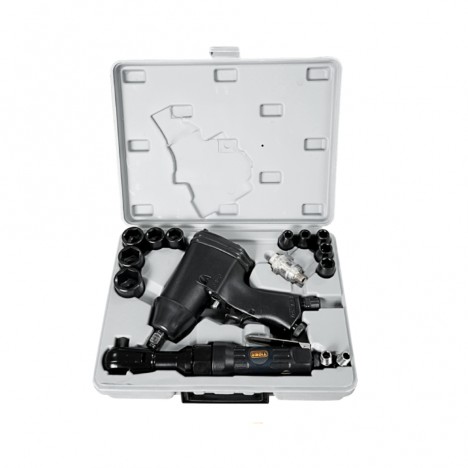
When we see mechanics in garages or service centers using Air Impact Gun loosening lug nuts effortlessly with that loud ratcheting sound, and the compressor kicks in once as the nut comes right off, it looks remarkably easy, doesn't it? So easy that you might want to buy one for yourself. In reality, choosing an air impact wrench involves several factors to consider: torque output capacity, the specific nature of the work, frequency of use, and long-term durability of the tool.
Most importantly, do you have an air compressor appropriately sized to pair with the air impact wrench? If it is too small, actual operation will not run smoothly; the wrench will not deliver full torque, and you will have to pause and wait for the tank to rebuild pressure, causing workflow disruptions, lost time, and potentially premature wear on the tool.
Therefore, selecting an air impact wrench is not just about price or torque output alone. It requires considering whether the available air compressor matches properly to ensure a worthwhile investment and seamless operation.
In this article, I will address the key question: What size air compressor is required to run an air impact wrench properly according to its specifications? to achieve the ideal fit. We will also delve into how tank size affects air impact wrench performance, and what happens if you choose an undersized compressor.
How does an air impact wrench work?
In-depth look at air impact wrenches: What are they, and how useful are they for your work? Before exploring other topics, let's understand the basics: an air impact wrench is a tool powered by air pressure that turns an internal rotor mechanism, converting it into immense torque for tightening or loosening bolts. Its primary advantage is high power delivery and immediate responsiveness. If EA clear comparison: Why air impact wrenches remain popular in the age of power tools An air impact wrench does not require waiting for motor RPM to build up to maximum power; as long as continuous air flows in, it delivers power instantly. Working speed is therefore faster and more continuous, and crucially, there is no motor overheating. However, it relies heavily on an air compressor capable of delivering continuous, sufficient air volume.
Why does an air impact wrench require a high air volume?
- Air impact wrenches consume a lot of air The primary unit of measurement is CFM (cubic feet per minute), or sometimes manufacturers may specify it in L/min (liters per minute) for ease of understanding. Generally, 1 CFM is approximately equal to 28.3 L/min.
- If there is insufficient air, The air impact wrench may not reach its specified torque rating.
- If using an air impact wrench to loosen extremely tight bolts, They might not come off at all if the compressor is too small.
Is the air compressor the heart of an air impact wrench?

Imagine working in an auto repair shop where you need to remove dozens of wheel lug nuts continuously. If the compressor is too small, you'll hear the motor running constantly, yet the delivered air volume still won't be enough to drive the air impact wrench with proper force. Ultimately, a job that should take minutes can turn into hours.
And what should be understood when saying “the air compressor is the heart” is that it is not merely a machine that pumps air, but the defining factor of overall tool performance:
- If it is powerful enough, work flows smoothly and finishes quickly.
- If it is too small, work is interrupted and you have to stop and wait.
- If the tank is large and supplies air continuously, the air impact wrench operates at full power.
- If the airflow is inconsistent, the air impact wrench can wear out quickly.
Therefore, selecting the right size air compressor is not a secondary matter, but choosing a strong "heart" for all your pneumatic tools.
So what size air compressor does an air impact wrench need?
This is the core question that I believe everyone wants an answer to by now, and it is a question that many mechanics still frequently debate. In reality, there is no single fixed answer because multiple factors must be considered—from the size of the air impact wrench most frequently used for that job, to the differing workload demands. Sometimes, general automotive wheel lug nut removal may only require a medium-sized air compressor, but for industrial applications, large trucks, or continuous hours of operation, a small air compressor definitely won't cut it.
To give you a clearer picture, I will summarize a straightforward guideline categorized by air impact wrench size and application.
1/2-inch air impact wrench for general automotive repair
- May require approximately 5–6 CFM of air
- Use with an air compressor tank of 50–100 liters, motor power 2–3 HP
- Suitable for small garages, motorcycle workshops, or DIYers at home
3/4-Inch Air Impact Wrench for Heavier Duty Tasks
- Requires approximately 7–9 CFM of air
- Use with an air compressor tank of 150 liters or more
- Suitable for auto repair shops, pickup trucks, and light trucks
1-Inch Air Impact Wrench for Industrial Work & Heavy Trucks
- Requires over 10 CFM of air
- Air compressor tank of 200 liters or more, 5 HP motor
- Suitable for large repair shops or factories
Is Air Volume (CFM) More Important Than Pressure (PSI)?

A simple example:
A small 24-liter air compressor can pressurize up to 115 PSI, but delivers continuous air flow at only 2–3 CFM The air impact wrench requires 6 CFM, meaning the tank runs out of air in just a few seconds and then stalls This is why you should always look at the CFM first.
The question is: what tank capacity in liters should you choose?
The answer doesn't just depend on tank size alone, but on how much continuous air the compressor can supply. For example, if an air impact wrench specifies a requirement of 5.5 CFM (approx. 156 L/min), a 100-liter compressor with adequate motor power that delivers a continuous 6–7 CFM is sufficient to operate. However, for smoother operation without having to wait frequently for the tank to repressurize, choosing a compressor of 150 liters or more is better. Therefore, 150 liters is not strictly necessary; it depends on the actual CFM delivered by the compressor and your application needs.
- Choose one that delivers 20–30% more CFM than the air impact wrench requires
- Consider tank size as well; a larger tank allows continuous work without frequent repressurizing waits
- Choose a belt-driven model for heavy-duty work; it is more durable than oil-free or direct-drive compressors
- If your regular job is loosening wheel lug nuts on standard passenger cars, and not heavy or major work, choosing a 100-liter air compressor is easily enough to get the job done.
What happens if you choose a size that is too small?
Choosing an improper compressor tank size can directly affect the operation of your air impact wrench and your overall user experience. Therefore, understanding the consequences will help you plan and choose correctly the first time, saving both time and redundant expenses. Let's look at how an undersized air compressor negatively affects an air impact wrench.
1. Wasted work time
Using an air impact wrench, you pull the trigger briefly and then have to wait for the machine to build up air pressure again, leading to interrupted work. Work that should be finished quickly becomes constantly halted—especially when removing multiple bolts in a row or using the air impact wrench continuously. This delay is not only frustrating, but it also disrupts the entire work rhythm.
2. Faster tool wear and tear
The air compressor runs overloaded all the time because it struggles to compress air fast enough to meet demand beyond its capacity. This causes the machine to overheat, leading to accelerated wear on pistons, rings, and valves faster than usual, and sometimes resulting in additional maintenance costs.
3. Air impact wrench damage
Unstable air pressure prevents the internal mechanism of the air impact wrench from rotating smoothly, causing abnormal vibrations that wear down internal components much faster. In some cases, it causes inconsistent torque, failing to loosen bolts or not tightening them to the required standard.
4. Escalating expenses
Ultimately, you may have to buy a larger air compressor anyway, alongside hidden expenses such as higher electricity bills from the machine running more frequently, repair costs for the impact wrench damaged by inconsistent air pressure, or time lost from work delays.
So, how should beginners start?
If you are just starting out, I recommend looking at your "actual primary work" first. There's no need to rush into buying a massive 200-liter air compressor when you don't yet know how much you will actually use it. If you are doing DIY and your usage is just removing car wheel nuts at home without running a garage, a medium-sized 50–100 liter compressor is considered sufficient and worthwhile. It easily handles general tasks, saves storage space, and is more energy-efficient.
However, if you plan on doing continuous work—such as opening a small workshop that requires loosening bolts frequently throughout the day, or using multiple air tools at the same time—a small air compressor might not fit your needs. It is better to invest in a large tank compressor of 150–200 liters or more. Even though it costs more initially, it will save time, reduce waiting, and extend the lifespan of all your tools in the long run.
Simply put, beginners should start by evaluating their actual workload first. If you use it lightly, choose a medium size; but for frequent and continuous use, investing in a slightly larger air compressor is definitely the most worthwhile.

Summary
Every time I pick up an air impact wrench and hook it up to the compressor, I always think of the phrase "a matching pair." The air compressor size really matters. If the compressor is too small, no matter how great your impact wrench is, it is like having powerful gear you can't use to its full potential. But if you choose the right compressor size, the impact wrench will operate with real power without ruining your mood during work.
So before buying an air impact wrench every time, don't forget to ask yourself: "Can my existing air compressor handle it?" If not, it's time to plan and invest in the right air compressor so your work runs smoothly every time you pull the trigger.
A suitable air compressor doesn't just get the job done quickly, it also makes Air Impact Gun it a tool you will frequently reach for and use for a long time.