


 EN
 ไทย


Customers Also Purchased


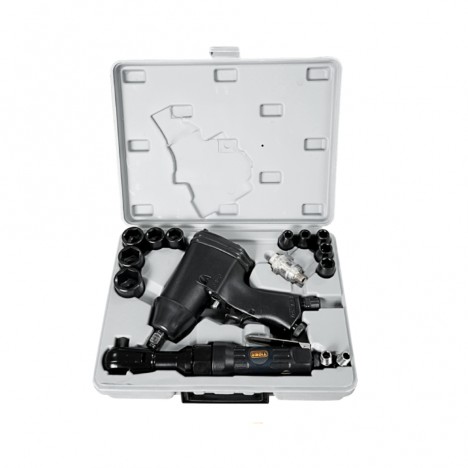
Imagine you are rushing to tighten or loosen Air Impact Gun with all your might, but the bolt won't budge at all. Even though earlier this morning it came off in just a few seconds, that once-solid sound has turned into a faint, weak vibration as if the air impact wrench has run out of power. Situations like this leave many mechanics utterly frustrated, wondering: is the air impact wrench broken? Or is there a major issue throughout the entire air system?
The truth is, an air impact wrench "losing power" is one of the most common symptoms found in auto repair shops and all heavy-duty jobs. Most of the time, the tool isn't broken, but rather it's small details that are frequently overlooked.
So, let's take a deep dive into where the air impact wrench's power actually goes missing. Is it lost right at the source from the air compressor? Lost along the way through pipes and air hoses? Or is the air tool you're holding in your hands simply getting worn out? Sometimes, it might even be our own habits, unknowingly putting more daily strain on the impact wrench than it is built to handle.
Because no matter how great an air impact wrench you buy from a world-class brand, if the air supply system is incomplete or neglected, the power will still drop. Therefore, let's trace point by point as if following the air line together—from the air compressor, air tank, piping, hoses, and fittings, right down to the inside of the air impact wrench itself—to see what simple improvements can be made without rushing to the repair shop every time the power feels weak.
1. Source: A tiny hiccup in the air compressor immediately affects the air impact wrench
What size air compressor do you really need for an air impact wrench? What happens if it's too small? This is the number one cause of power loss across all tasks. Especially during rush hours, such as when running an air hammer or a 1/2"–1" air impact wrench continuously, if the air compressor cannot supply sufficient air, the air impact wrench will show a noticeable "power drop".
- Symptoms encountered: The air impact wrench starts sounding quieter, rotational speed drops, and you have to wait for the air compressor to cycle on and off repeatedly.
- Values you should know: A typical air impact wrench requires around 90 PSI. Airflow rate (CFM) corresponds to the size of the air compressor. If CFM is insufficient, the air impact wrench will not be able to operate at full power.

In addition, source-end issues with the air compressor can have other causes, such as:
Too much water accumulated in the air tank
I once encountered a case where opening a 200-liter air tank released almost half a glass of water. Every time the air impact wrench operated, the exiting air was full of water mist, visibly reducing its power immediately.
Many people forget to drain water from the air tank. The more humid the air, the easier it accumulates. When there is a lot of water, usable air volume decreases and the discharge pressure from the tank drops. As a result, air mixes with water, making the airflow weak, and moisture enters the air impact wrench, causing the rotor vanes to wear out quickly.
Setting the regulator pressure too low
Some people set the pressure at 70–80 PSI, thinking it saves electricity and prevents the air compressor from working too hard. But most air impact wrenches require 90 PSI to work at full power. If it's less than that, power will definitely drop.
2. In transit: Hoses, pipes, and fittings matter more than you think
Imagine air traveling from the air compressor and having to pass through pipes, air hoses, and several fittings before reaching the air impact wrench. Along the way is precisely the point many overlook, because just a slightly undersized pipe or a fitting loose by just a thread can rob the air impact wrench of power.
Air pipe too small (undersized inner diameter)
Many workshops use 1/4" piping for the entire system because it's cheap, but air flow cannot keep up. Especially when revving the air impact wrench to high speeds, the result is that downstream pressure drops, the tool fails to reach full RPM, and the sound becomes "faint" as if it can't catch its breath. Ideally, to standard, you should use 3/8" or 1/2" piping to unleash the full power and efficiency of the air impact wrench.
Air hose is too long or tightly coiled in multiple layers
The longer the air hose, the more pressure drops—just like using a 20-meter garden hose, you can feel the water pressure is weaker. Air impact wrenches are no different.
A hose that is too long might require repeatedly feathering the trigger to reach full speed, and it will barely manage heavy-duty tasks. It feels like having to build up RPM for a long time before the tool responds as needed, which noticeably slows down work, especially when loosening very tight bolts or facing high-torque demands.
When the air impact wrench loses pressure over the distance of a long hose, you'll need to rev it repeatedly, making you feel the tool works slower, is more exhausting, and cannot be used to its full potential.
Therefore, if the hose is longer than 15–20 meters and you aren't using a large-diameter hose, the air impact wrench will definitely lose power.
Air fittings leaking or thread seal tape deteriorated
This is also commonly encountered. Just a single leak can cause continuous pressure drop; in some cases, leaks start right at the source at the air tank itself.
An easy check method is to apply soapy water along the fittings. If bubbles form, it indicates a hole or an invisible air leak.
The air filter is clogged or hasn't been changed in a long time.
If the filter is clogged, less air can pass through, which can also cause a pressure drop. Some people assume the air impact wrench is broken, but in reality, it's just a clogged filter preventing adequate airflow.
3. Loss of power originating from the air impact wrench itself: Not broken, just needs maintenance of spare parts
Many times, a technician picks up an air impact wrench and finds that the tool still spins, but the power has mysteriously vanished, even though the air system seems normal. That's precisely when we should take a closer look at the tool itself.
Inside an air impact wrench, there are several small components that heavily rely on proper lubrication and optimal working conditions. Improper care can lower the impact wrench's torque and keep it from performing as expected in actual use.
Air impact wrench lacking pneumatic tool oil (Air Tool Oil)
This is a mistake that many technicians overlook. Air impact wrenches require lubricating oil so internal components run smoothly and at full efficiency, no different from an engine.
When an air impact wrench lacks oil, internal vanes become stiff, preventing full rotation, causing a sudden drop in power, and shortening its service life.

Worn Vanes
The rotor blades, or vanes, are the fastest-wearing spare parts in an air impact wrench because they constantly rub against the cylinder wall. Every time you pull the trigger, air pressure pushes the vanes outwards to rotate with the RPM, meaning this spare part works hard during every single use—especially in continuous-use workshops like truck service centers, tire shops, agricultural vehicle repair shops, or shops that tighten and loosen a massive number of bolts all day.
Repeated friction always makes the vanes the first component to show wear. Symptoms of worn vanes include:
- An increasing grinding or rattling noise, as if the tool is beginning to stumble from the inside.
- Inconsistent power loss, spinning intermittently—especially when high torque is required.
- Failure to accelerate: even with the air valve wide open, the RPM revs sluggishly, as if the air isn't delivering full force.
Many people are puzzled when encountering this issue because the air impact wrench still spins and makes noise, but has "no torque." That is a sign the vanes are worn and can no longer seal air inside the rotor chamber properly. Air that should be driving rotation leaks past instead, causing pressure and torque to drop continuously. If left unattended, the tool will lose so much power it becomes practically unusable and may eventually cause the rotor cylinder to wear out as well, leading to higher repair costs.
Rotor or gear assembly in the air impact wrench is becoming loose
If the rotor is loose or worn, air will leak inside the tool and lose pressure, preventing the air impact wrench from delivering its full power. It also causes unstable RPM, as if the tool hesitates between spinning and stopping. As wear spreads, air leakage worsens, resulting in a noticeable power drop—sometimes even spinning freely without any working torque.
Symptoms like this require disassembly and inspection by a professional technician, as it takes precision and expertise to inspect the surface condition of the rotor, gears, and all internal contact points to evaluate whether to repair, replace, or recalibrate for optimal performance.
5. Usage: Little things that quickly cause air impact wrench fatigue
Daily operating habits are also a major factor in unnoticed power drops in air impact wrenches. Even if your air supply system is solid, hoses are large, and the compressor is fully capable, using the tool continuously beyond its duty cycle or using it inappropriately will cause it to fatigue, lose power, and respond noticeably slower.
Sometimes, an air impact wrench that "seems broken" isn't broken at all; it's simply been pushed beyond its limits or improperly maintained, leading to cumulative issues without anyone noticing. Here are a few examples:
Pushing it continuously with heavy work without letting it rest
One reason why air impact wrenches are still widespread in the era of power tools is because many people understand that air impact wrenches are "more durable" than electric ones. That is true, but if you run it continuously under heavy loads for too long, the tool can overheat and suffer power loss just the same.
Using motor oil instead of pneumatic tool oil
There's an ongoing rumor among technicians that some people do lubricate their air impact wrenches every day, but they use car motor oil instead of air tool oil. Motor oil has too high of a viscosity for pneumatic tools, causing the tool to drag and lose power in the long run due to sticky buildup.
Using the wrong size air impact wrench for the job
A 1/2” air impact wrench isn't designed to remove 10-wheel truck lug nuts. Yet some garages still use it thinking "it should manage," only to find it can't loosen the nuts and assuming the tool is broken, when in fact it's simply a matter of choosing the wrong tool for the job.

Summary: Air impact wrench power loss is nothing to panic about
Many people rush to send their air impact wrenches in for repair when the issue isn't with the tool at all. It often comes down to basic factors like water in the air tank, an undersized air hose, or a lack of pneumatic oil—issues that take less than 5 minutes to fix, restoring full power immediately.
Keeping your air impact wrench running at full power all day long isn't technically complicated at all. All you need is a good air supply system, proper maintenance, and selecting the right size tool for the job. Do these three things, and your air impact wrench will rarely ever stutter, while extending the tool's lifespan significantly and saving on costly repairs.
Great performance without power loss starts with the right choice, Air Impact Gun all the way to paying attention to the small details before, during, and after use.