


 EN
 ไทย


Customers Also Purchased
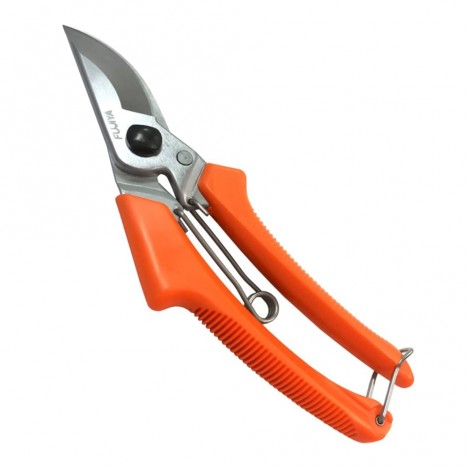

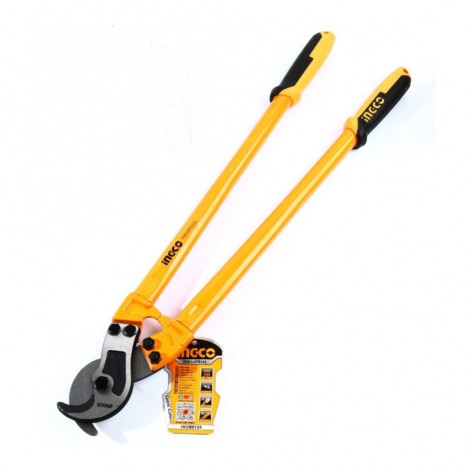
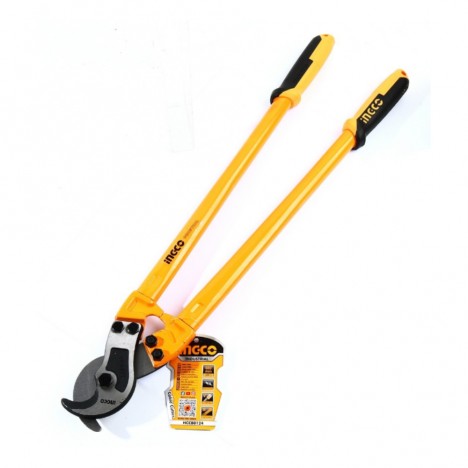


If you're assembling a small shelf at home on a weekend morning, organizing cables, getting every corner neatly in place, and securing everything with zip ties, you then grab a brand new pair of cutting pliers to snip off the excess cable tie ends. Everything looks tidy, until you accidentally touch the freshly cut tip of the cable tie and feel a sharp edge ready to cut your finger—even though you used brand new, sharp cutters that sliced through in a single cut.
Sometimes the same issue occurs with copper wires, electronics, or wire-cutting for DIY projects. If you look closely at the cut ends of the material, you'll notice that the two sides don't look the same: one side looks smoother, while the other side has a sharp peak or a deformed indentation. This makes many wonder whether their cutters are getting dull or if they're simply holding the pliers the wrong way.
In reality, the quality of a cut doesn't depend on sharpness alone, but also on the cutting edge profile, the orientation of the jaws, Cutting Pliers and the type of material being cut. Understanding these details will help both professional tradespeople and DIYers achieve cleaner results without exerting extra effort or wasting time on unnecessary rework.
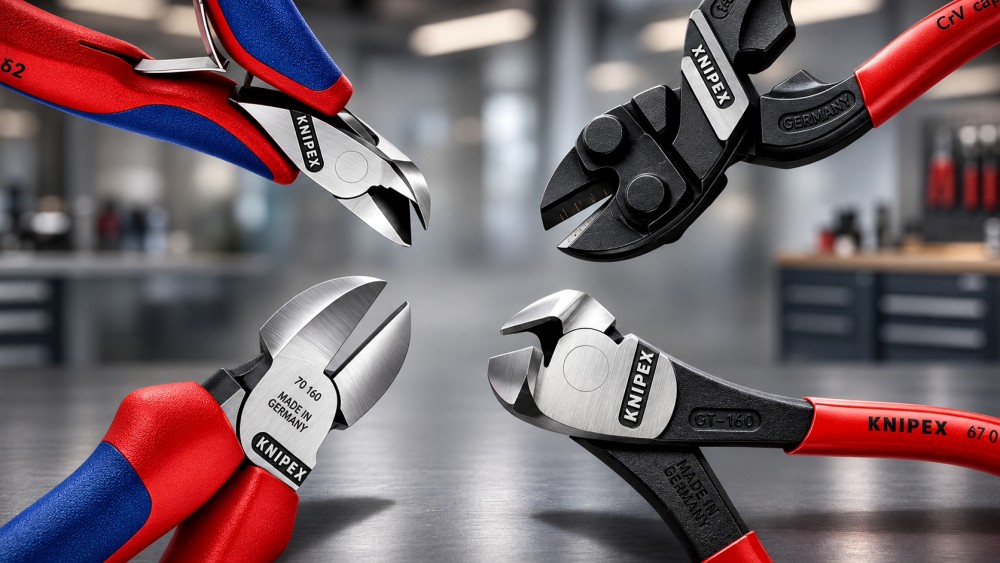
Why do cutting pliers create different shapes on the two cut ends?
First, it's important to understand that cutting pliers don't work like ordinary scissors. Many standard diagonal cutters use two cutting edges squeezing together until the material deforms and shears off. Meanwhile, some precision cutting pliers use specific edge geometries or shearing mechanisms designed to cut closer to the surface. When the cutting edge makes contact with the wire, pressure first deforms the material before it separates. The profile of the remaining cut end is therefore directly related to the bevel angle of the cutting edge and the ductility of the material.
Beveled cutting edges create a wedge-shaped cut on the material end
Standard diagonal cutting pliers typically feature beveled edges—slanted ground edges that slope toward the cutting line. This profile provides more metal backing behind the cutting edge, making it suitable for cutting wires according to the manufacturer's rated capacity. When both edges press together, the material is pinched until it breaks, which can leave a V-shaped or slightly peaked tip, especially on metal wire.
However, this does not mean that these cutting pliers will always produce different shapes on both cut ends. A symmetrical cutting edge profile can leave similar-looking tips on both sides. The variation also depends on workpiece support, the position of the cutting edge, and the force applied during the cut.
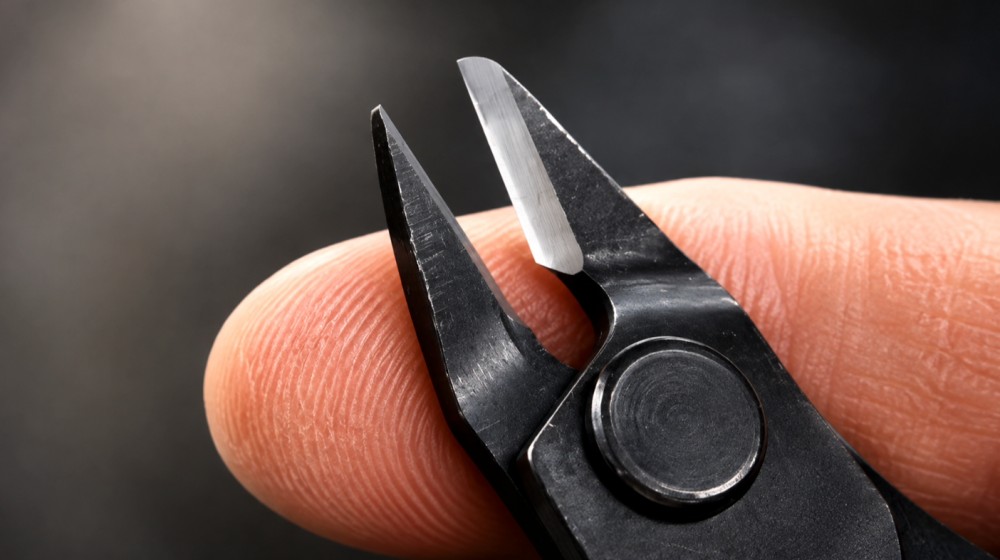
Cutting pliers with a Flush Cut edge
Flush cut pliers are designed to cut certain soft materials closer to the workpiece surface. With cutting edges that have no outer bevel or feature a specialized profile, they help minimize the protruding ridge left after cutting. A clear example is trimming electronic component leads or excess cable ties; using the right flush cutter can leave the retained end much smoother than standard cutting pliers would.
Manufacturers like KNIPEX explain that electronic cutters with flush cutting edges without bevels can deliver flush cuts, particularly on soft wire, but they also have limitations regarding material hardness. Therefore, 'Flush Cut' does not mean it can cut all materials completely flat, nor does it mean the pliers are suitable for cutting hard steel wire.
Which side of the cutting pliers should face toward the workpiece?
For standard diagonal cutting pliers
For cutting pliers with double-sided cutting edges ground with similar bevel angles, it is more important to position the cut perpendicular to the wire and keep the workpiece steady than to try facing a specific side toward the material. For example, when cutting copper wire for DIY assembly, choose a position that the pliers can easily access, place the wire within the cutting edge range specified by the manufacturer, and apply direct squeezing force without twisting the wrist. Tilting the pliers to make the wire end look smoother may instead cause a skewed cut or increase lateral stress on the jaws.
If using flush cutters
Check the cutting edge profile before use. If the pliers have a flat face designed to sit flush against the workpiece, face that side toward the part you want to keep, and face the side with the bevel or clearance angle toward the waste material. For example, when trimming cable ties, position the flat cutting side close to the locking head as supported by the tool, then squeeze firmly to cut it clean off. This helps minimize protruding plastic ends. However, be careful not to crush the locking head with the jaws, and inspect the cut afterward, as even flush cuts can still leave sharp edges.
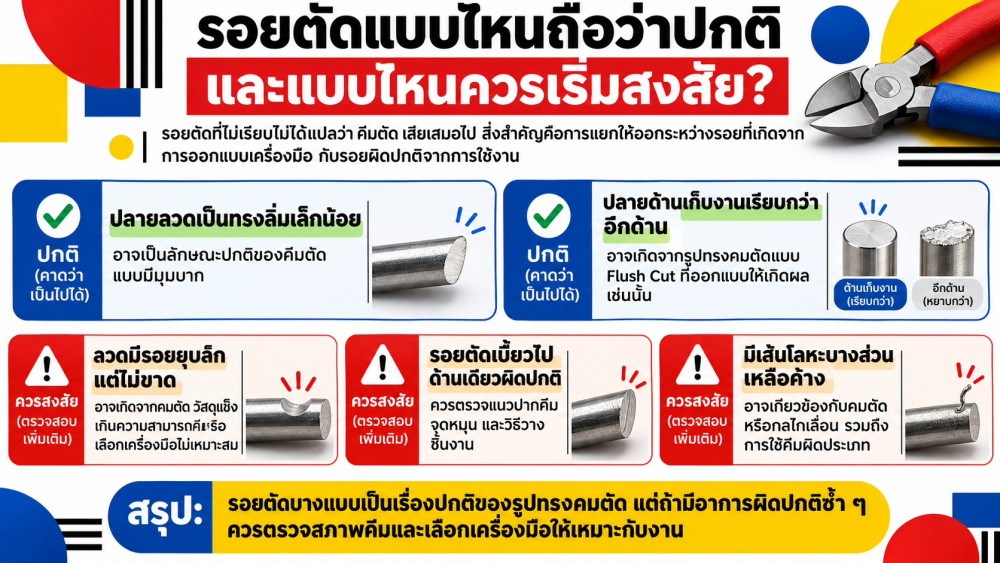
5 Techniques for Using Cutting Pliers for Neater Cuts
Inspect the cutting edge profile before starting work
Open the pliers in a safe position and observe whether the cutting edge area has a bevel or a flat surface. If you need to cut flush against a surface, verify whether the tool truly supports flush cuts. Do not judge solely by the name diagonal cutters, as similar-looking pliers can have different cutting edge geometries and application scopes.
Choose cutting pliers suited to the material hardness
Cutting pliers for electronics typically focus on cut precision, while some general-purpose wire cutters are designed to withstand cutting harder materials. For example, the KNIPEX 70 05 160, a 160 mm diagonal cutter, lists manufacturer specifications indicating a cutting capacity of medium-hard wire up to 3.0 mm in diameter and hard wire up to 2.0 mm. These figures are model-specific specifications, not a standard for all cutting pliers.
Align the cutting pliers squarely with the material
For wire cutting tasks, align the wire perpendicular to the cutting edge following the manufacturer's recommendations, and keep the pliers steady throughout the squeeze. The Canadian Centre for Occupational Health and Safety (CCOHS) advises against rocking the pliers from side to side or twisting the wire while cutting, as this can damage the tool and make cutting force harder to control.
Do not force cuts using only the tips of the jaws every time
Some tasks allow using the tips of the jaws to reach confined spaces, but not all cutting pliers have the same capacity to cut hard materials across the entire edge. If you need to cut tough materials requiring significant force, check the manual to see which section of the cutting edge is rated for it, and never increase leverage by using cheater pipes or striking the pliers with a hammer.
Inspect the workpiece end after cutting
After cutting cable ties, wire, or plastic parts, visually inspect for sharp ends, leftover burrs, or protruding edges. Never run your fingertips over the cut edge to check for smoothness, as this can cause cuts. If the cut does not meet requirements, consider switching to a different tool rather than repeatedly forcing cuts with the same pliers.
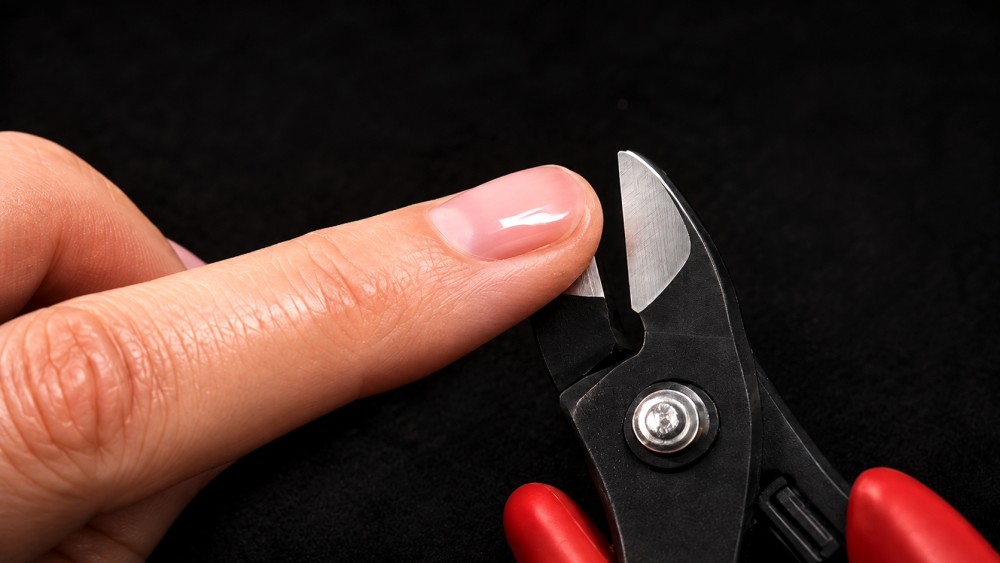
Which Cutting Pliers to Choose for DIY and Maintenance Work?
Home repairs and general wire cutting
Robust diagonal cutters that fit comfortably in hand are a versatile choice, but always check the supported wire types and sizes. The KNIPEX 70 series, for example, represents diagonal cutters that emphasize precision and cutting edge strength, making them well worth considering for wire-cutting tasks within their model specifications. Different types of cutting pliers are designed for different materials and tasks. To get an overview first, check out What Are the 7 Types of Cutting Pliers? and then choose according to the applications below.
Cable ties and plastic assembly work
If the goal is to reduce protruding ends that can cut hands, consider flush-cut pliers designed specifically for plastics and choose a size that accommodates the cable ties you use. This type of cutting plier is better suited for finishing work rather than cutting hard metals.
Electronics and Circuit Board Work
This type of work requires small plier jaws, precise control, and cut edges that do not disturb adjacent components. The KNIPEX Electronic Super Knips model 78 03 125 is an example of precision pliers featuring ground, extremely sharp cutting edges without a bevel and controlled micro cutting-edge offset, supporting cutting thin wires according to manufacturer specifications.
Conclusion
The answer is that both factors must be considered together. Sharp, high-quality cutting pliers may not produce the desired cut if the wrong cutting edge geometry is chosen or if the cutting orientation is improper. General cutting pliers with bevels on both sides don't necessarily have a specific side that must face the workpiece. However, for flush-cut pliers specifically designed with a flat cutting side, facing that flat side toward the part you want to keep can help ensure a clean finish on the workpiece end.
Ultimately, the key is knowing your tools, selecting the right one for the material, and checking the cut surface every time before delivering the work, as small details can determine both the quality and safety of the finished piece.
Select Cutting Pliers to suit the application