


 EN
 ไทย


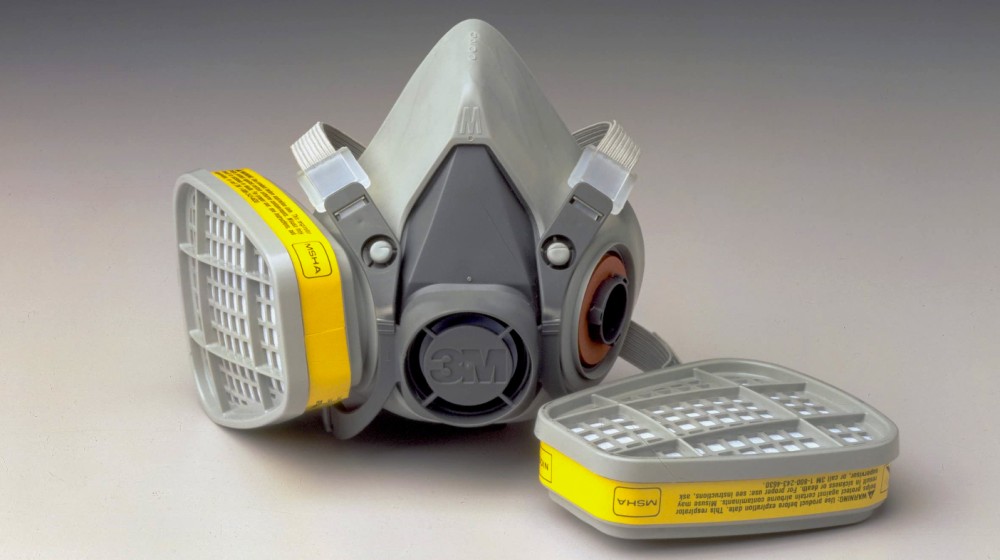
Customers Also Purchased





When choosing a chemical respirator, many people get confused by the codes on the filter cartridges—A1, A2, ABEK, OV, AG, or P100. Some are brown, some black, and some yellow. Common questions follow: "How are they different? Can they be used interchangeably? What type should be used for spray painting?" The first thing to know is that A1/A2 and OV/AG do not belong to the same system. A1 and A2 come from the European EN 14387 standard, while OV and AG are commonly found in the US NIOSH system or used as acronyms for the substances they protect against (e.g., OV = Organic Vapor and AG = Acid Gas). Comparing them must therefore be based on the specific substance you need protection from, not just the letters on the cartridge.
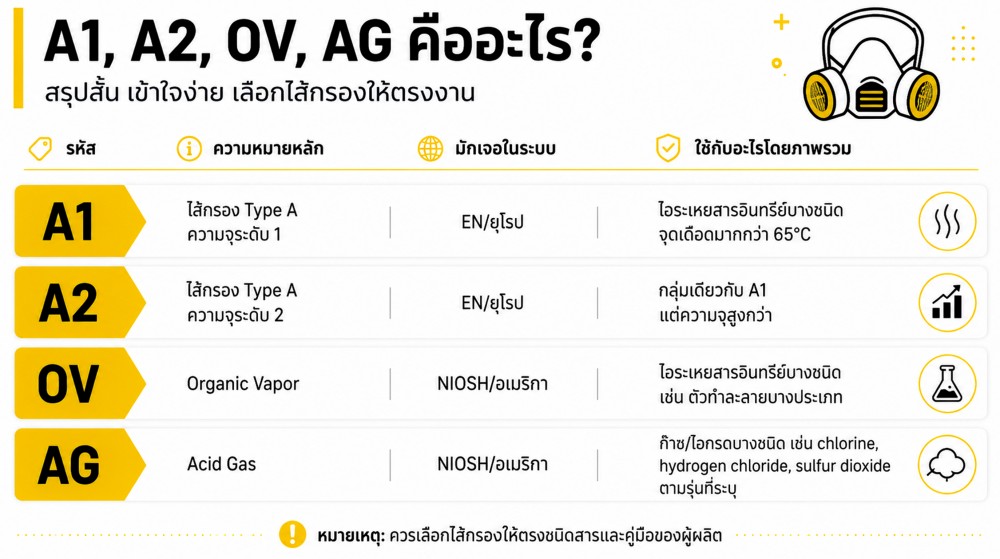
This article will explain the basics of filter cartridges, Safety Masks What are the differences between A1, A2, OV, and AG, what applications are they used for, and how should you choose the right chemical respirator for actual work?
First of all, it must be understood that chemical respirators cannot filter everything.
Chemical respirators with cartridges work by passing air through absorbent materials inside the cartridge before inhalation. Each cartridge is designed for specific groups of substances, such as solvent vapors, acid gases, or ammonia. Therefore, a single cartridge cannot protect against all substances, all concentrations, and all worksite conditions.
Before choosing a cartridge for a chemical respirator, the first thing you need to know is the physical form of the substance you need protection from. Gases/vapors and dust/mists/fumes require different types of cartridges and cannot be used interchangeably. The EN 14387 standard differentiates between gas filters and combination filters used for particulates as well, which aligns with OSHA specifications stating that selection must match the chemical state and physical form of that specific substance.
To illustrate, if the worksite has only thinner odor, you can look for organic vapor cartridges. However, if paint mist or overspray dust is also present, a particulate filter must be added, because odors and mists are completely different things. Odor-filtering cartridges alone do not filter airborne mists.
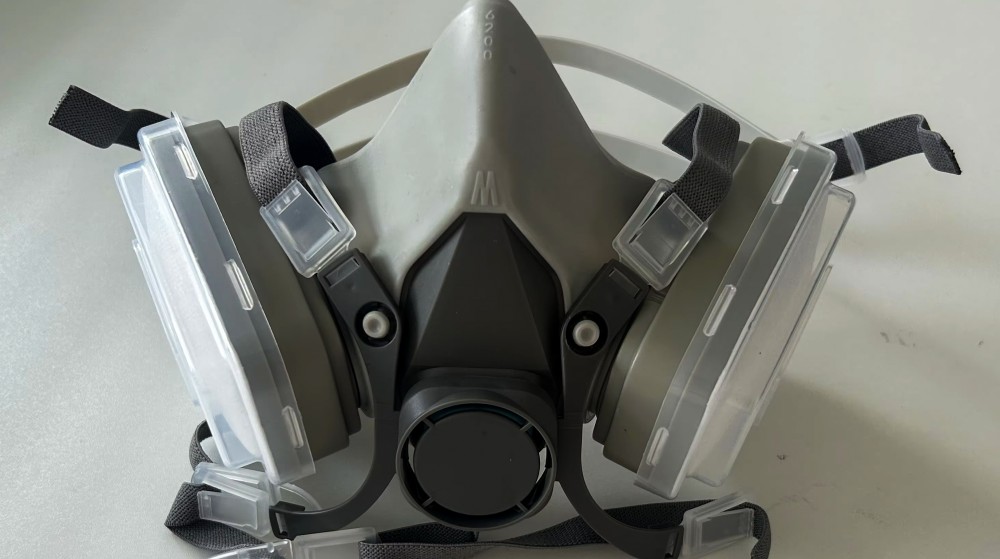
Types of Chemical Respirator Cartridges
What is A1? What applications is it used for?
A1 is a Type A Class 1 filter cartridge according to the EN 14387 standard. The letter "A" denotes protection against certain organic vapors with a boiling point higher than 65°C, while the number "1" represents the lowest capacity class in the A group. It is suitable for light work, short-duration tasks, and jobs where the substance type is clearly identified, such as painting, using adhesives, or surface coating in open areas.A point of caution is that A1 is not the answer for all types of paint work, as different types of paint contain different volatile substances. Some jobs involve paint spray mist, while others contain isocyanates, which require specialized cartridges beyond a basic Type A cartridge. Selection must be based on the substance's SDS document, not just odor.
How does an A2 filter cartridge differ from A1?
An A2 filter cartridge is Type A Class 2, filtering the same group of substances as A1 but with a higher capacity. To put it simply, it is like a larger water bottle—it does not hold a different type of water, but lasts longer under appropriate conditions.A2 is typically chosen for tasks where vapor levels tend to be higher or for work with longer continuous exposure. However, "longer" does not always mean it can be used all day, as actual service life depends on the type of substance, concentration, temperature, and humidity. In summary, A1 and A2 differ in capacity, not substance type.
What is an OV filter cartridge? Why aren't some cartridges labeled A1/A2?
An OV cartridge stands for Organic Vapor. This term is found in the American NIOSH system, which differs from the A1/A2 designations used in the European EN system. Conceptually, OV is closest to Type A, as both address organic vapors. However, one should not simply conclude that OV = A1 or OV = A2 directly, because test standards and certification methods are not the same. Selection must therefore begin with the substance you want to protect against, rather than cross-matching letters across systems.What is an AG filter cartridge? How does it differ from OV?
An AG cartridge stands for Acid Gas, covering certain acid gases such as chlorine, hydrogen chloride, or sulfur dioxide. This is entirely different from OV, which focuses on organic vapors. Therefore, OV and AG cartridges protect against different groups of substances and cannot be used interchangeably.A key thing to remember is that odor is not a reliable indicator of substance type. Some hazardous substances have little odor, or users may become desensitized to odors, leading to misjudgment. If the worksite involves acid vapors, do not choose OV thinking it will block odors just the same.
What is an OV/AG filter cartridge? Is it necessary to choose a combination type?
An OV/AG cartridge is a filter cartridge that handles both organic vapors and acid gases in a single unit. It is suitable for worksites with a mix of multiple substance groups, but this does not mean everyone should always default to buying a combination type, as combination cartridges can be heavier, more expensive, and have higher breathing resistance.The simple principle is that if the worksite has only organic vapors, an OV or Type A cartridge may be sufficient. But if acid gases are also present, you must upgrade to AG or OV/AG. Cost-effectiveness is not about "protecting against more," but about matching the actual risk.
Can A1/A2 filter cartridges be compared to OV, and AG compared to E in the EN standard?
They can be compared in "concept," but they are not "exactly identical." A1/A2 is an EN code, while OV is a NIOSH code. Both cover similar substance groups, but their testing standards differ. Similarly, AG and Type E in the EN system both fall under acid gases, but specific substance details and certifications may not match across all models.What adds to the confusion is the "cartridge color." In the EN system, Type E uses yellow, but NIOSH OV/AG cartridges also use yellow. Therefore, you should not rely on color alone without reading the label. The safest rule of thumb is always to check the code + standard + manufacturer's manual together.
Don't confuse “Gas Filtration” with “Particulate Filtration”
This is where many people unknowingly choose the wrong chemical respirator mask. A1, A2, OV, and AG are only for gases and vapors. If your work site also involves dust, mist, fumes, or airborne particulates, you must have a separate particulate filter, such as P3 under the EN system or P95/P100 under the NIOSH system.
A clear example is spray painting, which involves both solvent vapors and airborne paint mists simultaneously. If you use only a vapor cartridge, paint mists can still pass right through. This requires a combination cartridge or adding a pre-filter according to the manufacturer's recommendations. Clarify your needs before purchasing.
- A1/A2/OV/AG = Filters gases and vapors
- P1/P2/P3 or N95/P95/P100 = Filters dust, mists, fumes, and particulates
- A2P3 or OV/P100 = Combines both into a single set
This is why some people still experience a sore throat or see dust on their faces while wearing a chemical respirator mask. It’s not because the mask is flawed, but because they chose a cartridge that only addresses part of the hazard.
Easy-to-understand examples for selecting chemical respirator cartridges
Painting / spray painting with solvents
If the job involves organic vapors from paint or thinner, you may need an A-series or OV cartridge. But if paint mist is present, particulate filtration must also be included, such as A2P3 or OV/P100 depending on the mask and cartridge system used. When spray painting, you shouldn't choose based merely on "paint odor protection"; you must account for both vapors and mists.
Working with adhesives, coatings, or solvents
If the primary substance is a type of organic vapor, A1/A2 or OV cartridges might be appropriate. However, you must check the SDS to confirm the substance is covered by that cartridge. For infrequent use with low concentrations, A1 may suffice in some cases; for longer durations or higher concentrations, A2 may be more suitable.
Working with acid mists or acid gases
If acid gas is present, you must look for AG or the EN system's Type E. Do not rely solely on OV or A, as they cover different chemical groups. For instance, if the site contains chlorine or hydrogen chloride, select a cartridge certified for those substances according to the manufacturer, rather than assuming any "chemical mask" works universally.
Jobs where the chemicals are unknown
This scenario is the most dangerous because cartridge selection must start with identifying the substance. If the substance or its concentration is unknown, or if you are working in a confined space, an air-purifying cartridge respirator may not be appropriate. A safety professional must evaluate the environment first, as filter cartridges do not supply oxygen and are not suitable for every environment.
Other articles about chemical respirator masks
- 5 Precautions for Maintaining Chemical Respirators After Use!
- Check Now! 5 Warning Signs That Your Chemical Respirator Has Expired!

Conclusion
To sum up simply: A1 and A2 are EN system codes for certain types of organic vapors, differing in capacity—A2 being higher than A1. OV stands for Organic Vapor under the NIOSH system, which is close to Type A but should not be directly compared on a 1:1 basis. AG stands for Acid Gas, which is a different category from OV and closer to Type E in the EN standard.
What you must keep in mind is that no matter how good the filter cartridge is, it is useless if the mask does not seal tightly to your face, if the wrong model is used, or if it isn't replaced on schedule. Choosing a good chemical respirator is not just about buying the most expensive model, but about selecting one suited to the specific chemical, matched to the job, and used correctly from start to finish.
Select Safety Masks and filter cartridges to suit your application