


 EN
 ไทย


Customers Also Purchased
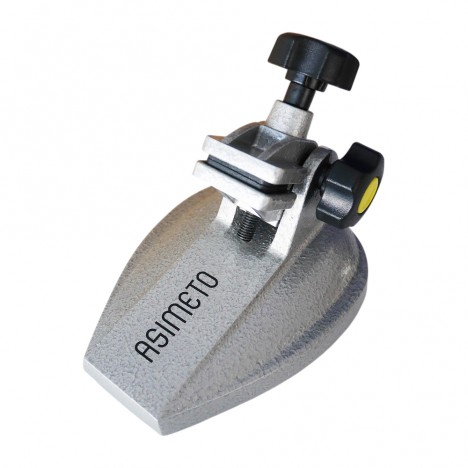
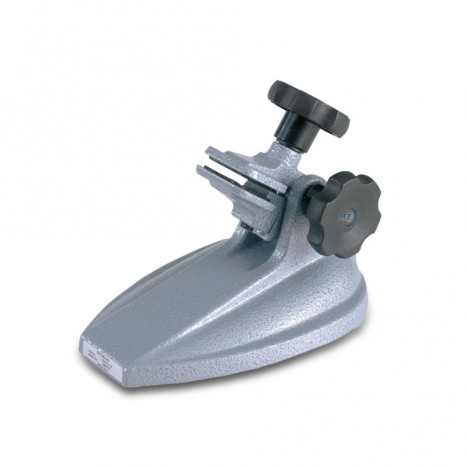
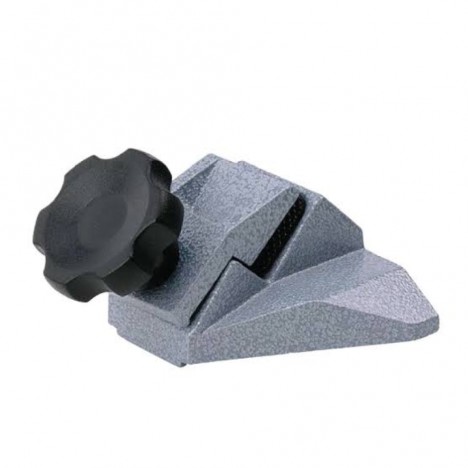
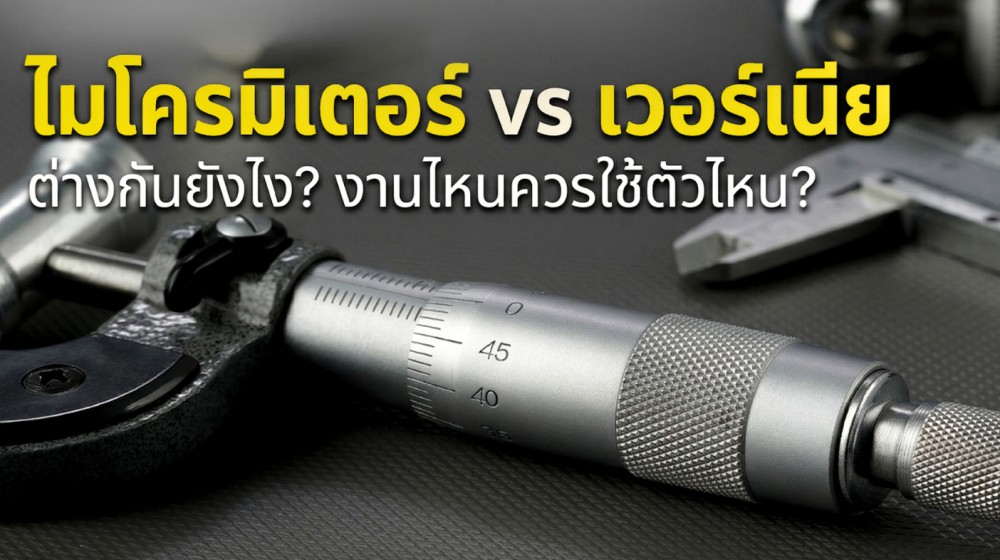
When talking about precision measuring tools, many people often confuse vernier calipers with micrometers because, at first glance, they both measure dimensions similarly, differing only in appearance and resolution. But in the world of craftsmanship where a slight deviation can ruin an entire project, choosing the wrong tool doesn't just waste time—it means making flawed decisions in QC or during the assembly of critical components.
In this article, we'll clearly summarize and clarify which one provides specialized precision, so you can pick the right tool for the job without guessing or spending more money than necessary.
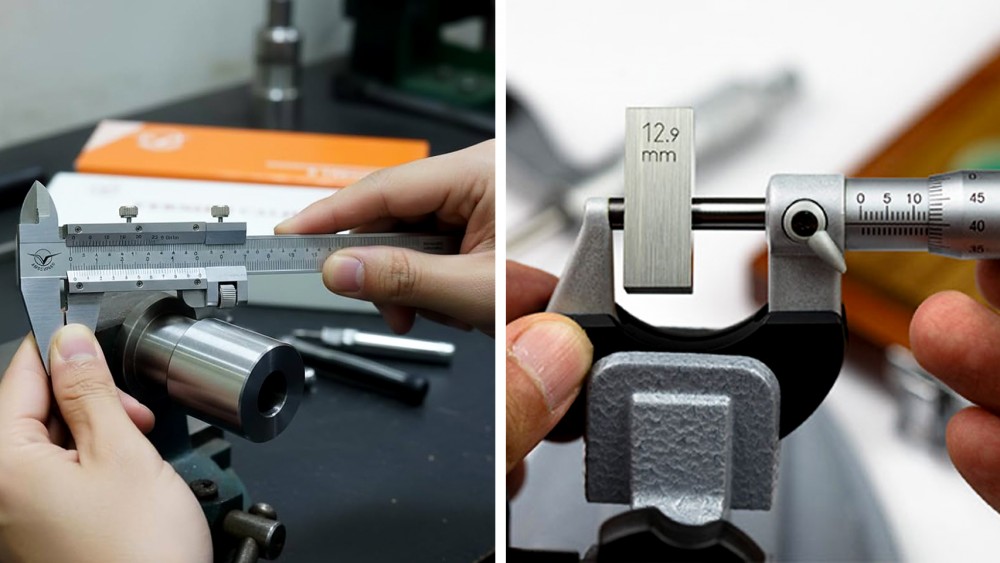
What is a vernier caliper? Why is it a staple measuring tool on almost every workbench?
A vernier caliper, commonly referred to by technicians simply as a "vernier," is an essential, highly versatile workshop tool. Its standout feature is its 4-in-1 capability to measure outside dimensions (thickness/OD), inside dimensions (ID), depth, and step heights. Whether it's lathe work, auto repair, or home DIY projects, vernier calipers are frequently reached for when you need a quick, immediate measurement.
However, this versatility comes with a trade-off. Because it is designed to measure multiple dimensions, its structure is not as rigidly locked down as a micrometer. Precision largely depends on the user's "touch" or hand pressure. Pressing a bit too hard or tilting it slightly will change the reading. That is why a vernier caliper is "easy" to use, but getting truly precise results requires skill.
What is a micrometer? Why does it seem to do less, yet matter more in precision work?
If you look at it Micrometer at a glance, it might seem less accessible and less versatile than a vernier caliper, as it is mostly used to measure only thickness or outside diameter. But what pro technicians pay for when buying a micrometer is confidence in the numbers.
Its secret lies in a fine screw thread mechanism and precise rotation, especially features like the ratchet stop (the clicking thimble) that ensures consistent measuring force every single time. Regardless of who is taking the measurement or differences in hand pressure, the reading remains rock solid. This is why engine work, mold making, or parts with tolerances within 0.01 mm must rely on a micrometer. If a vernier caliper is an all-around jack-of-all-trades, a micrometer is a sniper locked onto precision without missing a single micron."

What kind of work is a vernier caliper suitable for?
If you ask which tool should be on your workbench first, for most craftspeople and mechanics, we still consider Vernier caliper the primary choice, because it is widely applicable and offers great value. Clear applications well-suited for a vernier caliper include general dimension checks on parts, measuring width, thickness, outer diameter, bore size, depth of holes or slots, as well as preliminary inspections during fabrication or repairs.
For instance, in automotive repair, vernier calipers are great for measuring bolt diameters, certain brake pad thicknesses, slot dimensions, washers, or pipe diameters to select spare parts. In welding or structural fabrication, they are conveniently used to check steel thickness, workpiece widths, and dimensions before assembly. In machine shops, vernier calipers are also very useful for prep work or rough sizing before moving to final precision measurement with a micrometer.
What makes the vernier caliper truly stand out is its speed and flexibility, eliminating the need for technicians to switch tools constantly. If your job requires measuring multiple shapes, points, and dimensions where tolerances aren't extremely tight, a vernier caliper saves an immense amount of time.
What kind of work is a micrometer suitable for?
A micrometer is suited for tasks where "close enough" simply won't cut it, requiring firmer, clearer, and more dependable results—especially on external workpiece dimensions such as shafts, pins, sheet metals, or critical components where minor deviations impact assembly or performance.
Common applications requiring a micrometer include lathe work needing tight shaft sizing, pre-QC part inspections, bearing assemblies, sheet thickness checks, mold manufacturing, engine component inspections, and tasks with strictly defined specifications, such as ±0.01 mm or tighter. For these applications, a vernier caliper can provide a rough check, but the micrometer serves as the final judge.
One point many only realize in practical use is that a micrometer is not just more precise, but also far better at eliminating operator bias. With its ratchet force control and defined contact surfaces, measurements stay consistent regardless of who takes them—a vital benefit across multiple operators in a plant or inspection line.
Common Mistakes When Choosing What to Buy
Many people buy only a vernier caliper hoping it covers everything, only to lose confidence when precision work comes along. Others buy a micrometer first thinking it is simply better, only to find it inconvenient for daily tasks due to limited measurement versatility, eventually forcing them to buy a vernier caliper anyway.
The easiest way to decide is to ask yourself what you measure most frequently, and what level of tolerance your work permits. If most tasks are general-purpose, a vernier caliper is the right place to start. But if your work involves shafts, thickness, or fine precision parts with tight tolerances, you should plan to include a micrometer from the outset.
Another frequently overlooked factor is the micrometer's measuring range. Unlike a vernier caliper, a micrometer does not measure across a wide continuous span; it comes in discrete steps, such as 0–25 mm, 25–50 mm, 50–75 mm, etc. Therefore, know your typical part sizes before buying, otherwise you'll end up with an accurate tool that cannot handle your actual work. Once you've purchased the right spec, the next crucial step is proper usage—let's take a look. Don't do it! 5 risky habits that can ruin your micrometer! to protect your beloved tools even further.
Conclusion
If you are still confused today about what should be the first tool on your workbench, start with a simple question: what is your daily work? If you need to make various measurements in a single day—measuring outside, inside, depth—and need speed, a caliper is the better answer. But if your work enters the territory where a difference of a few fractions of a millimeter affects actual use, a micrometer is not a luxury—it is an essential tool.
Many times, mistakes in work are not caused by an unskilled technician, but rather by using tools that do not match the level of decision-making required. Therefore, instead of asking, "Which is better, a micrometer or a caliper?", you might want to rephrase the question to: "Does this job require agility, or does it require certainty?" Once you change the question, the answer usually becomes clear on its own.