


 EN
 ไทย


Customers Also Purchased


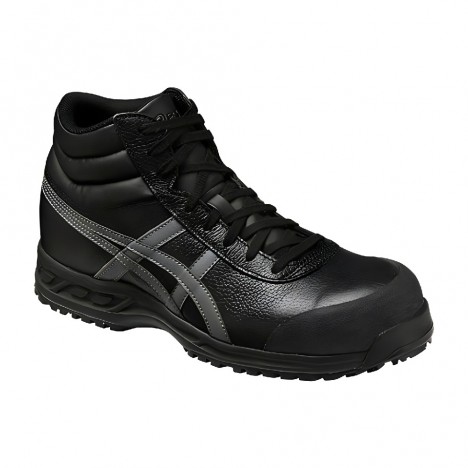
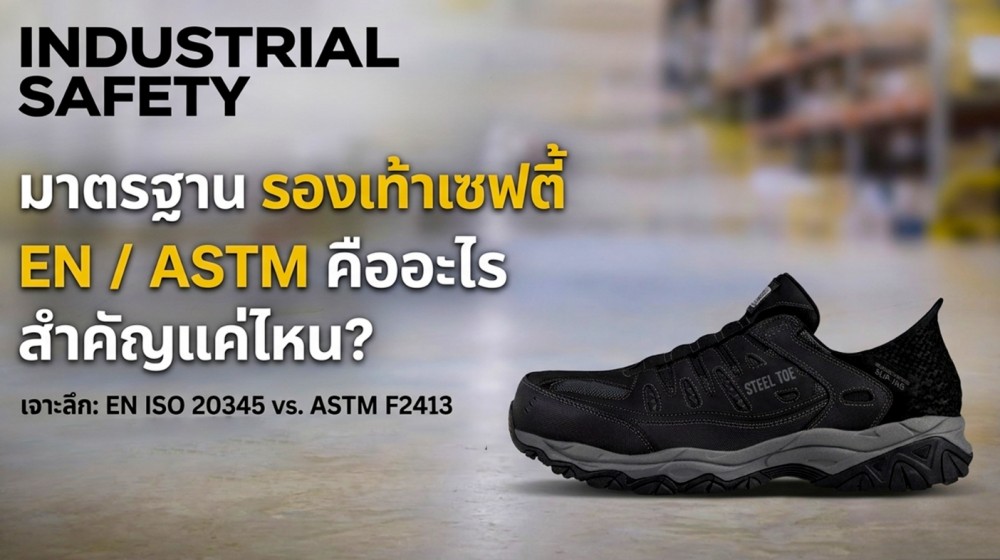
When buying safety shoes, many people just look for the words "steel toe" or decide mainly on appearance and price, right? But when you flip the tag over and see confusing symbols like EN ISO 20345, ASTM, S1, S3, EH, or P, it's completely bewildering! In this article, we'll decode safety shoe labels once and for all.
In this article, we will walk you through in easy-to-understand terms what EN / ASTM safety shoe standards are, how important they are, how they differ, and how buyers should read labels without making mistakes. We won't just stop at translating the codes, but also invite you to look further into practical job site selection. Because in the end, even if a pair of shoes "meets standards," choosing the wrong type might still fail to protect against hazards properly. This is the heart of the matter that many people overlook most.
What are safety shoe standards?
The word "standard" on the label Safety Shoe is not just a fancy marketing buzzword, but a certificate verifying that these shoes have actually passed rigorous testing. It's not just about stuffing steel into the toe cap and claiming it's safe. Simply put, standard codes serve 2 main purposes:
- Filtering real protection from tough-looking decoys: Some pairs look rugged and heavy-duty, but when an actual accident happens, they protect against nothing because they were never tested.
- Indicating specification limits (what they excel at): Standards don't just state whether a pair of shoes is good; they tell you "what type of work they are suitable for." Some excel at puncture resistance against nails, some offer excellent slip resistance, some are made specifically for electricians, while others are fine for warehouse walking but absolutely forbidden on wet construction sites!
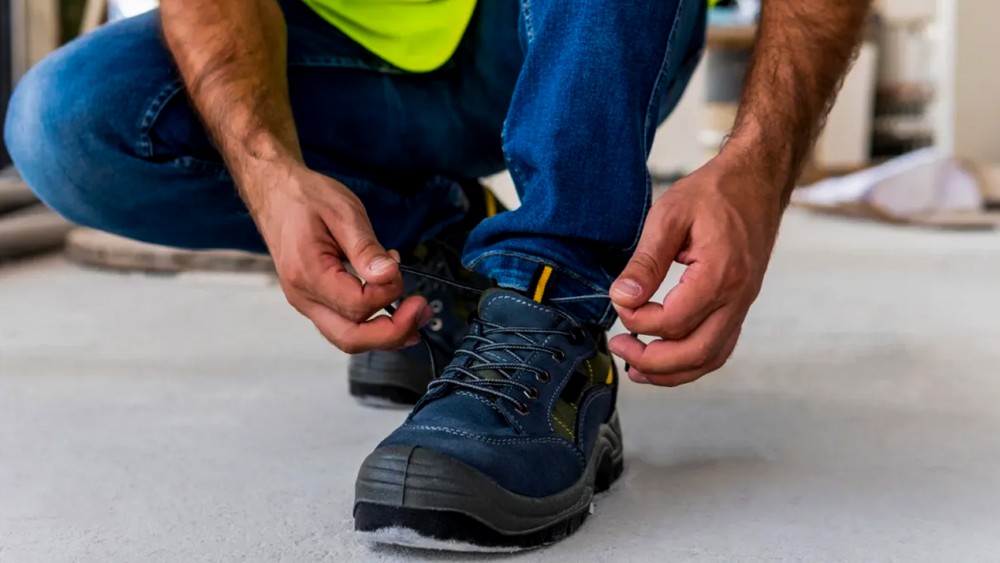
What are EN and ASTM safety shoe standards?
Decoding the 2 major standards: EN (Europe) vs ASTM (America) – what's the difference? To sum it up simply, both camps share the exact same safety goals; they just label and express their specifications in different styles.
The European side (EN / EN ISO), the "bundled package" style, specifies standards by Levels, such as SB, S1, S3. Just seeing a short code tells you what bundled options the shoe includes (e.g., steel toe + puncture-resistant midsole + water resistance), much like ordering a set menu.
The American side (ASTM), the "itemized checklist" style, details granular specifications by individual properties, such as I/75 (impact resistance), EH (electrical hazard protection), PR (puncture resistance). It lists clear abbreviations showing which specific tests were passed, much like ordering à la carte.
Understanding EN / EN ISO 20345 without the confusion
For those buying safety shoes in Thailand, you will encounter shoes referenced to EN or EN ISO standards quite frequently, especially imported goods from Europe or various international brands. At the core of EN ISO 20345 is that it is a safety footwear standard specifying both basic and additional requirements for general use. The first thing people should know is that these shoes are not regular work shoes; they must have toe protection conforming to defined test criteria. From there, they are categorized into common sub-classes such as:
- SB means meeting the basic requirements for safety shoes.
- S1 is typically suitable for indoor, dry environments, offering additional features beyond the basics, such as enhanced sole comfort, antistatic properties at specified levels, energy absorption in the heel area, and fuel oil resistance on the outsole.
- S1P is S1 with the addition of puncture-resistant sole protection.
- S2 refers to shoes with additional water penetration and absorption resistance on the upper, making them suitable for wetter environments.
- S3 is a highly popular category in industrial and construction work, combining puncture-resistant soles with cleated outsoles or equivalent features according to the model/standard version.
So how do you read ASTM F2413?
If you encounter an American label on safety shoes, the terminology used will be slightly different, but once you grasp the basics, it is very easy to read. Common examples include codes like ASTM F2413-18 M/I/C EH, or newer models may reference the latest version year of the standard. The key point to look at is the code series following the standard name, which indicates the properties the footwear has passed. The most common codes include:
- I = Impact resistance, or protection against impact at the toe area
- C = Compression resistance, or protection against compressive/crushing forces at the toe area
- EH = Electrical Hazard, helps protect against certain electrical hazard scenarios under specific test conditions
- PR = Puncture Resistant, or puncture-resistant outsoles/midsoles
- Mt = Metatarsal protection, shields the upper foot/instep area
- SD = Static Dissipative, dissipates static electricity within a specified range
- CD = Conductive, used in specialized applications requiring specific electrostatic control
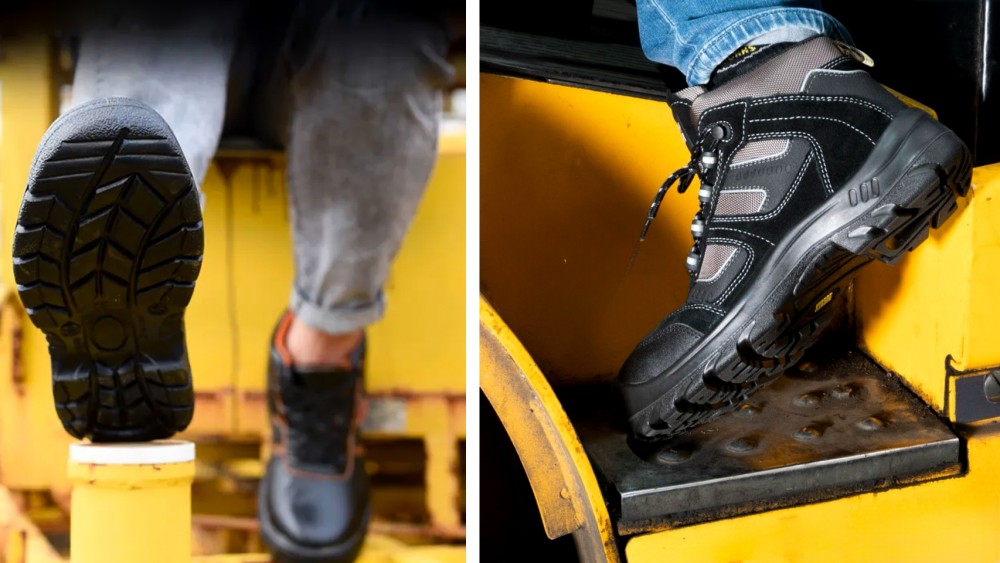
Steel Toe Safety Shoes = The Safest?
A common misconception: Is just having a "steel toe" really safe enough? Many people assume that seeing "steel toe" or "composite toe" means that pair is ready for any job site... That is totally wrong! Impact protection at the toe is only a "single layer of defense" for safety shoes. On real work sites, we don't just face falling objects; there are also hidden hazards like puncture nails, slippery oily floors, or electric shocks. Choosing the wrong safety shoes for the job = having safety gear is like having none at all!
- Warehouse vs. Construction: Steel toes alone are perfectly fine for walking around warehouses. But if you take them to a construction site full of scrap metal and nails, you'll definitely get punctures through the soles! (You must choose a model with a puncture-resistant plate).
- Watch out for slippery floors: Even with steel toes and puncture plates, if the tread pattern isn't designed to grip wet or oil-stained floors... you can still slip and get injured just the same.
- Electricians (EH): Not a magic shield. Electrical hazard footwear helps save your life under specified conditions, but it doesn't mean wearing them turns you into a superhero who can work with high voltage while ignoring other safety protocols.
EN vs. ASTM: Which one is better?
This is a very common question, and while it seems simple, it cannot be answered definitively. It is not a direct competition of which is superior. What should be asked instead is which standard the safety shoes pass, and whether those certified properties match the risks of your specific job.
Safety shoes properly certified under EN ISO 20345 from a reputable brand might suit your work better than ASTM-certified shoes that lack certain features you actually need. On the other hand, ASTM-certified shoes with complete I/C/EH/PR codes may more clearly address specialized tasks, as the label reads more directly with itemized features.
From an actual user's perspective, the key is not arguing whether "Europe is better than America" or "America is better than Europe," but understanding enough of each standard's language to select based on job requirements, risks, and actual working conditions. To sum it up practically: A standard that fits your job is always more important than one that sounds stricter but exceeds your needs.
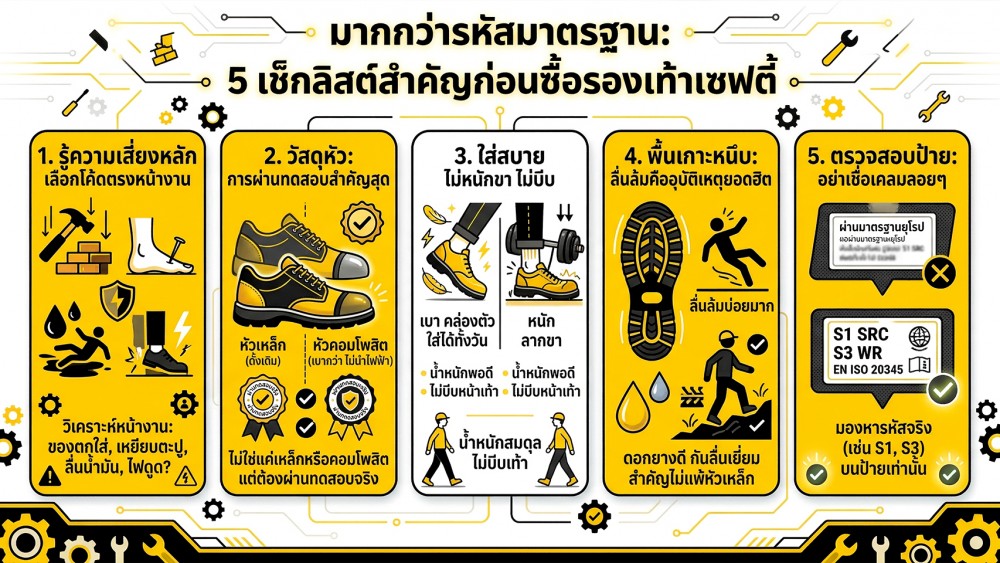
Standards are the baseline, not the final answer
This is the point we want to emphasize most. Many articles simply explain that if it meets standards, it's good to buy. But in the real world of practical use, a standard is merely a minimum baseline ensuring that the safety shoes have passed tests in specified areas. It does not mean they are the best for everyone, nor that they are the most comfortable, most durable, or suitable for all job conditions.
To give a simple example: two pairs of safety shoes can meet similar standards, but one may have a narrow toe-box design while the other is wide; one suits people who walk a lot, while the other is better for standing in place; one excels in breathability, while the other shines in waterproofing. Therefore, when buyers read standards, they should use them as a "foundation" and then consider actual fit, ergonomics, weight, materials, and job site conditions.
In other words, don't view standards as a guarantee that every pair of safety shoes with the same code will provide the same experience. Standards measure minimum safety requirements, not directly how well the shoe fits your foot. Beyond the fit, many people also frequently ask: How do electrical hazard, waterproof, and slip-resistant safety shoes differ in application? So you can choose a pair that truly gets the job done.
How to Read Safety Shoe Labels for Practical Use
If you're standing in front of the product, I recommend this simple approach: start by checking which standard it references. For European standards, you will often see EN ISO 20345 followed by a class like S1, S3, or additional codes. For American standards, you will usually see ASTM F2413 followed by a series of codes indicating properties. Then ask yourself 3 questions:
- What is the primary hazard in our work?
- Do these shoes truly feature the properties that match that hazard?
- Is the provided information clear and reliable enough?
If you can't answer any of these questions, don't buy them just for a promotion or nice look—especially when it comes to safety shoes used in real industrial work. Using the wrong type isn't just uncomfortable; its true cost is the physical risk to your body.
Summary
EN / ASTM safety shoe standards are extremely important! They help distinguish between "shoes that merely look safe" and "shoes that have truly passed rigorous tests." Even so, standards aren't the only answer. Your ideal safety shoes must meet these 3 golden rules simultaneously:
- Certified by standards with clear testing evidence
- Matched to risks, providing targeted protection for actual job-site conditions
- All-day comfort—they must be practical for real work without causing foot pain. If any aspect is missing, the safety effectiveness drops immediately!
Select Safety Shoe to suit the application