


 EN
 ไทย



Customers Also Purchased
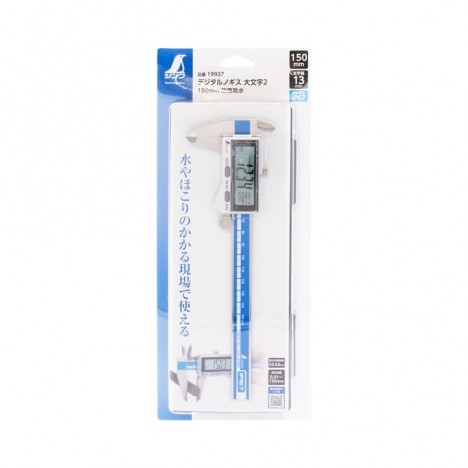
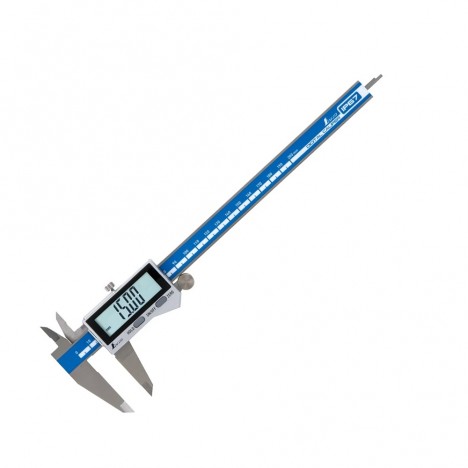
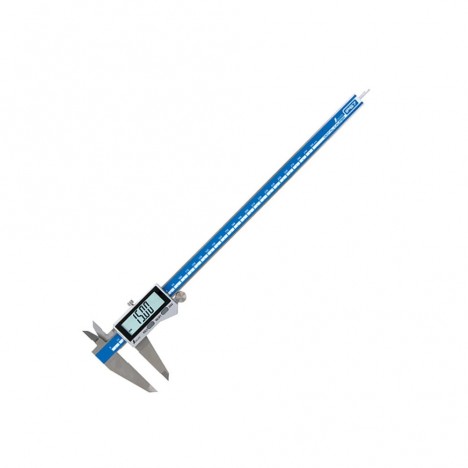
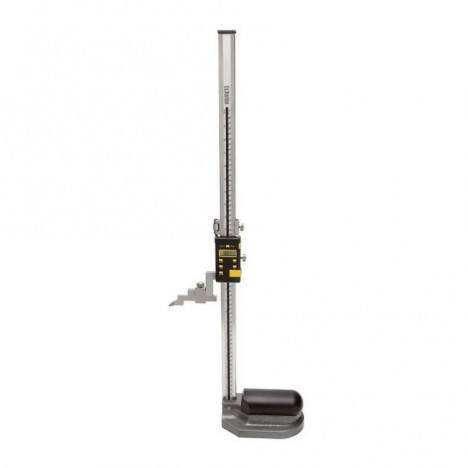
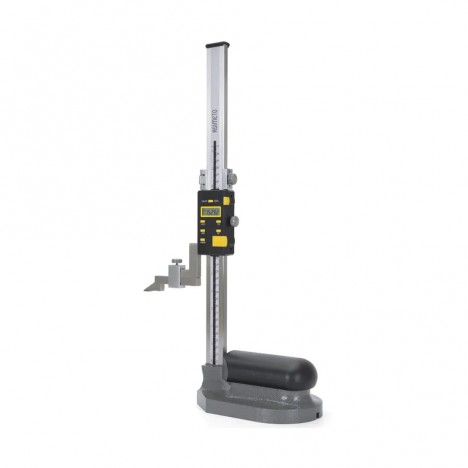
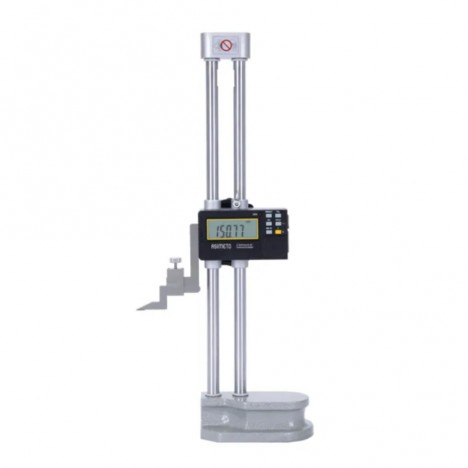
Vernier caliper Considered a highly precise measuring tool with great flexibility for various measurements such as thickness, outer diameter, inner diameter, length, width, and depth of various objects all in one tool, it can truly be called a complete measuring instrument.
Vernier calipers are usually made of steel. However, carbon materials (plastics) can sometimes be used. In certain situations where steel might cause scratches, plastic is suitable for use. When it comes to general Vernier caliper resolutions, they range from 0.1 to 0.02 mm; however, the most commonly used is 0.02 mm, and the most common measuring range is 0 to 15 mm or 6 inches, though it can be extended depending on job site requirements. It is one of the well-known linear measuring tools used to obtain accurate measurements.
How a Vernier Caliper Works
When it comes to measuring the diameter of various objects, a vernier caliper is the ideal choice. Whether measuring inside or outside diameters, a vernier caliper accomplishes the task easily and accurately.
To measure thickness, length, and width, you can certainly use a Vernier caliper. Use the larger jaws to grip the object for external dimensional measurements. You can also use it to measure depth; Vernier calipers are fitted with a thin rod at the back. Use this depth rod to measure the depth of your desired object, ensuring the depth is within 15 mm or 6 inches. The Vernier caliper is one of the primary measuring tools widely used in various fields, such as engineering, medicine, construction, as well as DIY projects.

Pros and Cons of Vernier Calipers
Advantages of Vernier Calipers
- Accuracy: The first advantage of a vernier caliper is that it provides more accurate readings than other measuring tools.
- Versatility: A vernier caliper is a multipurpose tool suitable for a wide range of applications. It can be used to take internal, external, and depth measurements.
- Durability: Because vernier calipers are made of strong materials like stainless steel, they are durable and can be used for a long time.
- No additional scale required: For direct-reading vernier calipers, there is a fixed scale and a movable scale. They do not require a separate scale to take measurements.
Disadvantages of Vernier Calipers
- Potential for error: The viewing angle when reading is critical. Errors are likely to occur when used by less experienced individuals.
- Additional scale required: Indirect-reading calipers require a separate ruler or relevant scale to calculate the measurement.
- Good eyesight required: Vernier and dial calipers require good eyesight. Those with poor vision will have difficulty reading the measured values.
- Zero error: One of the most common disadvantages of using a vernier caliper is zero error. When the jaws are fully closed, the reading must indicate zero. If it does not show zero, a zero error exists. A vernier caliper with zero error needs to be recalibrated or repaired, as it will cause inaccurate readings.

Types of Vernier Calipers
The word "vernier" does not refer to a single shape or form. There are several models and types known as calipers. The easiest way to distinguish them is by the reading scale—whether the scale is separate or attached to the tool itself.
Indirect-reading calipers
- Inside Caliper Designed to measure the internal dimensions of an object. The legs of an inside caliper are adjusted to the object to obtain the desired dimension.
- Outside Caliper Outside calipers are designed to measure the external dimensions of an object. Similar to inside calipers, the legs of an outside caliper are adjusted to obtain the desired dimension.
- Divider Caliper Divider calipers, commonly known as compasses, are used to mark positions on a surface. The tips of the legs are very sharp, making it easy to draw arcs or circles. They are also used to measure distances between points on a map.
- Odd leg caliper: An odd leg caliper has a bent leg designed to scribe lines while the bent leg runs along the edge of the workpiece.
Direct-reading calipers
Direct-reading calipers have an accurate scale built directly into the caliper itself. Although they use displays (whether mechanical or digital), they differ in several factors. Direct-reading calipers include the following types:
- Vernier Caliper Just as the name suggests, a vernier caliper uses a vernier scale. It consists of two scales: the first is fixed, and the second slides.
- Dial Caliper Although the mechanism of a dial caliper is complex, reading the caliper is easier than reading a vernier caliper. Dial calipers use a dial indicator to display readings.
- Digital Caliper Caliper Digital models feature an electronic digital display and offer the easiest way to read measurements. They allow you to switch between mm or inches with a single button.
Benefits and Applications of Vernier Calipers

Using Vernier Calipers in Science Laboratories
One of the main uses of this vernier is to study material expansion due to varying temperatures to determine material properties. It is used to measure dimensions of various equipment. In addition, it is useful for measuring regular and irregularly shaped objects from the inside or outside.
Using Vernier Calipers for Medical Purposes
The medical and surgical industry relies heavily on vernier calipers because the dimensions of instruments are measured to ensure suitability for surgery. Accuracy and precision are crucial, as every instrument is highly sensitive to even minor changes and must be precisely measured since they operate in extremely complex areas.
Using Vernier Calipers in the Steel Industry
During production or when inspecting dimensions of by-products to ensure they meet required standards, using a vernier caliper is recommended. It is used to measure the width and height of various objects, helping measure holes, pipe widths, circumference of metal pellets, etc.
Using Vernier Calipers in the Aerospace Industry
The aerospace industry operates with absolute precision. A tiny variation in an object's dimensional changes can be catastrophic. Using a vernier caliper helps ensure safety standards and precision when working with small components essential for flight.
Using Vernier Calipers in Education
In schools and engineering institutions, using vernier calipers allows students to measure tools and other objects used in physics or other fields, and also helps correct zero errors. Using this tool to measure internal and external dimensions of cylindrical objects is one of several modern physics experiments.
Select Vernier caliper each type to suit your application here.