EN
 ไทย


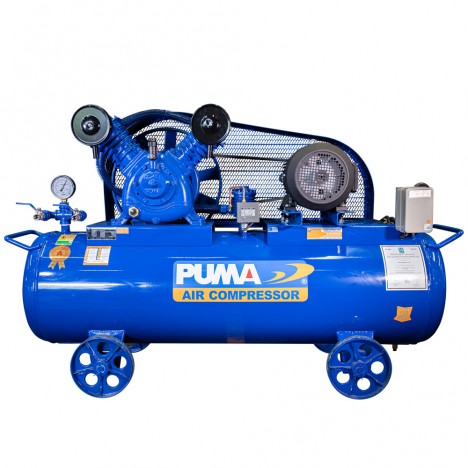
An auto repair shop running an air compressor all day, a furniture workshop using pneumatic nailers all week, or a household keeping an air compressor for occasional tire inflation and spray painting—these three places might use Piston Air Pump different types or sizes, such as direct-drive rotary compressors versus belt-drive compressors. However, Many people might maintain them all the same way: fill the oil once when bought, and never check it again— until the machine becomes loud, overheats, or pumps air slower and slower.
If the oil in the machine isn't low yet, that means it's still fine to use, right? The truth is, oil in the crankcase can degrade even when the level is full. Heat, moisture, and metal particles from wear gradually reduce lubrication performance, so a seemingly normal oil level doesn't mean the oil is still in good condition.
Let's take a look at What oil does in a piston air compressor, when it should be changed, what type to choose, and how much to fill. Correct changing procedures and how to read symptoms from used oil to see what your machine is telling you.
Why oil in a piston air compressor is more important than many people think?
Oil-lubricated piston air compressors have a crankshaft rotating in an oil sump at the bottom. The crankshaft drives connecting rods and pistons up and down to compress air. Oil serves to lubricate bearings, connecting rods, and cylinder walls, helps dissipate heat from friction surfaces, and ensures piston rings seal properly against cylinder walls.
When oil in a piston air compressor degrades, the oil film separating metal surfaces thins out. Components suffer more friction, the machine runs hotter, piston rings wear out faster, and air delivery decreases. Unlike oil-free compressors which have no oil sump at all—if yours is an oil-free model, the oil change tips in this article do not apply.
Think of it like motor oil in a car: we don't change it because it ran dry, but because it degraded. The key rule used throughout this article is that oil in a piston air compressor must be changed based on usage and oil condition, not by waiting for the level to drop.
The first oil change for a piston air compressor must be done sooner than regular intervals
A new piston air compressor undergoes a break-in period initially. Newly assembled parts create friction until properly seated, causing a certain amount of fine metal particles to wear off into the oil.
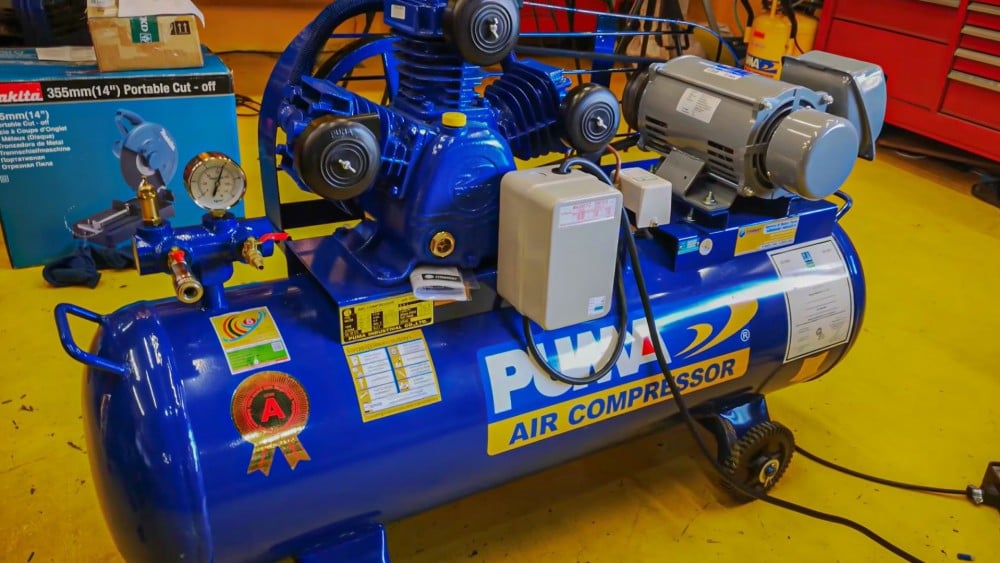
Therefore, the first oil change should follow the operating hours or timeframe specified in the machine's manual for the break-in period, which is usually much sooner than regular service intervals. Changing it on time helps flush out early metal shavings, preventing them from circulating and wearing out components further. If you bought a used machine without maintenance history, change the oil immediately before putting it into service.
Piston air compressor oil change intervals depend on operating hours and environmental conditions
There is no single number that applies to every piston air compressor, as each machine operates under different workloads.
Count by operating hours, not from the date of purchase
A machine in a workshop running all day versus one at home turned on once a week put vastly different demands on their oil. Therefore, refer to the change intervals specified in the manual—both in operating hours and calendar time—and follow whichever comes first. Rarely used machines still require time-based changes because sitting oil absorbs moisture and deteriorates. If you're unsure how hard your machine is working, read about duty cycles at How long can a piston air compressor run continuously? Is the Duty Cycle really important?
Hot, dusty, or humid environments require more frequent oil changes
For units installed in hot rooms, near heavy sanding or spraying operations with lots of dust, or in humid environments, oil may degrade faster than stated in the manual. Change it more frequently and check the air intake filter each time, as a clogged filter makes the machine run hotter, and bypassed dust will contaminate the oil.
Select oil for your piston air compressor according to manual specs—do not use substitutes
Piston air compressors operate differently from internal combustion engines: there is no combustion, but there is heat from air compression and moist air constantly contacting the oil.
Use dedicated air compressor oil matching the grade and viscosity specified in the machine's manual. Many automotive engine oils contain detergents designed to trap combustion soot, which can cause foaming or valve deposits when used in an air compressor.
Hydraulic oil or bicycle chain oil are not made for this application either. If you do not have the manual, ask the dealer or the brand's service center, and never mix different types of oil.
Fill the piston air compressor oil to the proper level; both underfilling and overfilling cause problems.
The oil level can be checked through the sight glass on the side of the oil sump or the dipstick on the fill plug. The correct way to check is to turn off the machine, place it on a level surface, and wait for the oil to drain back into the sump first.
Too little oil
If the level is below the minimum line, the piston air compressor's crankshaft cannot splash oil thoroughly for lubrication. Bearings and connecting rods may wear out quickly, or the machine may overheat and become louder. If the oil level drops unusually fast between change intervals, it means there is a leak or oil is being carried out with the compressed air, which is usually a sign of worn piston rings.
Too much oil
Many people overfill just in case, but a level higher than the maximum line can cause the crankshaft to whip the oil into foam, causing oil mist to be sucked into the cylinder and escape with the air at the end of the line. The solution is to add oil gradually until it reaches roughly the center of the sight glass or the mark specified in the manual. If already overfilled, drain it until the proper level is reached.
Step-by-step procedures for safely changing piston air compressor oil: before, during, and after
Before changing, run the machine briefly to warm the oil, as it flows out much better than cold oil. Then turn off the machine, unplug it, and release the air from the tank until the gauge reads zero. Wait until the unit cools down enough to handle, as the crankcase and cylinder head become extremely hot after running. Prepare an oil drain pan, cloths, and the complete amount of fresh oil.
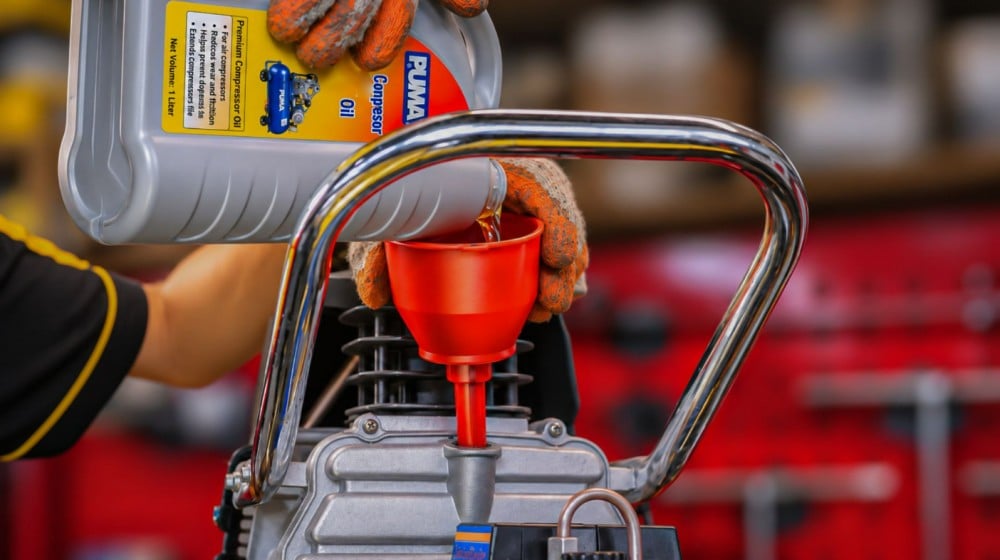
During the change, loosen the fill plug first to allow air in, then remove the drain plug underneath. Wait until the oil is completely drained, slightly tilting the machine if permitted by the manual. Tighten the drain plug securely, replace the crush washer if damaged, and then slowly pour in fresh oil through the fill port while monitoring the level through the sight glass.
After the change, close the fill plug, wipe off any spilled oil, and run the machine for a short while. Check to ensure there is no oil seepage around the drain plug, then turn off the machine and wait a moment. Recheck the level and top up if necessary. Record the date and operating hours on the machine. Store used oil in a sealed container and take it to a used oil collection point; never pour it down drains or onto the ground.
Reading symptoms from used oil can tell you what problems the piston air compressor is having.
The drained oil is the best health report for your piston air compressor; do not dispose of it without inspecting it first.
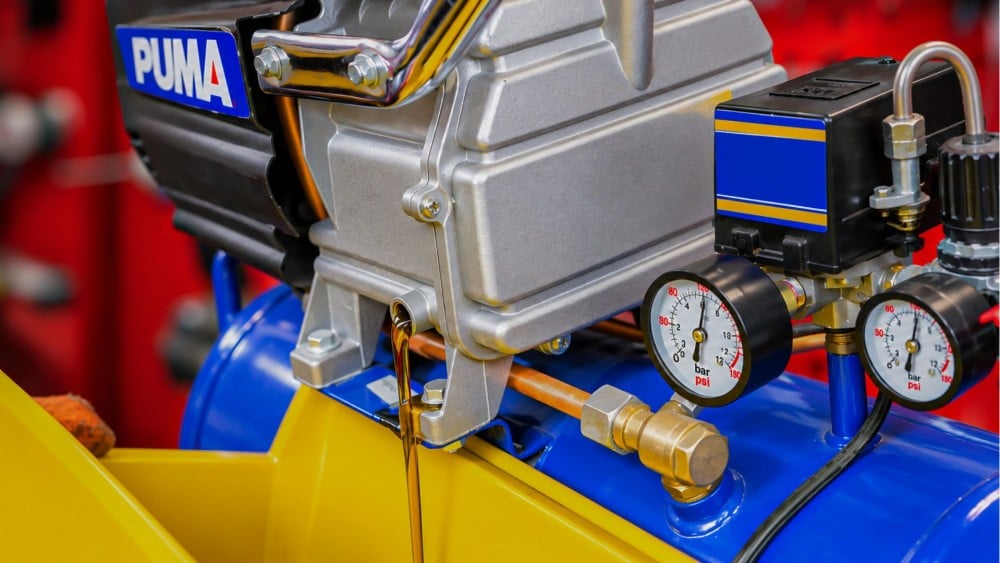
If the oil is cloudy and milky white, it means water has entered the oil sump. This usually occurs when the unit is placed in a very humid area or operated only for short runs that never get hot enough to drive off moisture. If the oil is dark black with a burnt smell, it indicates overheating or that the oil was used far past its service interval. If you see shiny metallic flakes or tiny metal shavings in the oil, it means parts are wearing abnormally.
If metallic powder and shavings are present, stop using the machine and take it to a service center for inspection, as adding fresh oil and continuing to run it will further damage the worn components. As for compressors that build pressure slowly while consuming oil rapidly, you can troubleshoot the cause in: Piston air compressor builds pressure slowly and cannot reach full pressure: is it rings, valves, or gaskets?
Can a piston air compressor that has been in storage for several months be used right away?
Yes, provided the machine was stored in a dry place, the oil in the sight glass is still clear and not cloudy, the level is within the marks, and it has not yet reached the replacement time limit specified in the manual. Before turning it on, drain any water from the tank, check the air filter, and run the machine briefly to listen for smooth operation before putting it into actual service.
You should not do so if the oil is cloudy white, water droplets form on the sight glass, or the machine has been stored in a damp place until rust forms on the unit. In this case, change the oil before actual operation, because water mixed in the sump will cause the bearings and crankshaft to rust quickly.
If it is a belt-driven type, try turning the pulley by hand after unplugging. If it feels unusually stiff or the piston air compressor makes a knocking noise right from start-up, have a technician inspect it before use.
Signs to stop using the piston air compressor and send it for inspection, even if the oil was just changed
If you just changed the oil and the piston air compressor is still abnormally loud, has knocking sounds from the crankcase, is too hot to touch, oil drops rapidly to the point of needing daily refills, oil spouts out from the filler cap or breather, or you see a lot of oil mixed with the compressed air, stop using it immediately.
Turn off the machine, unplug it, release the air in the tank, and send it to a service center or air compressor repair technician for inspection. Do not add more oil to mask symptoms, and never adjust or remove the tank's safety relief valve under any circumstances.
Inspection and service costs are cheaper than replacing the entire pump head of a piston air compressor.
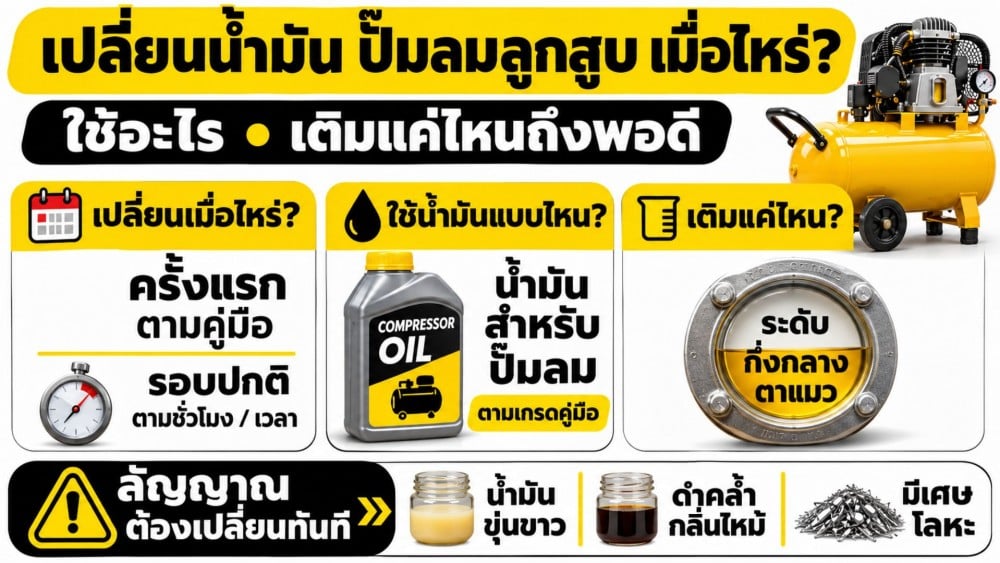
Conclusion: Oil in a piston air compressor must be changed based on usage, not by waiting for the level to drop.
Oil that is still at full level does not mean it is still good. Heat, moisture, and metal particles cause the oil in a piston air compressor to degrade over time—whether it is a unit in an auto shop running all day, in a furniture workshop, or at home used only occasionally. Changing the oil on schedule is the cheapest maintenance that helps extend pump head life.
What you need to do is: perform the first change according to the break-in period in the manual; track change intervals by operating hours or elapsed time, whichever comes first; change more frequently in hot, dusty, or humid environments; use compressor-specific oil matching the grade specified in the manual; fill to about the center of the sight glass; change while the oil is warm after venting the air and unplugging; and inspect the color and debris in the old oil every time.
Never substitute with automotive motor oil, never overfill past the mark, and if you see metal shavings in the oil, hear knocking noises, or oil disappears rapidly, it is best to stop the machine and send it for inspection.
If you are looking for an air compressor or spare parts for continuous compression work, check out the category Piston Air Pump especially rotary screw air compressors and belt-driven air compressors from iToolmart.