


 EN
 ไทย


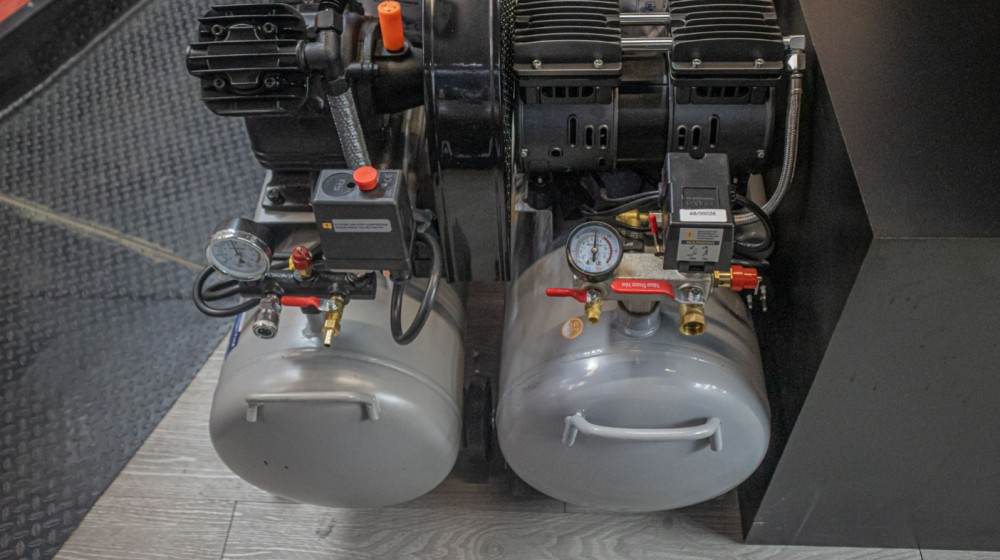
Customers Also Purchased


When talking about Piston Air Pump we might start by looking at horsepower, tank capacity, maximum pressure, or the number of pistons first, because these numbers are easy to see and seem to clearly indicate the machine's power. But there is another piece of information that is often overlooked. Besides Which type of piston air compressor is the loudest? that is the proportion of time the air compressor can run within a single operating cycle, or Duty Cycle
If you choose an air compressor by looking only at horsepower and tank size without considering whether the Duty Cycle fits the nature of your work,
- the machine may have to work harder than it was designed for,
- heat will build up,
- it will trip or cut out frequently,
- air delivery will drop,
- Shorter lifespan than it should be
The question of "how many hours can a piston air compressor run continuously?" requires distinguishing between Total time the machine is turned on and Actual running time of the motor and pump head
A piston air compressor may be left on all day, but during that period, the motor will alternate between resting and running cycles. If the motor runs constantly with almost no rest periods, it indicates that the air compressor may not produce enough air to meet demand or is undersized for the job. Even if the unit does not fail immediately, heat and wear will gradually accumulate within the system.
How many hours can a piston air compressor run continuously?
Leaving the air compressor on from 08:00 to 17:00 does not mean the motor has to run continuously for 9 hours. A piston air compressor may run for 3–5 minutes at a time and then rest for 3–7 minutes, depending on the volume of air consumed by pneumatic tools, air tank size, the pump head's air delivery rate, and the set pressure. Under these conditions, the air compressor can support full-day operations because the motor has periodic cooldown periods. However, if air-hungry tools are used to the point that the compressor runs continuously for 20–30 minutes without cutting off, or if the motor barely stops throughout the shift, the machine may be exceeding its appropriate Duty Cycle.
Some piston air compressor models can remain turned on for several hours, but the actual operating time of the pump head must not exceed the specified duty cycle ratio.
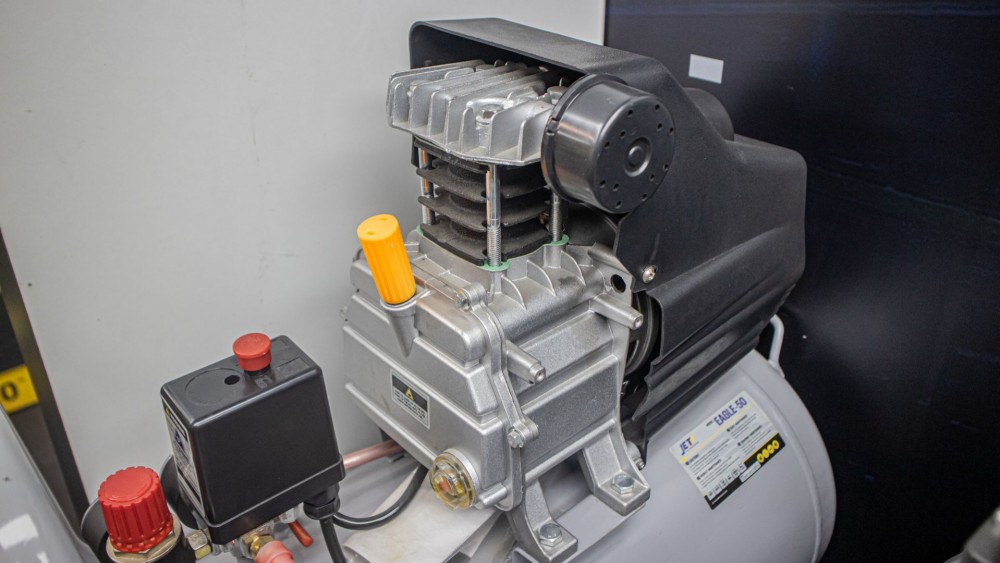
Why shouldn't a piston air compressor run continuously all the time?
The working principle of a piston air compressor involves a piston moving up and down inside a cylinder to draw air in and compress it to a higher pressure.
- During compression, the temperature of the air and internal components naturally rises.
- The higher the compressed air pressure and the longer the operating time, the more heat accumulates.
- Although the air compressor is equipped with cooling fins, a fan, or a flywheel to blow air across the pump head, its heat dissipation capacity has limits.
Additionally, the movement of the piston, connecting rod, crankshaft, piston rings, and bearings generates continuous friction. For oil-lubricated piston air compressors, lubricating oil helps reduce friction and carries some heat away from contact surfaces. However, if temperatures remain excessively high for an extended period, the viscosity and properties of the oil may degrade, thinning the oil film and reducing component protection. As for oil-free air compressors, even though they do not require oil changes, their surface coatings, seals, and piston rings still have temperature and operating duration limits.
Resting is therefore not just for the motor, but it is also the period during which the pump head, cylinders, valves, compressed air, and surrounding components dissipate heat. Without rest intervals, temperatures will gradually rise until thermal protection trips, or degradation occurs before the user even notices. Which Air Compressor Spare Parts Can Be Damaged by Heat Buildup?
For systems requiring continuous air supply 24 hours a day, most factories consider screw air compressors because they are designed for continuous air delivery and handle heat control much better for such applications. Heavy-duty and continuous use: which air compressor to choose? A beginner's guide to screw air compressors
A larger tank size does not mean a higher Duty Cycle
One common misconception is that a piston air compressor with a larger tank can run continuously for longer and won't overheat easily. In reality, the air tank merely stores compressed air and helps reduce motor start-stop cycles; it does not increase the air pump's output capacity. Fitting a small pump head onto a large tank may provide more air reserve initially, but once the air is consumed and pressure drops, that same small pump head will still require a long time to refill the tank.
Choosing an air compressor requires considering both tank size and the actual air delivery rate. If your work requires continuous air, the priority should be given to FAD (Free Air Delivery)—the actual volume of air delivered at operating pressure—rather than just the displacement or suction volume, which is a theoretical value before subtracting internal system losses.
Signs That a Piston Air Compressor is Exceeding Its Duty Cycle
Some industrial piston air compressors are clearly labeled as "100% Duty Cycle Rated" because it is a key feature of the machine, while general-purpose models may only specify that they are suitable for "Intermittent Duty" or periodic operation.
The Duty Cycle for most air compressors is often not printed directly on the machine or the tank nameplate, especially for small-to-medium-sized piston air compressors.
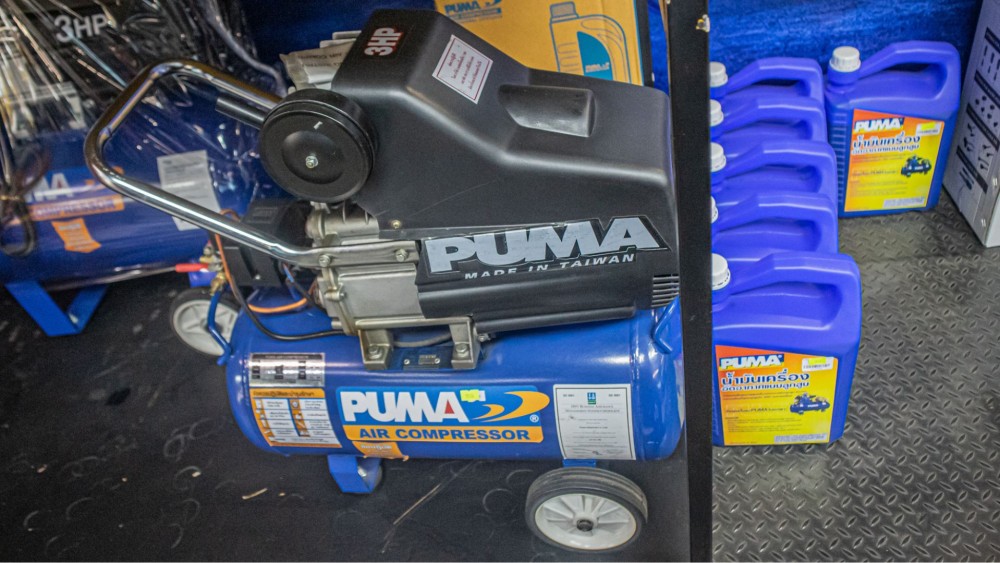
The machine nameplate usually displays:
- Horsepower
- Maximum pressure
- Tank capacity
- Voltage
- Current
- Motor speed (RPM)
The easiest sign to spot is the motor running abnormally long or barely cutting out. If a piston air compressor used to take only a short time to fill up, but lately has been running much longer, it could be due to a clogged air filter, loose belt, leaking valve, worn piston rings, leaks at fittings, or the addition of pneumatic tools that exceed the compressor's capacity.
Another sign is the pump head and discharge pipe becoming abnormally hot. While heat around the discharge pipe is normal, if there is a burning smell, rapid oil discoloration, the motor trips the overload protector, or the machine shuts off on its own after running for a while, stop and inspect it immediately.
Air pressure dropping during use is another symptom. If the tank pressure keeps falling even while the compressor is running, it indicates that air consumption exceeds air production. In this case, simply increasing the tank size might offer temporary relief, but it does not address the root cause. If the same work must continue, you should increase the air output capacity or switch to a piston air compressor with a higher duty cycle.
Can You Leave a Piston Air Compressor Turned On All Day?
An air compressor can be left switched on and on standby throughout the day in a properly installed and maintained system. The pressure switch will signal the piston air compressor motor to run when pressure drops and shut off when the preset pressure is reached. However, leaving the unit running unattended requires careful consideration of safety, air leaks, electrical systems, tank drainage, and overall equipment condition.
When finished using it, turn off the switch and disconnect the power supply following proper procedures, especially in unattended areas. As for whether to drain all the air from the tank or keep some pressure, follow the manufacturer's guidelines and site requirements. A routine task you should always perform is draining condensate from the tank to prevent internal corrosion.
How to Choose a Piston Air Compressor to Stay Within Its Duty Cycle
Horsepower indicates the motor's power output, but it does not tell the whole story regarding the actual volume of air delivered. Two piston air compressor models with the same horsepower may have different air delivery rates due to piston size, compression stages, pump RPM, valve efficiency, and overall system design.
Combine the air consumption rates of tools that need to operate simultaneously
If you have multiple pneumatic tools, you shouldn't automatically add up the air consumption of every tool if they aren't used at the same time. Instead, analyze the realistic maximum usage scenario that is likely to occur, such as: Two technicians using air impact wrenches at the same time, or a paint spray gun running continuously alongside an air blow gun Then select a compressor that delivers sufficient airflow with an allowance for system losses
Allow margin for future air production capacity
A system sized precisely for today's workload might be insufficient when tools or users are added in the future. Choosing a piston air compressor with an appropriate reserve airflow capacity helps ensure the machine can cycle off as intended, reducing heat, decreasing start frequency, and extending service life.
Choosing one that is far too large may result in high investment costs and wasted energy, so sizing should be evaluated using realistic data rather than arbitrary over-sizing
Ways to help a piston air compressor last longer
Maintaining an appropriate duty cycle begins with basic system maintenance: clean or replace the air filter periodically, check levels and change the oil according to recommendations, inspect belt tension, clean cooling fins, and drain tank moisture regularly. For larger piping networks, check for leaks and choose appropriate pipe sizes to minimize pressure drops and reduce the load on the compressor.
Avoid using extension cords that are undersized or too long, as voltage drops can cause the piston air compressor's motor to draw high current and run hotter than normal. For large air compressors, have qualified technicians install the electrical system, breakers, wiring, and protection devices rated for the motor's power. The installation location should be well-ventilated, have a solid base, and provide sufficient space for inspections or maintenance.
You should observe the machine's normal operating behavior, such as:
- How many minutes it takes to fill the tank from initial pressure to the cut-out point
- How frequently the motor cycles on and off
- How the compressor pump sounds
If the tank fill time increases noticeably or the sound changes, inspect it before severe damage occurs. Detecting changes early helps reduce both repair costs for the piston air compressor and downtime.
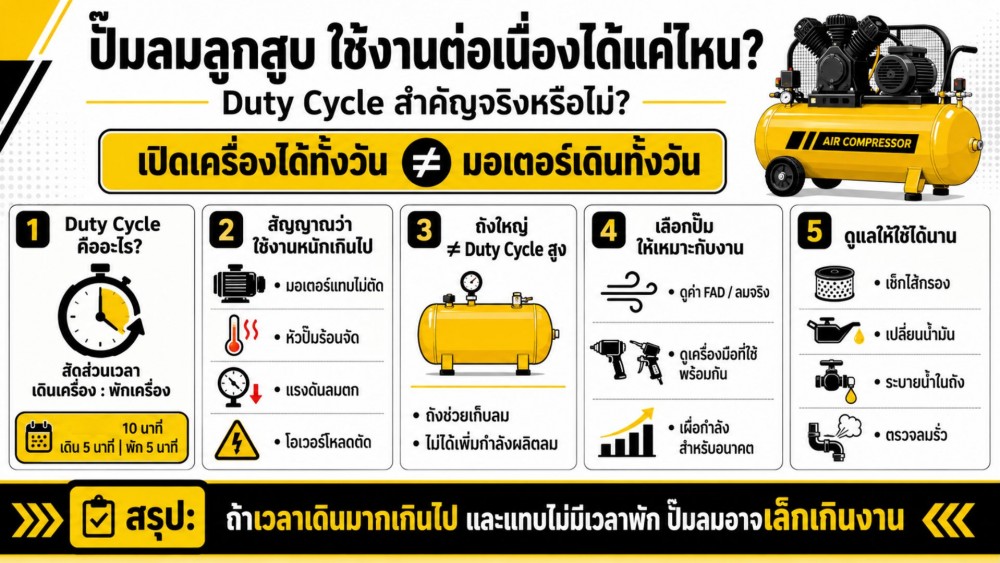
Summary: How long a piston air compressor lasts depends on running time and rest time
The question of How many hours can a piston air compressor run continuously? It cannot be answered with a single number of hours, because what must be considered is the actual running time of the pump head compared to its resting time. An air compressor can remain powered on in the system for many hours or all day, but it should not be allowed to run beyond the manufacturer-specified duty cycle—especially typical piston air compressors designed for intermittent operation.
Selecting the right air compressor requires looking beyond horsepower and tank size
- You should check the actual free air delivery (FAD)
- Operating pressure
- Air consumption rate of tools
- Number of tools that may operate simultaneously
If the air compressor can charge up until it shuts off and has regular resting intervals, it indicates that the system is balanced to a certain degree. However, if the motor runs continuously, that is a sign the compressor may be overloaded.
Duty Cycle may be a minor figure that isn't prominently marketed on the product page, but it is information that directly affects efficiency, work continuity, and the service life of the air compressor.
Understanding Duty Cycle and observing duty cycles after installation Piston Air Pump will help reduce overheating issues, minimize downtime for repairs, and ensure cost-effective use in the long term.
