


 EN
 ไทย


Customers Also Purchased
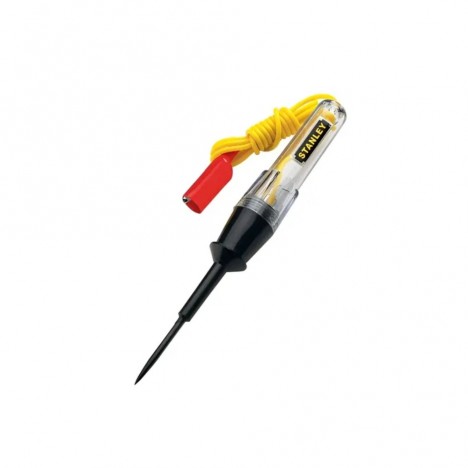
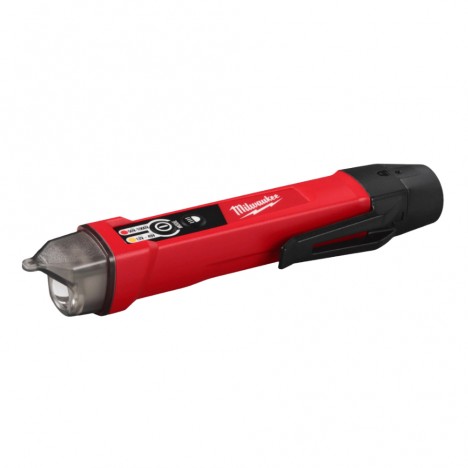


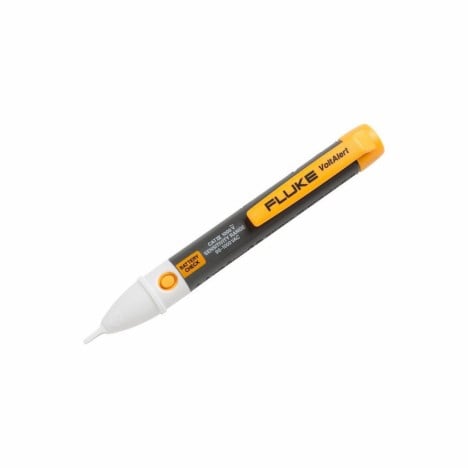
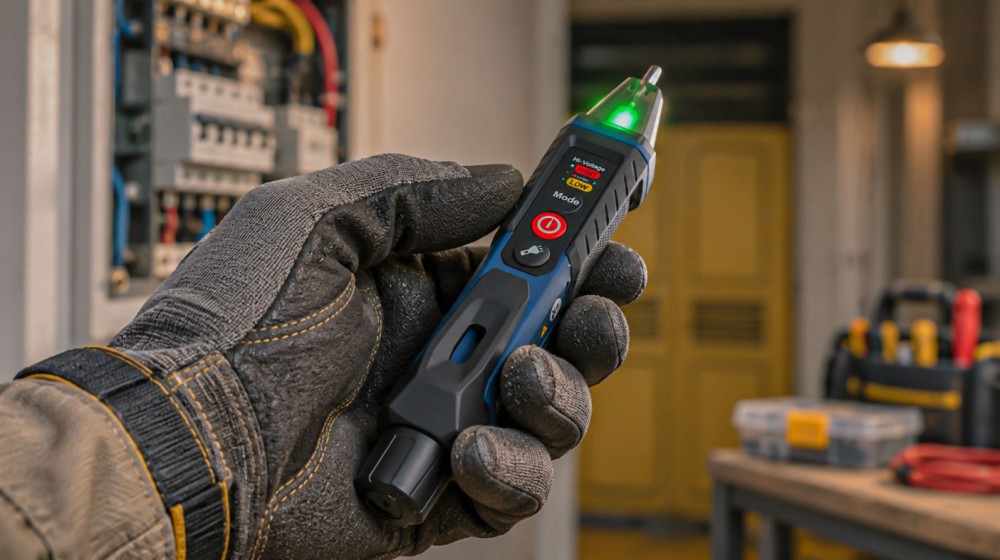
One morning, the bedroom fan is running unusually slow, and some light bulbs aren't as bright as usual. When you pick up Voltage tester screwdriver and test the outlet, you discover the neon bulb lights up in both slots, even though normally only one should light up. Or in some homes, the slot that should be neutral emits a dim glow every time it's probed, leaving you unsure whether the tool is broken or there's a problem with the house's electrical system.
Many people assume that a voltage tester pen lighting up on the neutral wire simply means the tool is broken and replacing it will fix it, right? The short answer is: sometimes yes, but often no. This symptom can be a sign that the neutral wire in the system is loose or broken, which can damage electrical appliances and increase the risk of electric shock.
Let's see when a voltage tester pen should normally light up, what each symptom of lighting up on the neutral wire indicates, how to troubleshoot to determine if the problem is with the tool or the electrical system, and at what point you must stop and call an electrician immediately.
Why should a voltage tester pen only light up on the live wire and not on the neutral wire?
The commonly used neon bulb voltage tester pen has a high-value resistor connected to a neon bulb inside. When you touch the screwdriver tip to a conductor and place your finger on the metal end of the handle, a tiny amount of current flows through the resistor, the neon bulb, and your body down to the ground. The bulb lights up only when the contact point has a sufficiently high voltage relative to ground.
In a single-phase residential electrical system, the live wire carries voltage relative to ground, while the neutral wire is grounded at the source, making its voltage relative to ground close to zero. Therefore, a voltage tester pen should light up on the live wire and remain off on the neutral wire.
Compare it to a pressurized water pipe and a drain pipe emptying onto the ground: if water starts pushing back up through the drain pipe, it means the downstream drain is clogged or broken. Therefore, a voltage tester pen lighting up when testing the neutral wire is a sign that the return path of the circuit is incomplete, until it can be proven that it is caused by the tool.
Check the voltage tester screwdriver first to ensure the issue is not coming from the tool itself.
Before concluding that the electrical system has a problem, eliminate the simplest possibilities first.
A voltage tester screwdriver with a cracked transparent handle, internal moisture, or one that has suffered a hard drop may malfunction. A damaged internal resistor also poses a direct hazard to the user.
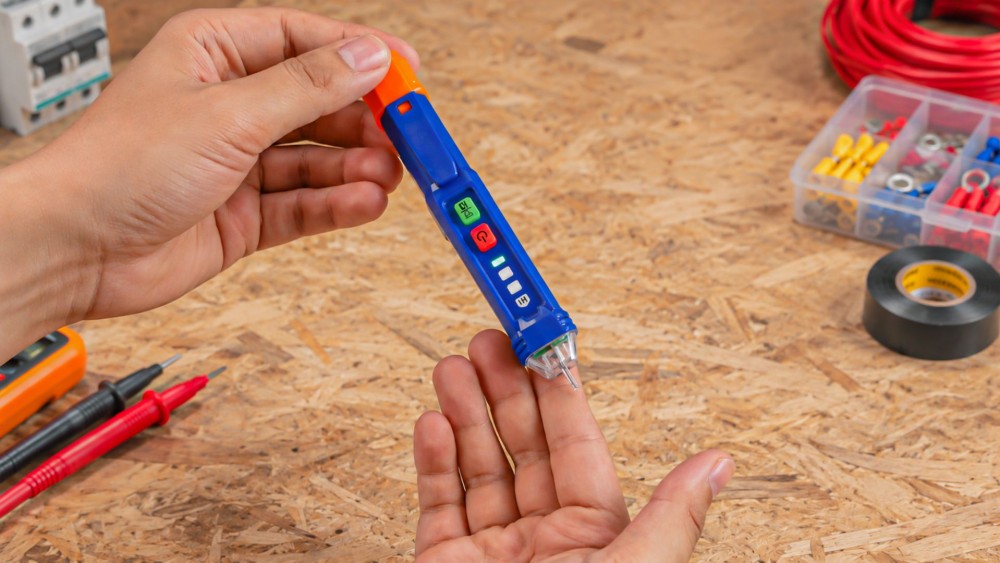
Furthermore, if the handle is cracked or burn marks are visible inside, discard it immediately; do not continue using it for testing.
Test on an outlet that is confirmed to be normal.
Try using the voltage tester screwdriver to touch an outlet in another circuit or another house where the electricity is normal. If it is in good condition, it should only light up on the live wire slot. If it still lights up on both slots in every outlet tested, the problem may be with the tool or electrical equipment. However, if it lights up normally elsewhere and behaves abnormally only at certain points in the house, the problem lies within that specific point's electrical system.
An important thing to know before checking here is how to use a voltage tester screwdriver without getting an electric shock.
A dim glow on the neutral wire from a voltage tester screwdriver may come from induced voltage, not an electrical leak.
One symptom that can be found is a faint glow on the neutral wire, or on a wire that has already been switched off, even though all electrical appliances in the house operate normally.
Why Does a Voltage Tester Screwdriver Glow? The cause could be Induced Voltage from other wires running alongside it over a long distance. Therefore, a wire without power may carry a small amount of voltage, enough to make the neon bulb glow faintly, but without the capacity to supply actual current. Non-contact voltage testers or highly sensitive models will show this symptom more clearly.
Distinguish between a faint glow and full brightness like on a live wire slot. A faint glow with no other accompanying symptoms is not an emergency yet, but do not judge by the light alone; measure with a multimeter or have a technician confirm it again.
A voltage tester screwdriver lighting up brightly on both slots is a sign of an open or loose neutral wire.
If the voltage tester screwdriver lights up brightly on both the live and neutral wire slots—especially when electrical appliances in that circuit are malfunctioning—the most common cause is an open, disconnected, or loose neutral wire between the outlet and the breaker panel.
Why does an open neutral wire cause the neutral slot to have power?
When the neutral wire is disconnected, electrical appliances plugged into the same circuit will become a conductive path, allowing voltage from the live wire to flow through to the neutral side.
The voltage at the neutral slot relative to the ground is almost equal to that of the live slot. Therefore, the voltage tester screwdriver lights up in both slots, but electrical appliances cannot operate or function abnormally because there is no complete return path for the electrical current.
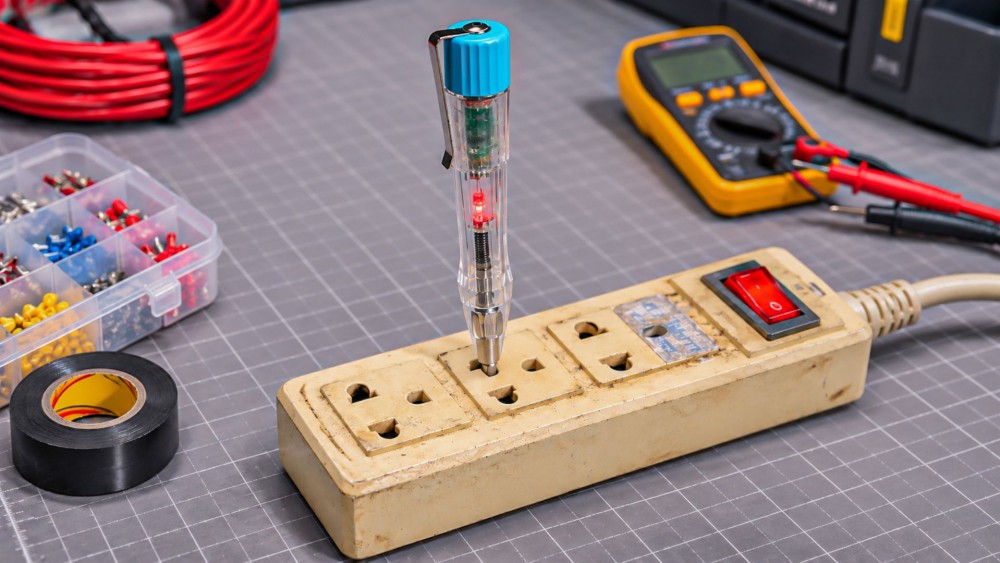
Common Associated Symptoms
Some lights may dim or become unusually bright, fans may spin slowly and then speed up, some electrical appliances may suddenly shut off, or you might smell burning from an outlet. These symptoms indicate that the household voltage is unstable. With a three-phase system, a severed main neutral wire can cause some rooms to receive abnormally high voltage, potentially damaging electrical appliances in a short period of time.
Using a Voltage Tester Screwdriver to Trace How Widespread the Issue Is
We can use a voltage tester screwdriver to help inform an electrician where the problem is without having to open the outlet cover or touch the wires inside.
Abnormal in only a single outlet
If the symptom occurs at only one outlet while other outlets in the same room are normal, the issue is usually at the terminal behind that outlet, such as:
- The neutral wire has detached from the terminal, or the terminal is loose to the point of burning.
- Refrain from using that outlet, place a warning label for household members,
- and have an electrician inspect it.
Abnormal across the entire circuit or the entire house
If all outlets on the same circuit exhibit the same symptom, the issue may lie with the neutral wire of that circuit inside the breaker panel. If it affects the entire house, the problem may be with the main neutral wire in the main distribution panel or on the supply side before the meter.
In the latter case, the electricity authority must be notified, as this is an area that homeowners and general electricians should not touch. Read more at Consumer Units: Fundamentals to Know Before Installing Home Electrical Systems
Observe if the light changes when appliances are unplugged
If the neutral slot lights up due to a broken neutral wire, the voltage at that slot usually comes from appliances that remain plugged into the same circuit. Once all appliances on that circuit are unplugged and tested again, the light at the neutral slot usually disappears or dims noticeably. This information helps confirm to the electrician that it is likely a broken neutral wire rather than reversed wiring.
Things Not to Do When a Voltage Tester Screwdriver Detects Abnormal Symptoms
Do not open the outlet cover or tighten terminal screws yourself while the power is not shut off, and never assume that the neutral wire is always safe. Under these conditions, the neutral wire may carry a voltage nearly equal to the live wire. People accustomed to assuming the neutral wire is safe to touch are at the highest risk of receiving an electric shock.
Do not use a voltage tester screwdriver as the sole confirmation that a wire is completely dead before starting work. This screwdriver only provides a rough indication of whether voltage is present and has several limitations. Do not attempt to fix the problem by swapping wires yourself or bridging connections to another circuit, as this will cause the protection system in the breaker panel to function improperly. Read more at What is a voltage tester screwdriver, what can it check, and limitations many people don't know
Signs you should cut the power and call an electrician immediately without waiting to test further with a voltage tester screwdriver
If you smell burning or see burn marks on an outlet or plug, multiple appliances turn off at the same time, lights flicker between dim and bright intermittently, you get a slight electric shock when touching an appliance body, or the voltage tester screwdriver lights up brightly in both holes across several spots in the house, turn off the main breaker immediately.
Unplug expensive or voltage-sensitive appliances such as refrigerators, TVs, and computers, then call a licensed electrician for inspection. If the electrician finds that the issue is before the meter, notify the electrical utility. This is not a task where you should use trial and error on your own.
Steps for using a voltage tester screwdriver to check an outlet safely
Before testing, check that the handle is not cracked and the tip is not broken. Test it first on a known live circuit. Your hands must be dry, stand on a dry floor, and wear shoes. If the floor is wet, postpone testing.
During testing, hold only the insulated handle. Touch the metal cap on the end with your finger as specified by the manufacturer. Insert into one hole at a time, never letting the tip touch two metal contacts at once. Observe the brightness in each hole and note which points are normal and which are abnormal.
If you ask whether How to use a voltage tester screwdriver safely After testing, if abnormalities are found, stop using that point, put up a warning sign for people in the house, take notes, and share the information to help the electrician locate the fault faster.
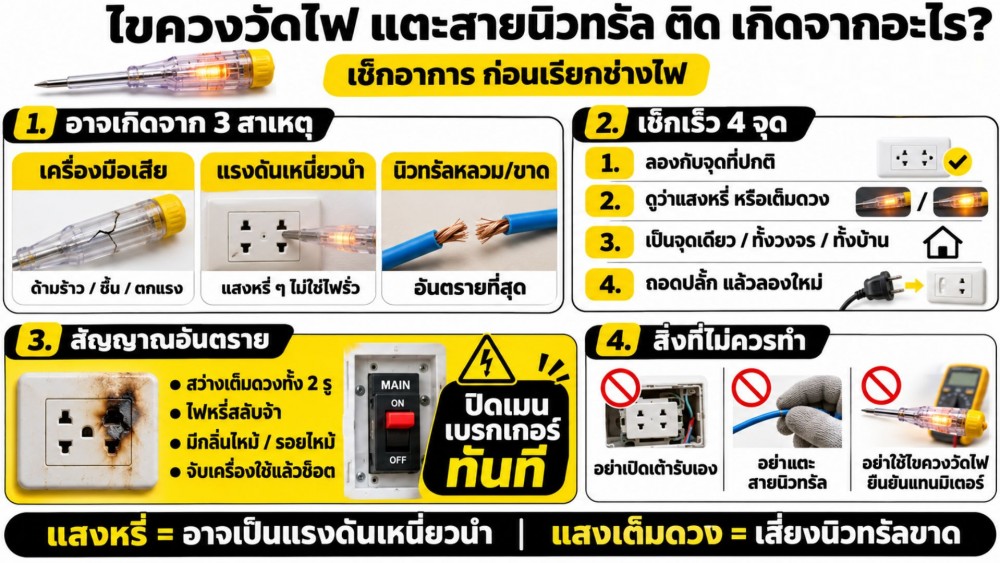
Conclusion: Voltage tester screwdriver lights up on the neutral wire: A sign that the return path of electricity is incomplete
A voltage tester screwdriver should not light up on the neutral wire in a normal electrical system. When it does, consider three possibilities: A faulty tool, induced voltage causing a faint light, or a loose or broken neutral wire. Whether found in a bedroom outlet, kitchen outlet, or throughout the house, a broken or loose neutral wire is the most dangerous scenario.
What you need to do is check the condition of the tool and test it on a known-good point first, distinguish between a faint glow and full brightness, see if the symptom occurs at a single outlet, the entire circuit, or the whole house, observe accompanying symptoms of appliances, record every point tested, and give the information to an electrician to verify with a multimeter.
The most important rule is never touch the neutral wire or open the outlet yourself when experiencing this symptom. If there is a burning smell, lights alternating between dim and bright, or electric shocks, turn off the main breaker, unplug appliances, and call an electrician immediately. As for voltage tester screwdrivers with a cracked handle, discontinue use immediately.
If your existing tools are getting old, or you want a model with clearer readings, check out the category Voltage tester screwdriver at iToolmart now.