


 EN
 ไทย


Customers Also Purchased




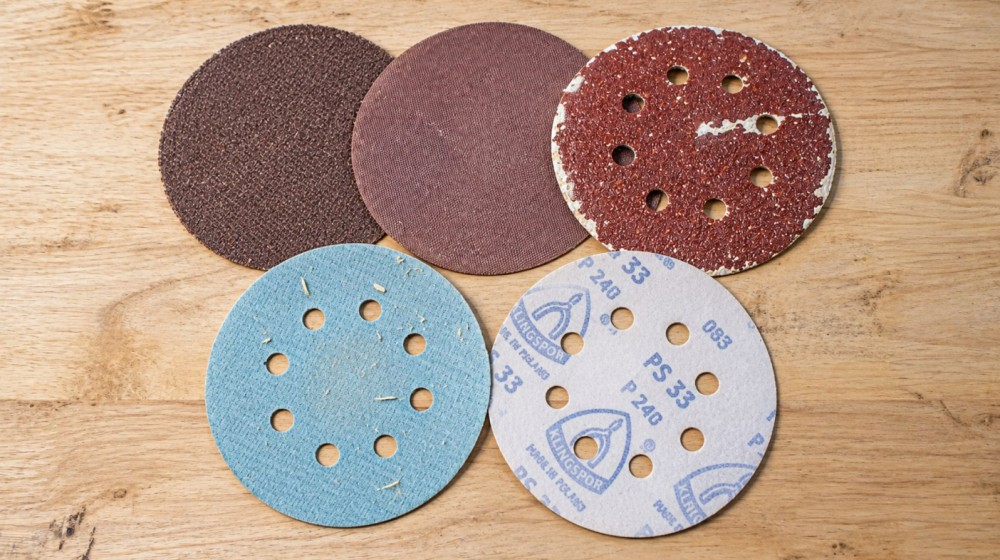
When buying Sandpaper we usually choose based primarily on the "grit", right? If fast material removal is needed, we choose a coarse grit; if the surface needs to be smooth, we move to a fine grit. But another question that arises is why some grits last a long time, while others seem to stop cutting effectively after just a short while—especially when comparing between fine, coarse, and extra coarse grits
We might assume that larger abrasive grains mean longer durability, or that having many smaller grains also impacts service life. In reality, sandpaper "grit" is only one variable. Lifespan depends on many other factors, including how each user defines "worn out". Round, sheet, and belt sandpaper: How to tell when it shouldn't be used anymore? Some sheets still have all their abrasive grains intact, but when sanding, they no longer cut material like when they were new; thus, they are considered spent for that specific job, whereas they might still be usable for another type of work.
So, if the question is: Does the lifespan of fine grit and coarse grit sandpaper differ? The answer is "it can vary," but you cannot determine it by the grit number alone. You must also consider what kind of work you are doing and what material you are sanding.
Does extra coarse sandpaper last longer than fine grit?
In some situations, we might feel that extra coarse sandpaper lasts longer. Because the abrasive grains are large and the gaps between them are wide, debris dislodges more easily—especially when sanding dry wood or materials that aren't too gummy. Thus, the abrasive surface does not clog as quickly as fine grits, but this does not mean coarse grits will always last longer.
If coarse sandpaper is pressed heavily against a hard surface, the abrasive grains may shatter, strip off, or dull quickly. Sanding with a machine at excessively high speeds can also generate heat that degrades the bonding agent.
Once the sharp edges of the abrasive grains wear down, their material-removal capability decreases, even if the sheet still visibly appears fully coated with abrasive grains to the naked eye. Deep dive into Loading, Glazing, and Dulling that make sandpaper feel dull
Some coarse sandpaper sheets initially feel like they "cut aggressively," but after a period of use, their efficiency may drop because the sharp edges of the abrasive grains—the vital part in cutting material—begin to wear down.
Larger grains do not always mean stronger
Abrasive grain size and grain strength are two different things. Two sandpaper sheets of the same grit number can have vastly different lifespans if they use different abrasive types, such as Aluminum Oxide, Silicon Carbide, Zirconia Alumina, or Ceramic, because the structure and wear behavior of each abrasive material vary.
Some types of abrasive grains continuously micro-fracture to create new sharp edges during use, while others are extremely sharp but more brittle, making them suitable for different applications. Therefore, comparing lifespan simply by looking at whether it is 40 grit or 240 grit is not enough.
Why does fine-grit sandpaper feel like it wears out so quickly?
One of the most noticeable issues with fine-grit sandpaper is surface clogging, often referred to as "loading." Small particles of debris accumulate in the spaces between the abrasive grains; once these gaps are filled, the sandpaper loses its ability to cut into the material.
Fine sandpaper has relatively narrow spacing between grains compared to coarse sandpaper, making it prone to clogging. Once debris coats the surface, you will feel the need to apply more pressure, sand for longer, or notice the surface heating up, even though the abrasive grains themselves have not actually worn out.
This is why fine grits are often perceived as "not durable." However, what occurs may not be the wearing down of the abrasive grains, but rather the surface being covered by debris, preventing it from performing at full efficiency.
Look at the task being done, not just the sandpaper sheet
The phrase "sandpaper lifespan" does not refer to the time until the backing tears. In practical work, we should consider whether the sandpaper is still producing the desired results.
For example, 80-grit sandpaper used for stripping wood may remove material very quickly at first. After some use, the removal rate may drop by half, even if the sheet remains intact. If the job demands high speed, the general recommendation would be to replace it with a new sheet immediately.
On the other hand, for small DIY projects, users might keep that sheet for tasks that do not require heavy stock removal, such as easing sharp wood edges or general detailing.
The term "long-lasting," in many cases, therefore refers to the duration during which the sandpaper continues to perform efficiently, rather than the time it takes until the backing material tears.
The material being sanded affects sandpaper lifespan
The same grit of sandpaper can vary in lifespan by many times depending on the material being sanded. General dry wood allows sandpaper to last quite a long time, but with gummy or resinous wood, sanding debris turns sticky and clogs the paper surface much faster.
Paint or putty behaves similarly; some materials turn into a fine powder that clears away easily, while others clump together and stick to the paper. As this accumulates, the actual contact area between the abrasive grains and the workpiece decreases.
Metalworking is another story; the abrasive grains must endure high loads and intense heat. Using sandpaper designed for light-duty tasks on heavy metal—even if you pick a coarse grit—does not mean it will have a long lifespan.
Extra coarse sandpaper can become "dull" without you realizing it
To the naked eye, very coarse sandpaper might still look fine—grains appear fully intact, the surface is still rough, and the backing sheet is not torn. However, what you will notice during use is a drop in the material removal rate.
The abrasive particles haven't all vanished, but their sharp peaks have rounded off. When the parts meant to act as cutting edges lose their sharpness, the grains rub against the surface instead of cutting it, generating more heat while removing less material.
On wood, you might start noticing burn marks or feel the need to press down harder on the tool. On metal, you may see increased heat generation accompanied by a noticeable drop in the amount of material removed.
This loss of sharpness means the sandpaper has reached the end of its useful life for heavy work, even if it still looks usable on the surface.
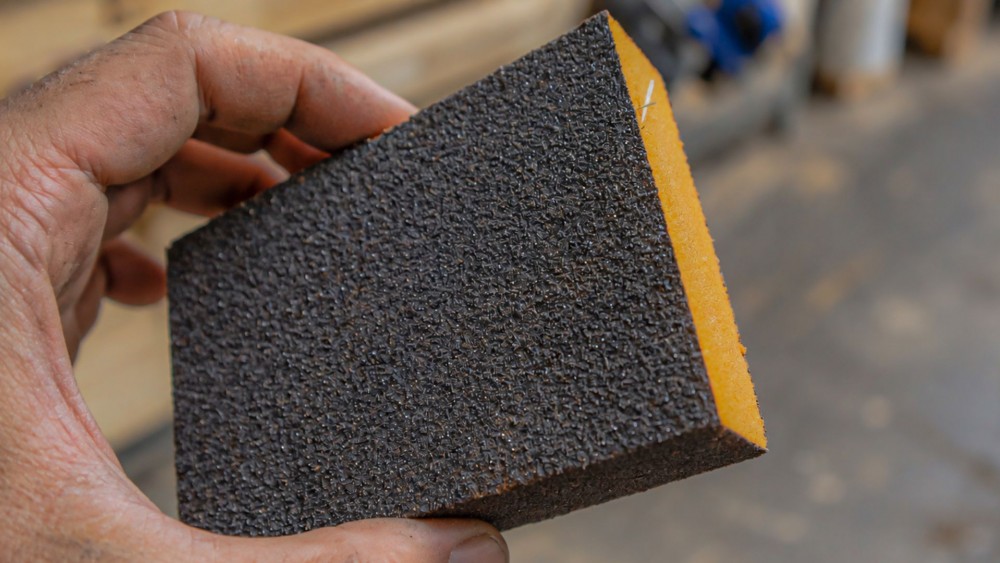
Fine sandpaper can last a long time if used through the correct steps
Although fine grit tends to clog more easily in certain tasks, it can have a great lifespan if used properly. The key is not to skip too many grit sizes.
Suppose a surface still has prominent scratches from 80-grit sandpaper, but you switch directly to 320-grit. The 320-grit paper will be overloaded beyond its intended role, having to remove deep scratches that intermediate grits should have addressed. You will end up sanding longer, pressing harder, and using up more sheets.
On the other hand, progressing gradually from grit 80 to 120, 180, and then onto 240 or 320 allows each grit to remove scratches left by the previous stage. This speeds up work and minimizes wear. It is another reason why properly working through multiple grits in sequence is not wasteful—it may even reduce the total number of sandpaper sheets you consume.
A dust extraction system helps sandpaper last longer
For sandpaper used with power sanders, dust extraction significantly affects paper lifespan. Sanding constantly generates debris that swirls and moves between the sandpaper and the workpiece, gradually clogging the spaces between the abrasive grains.
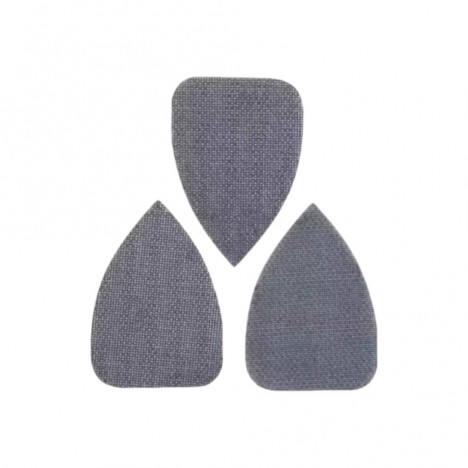
Sandpaper for sanders is therefore often designed with dust extraction holes or a mesh structure to help channel dust away from the contact surface. When dust is continuously removed, abrasive grains maintain better contact with fresh material, reducing clogging and preserving cutting performance.
However, you must align the sandpaper holes with the vacuum holes on the sander pad. If the holes do not line up, the dust extraction system will not work effectively, diminishing the benefits of the holes and the vacuum system.
Tool speed also affects lifespan
Another variable many overlook is the speed of the sander. Setting it to high speed does not necessarily yield the fastest results in every situation, as certain materials are heat-sensitive. Excessive speed can soften or make sanding debris sticky, causing it to clog the sandpaper faster than before.
Pairing high speed with heavy pressure raises the contact area temperature even further. Abrasive grains may wear prematurely, backing materials suffer heat damage, and the bonding agents deteriorate faster than they should.
Which type of sandpaper offers better value?
If looking solely at the operating time per sheet, the answer may vary for each job. But in terms of actual operating costs, "worth it" is calculated from both the amount of work completed and the resulting surface finish quality.
Cheap sandpaper that requires three sheets to do the same job can end up costing more than sandpaper that is more expensive per sheet but only uses one. Similarly, sandpaper that still looks new but takes twice as long to sand may not be worth it in jobs where labor time is a critical cost.
In industrial work, paint work, or production lines, sandpaper lifespan is therefore often considered alongside the sanding rate, material removal rate, surface quality, and the time spent changing sheets.
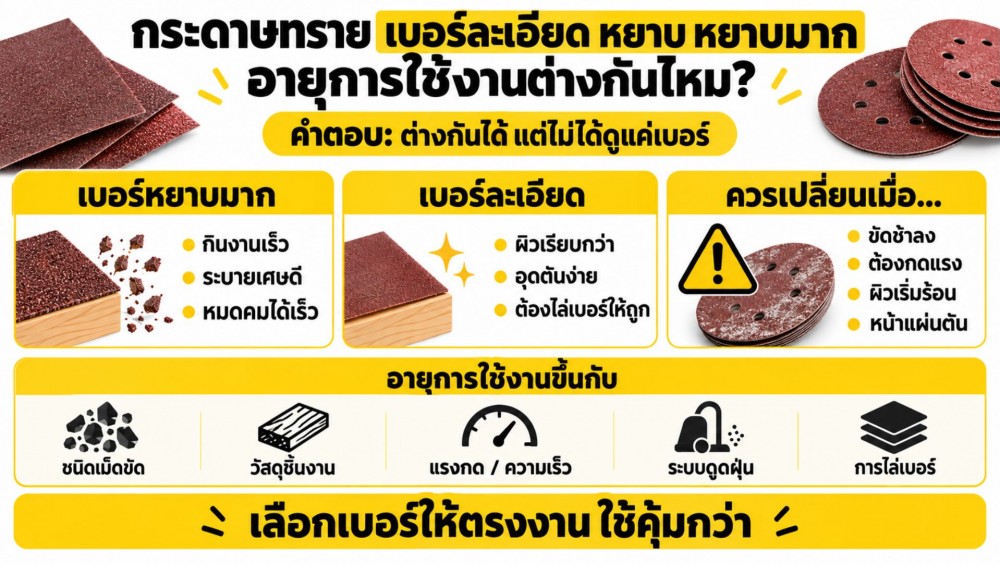
Summary: Which Sandpaper Grit Lasts the Longest?
If you ask whether Do fine, coarse, and extra coarse sandpapers have different lifespans? The answer is that they can differ, but there is no set rule that coarse grit sandpaper will always outlast fine grit.
Coarse sandpaper has larger abrasive grains and more space for swarf and debris to clear out, making it more resistant to clogging in certain applications, but it can lose sharpness quickly under heavy use, high pressure, or when sanding hard materials. Fine sandpaper, on the other hand, has less space between abrasive grains, making it clog more easily—especially when used on paint, resin, resinous wood, and materials that generate sticky debris.
What affects sandpaper lifespan actually includes several factors, such as:
- Grit size and abrasive type
- Quality of the backing material
- Grain adhesion and bonding
- Tool speed, applied pressure, and dust extraction system
- Workpiece material and choosing the right grit for the specific step
Instead of asking "which grit lasts the longest," it is better to ask which grit is most suitable for our job.
Choose the right grit, follow the correct steps, and do not let Sandpaper it overwork beyond its intended function; the resulting lifespan will naturally be longer, while achieving a better surface finish and reducing working time.