


 EN
 ไทย


Customers Also Purchased


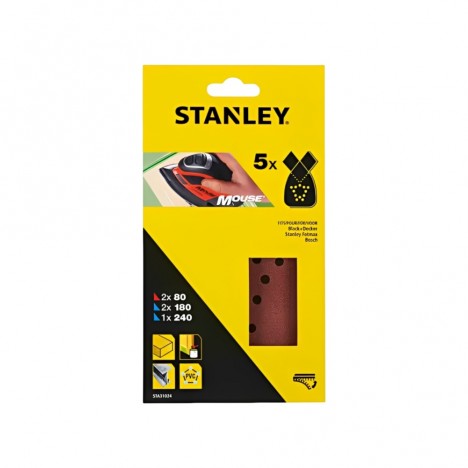


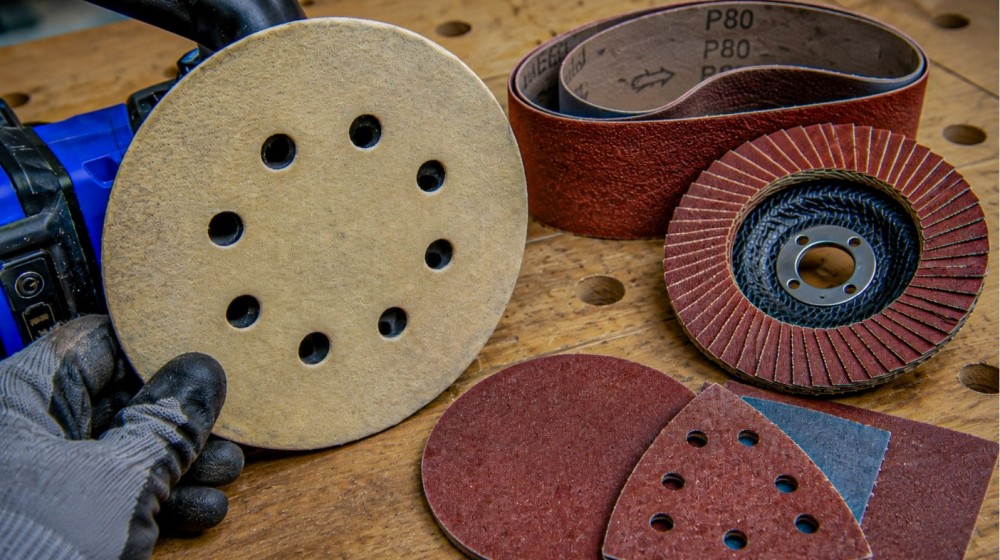
When using Sandpaper After a while, we might experience something like this: when starting to sand, it cuts material well, wood sanding produces dust quickly, sanding body filler levels the surface rapidly, and when using a sander, there is barely any need to apply pressure. But after using it for a while, it feels like the "sandpaper is dull." You have to push harder, sand longer, the machine runs hotter, but less material is actually removed.
If you ask whether Round, sheet, and belt sandpaper: How to tell when it shouldn't be used anymore? Many people might easily conclude that this symptom is: Dullness and replace the sheet right away.
In reality, poor cutting performance on sandpaper doesn't have just one cause. The sandpaper might not actually be worn dull, but could be experiencing one of the three primary abrasive issues, which are: Loading, Glazing, and Dulling Although the end result makes us feel the same—that it "doesn't sand well"—the underlying causes are different, and the methods to address them are not the same either.
Being able to identify the exact cause will improve surface quality, abrasive lifespan, and sanding time, especially In woodworking, paint work, metalworking, automotive body repair, or tasks where sanders are used continuously for long periods
Why does sandpaper feel dull even though the abrasive grains are still completely there?
When new sandpaper contacts the workpiece, the tips and edges of the abrasive grains are still exposed and can directly touch the surface, resulting in efficient cutting. However, after use, the condition of the sandpaper surface begins to change.
- Sometimes swarf and debris clog between the grains until the sharp edges can no longer touch the workpiece; this is Loading.
- Sometimes the face of the abrasive grains gets polished smooth, or gets coated with melted material until the surface turns slick and glossy; this is Glazing.
- Sometimes the abrasive grains themselves wear down, becoming truly dull or rounded from use; this is Dulling.
These three symptoms feel similar, but their internal mechanisms are distinctly different.
What is Loading? When debris "clogs" the sandpaper surface
If you ask whether Does a dust extraction system really help extend sandpaper life? Loading, or clogging, is a problem that happens very frequently when there is no dust extraction system, especially when sanding soft, sticky materials or materials that generate a lot of fine dust, such as paint, softwood, plastic, lacquer, or surfaces that still retain moisture and residual oil during sanding.
Debris removed from the workpiece should be blown or vacuumed away from the contact area. If it is not removed quickly enough, the debris lodges between the abrasive grains and gradually accumulates.
At first, it may only be a light dust, but with applied pressure, friction, and heat, that dust can compact into hardened clumps stuck on the sandpaper surface.
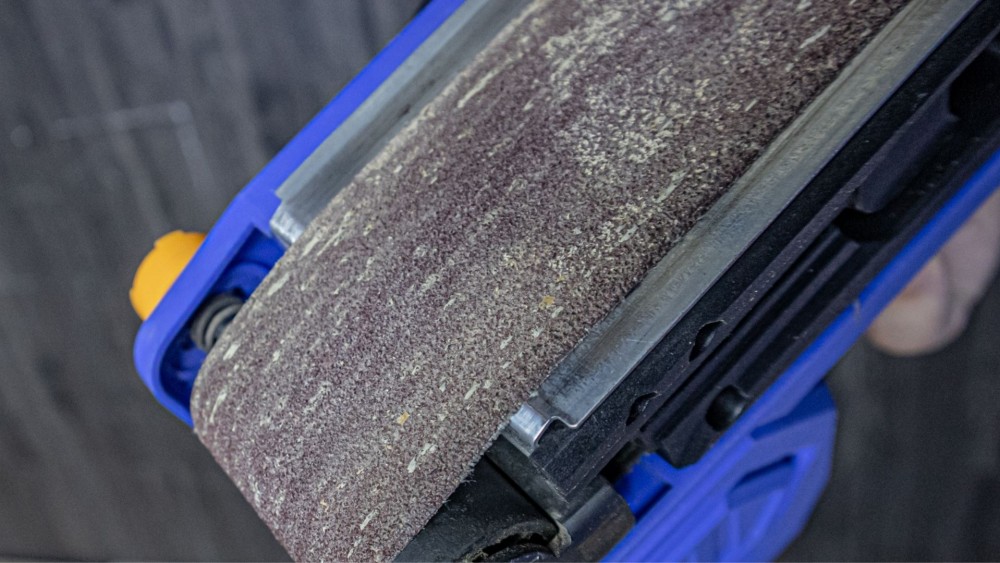
When enough of this occurs, the abrasive grains can no longer make full contact with the workpiece as before. Where there should be sharp abrasive edges, there are instead lumps of debris dragging across the surface. As a result, the sandpaper stops cutting, even though the abrasive grains underneath may still be sharp and in excellent condition.
How can you detect Loading?
One obvious symptom is that the sandpaper surface develops spots or streaks matching the color of the sanded material. For example, sanding white paint results in white patches on the sheet, sanding wood leaves embedded clumps of wood fibers, or sanding old paint leaves speckled paint deposits. If you run your hand across it, you may feel that certain areas are no longer rough, but instead have hard, protruding lumps.
The issue is that loaded lumps don't just slow down sanding; they can also create deep scratches on the workpiece. These hardened dust clumps can become high pressure points swirling beneath the sandpaper, especially when using a disc sander or random orbital sander. Therefore, if you begin to see swirl marks or unusual deep scratches despite using a fine grit, you should check the sheet's surface to see if loading has occurred.
What is Glazing? Why does the sandpaper surface turn shiny?
If loading is "clogging", glazing is closer to the condition where the cross-section of abrasive grains loses its cutting ability because the surface of the grains or surrounding areas have been worn smooth and shiny. The term glazing is often used with many types of abrasives, whether sandpaper, sanding belts, grinding wheels, or flap discs. The key symptom is that the contact surface becomes smooth or slippery to the point that it can no longer cut into the workpiece as before.
On sandpaper, this condition can be caused by the tips of abrasive grains being repeatedly abraded until tiny flat surfaces form, or by debris and heat creating a thin layer coating the grain surfaces so the cutting edges cannot bite into the workpiece. When in use, the machine feels like it is still running smoothly, but hardly any material is removed. Sometimes the paper's surface may look shiny or glossy when reflecting light.
How does glazing differ from loading?
With loading, you can usually see debris clogging the spaces between grains quite clearly, whereas with glazing, the sandpaper might still look clean without large debris clumps, but the surface appears smooth and won't cut. That is why some people inspect the removed sandpaper and wonder, "It still looks fine, why isn't it cutting?"
The answer might be that the abrasive grains are still all there, but the parts that should be cutting edges are no longer sharp.
Heat is a major accelerator of glazing
Heat is considered one of the major factors that causes sandpaper to lose efficiency sooner than it should. Every time you sand, friction is generated. When there is excessive pressure, high speed, or when sanding in one spot for too long, heat at the contact area rises rapidly.
On certain materials like paint, plastic, resin, or coatings, heat can soften the surface, causing material to coat or stick to the abrasive grains. Heat also directly affects grain wear, especially when using sandpaper that is not suitable for the material or running at excessively high RPMs.
It's no surprise that in some jobs, a sheet of sandpaper lasts a long time when sanded with just the right amount of pressure, but loses its effectiveness very quickly when the user presses down too hard on the tool. Therefore,
What is dulling? When abrasive grains truly become "blunt"
Unlike the first two conditions, dulling is when the abrasive grains on the sandpaper actually lose their sharpness through real use. Think of a knife used for a long time: even though the blade is still intact, the cutting edge is worn rounded, requiring more force to cut.
When abrasive grains on sandpaper are dragged across a surface thousands or tens of thousands of times, the sharpest points of the grains gradually wear down.
If the abrasive grains lack self-sharpening (fracturing) properties to reveal new sharp edges, they will gradually become rounded and skid across the surface instead of shearing it. As a result, the sandpaper still looks like it has a full coat of grains, but the sanding efficiency noticeably drops.
Different abrasive grains dull at different rates
- Whether it dulls slowly or quickly also depends on the abrasive grain material.
- Certain types of aluminum oxide can fracture during use and expose new cutting edges to a certain extent.
- Ceramic abrasives are engineered to undergo micro-fracturing to help continuously form new cutting edges during use, thereby maintaining their material removal capability well in heavy-duty applications.
- If you use an abrasive grain unsuitable for the material—such as using sandpaper meant for light-duty work on hard metals or applying continuous heavy pressure—the grains can dull very quickly.
- Sandpaper of the same grit but with different abrasive grain types can therefore have drastically different lifespans, even if the initial sanding results are similar.
Loading, glazing, and dulling can happen at the same time
In actual work, the problems aren't clearly divided such that one sheet only experiences Loading while another only experiences Glazing. Often, a single sheet of sandpaper faces all three symptoms simultaneously at varying degrees.
For example, starting by sanding putty with heavy pressure causes large amounts of dust to clog between the grains, resulting in Loading. This clogging reduces the contact area, prompting you to apply more pressure, which increases heat. The paint residue softens and coats the paper's surface, causing Glazing. Meanwhile, the grains still in contact with the workpiece bear more force than before, leading to Dulling or becoming blunt more quickly.
Ultimately, the user feels that "this sandpaper wears out very quickly." However, the root cause may not lie solely in the quality of the sandpaper, but in the overall sanding process combined.
How to tell whether you should clean it or replace it with a new sheet?
Sandpaper is a consumable: how to use it without wasting it? If the main issue is Loading and the abrasive grains are still in good condition, in some cases the paper surface can be cleaned to extend its service life—for example, using a cleaning stick for sanding belts or materials specifically designed for cleaning sandpaper surfaces.
However, if the grain surface has severe Glazing or the grains have already suffered Dulling, cleaning cannot restore the worn-down sharpness back to its original state.
In precision work, the key is not to keep pushing past the point where efficiency drops too much. The time wasted on slower sanding, increased heat, and the risk to surface quality may cost more than the price of replacing it with a new sheet.
Sandpaper losing its sharpness quickly doesn't mean it's low quality
If sandpaper stops cutting after brief use, many might conclude it's poor quality. But before judging, consider the operating conditions. Even top-quality sandpaper can quickly clog, glaze, or dull if used on uncured paint, with excessive pressure, without dust extraction, and at continuous high speeds.
The quality of the abrasive material certainly matters, but the entire "sanding system" matters just as much.
General sandpaper can last longer than expected if matched properly to the material, applied with appropriate pressure, and provided with good dust extraction.

Summary: What are the differences between Loading, Glazing, and Dulling?
To remember it most simply: Loading means the sharpness remains, but it is clogged with debris; Glazing means the contact surface becomes smooth or slick, preventing it from biting well. and Dulling means the abrasive grains have actually become blunt from real wear.
Although all three symptoms equally cause sandpaper to cut more slowly, their causes and solutions are different.
- For Loading: adjust dust extraction, reduce pressure, use Open Coat sandpaper, or choose anti-clog types to help significantly.
- For Glazing: heat, speed, pressure, and the suitability of the sandpaper for the material must be considered.
- Dulling is direct wear on the abrasive grains; once the cutting edge is truly gone, replacing with new sandpaper is the most appropriate choice.
The important thing is not to wait until Sandpaper "it doesn't cut at all" before replacing it, because when efficiency drops significantly, users often compensate by applying higher pressure, resulting in increased heat, scratches, and load on the tool.