


 EN
 ไทย


Customers Also Purchased
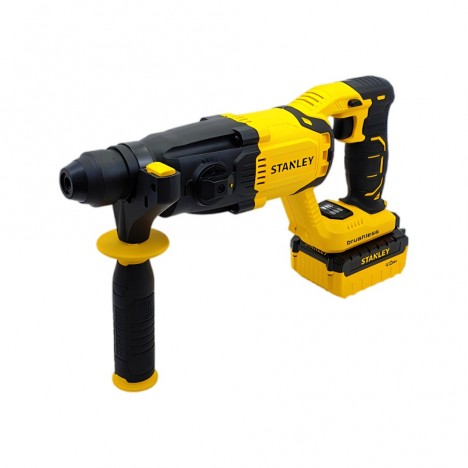
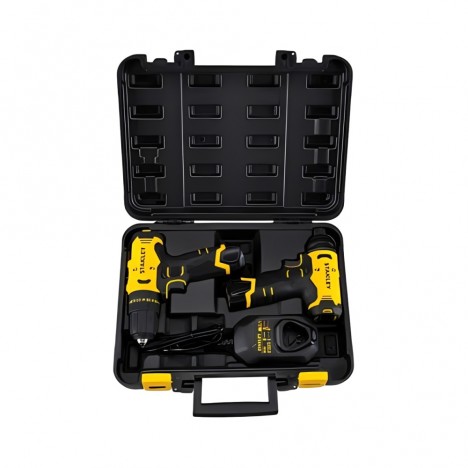
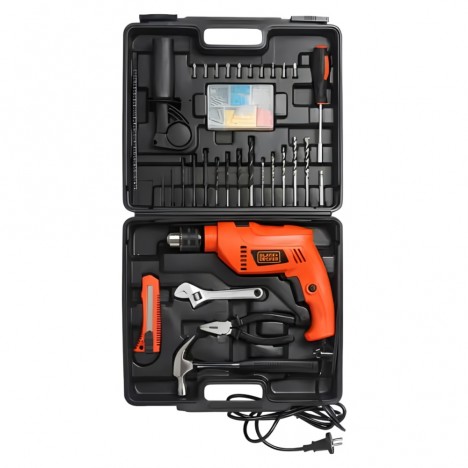


When talking about Electric drills corded vs. cordless drills, we often look at convenience and tool power, such as How powerful must a corded drill's "wattage" be to drill into your work (and drill into your heart)? Next, we might look at weight or operating duration first. But there is another equally interesting question: With regular use, which type consumes more electricity?
Corded drills connect directly to household power and specify power ratings like 500W, 750W, or more, making it seem like running them each time uses quite a bit of electricity. Meanwhile, cordless tools run on batteries and do not need to be plugged in while working, giving the impression that they use less electricity.
However, in terms of actual energy, this is not determined simply by whether a drill is "corded" or "cordless." The energy stored in a cordless drill's battery does not come for free. In the end, we still have to plug in a charger, and the charger draws energy from the electrical grid, only storing it in the battery first to be used later.
If you ask whether Is the electricity cost for a corded drill really higher than for a cordless drill? The short answer is: maybe not always true. When comparing tools with similar performance levels and measuring by the actual amount of work completed, the electricity costs between the two systems are not very different. The more noticeable long-term difference usually lies in battery prices, the number of batteries, service life, and workflow patterns.
To help visualize this, let's break it down piece by piece.
Before comparing electricity costs, you need to understand that Watts, Volts, and Ah are not the same thing.
The point of confusion when comparing corded and cordless electric drills is that these two types of drills usually show different units. A corded electric drill might state 650W, while a cordless tool shows 18V and a 5.0Ah battery. Looking at just the numbers, it's hard to tell how to compare 650W to 18V or 5Ah.
For electric drills, the Watt or W number indicates the electrical power related to the tool's operation. For example, a 650W drill means the tool is designed for an input power around that level under measurement conditions specified by the manufacturer.
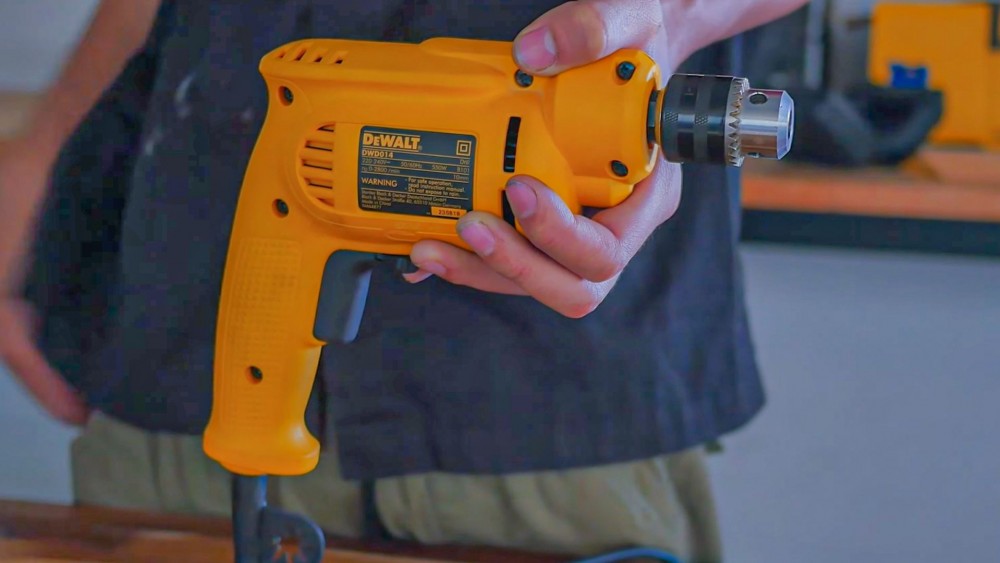
It doesn't mean that every time you pull the trigger, the tool draws a full 650W continuously, because actual power consumption varies with RPM, load, and the nature of the work. Cordless drill batteries, on the other hand, are typically stated in Volts and Ah, which need further calculation to estimate the rough amount of energy the battery stores.
How much energy does an 18V 5Ah battery have?
The simple calculation method is: Energy Wh = Voltage × Ah Therefore, an 18V 5Ah battery has a nominal rated energy of approximately 18 × 5 = 90 Wh or roughly 0.09 kWh
Looking only at actual usage, cordless drills seem to consume no electricity at all. But in reality, we have already "prepaid the electricity cost" when charging the battery.
Simple electricity cost calculation for a 650W electric drill
Assuming we have a 650W electric drill And to make it easiest to visualize, let's assume the tool runs continuously at 650W for a full hour. In real life, this is quite a heavy assumption, because general drilling work doesn't involve holding down the trigger continuously for an hour without breaks.
650W equals 0.65kW. Therefore, working for one hour will consume energy of 0.65kW × 1 hour = 0.65 kWh Assuming a simple total electricity rate of about 4.50 THB per unit The electricity cost from running the electric drill under these conditions would be approximately 0.65 × 4.50 = 2.93 THB
or less than 3 THB per hour
However, in real-world applications such as drilling holes, hanging shelves, or assembling woodwork, an electric drill might actually run for only a few minutes out of an entire hour of working time. Assuming an actual total runtime of about 15 minutes, even calculated at the full 650W throughout that period, the energy consumption is only around 0.1625 kWh, or an electricity cost of merely about 0.73 THB.
Even though the 650W rating on the tool may look high, for power tools operated in short bursts, the daily electricity cost might not be as high as you think.
Electricity cost of charging a battery compared to using a corded electric drill?
Returning to the example of an 18V 5Ah battery, which has a nominal energy capacity of about 90Wh or 0.09kWh: assuming a charging system efficiency of around 85% for calculation purposes, the energy drawn from the power outlet for a full recharge would be around 90Wh ÷ 0.85 ≈ 106Wh or approximately 0.106 kWh Calculated at an assumed electricity rate of 4.50 THB per unit (kWh), the cost would be approximately 0.106 × 4.50 ≈ 0.48 THB
This means that charging an 18V 5Ah battery from low back to full once costs approximately less than one baht. Based on this assumption, at first glance, the cordless drill seems to win by a landslide, as charging the battery once costs around half a baht, while running a 650W corded drill at full blast for an hour costs nearly 3 THB.
The issue is that we are comparing one battery pack to one hour of continuous operation, without looking at whether the electric drill and the cordless drill actually accomplish the same amount of work.
You must compare the "work accomplished", not just the runtime or number of charges
If you want to definitively answer which is more energy-efficient between a corded electric drill and a cordless drill, we should compare them based on the work accomplished—such as drilling 100 holes of the same size in steel, drilling wood with the same bit, or driving the same number of screws—rather than simply comparing one tool running for an hour versus another running on one battery pack.
An 18V 5Ah battery with roughly 90Wh of energy cannot deliver 650W for an hour. If we assume it continuously delivers 650W, theoretically that 90Wh would only last around 8-plus minutes. In real-world conditions, there are also limitations from efficiency, protection systems, temperature, and battery discharge rates.
If you need an amount of energy comparable to a 650W corded drill running continuously for a full hour, you might need to use energy from multiple batteries or recharge several times. Once all that energy is factored in, the electricity cost of charging would be nearly the same.
A higher wattage electric drill doesn't necessarily mean higher electricity costs
Another common misconception is that between a 500W electric drill and an 800W one, the 800W model will definitely cost more in electricity. In reality, you must consider both duration and load.
Suppose a 500W electric drill takes 60 seconds to drill a piece of work, while a higher-power drill can finish the same task in 35 seconds. In some situations, the higher-power machine may finish so much faster that its total energy consumption is actually lower.
Batteries have a limited lifespan—this is a cost you must consider
Lithium-ion batteries do not last forever. With every charge and discharge cycle, the cells gradually degrade depending on age, cycle count, temperature, and storage conditions. After several years of use, the usable capacity may drop to the point where a new battery must be purchased.
Corded electric drills have no batteries that need periodic replacement, giving them an advantage for stationary tasks or extended, continuous use. Even though the tool draws power directly from an outlet throughout operation, keep in mind that Corded electric drills never run out of battery, but you must watch out more for overheating
Using an electric drill only a few times a month? Electricity cost is hardly a major factor
For general tasks where you pick up an electric drill occasionally to hang shelves, drill into walls, assemble furniture, or do home repairs, the difference in electricity costs between corded electric drills and cordless drills barely carries enough weight to be a primary purchasing factor .
Assuming a 650W electric drill runs for an actual total of two hours per month, even calculated at full power for the entire two hours, it consumes about 1.3 kWh. Based on an assumed electricity rate of 4.50 THB per unit, that is only about 5.85 THB per month.
In this scenario, choosing between the two systems should be based on other factors, such as whether you need to move between multiple work spots, whether there is a power outlet nearby, whether you need to work at heights, whether you prioritize lightweight handling or continuous power, and whether you already own batteries on the same platform.
If you already have multiple cordless tools sharing the same battery platform, adding another cordless drill can be very worthwhile, as you won't need to buy a new battery and charger each time.
Corded vs. cordless electric drill: which one is truly more cost-effective?
If the question is simply whether corded electric drills have higher electricity costs than cordless drills, the answer is that you cannot make such a definitive conclusion.
An electric drill may show a higher wattage rating and draw power directly from a wall outlet, but cordless tools also require electricity to charge their batteries, with additional losses during charging, energy storage, and discharging. For the same amount of work, the total actual energy consumed is hardly different enough to impact your expenses.
What differs more clearly is the cost structure.
Corded electric drills incur energy costs directly through the electricity consumed during operation. Cordless drills have relatively low charging electricity costs, but come with the added expense of batteries and chargers, as well as the need to factor in long-term battery lifespan.
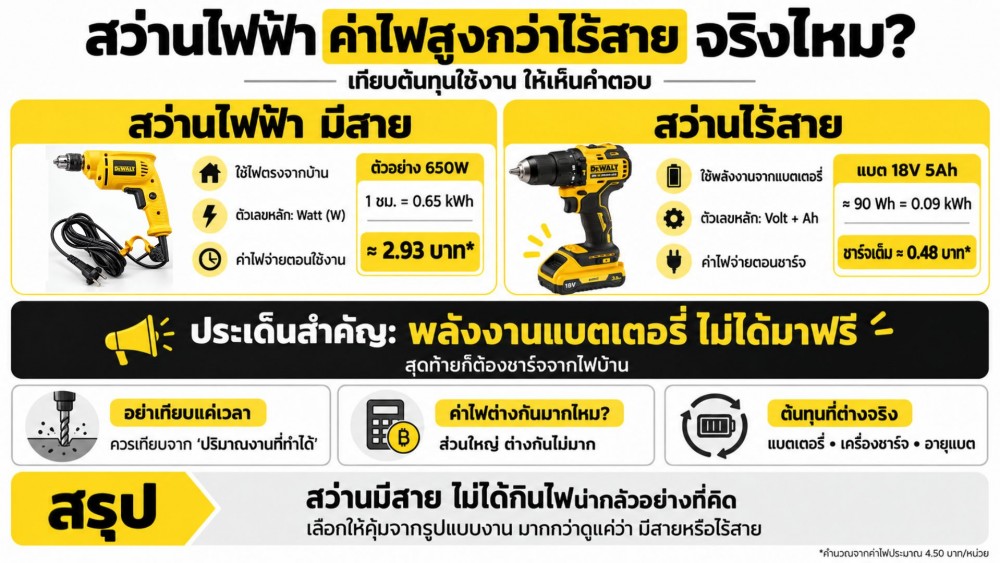
Conclusion: The difference in electricity costs is smaller than you think—usage patterns are the true decider of value
For anyone who sees a 650W or 800W corded electric drill and worries that it consumes many times more electricity than a cordless tool, there is no need to worry that much. Drill-type tools do not run continuously for hours like machinery that runs all day, so the electricity cost from typical usage is relatively low.
In the end, the appropriate question might not be “Which consumes more electricity, a corded drill or a cordless drill?” at all, but rather “How much do we have to pay in total for the same amount of work?”
Looking at it this way makes it clearer: corded electric drills are not power hogs in the way their power cord and wattage numbers lead many to believe, and cordless drills do not use free energy either—they simply switch from taking direct power to storing energy in a battery before use.
As for which tool is truly "more worthwhile," the answer depends on your work style rather than just whether it is Electric drills corded or cordless.