


 EN
 ไทย


Customers Also Purchased


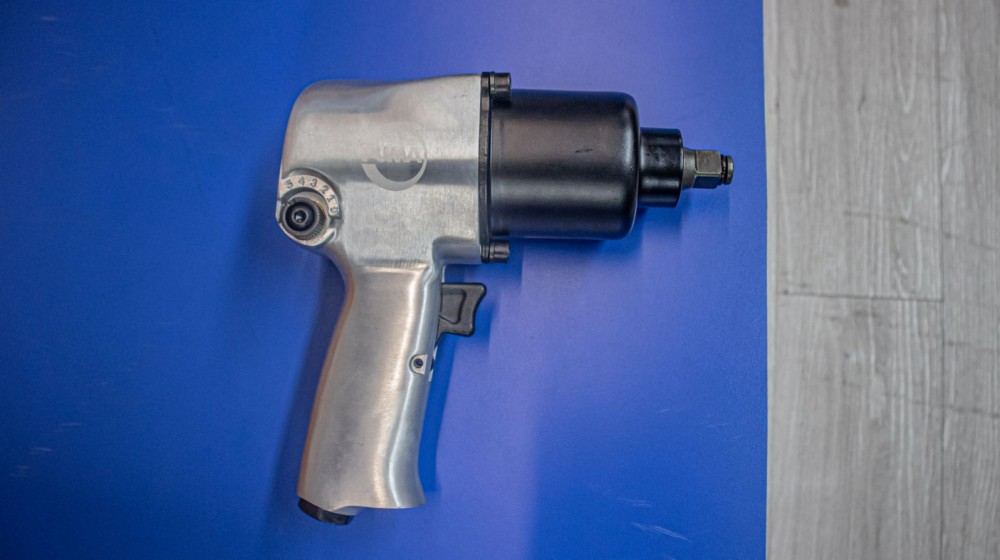
When picking up an Air Impact Gun (Air / Pneumatic Impact Wrench) air impact wrench to use, you might notice a small button or knob on the back or bottom of the tool. It may display numbers like 1-2-3-4, or some models might use notch marks, dots, or Min-Max markings. This can easily be interpreted as level 1 being low power, level 4 being high power, and that if you want to tighten a bolt securely, you just need to keep it turned to the highest level all the time.
This concept is only partly correct. These numbers do relate to power output, but it does not strictly mean that "Level 2 = exact torque X" or "Level 4 = maximum rated torque according to specs." The regulator on an air impact wrench controls the airflow inside the tool, which affects the rotational speed, impact frequency, and power of the impact mechanism, as well as the torque the tool can deliver to the socket.
Understanding how the air impact wrench's power regulator works will help you choose the right power for the job, reduce issues like overtightened bolts, stripped threads, and damaged bolt heads, and also make the tool much easier to control compared to always running at max power or guessing every time.
What Is the Power Regulator on an Air Impact Wrench For?
When Air Turns into Torque: Let's See How Air Impact Wrenches Work Air Impact Gun does not generate force from an electric motor, but uses energy from compressed air delivered from an air compressor through an air hose into the internal air motor.
- When the trigger is pulled, compressed air spins the motor,
- delivering power to the impact mechanism,
- transferring force to the drive anvil and the socket.
The power regulator built into the tool functions like an air flow control valve or regulates the amount of energy delivered into the internal system. When set to a lower level, the air passage may be restricted further, causing the motor and impact mechanism to operate at lower power. When adjusted to a higher level, more air can flow into the tool, giving it the potential to generate higher power and torque than before.
It is not necessary to use maximum power all the time because different fastening tasks do not require the same amount of force. Small bolts, assembly work, or threading bolts initially should not be done with the same force used for removing automotive suspension bolts or large machinery bolts.
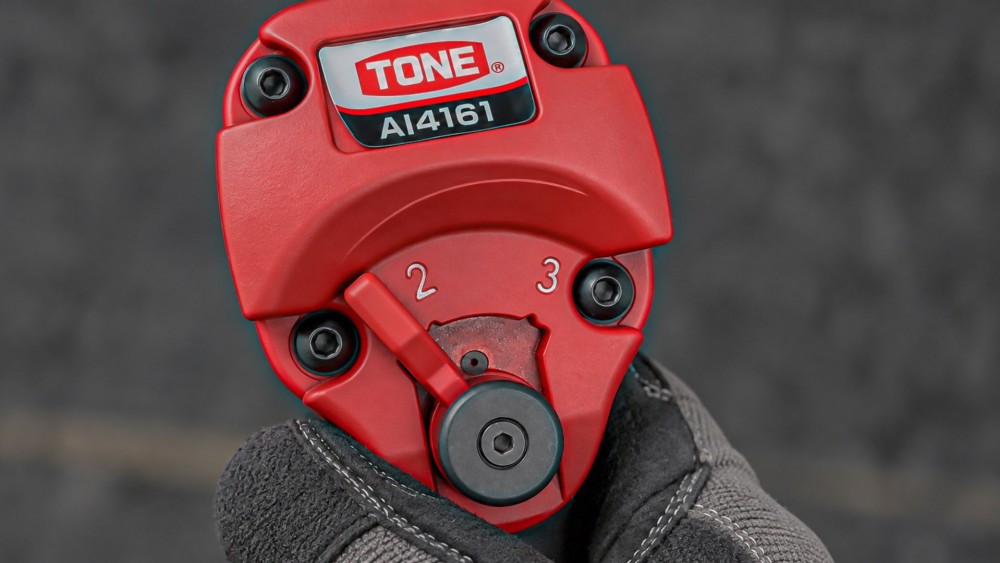
What do levels 1-2-3-4 on an air impact wrench mean?
Generally, if an air impact wrench has a 3-, 4-, or 5-level regulator, the basic principle can be understood as: level 0 or 1 restricts power the most, while level 4 or 5 allows it to operate at the highest power in that mode.
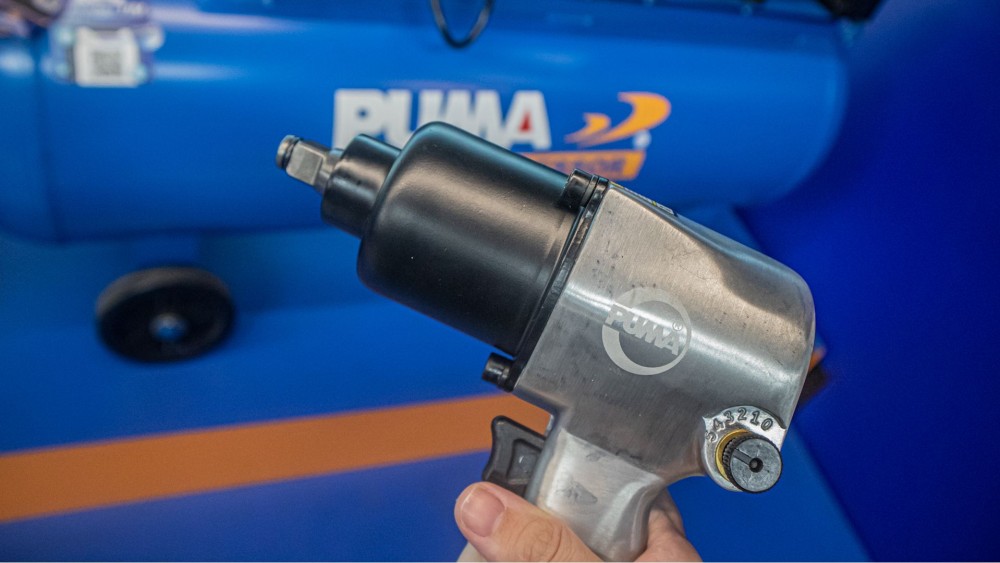
However, the word "generally" must be emphasized, because each brand designs its system differently. The numbers on the regulator are not an international standard; even with the same numbers 1-2-3-4, the actual torque delivered can vary greatly.
Levels 0-1 are suitable for work that requires control rather than brute force
Level 1 is usually the setting that restricts airflow the most. It is suitable for starting threads, preliminary assembly, or tasks where you do not want the tool to impact violently right away, such as engaging bolt threads before final tightening or working with small fasteners.
Starting with low power has the advantage of making the tool easier to control and reducing the chance of cross-threading, especially when rushing to run a bolt with an air impact wrench before the threads are properly aligned. If set to high power, the speed and impact force can strip threads very quickly.
Levels 2-3 are for general use
Middle levels like 2 or 3 are typically used for general tightening and loosening. The tool has more power—neither at the lowest nor at the highest level—making it ideal for assembly work, maintenance, and tasks that require a balance between speed and control.
However, regulators on many air impact wrenches do not increase power linearly. Changing from level 2 to 3 may increase airflow in proportions that cannot be predicted from the numbers alone.
Levels 4-5 provide high power and should not be used all the time
If the tool has levels 4 or 5, these settings open up the airflow for maximum power. They are suitable for heavy-duty tasks such as:
- Loosening tightly fastened bolts
- Bolts seized from long-term use
- Tasks requiring maximum torque
- Setting the tool to the maximum level for every task does not improve results, especially for tightening fasteners.
- Excessive impact force can overtighten bolts beyond their torque specifications, stretch threads, strip threads, or overload the fastened components.
Does increasing the level increase the air impact wrench's torque?
In principle Increasing the power setting may increase the air impact wrench's potential to generate higher torque. That's true, because the system receives more air. However, the actual torque output from the tool does not depend on the regulator setting alone.
What is essential is that the air pressure and airflow rate the tool receives from the system must also be sufficient. Suppose the air impact wrench requires a certain operating pressure, but the air compressor cannot keep up, the air hose is too small or too long, the fittings are undersized, or the air filter is clogged; even if you turn the regulator to the maximum level, the tool may still fail to generate its full expected power. Answering the Question: Does an air impact wrench depend more on air pressure or air volume?
This is why users sometimes wonder, "Why does the impact wrench still lack power even at setting 4?" The problem might not be with the air impact wrench itself, but rather with upstream factors such as the air compressor, air hose, fittings, or pressure drops during actual operation.
The numbers 1-2-3-4 are not fixed, precise torque values.
Some people might test tightening a bolt and feel that setting 2 is just right, then remember to use setting 2 whenever they need that same torque next time. In reality, this method only serves as an approximation for non-critical tasks and cannot substitute for torque-control tools.
The actual resulting torque also depends on air pressure, air volume, impact duration, socket size, impact mechanism condition, lubrication, bolt size, and resistance from the workpiece. For example, setting the impact wrench to level 3 and impacting for half a second versus setting it to level 3 and holding the trigger down to let the impact mechanism hammer for several seconds can yield vastly different results.
The regulator on an air impact wrench should be viewed as an approximate power control rather than a precise torque setting tool like a torque wrench.
Many people use high power to loosen bolts, but more caution is needed when tightening.
Loosening and tightening bolts have clearly distinct goals. When loosening a bolt, we need enough force to overcome the initial clamping load, as well as rust, dirt, or friction built up over long periods of use. Therefore, it is normal to set the air impact wrench to a high power level to loosen very stubborn bolts.
However, when tightening a bolt back in, the goal is not to apply maximum force, but to tighten it to the "proper specification." If you use a high setting on an air impact wrench and hold down the trigger while it impacts continuously, you have almost no way of knowing how much torque has been applied. It could be just right, or it could significantly exceed the component manufacturer's specified value.
Jobs requiring specific torque values should be finished with a torque wrench.
Clear examples include:
- Tightening wheel lug nuts
- Engine work
- Machinery assembly
- Fasteners with manufacturer-specified torque ratings
These jobs should not rely on the 1-2-3-4 numbers on an air impact wrench to determine the final torque.
The proper method is to use the air impact wrench to run the bolt in at a moderate power setting, stop before encountering heavy resistance and impacting hard, and use a torque wrench for final tightening. to the specified torque value. This method gives you both the speed of an air impact wrench and assembly precision.
Why do some air impact wrench models have different adjustments for tightening and loosening power?
The reason lies in actual usage behavior. When tightening, multi-level power control is needed to reduce the risk of over-tightening. But when loosening bolts, we usually want enough power to break the bolt free. Therefore, many air impact wrench models are designed with a reverse mode that primarily focuses on high power.
Some models may feature an Auto Stop or Bolt Removal Mode that slows down the speed once the bolt breaks loose, preventing the nut from spinning off and flying away from the spindle. These functions are advancements developed from traditional power adjustment systems to make air impact wrenches easier to control and more practical for real-world tasks.
Can you adjust the air compressor pressure instead of adjusting the levels on the air impact wrench?
Even though both involve compressed air, their functions are not the same. The pressure on the air system regulator should be set within the range specified by the air impact wrench manufacturer. Meanwhile, the level selector on the tool is meant for selecting operating power in each situation.
Increasing the supply air pressure beyond the manufacturer's specified value just to make the wrench more powerful is not a proper method. Air impact wrenches are designed to operate within a specific pressure range. Using excessively high pressure may increase speed and internal component stress, but it reduces the tool's lifespan and can increase other risks.
If the wrench still lacks power even at the maximum setting, things to check include whether the air compressor has sufficient airflow delivery, whether the air hose and fittings are appropriately sized, if there is excessive pressure drop, and whether the air impact wrench is properly maintained and lubricated.
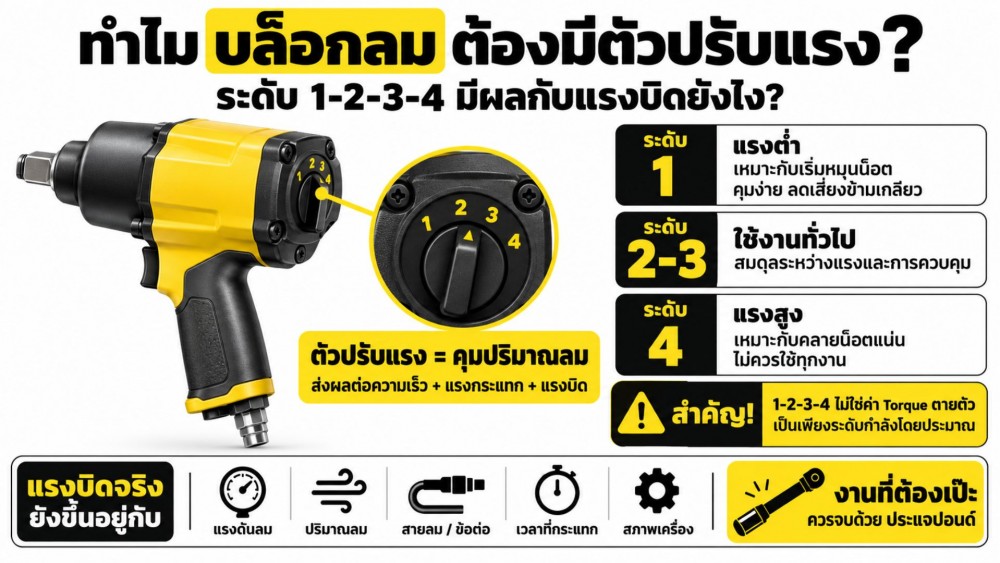
Summary: How should levels 1-2-3-4 on an air impact wrench be used?
The 1-2-3-4 power regulator on an air impact wrench helps control the tool's power. Lower settings typically restrict airflow, making tightening easier to control. Higher settings generate more power and torque, making them suitable for heavy-duty tasks, especially loosening stubborn bolts.
The important thing is these numbers do not represent fixed torque values. Setting 2 on one model may not deliver the same force as setting 2 on another model. And even on the same tool, actual torque can vary depending on air pressure, air volume, hose size, fittings, impact duration, and the tool's condition.
Therefore, do not think of an air impact wrench's power regulator as a torque wrench. It is more accurate to view it as a helper for "selecting the appropriate power range for the job." For general tasks, start at a low or medium setting and increase power as needed. For jobs with specified torque requirements, use the air impact wrench for initial rundown and finish with a torque wrench according to the manufacturer's specifications.
The numbers 1-2-3-4 on Air Impact Gun are essential aids that help you work faster, apply appropriate force, and unnecessarily reduce the risk of damaging bolts, threads, and workpieces.