


 EN
 ไทย


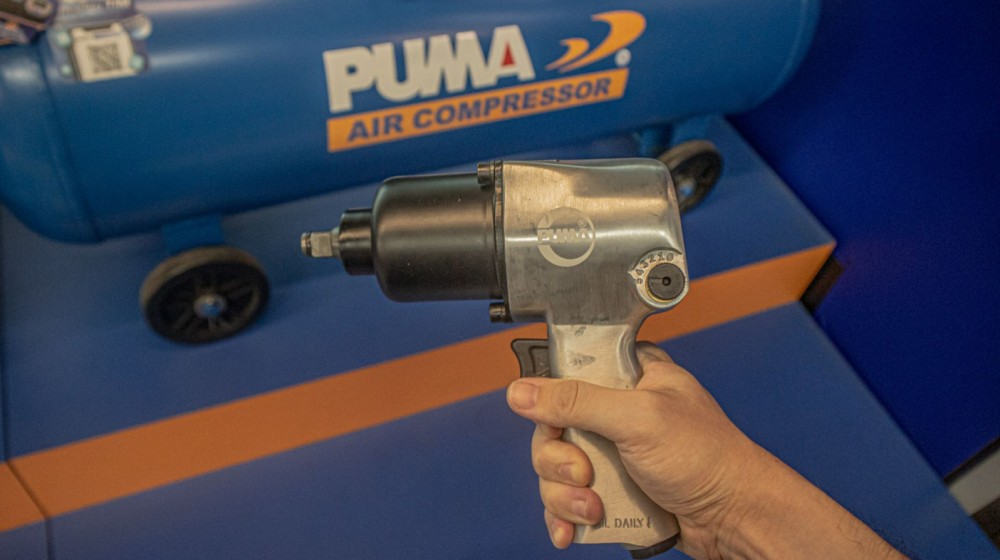
Customers Also Purchased


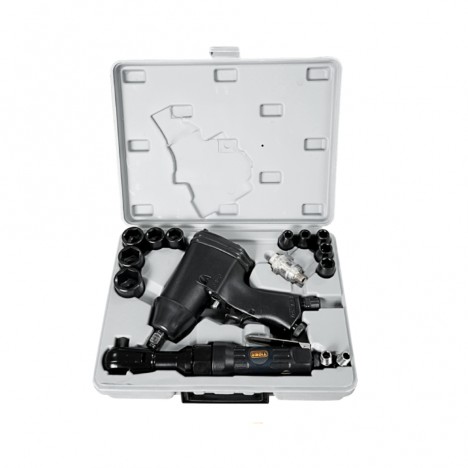
When it comes to pneumatic tools that auto mechanics or serious air compressor owners think of, one must certainly be Air Impact Gun an air impact wrench. For jobs dealing with stubborn bolts or repetitive assembly multiple times a day, this type of tool is practically an indispensable staple in the workshop. Clear comparison: Why are air impact wrenches still widespread in the power tool era? However, another question that often confuses many people when trying to use an air impact wrench at full efficiency is: Should we focus more on "air pressure" or "air volume (CFM)"?
In this article, we'll clear up what an air impact wrench really needs from an air system: how crucial air pressure is, why air volume matters, why two people with the same compressor pressure experience different tool power (one strong, one weak), and what key factors to check before buying an air impact wrench to match your existing compressor.
How does an air impact wrench work? Air pressure and air volume must go hand in hand
An air impact wrench is a pneumatic tool that uses compressed air to drive internal mechanisms to rotate, along with an impact mechanism that helps generate higher torque than ordinary rotation. This makes it ideal for loosening tight bolts, such as lug nuts or suspension bolts. When Air Turns into Torque: Let's See How Air Impact Wrenches Work When the trigger is pulled, air flows into the air motor and transmits force to the impact mechanism to create torque at the anvil.
The important thing is that an air impact wrench doesn't just use "tank pressure"; it also requires a continuous flow of air. Pressure is like pushing force, while air volume is the amount of air supplied to feed the tool. If the pressure is sufficient but the air volume is not, the wrench may only be powerful initially and then gradually lose power during actual use. Why does an air impact wrench suddenly lose power? Common causes compiled
Even if the air compressor gauge reads 8 bar, the air impact wrench might still fail to loosen bolts because the problem lies within the air system, such as the compressor, air tank, air hose, fittings, couplers, air filter, or pressure regulator.
Air pressure is the basic requirement
Air pressure is the value that indicates how much force the air is compressed with, which we see in units of PSI, Bar, or MPa. General air impact wrenches usually require a pressure of about 90 PSI or around 6.2 Bar. If the pressure is too low, the tool will rotate slowly, have low torque, and struggle to loosen tight bolts. However, setting the pressure higher than specifications is also not a good method, as it can cause seals and internal mechanisms to wear out faster.
Air volume is what keeps power from dropping easily
Air volume is the air flow rate that the system supplies to the air impact wrench, usually specified in CFM, L/min, or Air Consumption. If the compressor delivers less air than the wrench requires, the tool won't run long before losing power, especially for 1/2-inch air impact wrenches and larger, or for jobs involving lug nuts, suspension bolts, and industrial applications.
Does an air impact wrench need "Pressure" or "Air Volume" more?
The most straightforward answer is that an air impact wrench needs both pressure and air volume, but what people often overlook is "air volume."
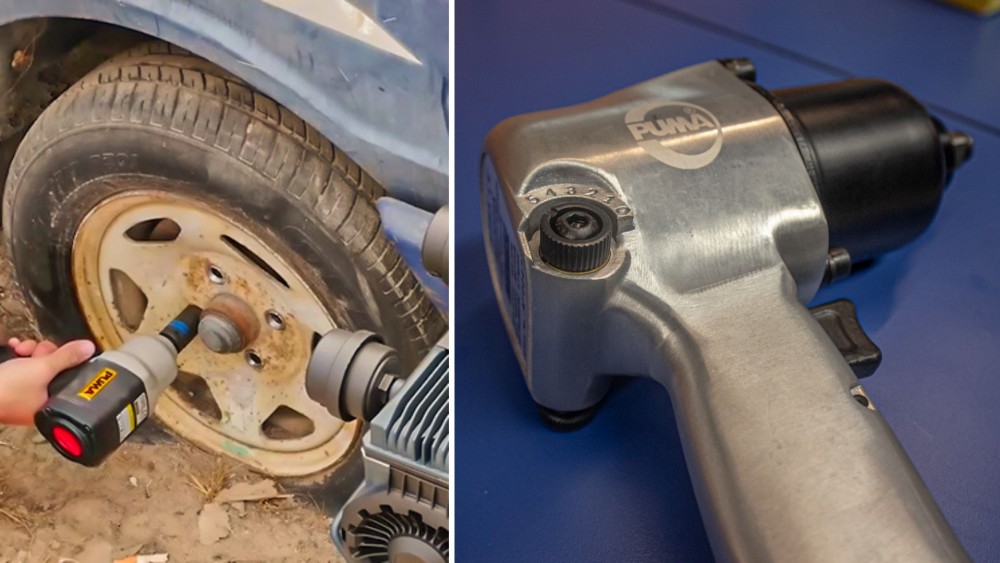
Pressure is easily read from a gauge, while "air volume" must be determined from specifications and the air system—not just by looking at a large tank or high pressure alone.
Sufficient pressure, but insufficient air volume
If the pressure is high but the air volume is insufficient, the air impact wrench may spin powerfully at first, but in actual use, that power will drop quickly, RPM will decrease, bolts won't loosen easily, or pulling the trigger longer won't yield better results. Sometimes we mistakenly think the tool is failing, when in fact the air system cannot keep up with supply, especially when using a small compressor tank, very long air hoses, small-diameter hoses, or narrow-bore fittings.
Another symptom encountered is the air compressor cycling on and off very frequently. After pulling the impact wrench trigger just a few times, the compressor motor starts running to refill air. If the compressor cannot generate air fast enough, the tank pressure will continuously drop, and the impact wrench will weaken accordingly. A job that should finish quickly ends up delayed by waiting for the compressor to constantly refill.
Sufficient air volume, but pressure too low, still won't give full power
Conversely, if the system has good air flow but the pressure is set too low, the air impact wrench still won't operate at full power. The air entering the tool lacks enough pushing force for the air motor and impact mechanism to generate torque according to specifications. The symptoms seen are that the tool rotates continuously, but the impact force is weak, making it difficult to loosen tight bolts or taking longer than usual.
Therefore, the answer is not to focus exclusively on one over the other, but to view them as a pair. The pressure must be within the manufacturer's recommended range, and the air volume must be sufficient for the demands of that specific air impact wrench model. If either is lacking, the tool cannot deliver its full performance.
Other factors that cause an air impact wrench to lose power even when the compressor is powerful enough
Many people choose an air compressor for an air impact wrench based solely on the tank size, such as 24 liters, 50 liters, or 100 liters. However, the air tank is merely a storage vessel, not the air generator itself. If the pump head or motor has a low air delivery rate, using an air impact wrench continuously for even a short period will quickly deplete the air in the tank, causing the pressure to drop anyway.
What you should consider together are the tank size, air delivery rate (CFM/FAD), and the air demand of the impact wrench itself. Air impact wrenches consume air in heavy bursts, especially when impacting to loosen stubborn bolts. If the compressor recharges slowly, even with a large tank, you will still have to wait frequently for it to build up pressure.
Here are additional points you should check before concluding that your air impact wrench lacks power:
- Is the air tank large enough, or is it large but the compressor takes too long to refill?
- Can the air compressor generate air fast enough to keep up with continuous use?
- Is there excessive accumulated moisture/water in the air tank or the air system?
- Are the air filter, water separator, or pressure regulator clogged?
- Are there any air leaks along the air hose, fittings, or quick couplers?
Hoses and fittings that are too small prevent air from reaching the tool properly.
Another cause of reduced power in an air impact wrench is undersized hoses and fittings. Even if the air compressor delivers sufficient pressure, if the hose is too long, the inner diameter is too small, or the fittings have narrow orifices, the air may not flow fast enough. By the time it reaches the impact wrench, the actual pressure may have dropped significantly.
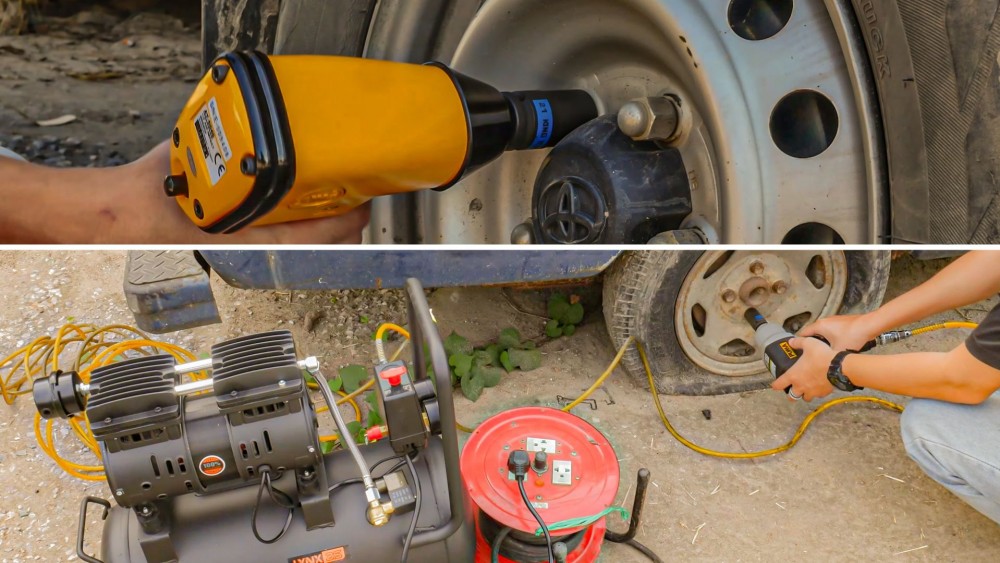
Fittings, quick couplers, hose barbs, and certain regulator models may look similar on the outside, but their internal passages can vary greatly. Choosing fittings with an orifice that is too narrow will choke the air impact wrench, starving it of air. This is especially true for 1/2-inch models and larger. Therefore, you should select air hoses and fittings capable of handling adequate air volume.
Signs indicating that the air hose or fittings might be the cause include:
- Strong initial burst when pulling the trigger, followed by a rapid loss of power.
- The air hose is very long or has multiple extended connections/couplings.
- Using undersized fittings with a large air impact wrench.
- The gauge at the compressor reads normal, but the actual operating pressure drops significantly at the end of the line.
Setting the pressure too high is not always the right solution.
If the air impact wrench lacks power, increasing the pressure can only help when it was initially set too low. Once the pressure is already at the optimal operating level, exceeding the recommended specifications can cause seal leaks, accelerate tool wear, increase operating noise, and make torque control more difficult. Most power drop issues are not simply caused by low pressure alone, but rather by insufficient air flow, undersized hoses, restricted fittings, or a compressor that cannot keep up with air demand. You should troubleshoot the entire air delivery system rather than just cranking up the pressure.
Choosing an Air Impact Wrench to Match Your Air System
When choosing an air impact wrench, don't just look at the maximum torque rating, as this number usually comes from tests conducted under optimal air system conditions with complete pressure, air volume, and accessories. If used with an air compressor that cannot supply sufficient air, the actual torque may be much lower than expected.
Factors to consider together include the drive size, such as 3/8 inch, 1/2 inch, 3/4 inch, or 1 inch, air consumption, operating pressure, tool weight, and suitability for the actual application, because the most powerful air impact wrench may not be the most worthwhile choice. If the work is not very heavy, equipment that is easy to control, properly weighted, and consumes moderate air may perform better.
Complete Checklist Before Buying an Air Impact Wrench
- Consider the scale of work and actual required torque.
- Choose an appropriate drive size for the sockets and fastener types.
- Check the operating pressure and air consumption rate of the tool.
- Compare with the existing air compressor, air hose, and fittings.
- For continuous operation, allow for extra air volume.
The key point is not to choose the tool independently from the air system, because whether an air impact wrench performs well depends not only on the tool itself, but also on the entire air delivery system.
Maintaining an Air Impact Wrench to Prevent Power Drop
In addition to pressure and air volume, the condition of the air impact wrench itself affects performance. If used without oil lubrication for a long period, internal parts may experience friction, wear, or rust from moisture, causing power to drop even if the air system supplies enough air.
Basic maintenance includes: adding air tool oil as recommended, draining moisture from the compressor tank, using a water trap or air filter in high-humidity setups, checking air hoses and fittings for leaks, and using impact-rated sockets specifically.
Small details may seem tedious, but they directly affect the power, durability, and safety of an air impact wrench.
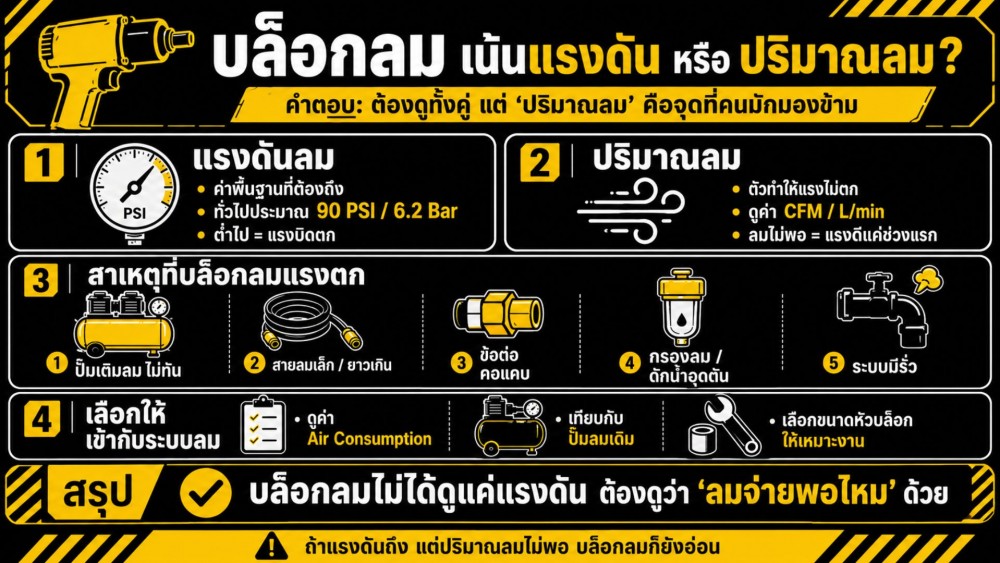
Summary: An air impact wrench isn't just about pressure; you must ensure sufficient air supply.
An air impact wrench requires both proper pressure and sufficient air volume. Pressure allows it to operate within its designed range, while air volume ensures sustained power without easily dropping, delivering torque close to its intended potential.
If there is pressure but insufficient airflow, the air impact wrench will still be weak, making fasteners hard to loosen, taking more time, and failing to achieve full efficiency—especially for stubborn bolts or continuous, repetitive tasks.
Therefore, before choosing an air impact wrench, consider the entire system: air compressor, air tank, air hose, fittings, and other specifications like the tool's air consumption rate. Don't look solely at the maximum torque number or the compressor's rated pressure.
When the air system is properly prepared Air Impact Gun it will also operate more steadily and be truly worthwhile in the long run.