


 EN
 ไทย


Customers Also Purchased



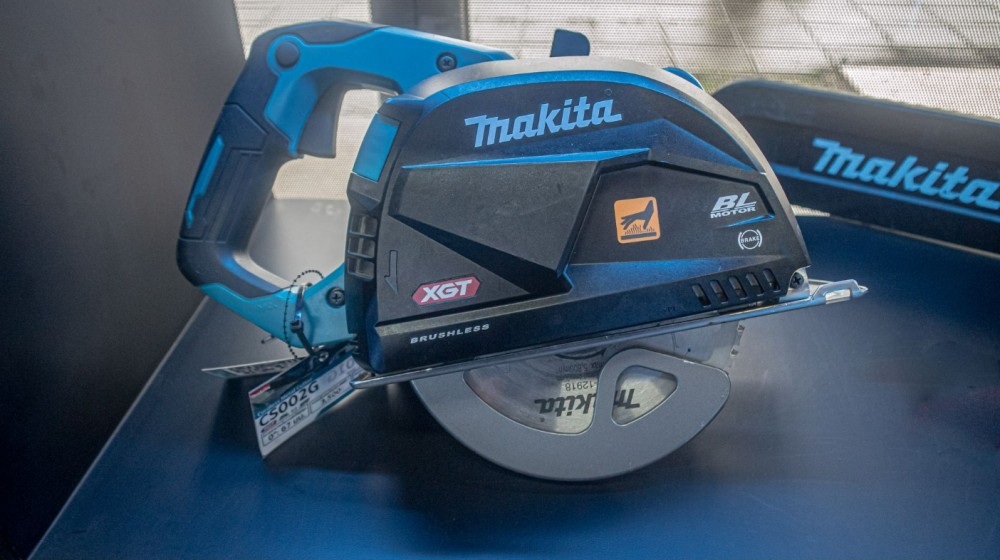
If you have ever browsed the product specifications Makita of various models, you will notice they are packed with letters and abbreviations, such as BL Motor, LXT, XGT, CXT, or AWS. Sometimes, tools in the same category differ in price by several thousand baht, yet appear on the outside to perform similarly. At a glance, we might think that all that really matters is choosing the right tool type for the job, checking battery voltage, torque, RPM, or wattage, and then comparing prices, or How to spot genuine Makita? Guide to checking tools, batteries, cases, and other features only.
In reality, many Makita codes indicate the internal structure, battery platform, how the tool responds under heavy loads, all the way to systems that help reduce risk during use.
Therefore, for anyone choosing Makita tools, understanding the specs is far more helpful than simply looking at "which Makita model is more powerful." Let's decode everything from the heart of the tool—the motor—to the protection systems and model numbers, so that when you see new Makita models, you can anticipate what each tool is designed for and what details should be prioritized before making a decision.
Starting with Makita tool motors: What is a BL Motor?
The term BL Motor found on many Makita tools stands for Brushless Motor,
- which differs from conventional motors that require carbon brushes to transfer electrical current to the rotating part of the motor.
- Without carbon brushes, directly friction-prone and wear-and-tear parts are reduced.
- At the same time, motor control can be managed more precisely through electronic circuits.
For example, Makita's DHP486 cordless drill states that its BL motor is electronically controlled to optimize battery energy use, and the absence of carbon brushes allows the motor to run cooler and more efficiently.
It does not mean that seeing the word "Brushless" immediately guarantees that Makita tool is more powerful than every brushed model, as tool power also depends on motor size, gear train, current management, battery, and overall tool design.
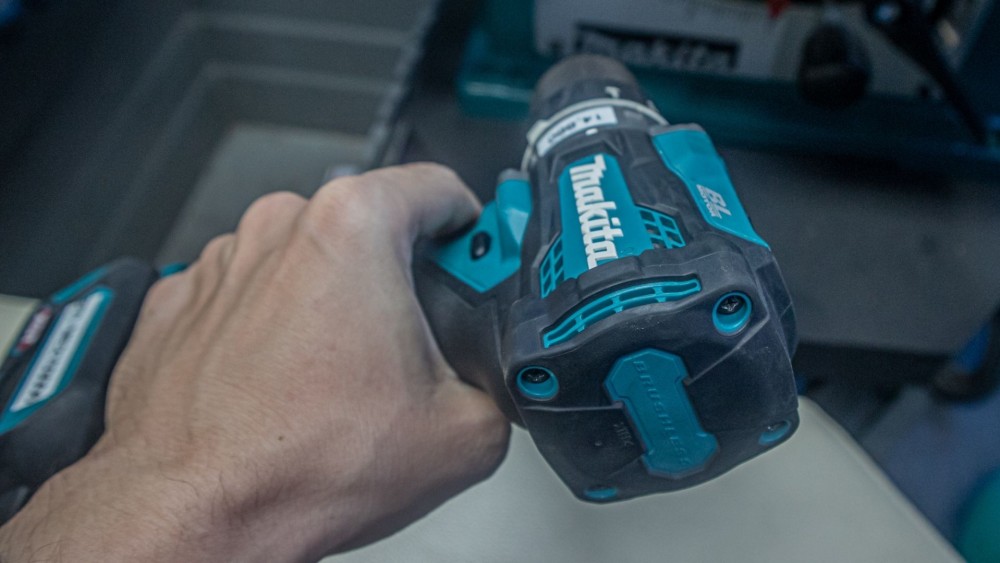
What a BL Motor truly means for buyers is that manufacturers have greater control over power delivery characteristics, reduce certain wear parts, and it is well-suited for cordless tools that need efficient battery energy management.
If you use tools frequently, work continuously, or are choosing mid-range to professional-grade tools, a BL Motor is a compelling feature, but it should not be the sole criterion for deciding that one tool is "better" than another.
Makita LXT, XGT, and CXT differ by more than just voltage numbers
Another crucial aspect to evaluate before choosing a Makita cordless tool is the battery platform, because purchasing a cordless tool is like starting or expanding an existing battery "ecosystem." Currently, Makita clearly separates its battery platforms into different groups, such as XGT 40V Max, LXT 18V, and CXT 12V Max. distinctly.
This principle applies to all brands, which often have conditions preventing cross-compatibility, though there may be exceptions, such as How compatible are Bosch and AMPShare batteries with other tool brands?
Makita CXT 12V: Ideal for compact applications
CXT is Makita's 12V Max battery platform. Its highlight is not delivering the absolute highest power, but rather its size, weight, and maneuverability. Tools in this range are well-suited for installation, assembly, maintenance, overhead work, or working in confined spaces where you need to hold the tool for extended periods.
If your tasks don't consistently demand high torque or heavy cutting power, a smaller Makita tool might actually be much more comfortable to use than a bulky one.
Makita LXT 18V: The system with comprehensive, wide-ranging coverage
When talking about Makita cordless tools, the system most people are familiar with is likely LXT 18V. Indeed, it offers a vast selection of tools—from drilling, fastening, cutting, grinding, and sanding to vacuum cleaners and garden power tools. Some tools even take two 18V batteries simultaneously to run on an 18V X2 or 36V system, all while utilizing the same LXT batteries.
Therefore, for anyone who already owns batteries like BL1830B, BL1850B, or BL1860B and an LXT charger, buying additional tool only (no battery) units within the same platform is often far more cost-effective than switching to a completely new system. That's because the cost of cordless tools isn't just the bare tool, but includes the number of batteries, chargers, and accessories needed for actual work.
Makita XGT 40V Max: Not just LXT with higher voltage
XGT 40V Max was developed for tasks demanding higher power and heavy-load capacity.
- We see XGT in tools such as rotary hammers, demolition hammers, large angle grinders,
- power saws, and outdoor power equipment that previously might have required corded power or petrol engines.
- Makita also features certain equipment running on two XGT batteries in an 80V Max system for applications requiring even higher performance.
The key takeaway is: Don't just look at '18V' or '40V' and assume a higher number is always the better choice. For general installation work, a lighter LXT tool is far more practical than lugging around a large Makita XGT all day. Conversely, for continuous, heavy-duty cutting, drilling, or chipping, the ability to sustain power under heavy loads makes a system built for heavy-duty work much better suited for the job.
CXT, LXT, and XGT are distinct, separate battery platforms. Batteries must therefore be selected according to the tool's platform. Just because it's also a Makita doesn't mean it can be plugged across all systems interchangeably.
XPT: A protection system that doesn't mean it's waterproof
Another frequently seen Makita symbol is XPT or eXtreme Protection Technology which involves engineering designed to enhance resistance against dust and water under more rugged operating conditions.
The key phrase to underline is "increased protection capability" does not mean the tool is completely waterproof. Therefore, seeing the XPT logo should not be interpreted as meaning you can leave the tool out in the rain, wash it with a garden hose, or submerge it in water without caution.
AVT Vibration Reduction: More important than you think
For those using rotary hammers, demolition hammers, or tools that generate continuous impacts, the term AVT – Anti-Vibration Technology is an interesting feature, especially if you have to hold and operate the tool for hours on end.
Makita employs several vibration reduction approaches depending on the tool's design, such as counterweight mechanisms, vibration-absorbing handles, or decoupled structures that isolate the impact mechanism from the handle grip.
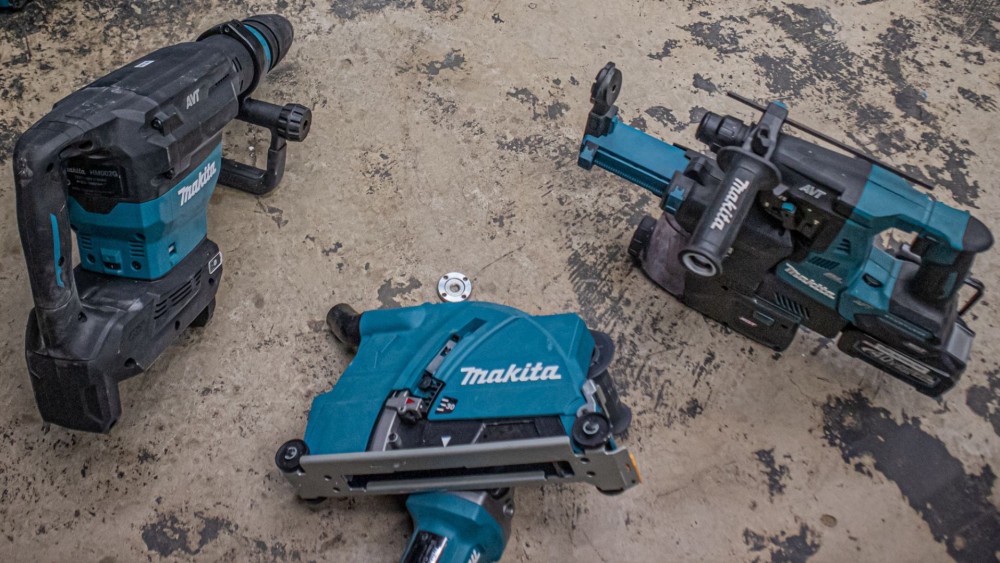
This highlights that when buying heavy-duty power tools, you shouldn't compare solely based on impact energy in Joules or beats per minute. A very powerful tool that transmits high vibration to the user can cause fatigue quickly during prolonged use. In certain tasks, "handling comfort" impacts real-world productivity just as much as peak power figures.
AFT: When the tool detects abnormal rotation
For heavy tools with high-speed rotating parts, such as angle grinders, saws, or rotary hammers, you might see the term AFT – Active Feedback sensing Technology Makita's system is designed to detect situations where the rotational speed suddenly drops or the accessory is forced to stop, and then immediately shuts off power to the motor.
Imagine using an angle grinder and the cutting wheel gets pinched, or drilling and the bit suddenly binds: the motor's torque can quickly create a violent reaction against the tool body. AFT provides an extra layer of response to these abnormalities, but it does not eliminate kickback risk completely. You still need to maintain proper posture and grip, select the correct disc or bit for the job, keep safety guards installed, and follow safe operating practices.
ADT: It's not just about "full power all the time"
ADT – Automatic Torque Drive Technology This is another system based on a different concept than AFT. While AFT focuses on responding to sudden anomalies, ADT dynamically adjusts tool performance based on load. Many Makita models with this technology can automatically adjust speed and torque during operation to match working conditions.
In practice, what makes such systems interesting is that modern power tools no longer simply "run the motor at full throttle whenever the trigger is pulled." Instead, control circuitry manages power output according to the actual load. This explains why two tools sharing the same battery voltage and BL Motor technology can feel completely different in real use.
AWS: The tool and vacuum cleaner "can talk to each other"
AWS – Auto-Start Wireless System This system provides clear benefits in cutting, drilling, or sanding tasks that require connecting to a vacuum cleaner.
- This system uses a wireless connection with compatible vacuum cleaners.
- When the tool is turned on, the vacuum cleaner starts working along with it accordingly.
- When the tool stops, the dust extraction system coordinates and stops accordingly.
For example, the HM001G demolition hammer and many other Makita tools support AWS to connect with compatible vacuum cleaners via Bluetooth.
For those who don't use dust extraction systems, AWS might not be a primary reason to increase your budget. But for indoor work, woodworking, concrete drilling, or tasks requiring dust control, eliminating the step of turning the vacuum on and off separately each time is a small detail that streamlines workflow significantly.
Makita's variety is a great example of how "more technology" doesn't mean "more suitable for everyone." The important thing is whether that system matches the nature of your work.
Summary: Look at Makita as a "system" rather than a single tool
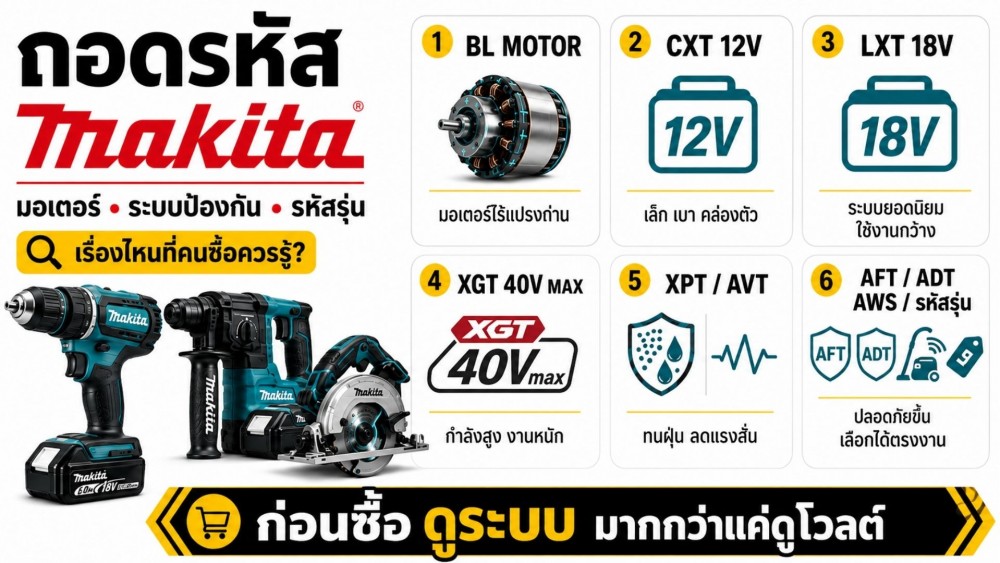
If there is one thing to take away from decoding all of Makita, it is: Don't choose based on technology names or voltage numbers alone. .
- BL Motor tells us about the motor type, but it doesn't represent the tool's total power.
- XPT provides enhanced protection against dust and water, but it doesn't mean the tool is waterproof in every situation.
- AFT helps respond when rotation drops abnormally, but it does not make kickback disappear completely.
- ADT helps adjust power according to the load.
- AVT is meaningful for high-vibration applications.
- AWS is extremely useful when working in tandem with compatible dust extraction systems.
Just like LXT, CXT, and XGT No single platform is "the best" for everyone. The best system is the one that matches your work and is compatible with the tools you already own. If you already have multiple LXT batteries, adding another Makita LXT tool only (no battery) can be very cost-effective. But if you are moving toward progressively heavier-duty work, looking into the XGT system makes sense in the long run.
Once you understand how to read Model Code Makita Battery Systems and Technologies Choosing tools will become much easier. More importantly, it's not about choosing "newer, more expensive, more powerful, or more feature-packed models," but choosing based on what actually impacts your work.


