


 EN
 ไทย


Customers Also Purchased



When buying power tools or cordless tools, especially from popular brands like Makita (Makita) we certainly wonder not only "Which model is good?" or "How much is it?", right? We also want to know, "Is it genuine?" Because in the market—both online and in physical stores—there are imported goods, compatible alternatives, and even counterfeits that look so similar to genuine products that they are hard to tell apart.
This matters because power tool quality involves power output, battery, motor, heat dissipation, torque, and safety. If you get a Makita tool claimed to be genuine but built with low-quality parts, you might not just face premature breakdown; it could also impact safety, void your warranty, or make you feel scammed and having wasted money. Therefore, before buying a Makita tool—whether it's a drill, impact driver, grinder, or circular saw—you should verify that it's genuine before paying.
Let's look at a step-by-step verification method to answer how to spot genuine Makita tools and where to check: from the tool body, battery, charger, case, packaging, labels, and model numbers, to the warranty. This will allow anyone to do a preliminary check themselves and reduce the risk of buying products that don't meet expectations.
Why Checking for Genuine Makita Is More Important Than You Think?
Power tools have far more internal details than meets the eye. On the outside, they may look similar, have nearly identical colors, similar logos, or even identical model numbers. However, internal components, manufacturing standards, thermal protection systems, battery management systems, motor quality, and long-term durability can differ vastly.
Makita tools are designed to work together as a system, especially cordless tools that must be used with batteries and chargers. This means verification must be done across the "entire system," not just the tool body alone.
Spotting Genuine Products Goes Beyond Just the Makita Logo
The first thing to remember is that having a Makita logo on the tool body does not always mean the product is genuine. Logos are the easiest thing to copy. At a glance, it might look real, but if you look closer at the details, you'll start noticing more differences—especially in the small details that often reveal product quality.
- Plastic Quality and Build Assembly Must look solid and refined, with no rough finishes, uneven gaps, or strange flashing/excess edges.
- Lettering, Logos, and Labels on the Tool Should be sharp, clear, unblurred, spelled correctly, and not easily peeled off.
- Tool Weight, Motor Sound, and Switch Should feel solid and firm, not loose, and free from abnormal vibrations.
Genuine Makita tools generally feature neat details on the body, consistent and unbleached coloring, and tightly fitting parts. In actual use, the grip feel, switch actuation, and motor sound feel stable, with no burning smell or abnormal overheating shortly after running.
Checking the Makita Tool Body: Where to Look First?
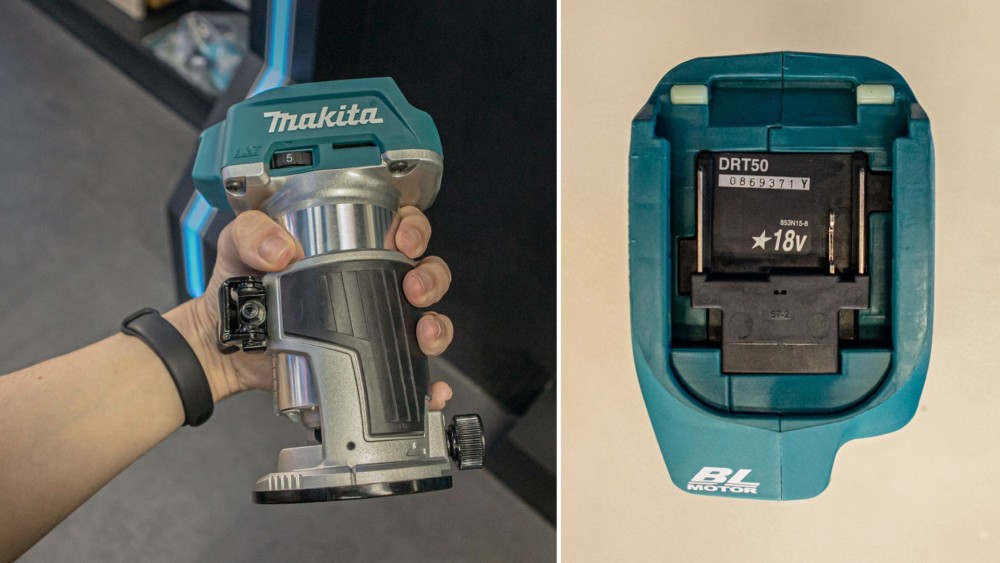
If you can handle the actual tool, first look at its overall appearance. Genuine Makita tools feature details such as model badges, ventilation slots, switches, mode selectors, chucks, or fastening points that are neatly aligned and do not look crude or loose.
For cordless Makita tools like drills, impact drivers, or cordless grinders, pay attention to the battery rail as well. The rail should be sturdy; when the battery is inserted, it should fit snugly without wobbling, and the contacts must be clean and neat. Since this area directly handles power delivery, loose manufacturing could cause the tool to stutter or overheat, something genuine brands prioritize heavily.
Another spot to check is the rating plate on the tool. It should be clearly printed, not blurry, not prone to peeling, and the information must match the model—for example, Makita 18V tools must be used with the 18V battery system, while 40Vmax tools must belong to the XGT system. There should be no typos or odd layout choices. How to Choose Makita Batteries Without Mistakes: An In-Depth Look at 12V, 18V, and 40V
What Can Build Quality and Tool Weight Tell You?
Genuine Makita tools have a sensible weight and balance appropriate for their tool category. The tool won't be abnormally light compared to the same model, nor will it feel awkwardly heavy or unstable in the hand.
Of course, most people may not have a genuine unit right next to them for comparison. However, if you have ever handled a Makita tool from an authorized dealer, you can usually sense that a genuine tool feels significantly more solid and balanced than many counterfeits.
Additionally, check the plastic seams to see if there are large gaps, whether the mounting screws look neat, if the buttons are too tight or too loose, and whether the air vents are crisp or rough. If the tool looks improperly assembled, has plastic flash, uneven edges, or patchy plastic coloring, proceed with caution, as a good power tool starts with good build quality.
What Can You Check on Makita Boxes and Packaging?
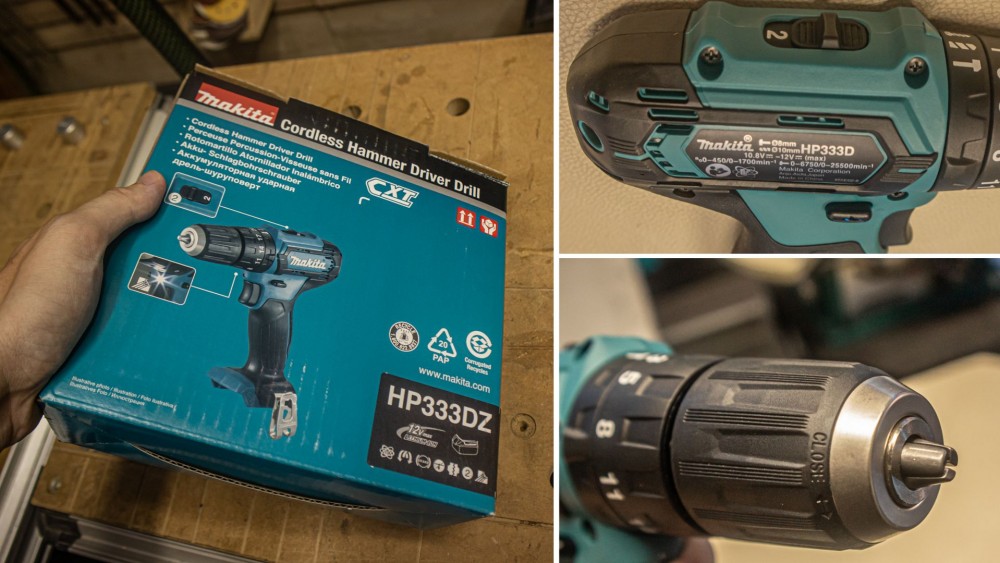
Product packaging is another area where many people only take a superficial look. Genuine Makita packaging should have a box or container that is clearly printed with accurate colors and legible product information, and the details on the box must match the product inside, such as the model, set format, included accessories, and other basic specifications. If the box looks poorly printed, faded, has a blurry logo, or doesn't match the product, it should raise immediate suspicion.
In some cases, genuine products may come in packaging that has minor transport damage, or certain models may be packaged in cardboard boxes, plastic cases, or as tool only (no battery) sets with different packaging configurations. What is essential is that the information on the box and the product itself align consistently. There should be no obvious contradictions, such as the box specifying one model while the tool is another, or the packaging displaying a full kit with batteries while containing no battery inside and no explanation.
Included Accessories Matching the Sales Listing
Before purchasing Makita tools, you should thoroughly review the package contents to see what is included in the set, such as the tool, battery, charger, storage case, screwdriver bits, saw blades, grinding discs, manuals, or other accessories. Many Makita models come in both tool only (no battery) and complete kit options; without reading carefully, misunderstandings can easily occur.
This is especially critical in online marketplaces. Some sellers may use images showing a complete kit, while the product description states "tool only (no battery)" or "battery and charger not included." If you only look at the photos without reading the details, you might assume items are missing, even though it matches the advertised package.
Checking Makita tools before buying should always involve reviewing product photos, model names, product descriptions, and the list of included accessories together.
Manuals and Included Documentation Provide Added Assurance
Genuine Makita products include user manuals or documentation appropriate for the tool. While not everyone reads the manual, these documents demonstrate organized product packaging and operational guidance. Manuals should be crisply printed with standard language and diagrams, not poor-quality printing or obvious and frequent spelling mistakes.
However, having a manual is not the sole proof of an authentic Makita tool. Still, if the tool, box, battery, charger, and all documentation appear consistent, it provides much greater peace of mind.
Conversely, if the box looks strange, the manual appears substandard, the tool labels are unclear, and the shop cannot provide warranty details, these are warning signs to be cautious of.
Buying from an authorized Makita dealer significantly reduces risk.
The easiest way to minimize the risk of counterfeit Makita products is to purchase from a reputable shop or authorized dealer. Established shops can typically provide model specifications, recommend compatible battery platforms, issue purchasing documents, and assist with after-sales service. Buying from unusually cheap sources with no clear shop profile may seem cost-effective initially, but it carries greater long-term risk.
In addition, reading MAKITA Product Warranty may seem tedious, but it gives you peace of mind when using your tools—especially for those using Makita products or tools professionally. Tools used daily endure far more wear and tear than occasional home use, and understanding the warranty scope helps prevent misunderstandings if issues arise later.
Unusually cheap: a cause for celebration or suspicion?
Makita 12V Cordless Drill: Is the popular model truly powerful, worthwhile, and worth using? Naturally, everyone wants high-quality products at a great value; however, "worth it" doesn't always mean the absolute cheapest. If you encounter a Makita tool priced unusually below market rates, pause and verify first. It might be tool only (no battery) without a charger, a parallel import with differing warranty terms, an item from an unverified source, or simply not genuine at all.
Cheap is fine, but it must be justifiable.
If the price is extremely low, and the shop cannot answer questions, doesn't specify the exact model, gives no warranty info, or evades details, you should be especially cautious.
However, if a shop sells a Makita tool below regular price but clearly explains that it is a promotional deal, tool only (no battery), lists included accessories, clarifies warranty coverage, and provides complete purchase documents, it can still be considered.
Checking Makita tools before buying online: what should you look for?
Buying Makita tools online is very convenient, but it requires more careful checking since you cannot inspect the physical unit beforehand. Key aspects to verify include shop credibility, product specifications, actual photos versus stock catalog images, customer reviews, return conditions, warranty terms, and after-sales contact channels. A shop that offers complete details, promptly answers questions, and has a proven track record greatly boosts purchasing confidence.
- Make sure to check whether it is tool only (no battery) or a complete kit with battery and charger
- Check whether the battery system matches the tool, such as 18V, 40V max, or XGT
- Review warranty terms, receipt availability, and after-sales contact methods for the shop
If you are unsure whether the Makita model you plan to buy is genuine, ask the seller beforehand: e.g., which battery system it uses, whether it comes with a warranty, whether they can issue a receipt or tax invoice, and who to contact if issues arise. An expert shop or authorized dealer should be able to answer these questions clearly.
Summary: How to verify genuine Makita tools with confidence before buying?
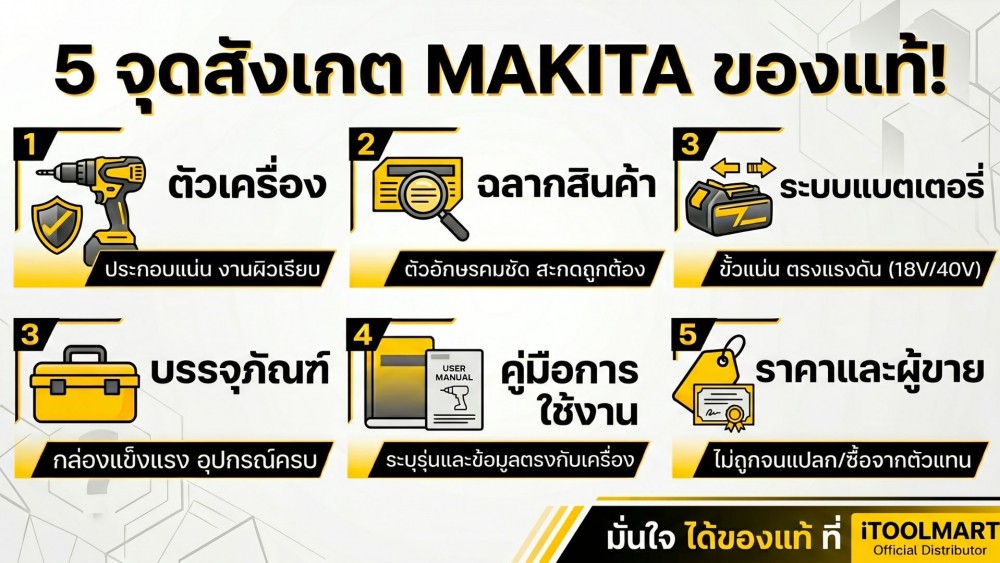
Identifying genuine Makita isn't about looking at just one detail; you need to check several elements together, including: The tool body, build quality, model badge, SKU, battery, charger, case/packaging, documentation, price, point of sale, and warranty terms. The more consistent the details are, the greater your confidence can be.
For those looking to buy Makita tools, we recommend starting with a reputable retailer, matching the model to your job, checking whether it's tool only (no battery) or a complete kit, inspecting the battery system, and clarifying warranty terms before paying. Don't base your decision solely on cheap prices, because a good power tool should be worth it on the day of purchase and throughout its entire service life.
iTOOLMART is an official authorized dealer Makita carrying genuine products, spare parts, repair services, and expert guidance.