


 EN
 ไทย


Customers Also Purchased


Many people may have encountered symptoms that seem like Air Pumps a malfunction, such as the motor stopping for a while and then turning back on by itself. Sometimes you look at the gauge and feel that the tank is already full, but the air compressor starts running again, leading to various questions like:
- Is the compressor broken?
- Is there an electrical issue?
- Or is air leaking from the tank without us noticing?
Actually, the fact that an air compressor auto-cycles is part of normal operation for many types of tank-mounted air compressors. This is especially true for piston air compressors; the machine is not designed for the motor to spin continuously whenever the switch is on. There is a pressure control system that tells the motor to stop when pressure reaches a set value, and turns it back on when pressure drops. At the same time, if the machine or motor cycles abnormally frequently, shuts off briefly then restarts, or runs continuously even when the tank appears full, it can also be a sign of underlying issues.
Therefore, before concluding that the air compressor is broken, we should first understand how the compressor's cycling system works, what symptoms are normal, and which ones warrant inspection.
Why does an air compressor need to cut out and cut in automatically?
If you ask whether Why do air compressors need an air tank? Can't the motor just blow air directly? The answer is Because the function of the air tank is to store compressed air as a reserve. When the tank pressure reaches the set level, the system stops the motor to prevent pressure from rising unnecessarily. Then, as we use pneumatic tools such as impact wrenches, nail guns, spray guns, or blow guns, the amount of air in the tank gradually decreases along with the pressure. Once the pressure drops to a certain cut-in level, the system signals the motor to start running again to refill the air.
This cycle repeats continuously during operation, which is the origin of the behavior we simply call air compressor auto-cycling
What are Cut-out and Cut-in?
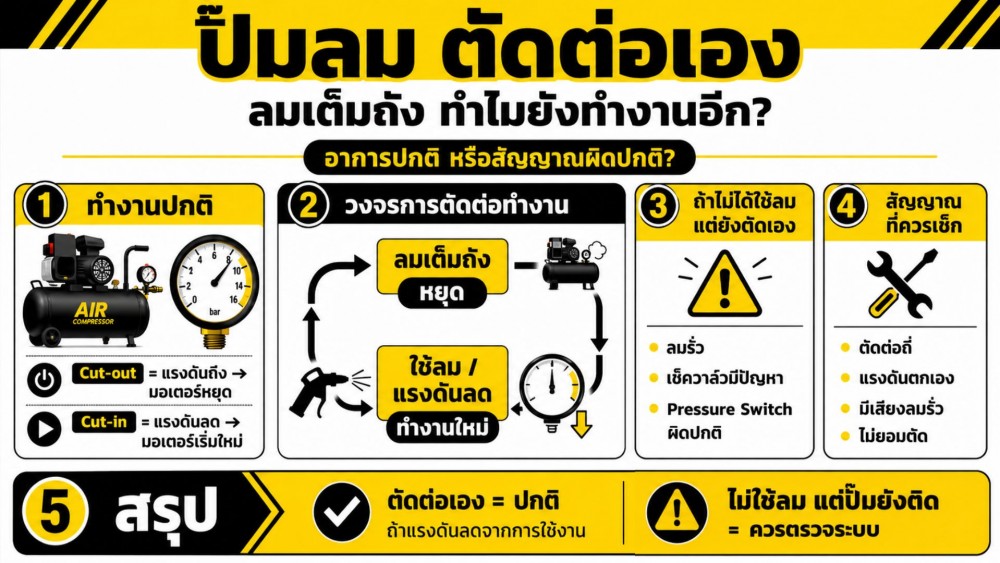
The values that cause the air compressor to stop and restart are commonly called Cut-out Pressure and Cut-in Pressure Cut-out is the pressure at which the system orders the pump to stop. For example, suppose an air compressor is set to stop at around 8 bar: when the tank pressure reaches that level, the pressure switch will cut power to the motor, causing the motor to stop working.
Meanwhile, Cut-in is the pressure at which the system signals the pump to start refilling air. For instance, from an original 8 bar, when we use air until the pressure drops to around 6 bar, the system may order the motor to start running again.
If you see the air compressor stop and then turn back on by itself after a while, it does not necessarily mean the machine is broken. What needs to be checked is whether the system pressure has actually dropped, and what caused it to drop.
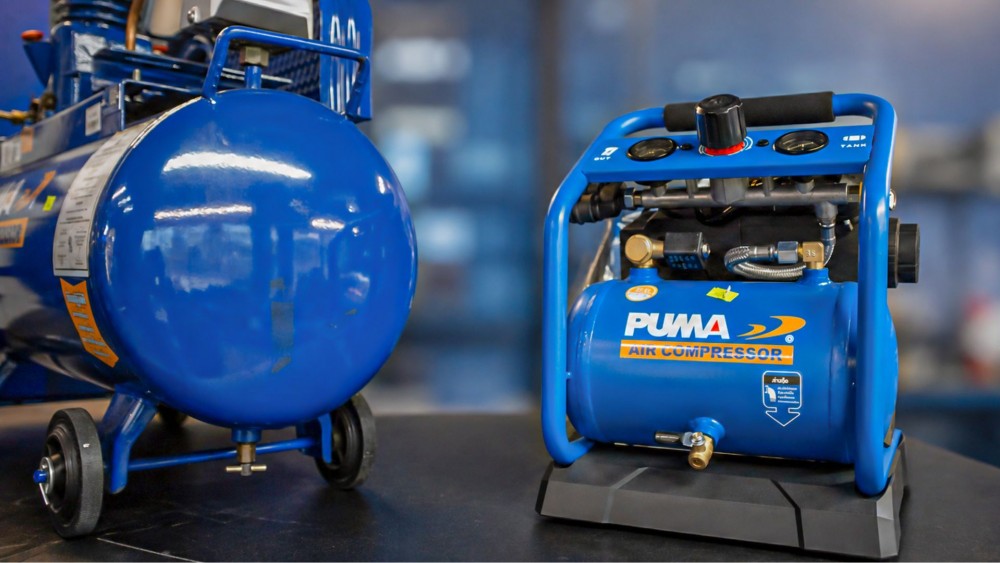
The tank is full of air, why is the air compressor still running?
The phrase "tank is full of air" confuses many people. Sometimes we look at the gauge needle and see that the pressure is still high, thinking the pump shouldn't need to run again. But between the Cut-in and Cut-out values, there is a considerable pressure range. For example:
- The pump stops at 8 bar and restarts at 6 bar.
- If the needle drops from 8 to 6 bar, the tank still contains a significant amount of air.
- When looking at it visually, you might feel that the air is "still full," but for the control system, the machine has reached the point where pressure must be restored.
- Pressure gauges do not directly show the volume of air in the tank, but show the pressure.
- The tank may still have plenty of air, but the pressure has fallen below the Cut-in level, so the pump can restart.
If the air compressor starts running after using air tools for a while, this is considered completely normal behavior. What is more suspicious is when we are not using any air at all, but the pressure still drops until the pump turns back on by itself, or the pump cycles on and off noticeably more frequently than usual.
Not using air, but the air compressor turns on by itself: There might be an air leak in the system
One of the most common causes of the symptom Air compressor cycling on and off while not in use is an air leak in the system. The leak doesn't necessarily have to be severe enough to produce an audible hissing sound. Some spots may have a minor leak, but after several tens of minutes, the pressure in the tank gradually drops down to the Cut-in value, causing the pump to restart.
A compilation of simple ways to check for air compressor leaks on your own without hauling it to a service center Points that should be checked include:
- Quick Coupler hose fittings
- Regulator threaded fittings
- Drain valve under the tank
- Air hoses
- Pneumatic tools left connected to the system
If any seal is not tight, air can slowly leak out continuously. If no pneumatic tools are in use but the pressure drops noticeably after a short while, you should start checking for leaks. You can test by applying soapy water around the joints and checking for continuous air bubbles. Before inspecting or disconnecting any fittings, always turn off the machine, disconnect the power source, and properly release the pressure.
Check Valve Problems Can Cause Backpressure
Another component related to the air compressor restarting more frequently than usual is the check valve (non-return valve), which prevents air in the tank from flowing back toward the pump unit after the motor stops. If the valve gets dirty, worn out, or fails to seal properly, some air may flow backward, causing the system pressure to gradually decrease.
The Pressure Switch Controls the Air Compressor's Auto Start/Stop Cycle
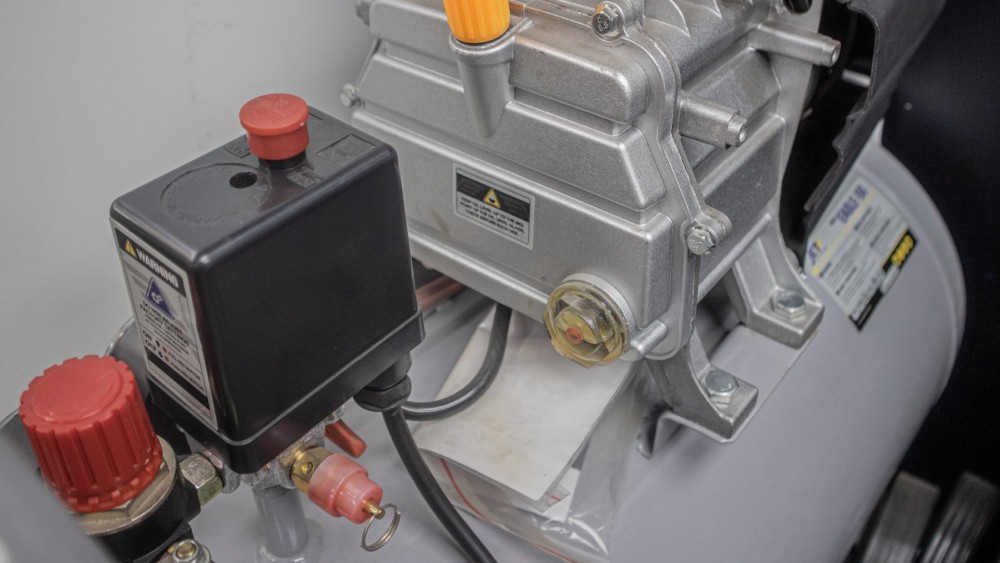
The key device that controls when the air compressor should stop and restart is the pressure switch. Internally, it responds to air pressure and controls the motor's electrical circuit according to preset values.
If the pressure switch malfunctions, various symptoms may occur, such as the compressor failing to cut off when reaching normal pressure, cutting off too early, restarting while the pressure is still high, or having inconsistent cut-in/cut-out thresholds.
Frequent Cycling May Not Just Be About the Pressure Switch
Suppose an air compressor previously filled up and rested for quite a while, but lately the motor kicks on every few minutes even though usage patterns haven't really changed. This warrants attention, because besides air leaks, other factors can also shorten the cycling interval.
Higher Air Consumption Than Expected
Sometimes nothing is broken on the machine, but additional tools have been added to the system—such as connecting extra air blow guns, using larger air impact wrenches, or operating multiple points simultaneously. The air in the tank depletes faster than before, naturally requiring the compressor to refill more frequently.
Points to check therefore include Tool air consumption and compressor air delivery capacity as well.
Large amount of accumulated water in the air tank
When air is compressed, moisture in the air can condense and accumulate inside the tank. Therefore, water should be drained at intervals appropriate for usage and environmental conditions, especially in high-humidity areas or with frequent, continuous compressor use.
Tank is too small for the intended application
A compressor with a small tank can build pressure up to high levels just like one with a large tank, but the air reserve capacity is not the same. When using tools that require continuous air, the pressure in a small tank drops to the cut-in level faster, making users feel that the compressor "kicks in frequently."
Therefore, when choosing an air compressor, you should consider pressure, air delivery rate, and tank size—not just bar ratings or motor horsepower alone.
Compressor cuts out and kicks in immediately: watch out for motor overheating
Intermittent operation of an air compressor is normal, but if the motor starts and stops too frequently, the unit may build up heat more rapidly—especially for small air compressors not designed for extended continuous operation.
During startup, a motor experiences higher loads than when running, so frequent starting is not something that should happen continuously. If you notice the compressor stops for just a few tens of seconds and repeatedly kicks back in, you should check:
- Whether there is an air leak
- Whether the tools exceed the compressor's capacity
- Whether the unloader system functions properly before the motor starts
Additionally, you should check each model's manual for its duty cycle and operating limitations, as not all air compressors are designed for full-time continuous motor operation.
How to check if automatic compressor cycling is still normal?
The easiest way is to observe the "pattern": turn on the machine, fill air up to the set pressure, and the motor stops; then, use tools until the pressure drops to a certain level, and the motor restarts. This pattern is the normal operation of the system.
However, if all air tools are turned off and the pressure still drops rapidly, the compressor repeatedly restarts on its own without air usage, there is a continuous hissing sound, the motor struggles to start, or pressure exceeds normal levels without cutting out, further inspection is required.
Observe the gauge values from the start of filling: note at what pressure the compressor cuts out, and note at what pressure it restarts. If both values are consistent every cycle, the pressure control system is working. If they vary significantly between cycles or behave unusually, you should investigate the cause.
Conclusion: Automatic compressor cycling does not mean the machine is broken
Automatic cycling is normal operation for tank-mounted air compressors. When pressure reaches the cut-out point, the system shuts off the motor; when air is used and pressure drops to the cut-in point, the motor restarts to replenish air. Therefore, the symptom of "air is still left, but the compressor kicks in again" occurs because the system does not wait for the tank to empty before refilling.
What you should observe is Is the pump restarting because air is being used, or is the pressure dropping on its own while idle? If it is the latter, you should start checking for leaks around fittings, air hoses, drain valves, and other parts of the system. Additionally, if the motor cycles abnormally frequently, fails to cut out at high pressure, or produces a continuous air leak sound, these signs should not be overlooked.
Maintenance Air Pumps involves more than just changing the oil or draining the tank. You should observe the motor's cut-in/cut-out cycles, the cut-in/cut-out pressures, air sounds after the unit stops, and how long the pressure can remain in the tank.