


 EN
 ไทย


Customers Also Purchased


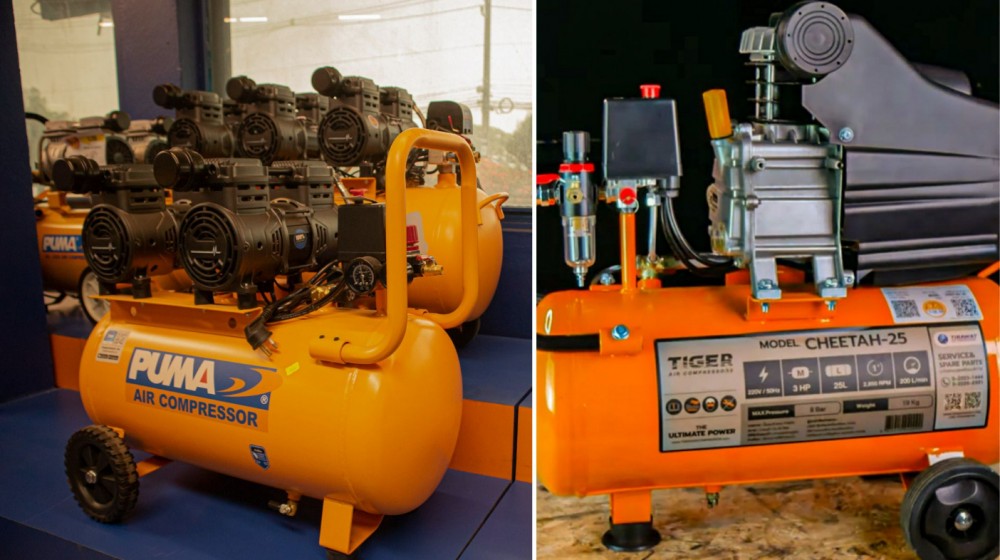
Have you ever wondered why Air Pumps an air compressor needs a thick metal tank attached to it, or why it is an indispensable part of the system? Many people might ask, "Is an air receiver tank really necessary?" because it makes the compressor heavy, bulky, and difficult to move. Wouldn't it be easier to just eliminate the tank? Looking at it superficially, it seems like having just a powerful blower motor should be enough.
But thinking a bit further, it makes you wonder: is that tank only for storing air, or does it actually have a greater impact on pressure, consistency, and air stability than many people think?
In this article, we'll start from the basics to see what an air compressor's receiver tank is used for, why a direct air blower motor cannot replace it in many applications, what happens if there's no air tank, and how to choose the right tank size for real-world tasks—instead of just looking at horsepower, cheap prices, or whichever seems more powerful.
An air compressor doesn't just create "air"; it must also generate "air pressure."
Before diving into air tanks and compressors, we need to distinguish between "strong airflow" and "pressurized air." These two terms sound similar, but in actual use, they are completely different. A strong draft like from a fan or blower is the movement of a large volume of air flowing out. You feel the breeze on your face, see dust blowing away, or notice continuous airflow, but the pressure is not high enough to drive many types of pneumatic tools.
However, an air compressor works differently. Its role is to draw in air and compress it to a higher pressure before storing it in a tank. When used, the released air doesn't just have volume, but also pressure ready to push, drive, shoot, spray, or power various equipment such as impact wrenches, air nailers, spray guns, blow guns, or factory pneumatic systems.
To put it simply, imagine blowing dust off a desk with your mouth. You might blow away light dust, but to clear grime stuck in machine crevices or drive a nail flush into wood, simple direct airflow is certainly not enough. What you need is compressed air stored under pressure that can be released on demand. This is the primary reason why an air compressor requires a compression and storage system, rather than just spinning a motor and blowing air directly.
How does direct airflow from a motor differ from air in an air compressor tank?
- A direct blower motor provides continuous airflow, but the pressure may not be very high.
- When encountering resistance—such as a smaller nozzle, a longer hose, or a tool requiring steady pressure—air pressure can drop immediately.
- Air from an air compressor with a receiver tank is compressed and stored in advance, making pressurized air instantly available when opened.
- An air tank helps keep pressure more stable without relying on raw, real-time motor output constantly.
To visualize it easily, a blower motor is like water flowing from a tap, whereas an air compressor with a receiver tank is like water stored in a pressure tank. When opened, it releases water or air with more controllable, sustained force—stored energy ideally suited for tasks that require that power over a specific period.
Why can't a direct air blower motor replace an air compressor?
The answer is "It works for some tasks, but cannot replace it for many applications." Indeed, for tasks like blowing dust, clearing leaves, or moving air across wide areas, a blower provides continuous airflow and is easy to use. However, for tasks that require pressure—such as using pneumatic staplers, spray painting, or running air impact wrenches—a direct blower motor has significant limitations.
The reason is that typical blower motors focus on high air volume at very low pressure. When encountering resistance, the air volume and airflow drop drastically. In contrast, an air compressor compresses air into a pressure tank first before delivering it to end tools, such as inflating tires, which requires pressure higher than the tire's internal pressure, not just blowing air.
High air volume doesn't mean it can replace an air compressor
This is a common misconception. Seeing a blower with strong airflow leads many to think it can replace an air compressor. In reality, you must determine whether that "strong air" is "air volume" or "air pressure." Some tasks require high air volume, such as blow drying, leaf blowing, and ventilation. Other tasks require high pressure, such as nail guns, tire inflation, spray painting, or driving pneumatic cylinders.
Simply put, they are different types of work yielding different results, and one should not be substituted for the other without first considering the application.
What problems happen if an air compressor lacks a suitable air tank?
If an air compressor has no air receiver tank or has one that is too small, the most noticeable issue is unstable pressure. Airflow may be strong at first, but after a short period of continuous use, the pressure will drop. Tools will lose power—resulting in uneven spray painting, staples not sinking flush, or blowing power fading quickly.
Another problem is that the motor has to cycle much more frequently because there is no reserve air. This causes the machine to overheat quickly, shortens its lifespan, and accelerates part wear, especially during continuous-demand tasks like spray painting, blowing numerous workpieces, or using air tools with high air consumption.
An air tank therefore helps the air compressor operate more rhythmically, provides an air reserve, maintains more stable pressure, and gives the motor resting time between uses.
Problems that may occur when the air tank is too small for the job
- Using an air blow gun for just a short while causes pressure to drop quickly
- Uneven spray mist when painting, resulting in a rough finish
- Staplers sink well at first, but fail to drive fully after a while
- The motor runs almost non-stop, causing the unit to overheat quickly
- These symptoms don't always mean the air compressor is broken; they often mean the tank size and air delivery capacity are not suited to the job at hand.
Some people choose an air compressor primarily based on horsepower, assuming that 2 HP can handle any job, while overlooking tank size, air delivery volume, and actual workload requirements. Ultimately, they buy it and it works, but not smoothly, not continuously, or not as effectively as expected.
An air tank helps stabilize the air compressor's pressure
When the pump head is running, compressed air output is not perfectly smooth and linear, especially with piston compressors that operate in intake and compression strokes. Air produced directly comes in pulses rather than a steady stream. The air receiver tank acts as a buffer and dampener, making the delivered airflow much smoother and more consistent.
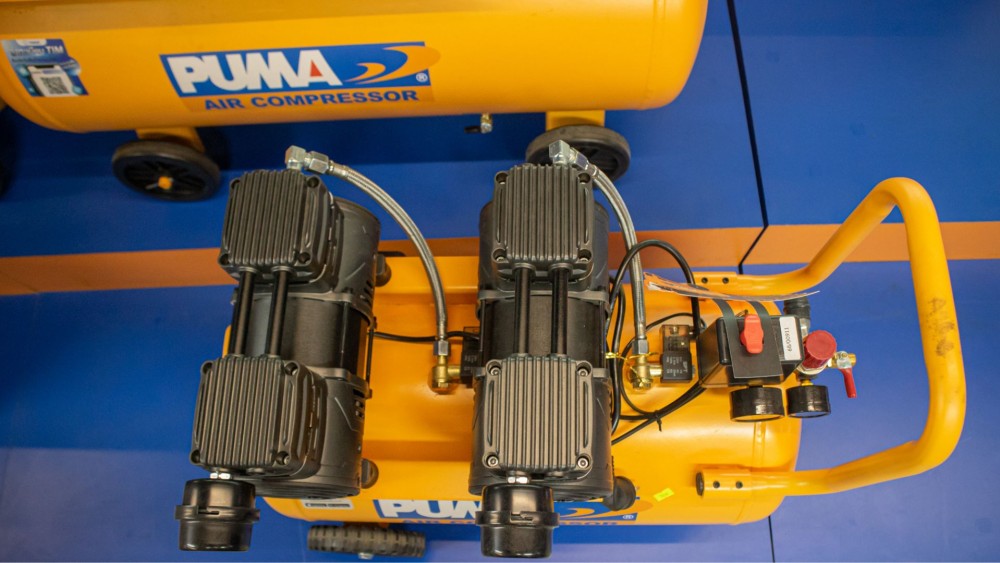
The air tank also works alongside the pressure switch and regulator to control the system's pressure range. When tank pressure reaches the preset upper limit, the motor stops; when it drops to the lower limit, the motor restarts. Meanwhile, the regulator adjusts the output air pressure to match the specific tool, as spray painting requires one pressure level, stapling another, and air blowing can be adjusted as appropriate.
Without an air tank, controlling pressure for each application becomes much harder because pressure depends entirely on the motor's output capacity. When the tool consumes more air than the pump head produces without a tank, the pressure drops instantly.
The air compressor tank acts as a helper to supply reserve air during periods when air demand exceeds production capacity, keeping the work flowing smoothly.
Does a large air receiver tank really help extend air compressor life?
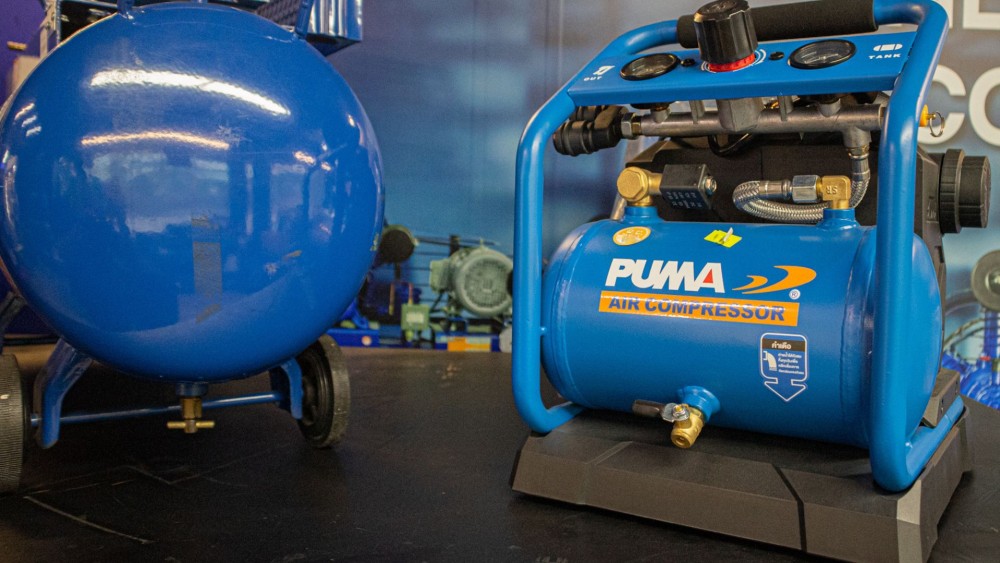
Yes, it does. What the air receiver tank helps with is: Preventing the motor and pump head from having to run every single second. A properly sized tank allows the machine to alternate between duty and rest cycles. Once the pressure reaches the set limit, the machine can rest; when the pressure drops, it starts compressing again. This system helps reduce heat buildup, minimizes wear and tear, and operates much more smoothly than a machine that must run continuously.
What is the difference between a large and small air compressor tank besides storage capacity? The answer is that if the tank is too small, or if the air consumption exceeds its capacity, the air compressor will run almost non-stop. The resulting symptoms include rapid overheating, continuous noise, faster oil degradation in oil-lubricated models, increased strain on internal components, and potentially degraded performance over the long term. Therefore, an air receiver tank well-matched to the job directly affects the system's durability.
It is recommended to look at an air compressor as a complete system, rather than focusing solely on the horsepower rating, because a compressor that is great for one job might not be suitable for another. For light household use, a small tank may suffice. However, for continuous work, spray painting, garage work, factory applications, or jobs running multiple pneumatic tools, a larger air receiver tank and a higher air delivery rate will ensure much greater operational reliability.
An air receiver tank does not give an air compressor unlimited power
However, it must also be understood that an air receiver tank does not infinitely increase the air production capacity of the pump head. A larger tank simply means more reserve air, allowing for longer usage before pressure drops. But if the pneumatic tool consumes more air than the pump head can continuously produce, the pressure will eventually drop anyway—a larger tank just delays that drop.
Therefore, when choosing an air compressor, both tank size and air delivery volume must be considered—not just the tank size alone. A large tank with a low-output pump head may result in long wait times for air compression and fail to keep up with heavy, continuous use. Conversely, a powerful pump head with a very small tank might perform well in short bursts, but its stability and continuity will fall short for certain tasks.
Are there tankless air compressors?
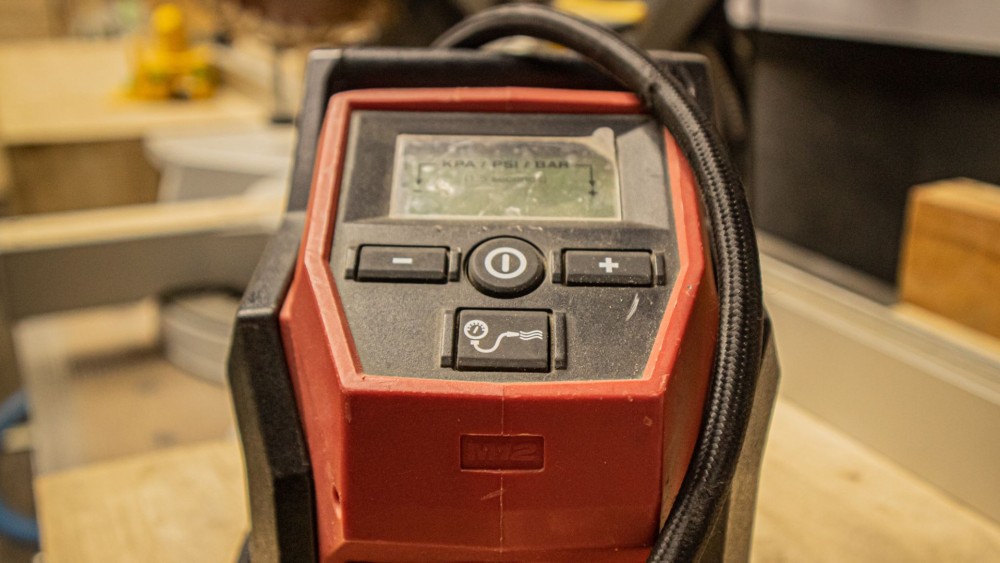
In-Depth Insights: What Do We Really Mean by "Electric Air Compressor"? Most portable tire inflators or mini air compressors do not have an air receiver tank. This key feature makes them smaller, lighter, and easier to carry. However, they are suited only for emergency tire inflation or light home tasks, and should not replace tank-mounted air compressors for trade work, as their air power and continuity are distinctly different.
Therefore, tire inflators in tire shops or garages are typically connected to air compressors with receiver tanks to ensure fast inflation, continuous use across multiple vehicles, and steady pressure without easy drops.
For light dusting, a basic blower may be sufficient; however, for blowing into narrow crevices or using nozzles that require high pressure, an air blow gun used with a tank-mounted air compressor is much more suitable.
Why can tankless tire inflators still inflate tires?
Because tire inflation requires pressure to gradually push air in until it reaches the preset PSI or Bar, rather than needing a high volume of air like a blow gun. Therefore, direct motor compression can be used, though it will inflate slower than a compressor with a tank and is not suitable for prolonged continuous use.
Tire inflators or blowers are devices meant for short bursts of air or emergency situations. If the priority is pressure and the flexibility to power other pneumatic tools, an air compressor with a receiver tank is far more versatile, making it indispensable for industrial, mechanical, and maintenance work.
Conclusion: The air receiver tank makes an air compressor truly practical
In simple terms, an air compressor requires an air receiver tank because its function is not merely to blow air, but to compress air into pressurized storage and deliver it as suited for the task. The air receiver tank ensures stable pressure, provides reserve air, reduces motor strain, and allows pneumatic tools to operate at peak efficiency.
Direct blower motors can certainly be used, but they are suited for equipment requiring continuous airflow, not tasks that demand high or consistent pressure—such as all-day tire inflation, spray painting, pneumatic stapling/nailing, using air impact wrenches, or various industrial pneumatic systems.
Select Air Pumps Don't just look at horsepower, tank size, or price alone. Look at your actual application, the required air volume, and pressure stability. This will make work much easier and genuinely help extend the machine's lifespan.