


 EN
 ไทย


Customers Also Purchased


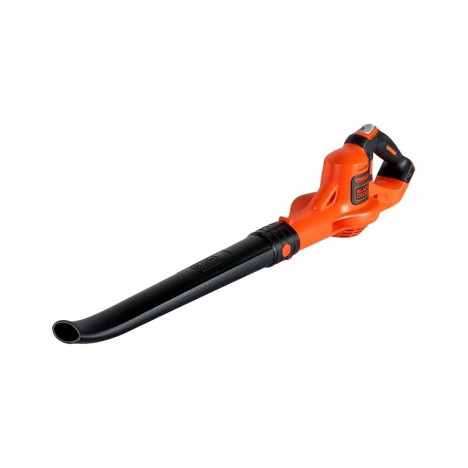

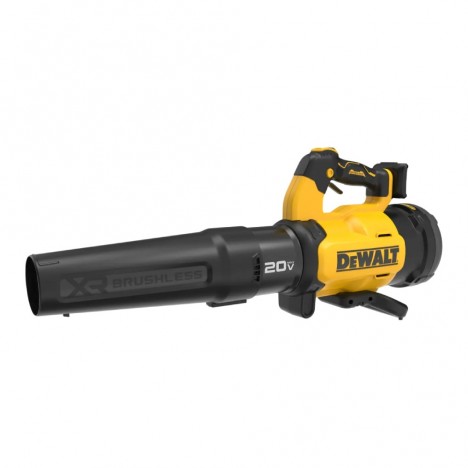
Symptom Blowers It turns on and the motor still sounds like it's running normally, but the airflow coming out of the nozzle is noticeably weaker. This can be a puzzling issue. When we hear the motor running as loudly as usual, we tend to assume the machine is spinning at full speed and should blow air just like before. However, “Motor sound” and “air volume discharged from the unit” are not necessarily the same thing.
A blower relies on the coordination of several components, from the motor, impeller, air intake, and air duct, to the nozzle or front-attached tube. Even if the motor is still spinning and sounds the same, if insufficient air enters the tool, the impeller has issues, or the airflow path is blocked, the output airflow can drop significantly.
Therefore, if the blower has weak airflow, do not immediately assume the motor is broken and rush to replace the tool. Sometimes the cause is simply dust, leaf debris, the blower tube, or certain components that are easy to inspect and fix.
1. The blower's air intake is clogged with dust or debris
One of the first things you should check if you notice weak blower airflow is the tool's air intake or inlet vent, especially for blowers used in dusty environments such as
- woodworking
- construction
- floor cleaning
- regular leaf blowing
Uncovering the Truth: Are Blowers "Vulnerable to Dust"? What Happens Inside the Motor During Operation? During operation, a large volume of air is drawn into the unit along with dust, sawdust, or small debris. Even though the tool is equipped with protective grilles or vents, over time, dust can accumulate around the grille.
When the air intake is partially blocked, the impeller has less air to draw in. The blower motor may still spin and sound nearly the same, but the output airflow decreases.
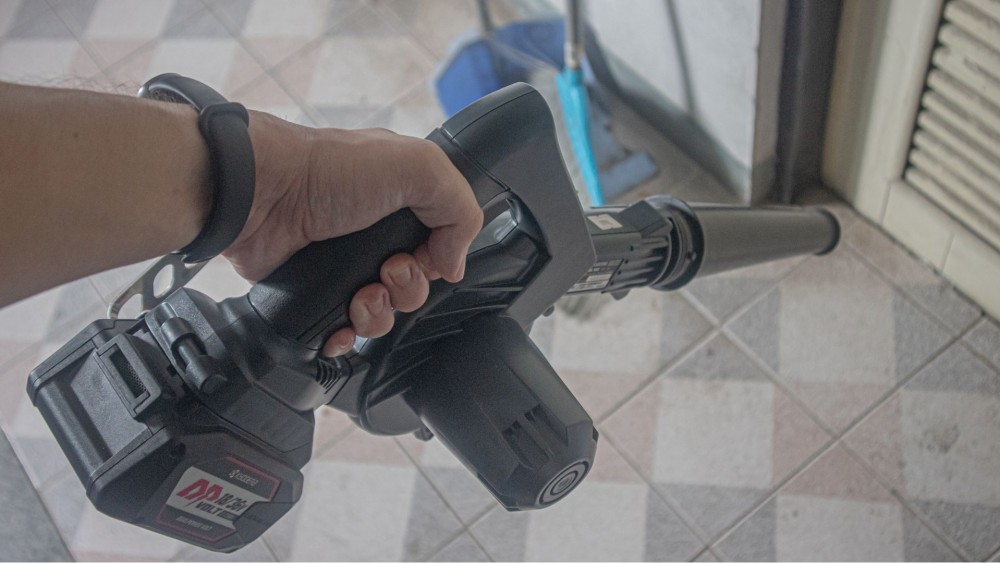
Check the air intake first
Before inspecting, turn off the tool and unplug it or remove the battery properly. Then, check the air intake area to see if there is a layer of accumulated dust, leaf debris, cloth scraps, threads, or other materials stuck in it.
In many cases, simply cleaning the grille and clearing the air intake can restore the airflow close to normal.
2. Clogged tube or nozzle causing low airflow
Another part of the blower that often gets overlooked is the blower tube and nozzle, especially on blowers with long tubes, concentrator nozzles, or multiple attachments. Leaves, paper, plastic, clumped dust, or even small debris can get stuck inside the tube. If the blockage does not seal the path entirely, you might still feel some airflow, but it will be unusually weak.
This problem is sometimes very easy to detect. Try detaching the blower tube from the tool and briefly running a test according to the specific model's manual. If the airflow from the tool feels noticeably stronger, the issue is likely in the tube or nozzle, not the motor. However, never insert fingers or tools into the impeller opening while the tool is still connected to a power source.
3. The internal impeller of the blower has dust accumulation or trapped debris
The fan blade is an internal component of the blower that directly generates airflow. After long periods of use, especially for machines exposed to fine dust,
- dust may accumulate on the surfaces of the fan blades.
- As more dust builds up, the shape and balance of the blades may slightly change,
- reducing the efficiency of pushing air, even though the motor continues to spin.
- In some cases, debris may become wrapped around the shaft or blades, preventing the fan from spinning at full efficiency.
- Symptoms observed may include weaker airflow, increased blower vibration, or altered operating sounds.
If it involves an area where you must remove a cover or get close to the motor assembly, check the machine's manual first. If the manufacturer does not design it for users to open and clean by themselves, sending it to a service center or technician for inspection is safer.
4. Motor makes noise, but actual RPM may have dropped
We often judge a blower motor's speed by the sound it makes, but our ears cannot always gauge the RPM accurately.
The blower motor might still sound nearly the same, but the actual RPM has dropped compared to when the machine was new. This can be caused by internal component issues, carbon brush wear in certain types of machines, increased internal friction, or a malfunctioning speed control system.
When the rotational speed drops, the fan blades generate less airflow, and the most noticeable effect to the user is that the airflow is not as strong as before.
A running sound does not mean full power
Besides How much impact can that blower noise you might overlook actually have? The fact that the machine still turns on and makes noise merely indicates that the system is functioning to a certain degree; it does not confirm that the motor is generating the same RPM or power output as it did when the tool was in optimal condition.
If you have already cleaned the air vents and nozzles and checked external components, but the airflow is still significantly reduced, consider whether the problem lies within the motor or internal drive system.
5. Loose, cracked, or deformed fan blades
Sometimes the blower motor spins fast, but the power from the motor is not fully transferred into airflow because the fan blades are loose, cracked, chipped, or deformed. For example, if the mount connecting the blade to the motor shaft starts to loosen, the motor may spin normally, but the blade cannot spin in full sync with the motor's speed. As a result, the machine still makes noise, but the airflow decreases.
In cases where the blades are cracked or unbalanced, besides weak airflow, other symptoms may appear, such as abnormal blower vibrations, scraping sounds, knocking noises, or a high-pitched whining sound that was not present before.
If you experience these symptoms, you should stop using the tool, as allowing an unbalanced impeller to continue spinning at high speed can cause damage to other parts.
6. The blower speed setting or mode is set lower than usual
Many modern blowers have speed adjustments, air volume controls, or multiple operating modes, whether via a dial, variable speed trigger, speed selector button, or electronic control system.
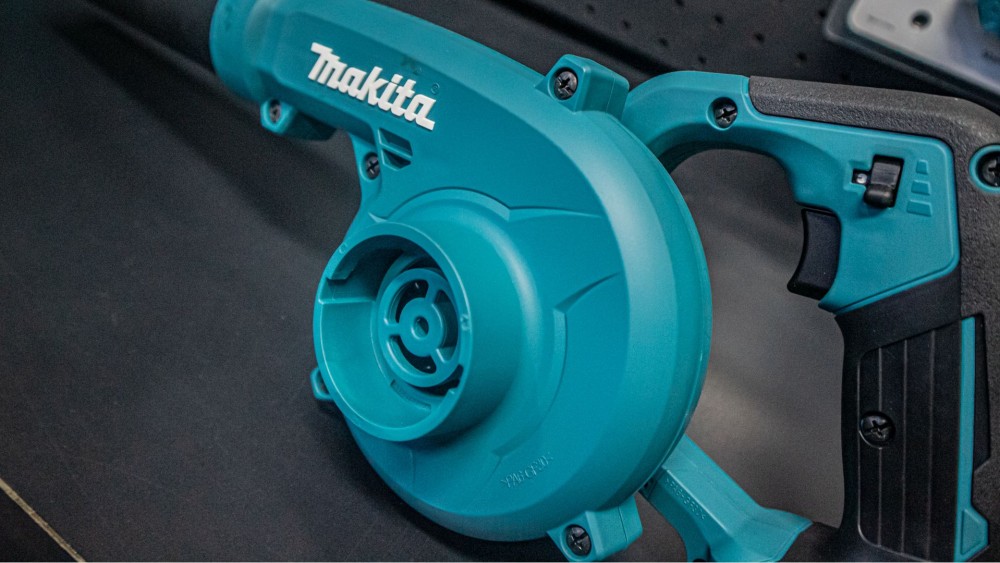
Sometimes the problem is not a malfunction of the blower at all, but may be due to settings that were changed unintentionally, especially on tools with a cruise control lock or multi-position selectors.
Before checking internal components, try checking if the blower is set to the speed level you normally use, whether the trigger can be fully pressed, and whether any switch or button is in an eco mode or low airflow mode. These are simple points to check that can save a lot of time.
7. For cordless blowers, the battery is not delivering full power
For cordless blowers, the battery directly affects the tool's performance. Even if it still powers on and the motor sounds normal, if the battery has a low charge, is degraded, overheats, or cannot deliver sufficient current, the motor may not reach maximum RPM.
Common symptoms include:
- The blower is powerful at first, but the airflow gradually decreases.
- The blower runs strongly with some batteries, but switching to another battery makes the airflow noticeably weaker.
- If you have more than one compatible battery, you can try swapping them for comparison.
- If the airflow returns to normal, it helps narrow down the cause to the battery rather than the tool itself.
Additionally, make sure the battery used is properly rated for that specific model, as some blowers require relatively high power, especially when operated at the highest setting.
8. The tool is overheating, causing the system to throttle power to prevent damage
Blowers are power tools. Some models may feature thermal protection systems or electronics that reduce power when the tool or battery gets too hot.
For example, running the tool continuously for a long time on a hot day, having clogged vents, or running the tool under heavy load constantly can cause internal temperatures to rise. When the system detects heat exceeding the preset threshold, the tool may reduce power to protect itself.
In this situation, you might feel that the tool is still running, but the airflow is not as strong as before.
If you encounter this symptom after continuous use, you should turn off the tool, check if the vents are clean, and let the temperature return to normal before using it again.
9. Carbon brushes are worn out in blowers with brushed motors
Some blowers, especially corded electric models, use carbon brushes to transmit electrical current to the motor. Over extended use, carbon brushes wear out naturally. If they are heavily worn, contact with the commutator may become incomplete, resulting in reduced motor power, unstable RPM, or abnormal sparking.
At first, the tool may still be usable, so it might not feel clearly "broken," but the airflow may gradually decrease.
If the blower experiences a drop in power, unstable RPM, a burning smell, or excessive sparking around the motor, stop using it immediately and have a technician inspect it.
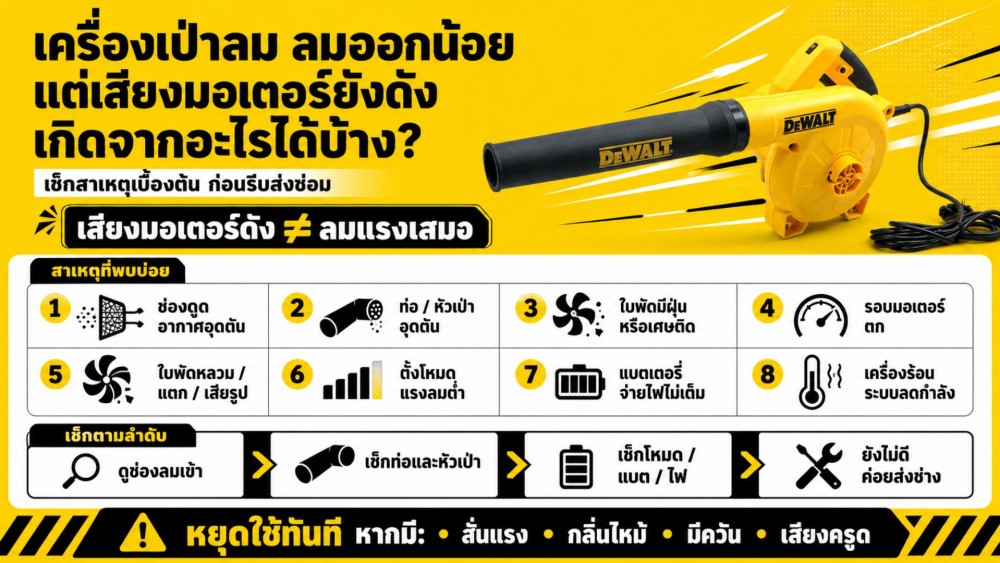
Summary: Squeezing the blower trigger and getting low airflow does not always mean the motor is broken.
Symptom Turning on the blower yields low airflow even though the motor sound remains loud as usual. It can stem from many causes, ranging from simple issues like dusty air intake vents, clogged nozzles, or low speed settings, to more complex problems such as: Damaged impellers, motor RPM drops, worn carbon brushes, faulty power control systems, or batteries failing to deliver full output.
The key is: do not use the "motor sound" alone to judge whether the tool is operating at full efficiency, because actual airflow is generated by the combined work of the motor, impeller, intake air volume, and the entire airway.
If you find that the blower is not as powerful as before, try starting with the simplest points first:
- Check the air intake vents
- Clean the tube and nozzle
- Check the speed setting
- Check the battery or power supply
If everything externally is normal and airflow is still significantly reduced, then have a technician or service center inspect the impeller assembly and motor.
Troubleshooting step-by-step like this helps avoid unnecessary spare parts replacement and allows Blowers the tool you thought was losing power to return to full operating efficiency once again.