


 EN
 ไทย


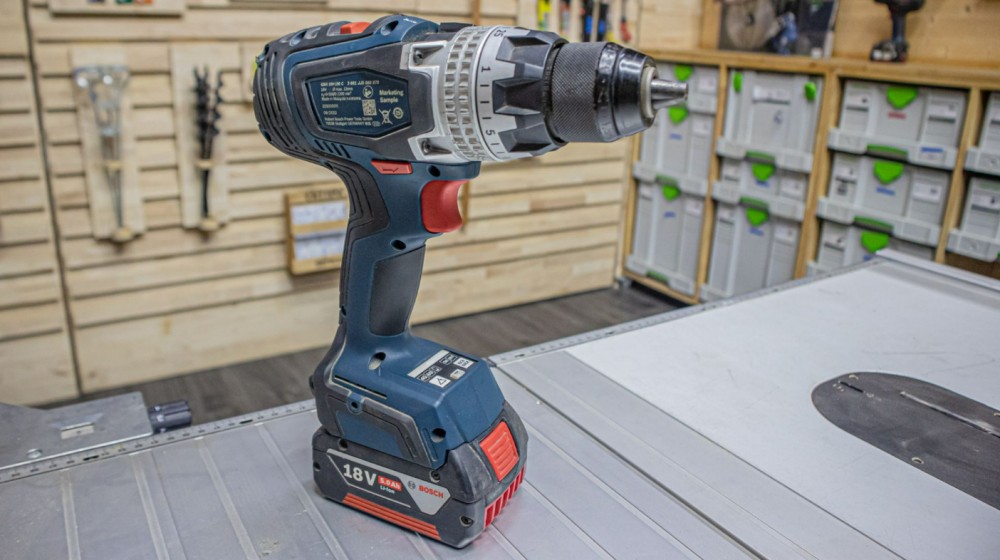
Customers Also Purchased


When a Drill drill won't penetrate, we might think the motor lacks sufficient power or the tool has a problem, especially when we are certain we've chosen the correct tool type, such as:
- Using an impact drill on masonry walls
- Using a rotary hammer on concrete
- Using a corded or cordless drill for drilling wood and metal as usual
When you actually start working, the bit just spins in place, drilling slowly, requiring heavy pressing force, or drilling in just a bit and making no further progress.
In reality, these symptoms don't always mean the drill is broken. Successfully penetrating a material doesn't depend on the tool alone, but on a combination of multiple factors, ranging from the drill bit, rotational speed (RPM), pressing force, operating mode, to the tool's actual power. If any variable is inappropriate, even if you chose the right type of drill, it may still fail to penetrate.
So before rushing to replace the drill or pushing down harder, try troubleshooting step-by-step. What looks like an underpowered tool might be much easier to fix than you think.
The tool type is correct, but is the drill bit right?
The first thing you should check when the drill won't penetrate is the drill bit. Even if the tool suits the job, using a bit not meant for the material can drastically reduce drilling performance. Does using the wrong type of drill bit risk damaging the tool?
A simple example is using an impact drill to drill into a masonry wall while fitting it with a metal drill bit. Even though the tool provides impact force, the bit isn't designed to cut masonry materials. Or if you need to drill stainless steel but use a generic metal bit of inadequate quality, excessive heat can quickly ruin the cutting edge before it penetrates. That's because each drill bit type differs in cutting edge geometry, material, and design.
Therefore, "using the right drill type" isn't enough; you must also check whether the installed bit is suitable for the material being drilled.
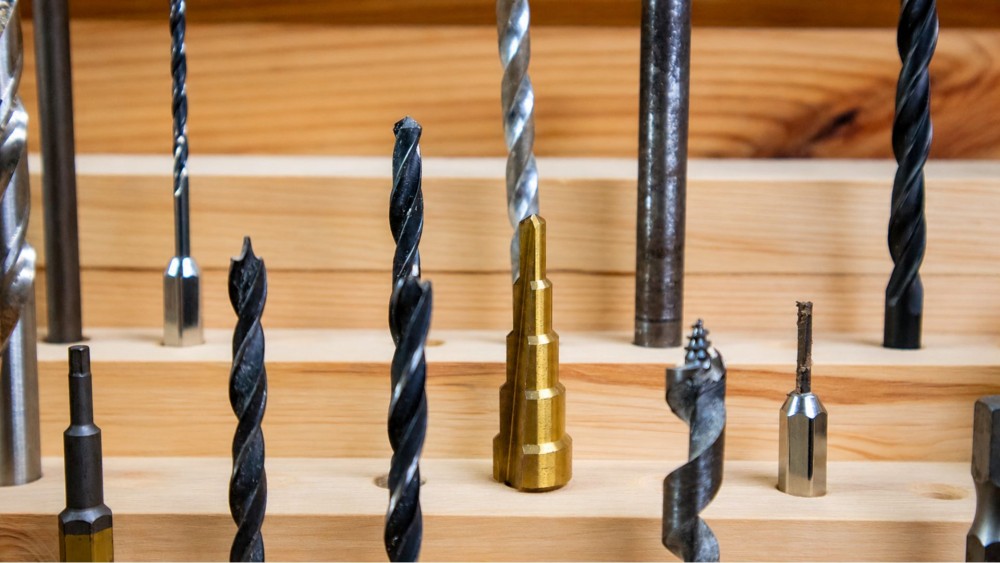
The bit type is right, but the cutting edge might be worn out
Another common case is using the correct bit type, but the bit has been used so long that its cutting edge has worn down—especially bits subjected to high heat from continuous drilling. A dull drill bit still spins normally, making it easy to assume everything is fine, but its ability to cut material drops significantly. You'll start feeling the need to press harder, drilling becomes slower, and the bit heats up much faster.
If you used to easily drill the same material with the same bit size, but one day it takes unusually high effort, try replacing it with a new bit before assuming the drill itself is the issue.
Higher RPM doesn't always mean faster drilling
Another commonly overlooked aspect is drill speed (RPM). Many people think that if it won't penetrate, they should rev it up to maximum speed, assuming a faster-spinning bit cuts material faster. In real drilling work, it's not that straightforward.
Different materials and bit sizes require different speeds. Generally, smaller bits can handle higher RPMs, while larger bits should run at lower RPMs because the linear speed at the cutting edge increases with the diameter. If you use a large bit and spin it too fast, heat builds up rapidly—especially when drilling metal. The result: the bit overheats, the cutting edge wears out fast, and the bit spins helplessly on the surface without biting in.
Conversely, if the speed is too low for certain tasks, it can also lead to inefficient chip evacuation or cutting. Therefore, when a drill won't penetrate, don't just look at whether the tool is spinning fast, but consider: Is the speed suitable for the drill bit size and the material?
Cordless drill: Gear 1 and Gear 2 are used for different applications.
Many cordless drills feature a 2-speed mechanical gearbox, which affects drilling performance more than many people realize. Generally: Gear 1 provides lower speed but higher torque, making it suitable for high-torque applications, driving screws, or using relatively large drill bits.
Meanwhile, Gear 2 provides higher speed, suitable for general drilling and small to medium-sized bits. If you use a large bit in high gear and feel the drill stalling or dropping RPM as it begins to cut, shifting down to the lower gear can help the tool maintain its rotational power better.
Downforce must be balanced; pressing harder doesn't mean it drills better.
When When a drill won't penetrate, our natural reaction is to apply more pressure. If it won't go through, we press harder, and if it still doesn't enter, we press even harder. However, applying excessive pressure may not help, and in some cases, it can actually make drilling worse. The simple rule is to press just enough for the cutting edge to engage and bite into the material continuously, but not so hard that the tool's RPM drops.
If you press so hard that the motor bogs down, RPM drops, or the tool strains, that indicates too much pressure. When the motor slows down, the cutting efficiency also drops, while internal motor current and heat may increase.
Especially with cordless drills, pushing too hard may trigger the tool's or battery's overload protection, causing it to shut down temporarily. This might make you feel like the drill lacks power, but it is actually just an excessive load at that moment.
A better approach is to maintain steady pressure, observe the bit's behavior, and if it is actively biting into the material, you will see chips or debris continuously ejecting from the hole.
Checking the "debris coming out of the hole" also helps diagnose problems.
If you want to know whether the drill is cutting well, don't just look at the hole depth. Observe the evacuated debris as well, as it is one of the best signs of whether the bit is actually cutting or just rubbing against the surface.
- Drilling wood should produce wood chips or sawdust being pushed out.
- Drilling metal should produce metal shavings corresponding to the bit type and material.
- Drilling masonry or concrete will evacuate dust and debris from the hole.
If the bit is spinning but virtually no debris comes out, stop and check. The bit might be dull, the speed might be improper, or the cutting edge might not be biting into the workpiece anymore. For deep holes, backing the bit out periodically to clear chips is also essential.
If too much debris accumulates in the drill bit's flutes, chip evacuation becomes harder, friction increases, and it makes the drill seem to penetrate slower and slower.
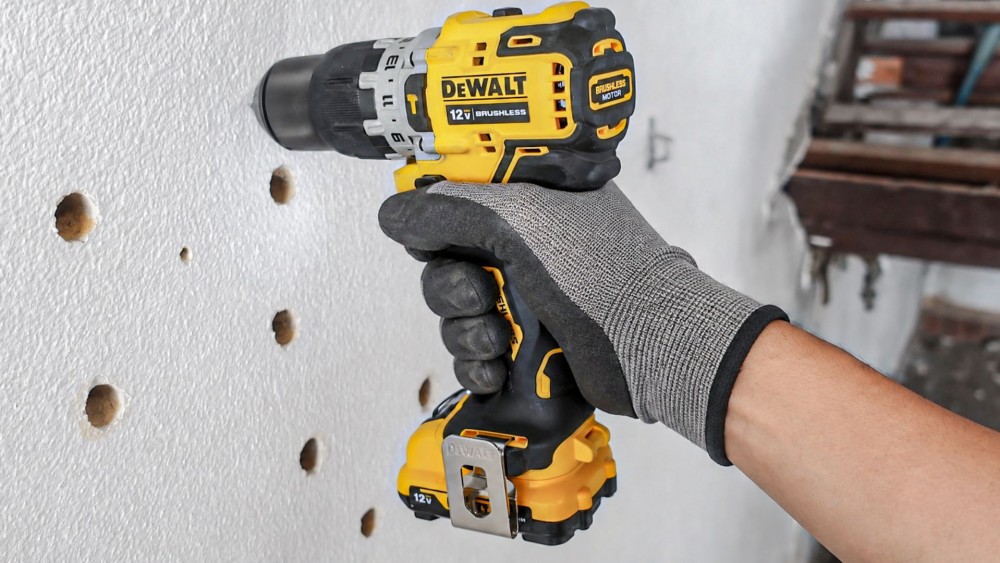
Is the drill's power sufficient for the bit size and the application?
If the drill bit, speed, and feed pressure have been checked and show no issues, the next thing to consider is the motor power of the drill. Just because drills are in the same category does not mean they can all perform at the same level. For instance, a compact hammer drill and a high-power hammer drill might both drill into walls, but their capacity for handling large drill bits and their drilling speeds can differ significantly.
Similarly, a compact cordless drill designed for furniture assembly can drill into wood and metal, but using it with a large hole saw or drilling through very thick materials might push the tool close to its operational limit at all times.
Therefore, we need to distinguish between "capable of drilling" and "suitable for regular drilling."
Some drill models may be able to spin a bit of that size, but when faced with an actual load, the RPM might drop quickly, generate high heat, or take a very long time. This doesn't mean the tool is broken, but it's a sign that the job is starting to exceed the tool's efficient operating range. This is another reason why we should Know Before You Buy: Why Are High-End Drills So Expensive? Motor, Battery, or Gear System?
Battery also affects the power of a cordless drill
For cordless drills, don't forget to check the battery as well. Even if the tool itself has enough power, if the battery is low, degraded, or cannot deliver current as effectively as before, the tool's performance may drop.
Noticeable symptoms
- When running without a load, the tool seems normal, but once you apply the bit to the workpiece, the RPM drops rapidly.
- The tool cuts out when encountering high resistance
- If you have multiple batteries, try swapping to a fully charged one in good condition
- and testing it on the same job. This will make it easier to isolate whether the issue lies in the tool or the power source.
For tasks requiring sustained power, having a fully charged battery does not necessarily mean every pack will deliver the same performance, because the battery's current discharge capacity also affects how much power the motor can draw.
Unable to drill into a wall? You might not just be hitting concrete
Another common situation is the drill penetrates the wall and then stops at a certain depth. At first, it drills normally, but after going in just a few centimeters, it feels like hitting something extremely hard and cannot drill further. In this case, don't increase the pressure right away, because the wall might not just contain mortar or concrete. There could be reinforcing rebar, electrical conduits, water pipes, or other systems hidden inside.
Especially in reinforced concrete, if a concrete drill bit hits the rebar, the drilling performance will change immediately because masonry bits do not work on metal the same way metal drill bits do.
If it was drilling smoothly all along and suddenly stops at a certain point, you should first check what you are hitting. You should not force the drill, as it may cause damage to the bit, the tool, or the utility systems inside the wall.
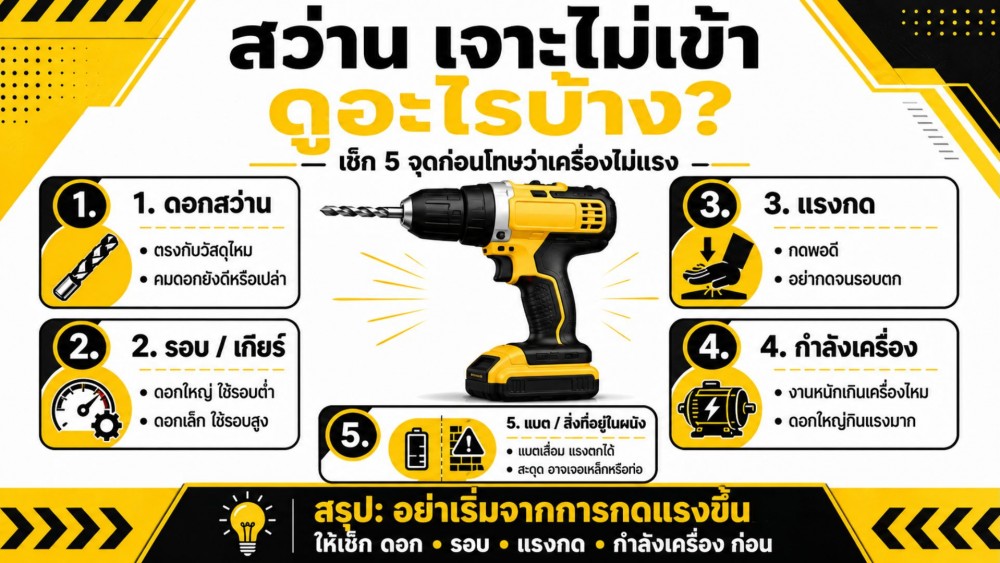
In summary, if it won't drill through, don't start by "pressing harder".
When you see that the drill cannot penetrate even though the correct type is used, the best solution is not revving to the highest speed or pressing down on the tool as hard as possible. Instead, troubleshoot the simple things first.
- Start by checking whether the bit matches the material, and whether the bit is still sharp.
- Check the RPM and the drill gear to see if they match the bit size.
- Check downforce pressure, chip clearance, operating mode, and the power of the tool.
- If it's a cordless drill, you also need to check the battery condition.
- If the tool drills well at first but stops at the exact same depth every time, consider materials or obstacles hidden inside the workpiece.
Good drilling does not come from high drill power alone, but from the machine, bit, rotational speed, and pressure working in harmony. When everything is properly matched, you won't need to exert much force, the tool won't overheat quickly, and the bit can continuously bite and evacuate chips from the hole.
If you encounter Drill spinning without penetrating, stop to check the bit, adjust the speed up or down appropriately, tweak the downforce, and check whether the task exceeds the tool's capacity.