


 EN
 ไทย


Customers Also Purchased


When choosing to buy Rotary hammer Many people look at the machine's specifications, whether it's wattage, battery voltage, drill bit size, rotation speed, or blow rate. Higher numbers often give the impression that the tool is more powerful and works faster, especially speed figures like 900 RPM / 1,100 RPM or blow rates such as 4,000 / 5,000 BPM, which are frequently used as selling points for many rotary hammer drill models.
When we Everything you should understand about rotary hammer drills before using them—in 5 minutes Another question that might follow is: if our main job is drilling concrete, masonry, or chiseling hard materials, between blow rate (BPM) and rotation speed (RPM), which one is more important?
The answer may not lie in choosing just one number alone, because a rotary hammer drill doesn't rely solely on rotation like a conventional drill, but on the combination of "bit rotation" and "axial impact force" Although both parts have different functions, the importance of each value changes depending on the nature of the work we do. Therefore, before judging which rotary hammer drill is more powerful or more suitable for the job, understanding what BPM and RPM actually tell us will help you choose the right tool for the job better than just comparing which number is more important.
What is the BPM rating of a rotary hammer drill?
BPM stands for Blows Per Minute or the number of times the internal mechanism generates an impact per minute
- Some models may use IPM (Impacts Per Minute) instead, which means the same thing.
- If a rotary hammer drill specifies a maximum impact rate of 4,500 BPM, it means that under the operating conditions specified by the manufacturer, the tool's mechanism can deliver up to approximately 4,500 impact strokes per minute.
- Importantly, the hammering action of a rotary hammer is not meant to make the drill bit spin faster, but rather to allow the bit tip to "hammer" or break up hard material directly in front of it.
- For concrete, brick, mortar, and hard building materials, repeated impacts on the bit tip cause the material to gradually fracture.
- Meanwhile, the rotation of the bit works to cut, grind, and clear debris out of the hole.
Does Higher BPM Always Mean Faster Drilling?
The answer is: not necessarily. Although a higher impact rate means more blows per minute, it does not mean that the impact force of each blow is correspondingly greater.
Some rotary hammers can achieve high BPM but have low impact energy per blow, while another type of machine may have a lower BPM but can deliver more energy to the drill bit with each strike.
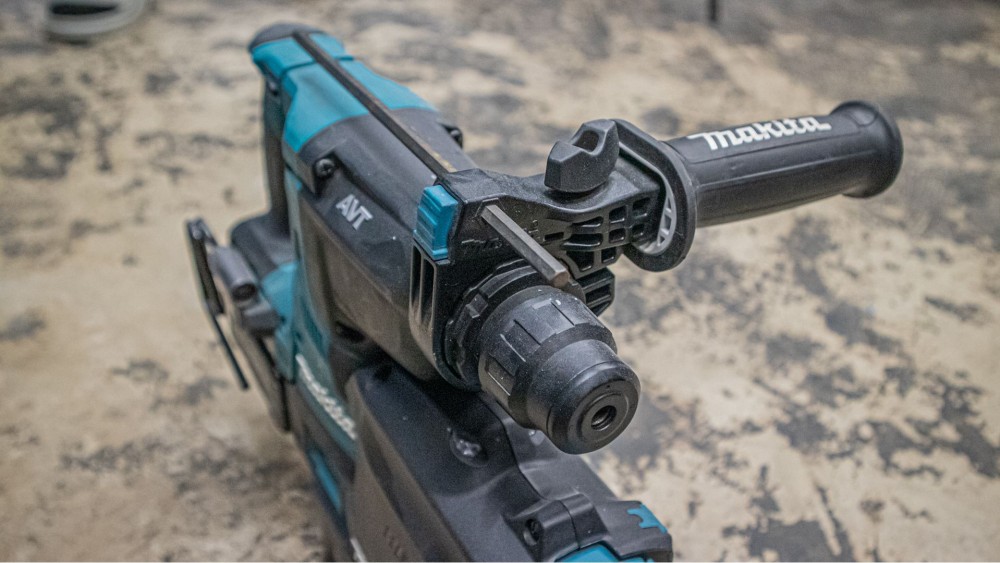
If you see one rotary hammer rated at 5,000 BPM and another at 4,000 BPM, you should not immediately conclude that the 5,000 BPM model will drill concrete better, because there are many other variables, such as:
- Impact energy per blow
- Tool size
- Drive/transmission system
- Chuck type
- Supported drill bit sizes
- Internal mechanism efficiency
Therefore, BPM should be used as one factor to assess the "impact characteristics" rather than a single number to judge the overall power of the tool.
How Important Is Rotational Speed (RPM) for a Rotary Hammer?
RPM stands for Revolutions Per Minute A tool with a high RPM can spin the bit faster, which directly affects drilling in wood, metal, plastic, and materials that rely on the cutting edge of the bit to shear through the material.
However, when it comes to rotary hammers for drilling concrete, rotation also plays a crucial role in repositioning the cutting edges after each impact, preventing the bit tip from striking the exact same spot continuously. The flute of the drill bit also utilizes rotation to help convey dust and concrete debris out of the hole.
If the bit rotates too slowly, debris removal may be inefficient and drilling speed may drop. But spinning faster than optimal does not mean it will drill concrete faster, because the material still relies on impact force to break apart concrete anyway.
For concrete drilling, is BPM more important than RPM?
If we look specifically at the task of drilling hard materials like concrete, the hammering system plays a very crucial role. It is what sets rotary hammers apart from conventional rotary drills. However, claiming that BPM is definitely more important than RPM can be misleading, because what truly makes a rotary hammer drill well is the optimal synergy between both systems, rather than a contest of which value is higher.
Imagine the drill bit tip hammering into concrete: if there is only impact without rotation, the bit will repeatedly strike nearly the same spot, and debris will build up at the bottom of the hole. Once rotation is introduced, the bit's cutting edge continuously changes position while clearing debris out along the flutes, allowing the drilling process to proceed much more continuously.
Therefore, for concrete work, it can be said that the impact force and rhythm are the focal point of the drilling, while the rotational speed is the component that helps the drilling process operate efficiently.
Don't just look at BPM; you must consider "Impact Energy" too
Another very important metric when comparing rotary hammers is impact energy, which is usually specified in Joules (J). This value indicates how much energy the tool can deliver to the drill bit per impact.
Consider a simple comparison between tapping a wall lightly many times versus applying a higher force per blow. Even with fewer blows per minute, the effect on the material can be distinctly different. Rotary hammers follow a similar concept: a tool with a higher BPM does not necessarily deliver the highest energy per blow.
For large rotary hammers designed for large-diameter drill bits or demolition work, you might notice that the rotational speed and impact rate are not as high as in smaller models, but the impact force per blow is significantly greater. That's because the tool's goal is not to produce rapid rhythm, but to deliver sufficient energy into the workpiece for heavy-duty applications.
Why some large rotary hammers have lower RPM
Choosing a rotary hammer by size: small, large, heavy, light—what are the differences? This often puzzles people when comparing specs: smaller rotary hammer models can spin at over 1,000 RPM, whereas larger models may have a much lower rotational speed, yet they are more expensive and designed for heavier tasks.
The reason is that large-diameter drill bits do not need to rotate as fast as small ones. Spinning large bits at excessively high speeds increases heat, resistance, and motor load. As a result, the tool's gear ratio is engineered to match the bit size and the workload the tool is built to handle.
When you see a lower RPM, do not rush to conclude that the tool is less powerful—especially when comparing rotary hammers of different sizes or systems.
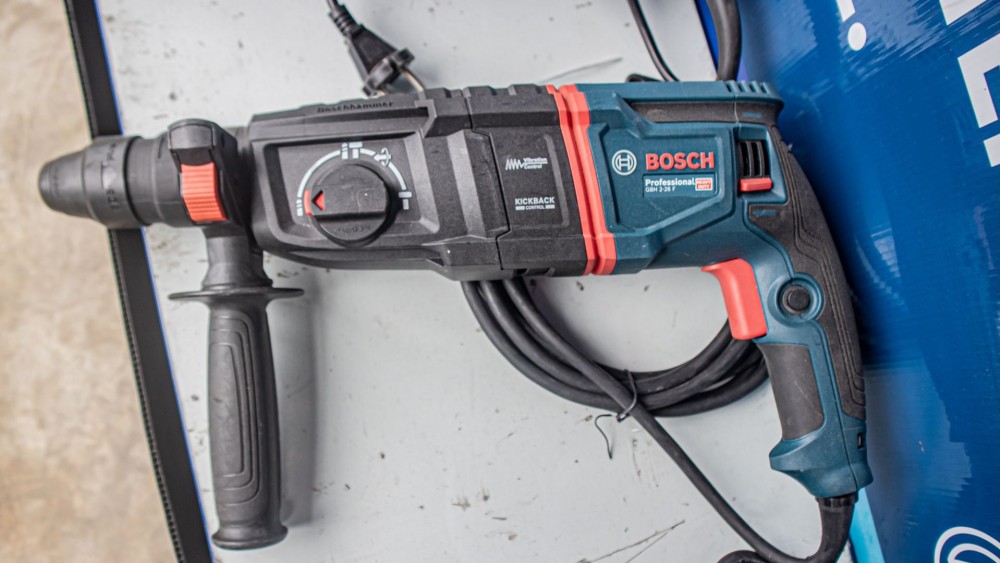
Different tasks require focusing on different specs
Selecting the right rotary hammer should therefore start with the question of what your primary application will be. If it involves drilling numerous small to medium holes, achieving a balance among rotational speed, impact rate, tool weight, and maneuverability is essential.
However, for large-diameter drilling, thick concrete, or continuous heavy-bit use, impact energy and load-handling capacity become far more critical. The tool does not necessarily need a very high BPM or RPM, but it must be able to maintain its power while the bit works through hard materials.
Chiseling tasks are even more different because, in hammer-only/chiseling mode, the bit does not need to rotate as it does when drilling. What is required is the impact energy delivered to the chisel. Rotation speed is barely a key metric for evaluating performance in this type of work.
For drilling in wood or metal, RPM plays a much more prominent role.
Many rotary hammer models offer a rotary-only mode to accommodate specific types of drill bits. When using the tool to drill wood, metal, or materials that do not require impact action, its working principle becomes much closer to that of a conventional drill. Why is a rotary hammer ideal for masonry drilling? And how well does it perform on wood and metal?
- Rotational speed has a greater impact on performance than BPM.
- Even with the hammer action turned off, you must still select the right speed for the type and size of the drill bit.
- Higher RPM is not always better; smaller bits can handle higher speeds than larger-diameter bits.
- Drilling certain types of metal may require lower RPM and proper heat management.
- Therefore, comparing rotary hammers based solely on BPM or RPM is not the answer.
When choosing a rotary hammer, do not just ask what the BPM is.
When choosing a new rotary hammer, comparing impact rates is indeed helpful, but it should always be considered alongside other specifications—especially the manufacturer-recommended drilling capacity, impact energy, and chuck system, such as SDS-Plus or SDS-Max, tool weight, variable speed control, and the intended applications.
For general users drilling walls, setting anchors, running wiring, mounting equipment, or handling home renovations, a compact rotary hammer with well-balanced specs is more maneuverable than picking an oversized tool just because its numbers look more powerful.
If you regularly drill large holes in concrete or do heavy construction work, moving up to a tool with higher impact energy and larger bit capacity may be more suitable—even if its RPM or BPM ratings are lower than those of smaller models.
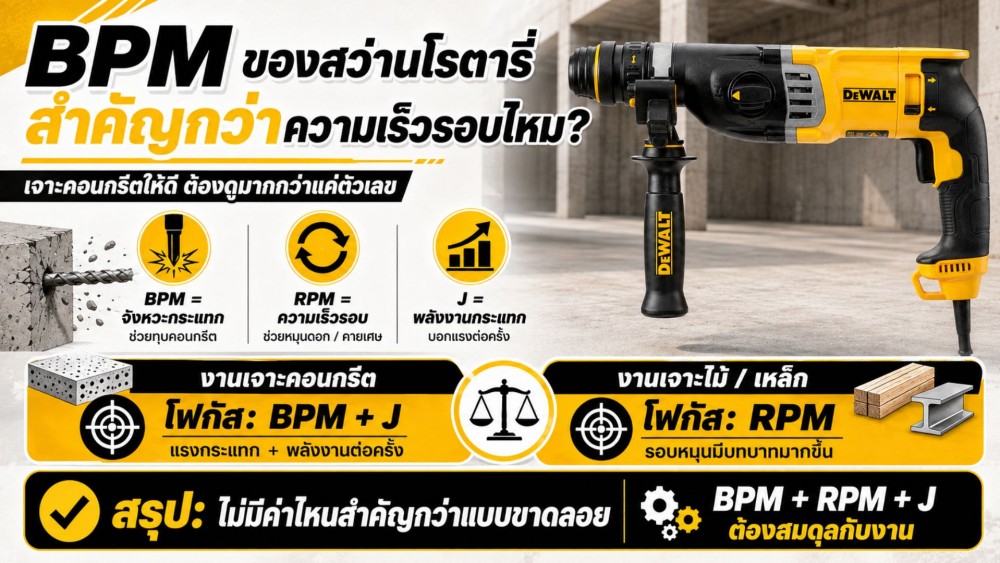
Conclusion: Is BPM more important than rotation speed?
If asked in the context of using a rotary hammer to drill concrete, impact rate and the hammer mechanism are indeed crucial, as the impact force is what breaks down hard materials. However, that does not mean you should simply pick the tool with the highest BPM or disregard RPM as unimportant.
In actual drilling, BPM, impact energy, and RPM must work together
- Impact action helps break up concrete
- Rotation shifts the cutting edge and helps remove debris from the hole
- Motor power and transmission help both processes continue under real loads
Therefore, if you need to compare two rotary hammers, do not just look at which one has 5,000 BPM or which one spins at 1,100 RPM and judge it as more powerful. Look at what bit sizes the tool is designed for, how much impact energy it delivers, what chuck system it uses, and what level of work you need to perform.
Rotary hammer What best fits the actual job does not necessarily have the "highest numbers," but rather should be the tool whose speed, impact rate, and power match the material and scale of the work you need to drill.