


 EN
 ไทย


Customers Also Purchased


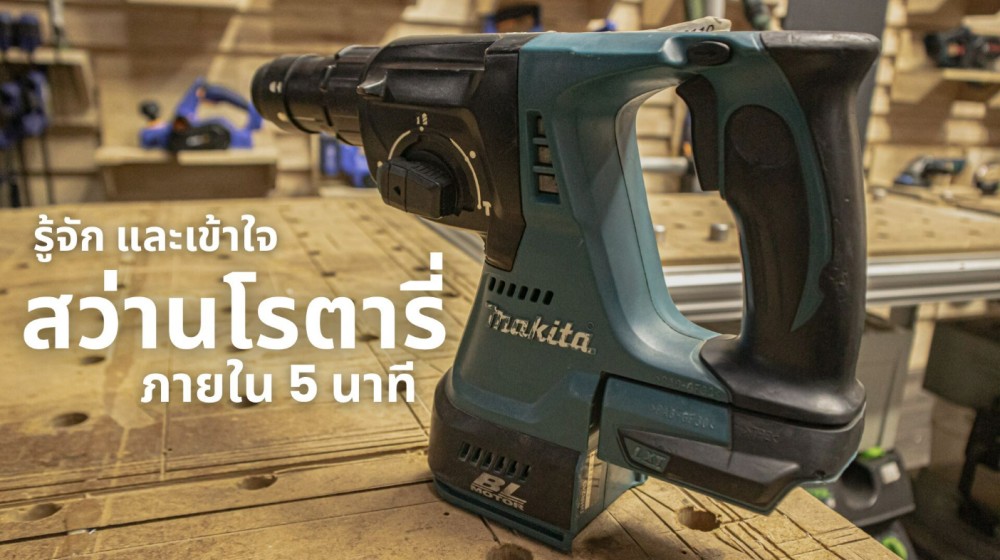
Ever wondered why some people make drilling concrete walls look so effortless, but when you try it yourself, the tool feels heavy, loud, barely penetrates, and leaves your hands fatigued? The answer often isn't a lack of strength, but rather that you might not yet understand what Rotary hammer the tool in your hand was designed for and how it should be used instead.
For beginners, the name 'rotary hammer' might sound like a heavy-duty contractor tool that requires true expertise to operate. In reality, once you grasp just a few basics, you'll see it isn't overly difficult at all—and it makes drilling masonry or heavy concrete much easier than standard drills.
That's why in this article, we've gathered everything you need to know about rotary hammers in a quick read: what it is, how it differs from other drills, which tasks it suits best, and what beginners should know before getting started.
What is a rotary hammer, and why is it considered the ultimate solution for concrete work?
In the simplest terms, a rotary hammer is a drill designed to combine 'rotation and hammering' simultaneously, focusing on drilling hard materials like masonry, brick, and concrete. These are tasks that standard drills or regular hammer drills can handle, but far less smoothly.
Deep dive into rotary hammer mechanisms: How does the piston hammer system work? It doesn't rely solely on the bit's rotational force; its internal mechanism delivers impact force directly to the tip of the bit. This makes drilling hard materials easier, faster, and puts less strain on the tool. When installing shelves, curtain rods, mounting TVs, or working with real concrete walls, this difference becomes very noticeable.
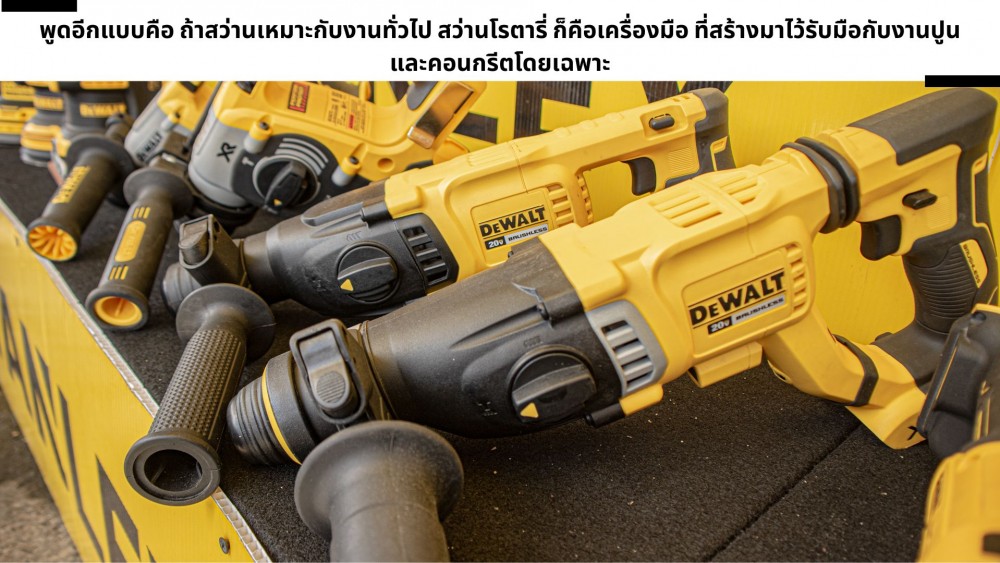
How does a rotary hammer differ from a standard drill and an impact hammer drill?
Many people see the word 'drill' and assume they are all interchangeable, but in reality, the nature of each tool is quite different.
Most people know that standard drills are suitable for drilling wood, plastic, thin sheet metal, or driving screws. They are agile, lightweight, and great for general-purpose tasks. However, if you need to drill hard concrete walls continuously, it quickly exhausts both the user and the tool.
As for impact hammer drills, while they handle masonry better than standard drills, their performance still falls short of a rotary hammer when dealing with dense concrete or extremely hard walls due to their different hammering mechanisms.
To sum up simply:
- Standard drill: Suitable for general-purpose tasks
- Hammer drill: Suitable for light masonry work
- Rotary hammer: Best suited for heavy-duty masonry and concrete drilling
This is why when it comes to serious wall drilling around the house, many recommend stepping up to a rotary hammer instead.
Can a rotary hammer replace every type of drill?
Why is a rotary hammer ideal for masonry drilling? And how well does it perform on wood and metal? The answer is not entirely. A rotary hammer excels at masonry work, but that doesn't mean it is suitable for everything. If you need to drill wood, thin sheet metal, or handle delicate assembly work, a standard drill or a drill driver will be much more agile.
Therefore, do not view a rotary hammer as an all-in-one universal tool, but rather as a specialized tool that excels at the right tasks—especially drilling masonry walls and concrete.
Why does a rotary hammer drill masonry better?
Many people simply answer that it's because it has more power, which isn't wrong. But to explain it more clearly, it's more accurate to say that it "delivers force better suited to the job."
When a rotary hammer operates, the tool delivers both rotational force and impact energy to the drill bit, allowing the bit to bite through masonry or concrete much better. When used with the appropriate bit, the work proceeds noticeably smoother.
Another point beginners should know is that using a rotary hammer doesn't mean you have to press down with maximum force. Some people, fearing the bit won't penetrate, press down harder and harder. In the end, pressing too hard prevents the tool from operating smoothly, causes the bit to heat up quickly, and tires you out much faster.
What you should keep in mind is:
- Let the tool work at its own pace
- Hold the tool firmly and perpendicular to the surface
- Apply moderate pressure—not too light, and without forcing the tool
Once you understand this point, you'll realize that rotary hammers are much easier to use.
What modes does a rotary hammer have, and why should you know them?
This is very important because sometimes people say rotary hammers don't work well, won't penetrate, or feel strange, when in reality they just selected the wrong mode. What is a 3-mode rotary hammer? Does it need all of them to be considered "pro-grade"?
Generally, rotary hammers feature 2 or 3 main modes.
- Rotary drilling mode For applications that do not require impact action
- Hammer drilling mode For drilling into masonry, brick, or concrete
- Chiseling mode Available on some models, for chipping or chiseling away sections of material
If you intend to drill a masonry wall but accidentally use rotary-only mode, the job will immediately be slow and strain the tool. Conversely, if you want to drill general materials but leave it in hammer mode, the finish might not be as clean as it should be.
Before every use, what you should ask yourself is "What mode does this job require?" Because no matter how good a rotary hammer you have, if you use the wrong mode, the results may not be good.
Rotary hammer drill bits are more important than you think
Many people focus only on the tool itself, but forget that drill bits have just as much of an impact.
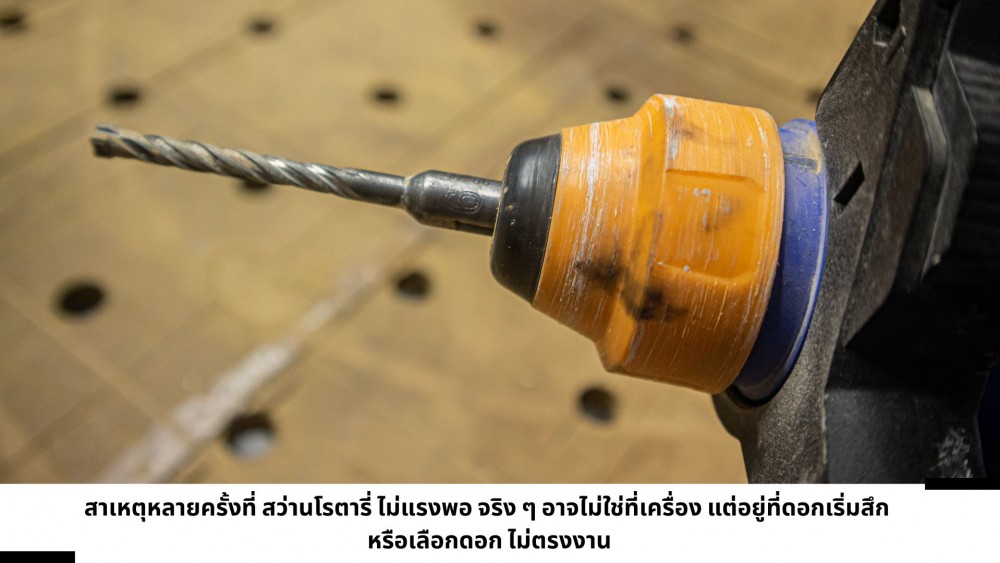
Rotary hammers use a dedicated chuck system called SDS, which is designed to withstand impact better for the job. Therefore, choosing a bit that matches both the tool and the material is very important. How to Insert a Rotary Hammer Bit: Is It Really Easy? How Do You Know It's Tight Enough for Use?
Here are the key things you should know:
- Use masonry bits when drilling masonry or concrete
- Do not use the wrong type of bit and expect the same results
- If the bit starts to become dull, the work will slow down and the tool will work harder
- A bit suited to the actual job size will operate much more smoothly
Beginners using a rotary hammer for the first time: What should you watch out for?
For those who have never used a rotary hammer before, what you need to be careful of isn't just whether it can drill through, but also safety matters.
First of all is the kickback of the tool. When the bit hits an unusually hard spot or encounters rebar in concrete, the tool might bind or twist back violently. If you don't hold the tool firmly, you risk losing control.
Second is dust. Drilling concrete definitely generates dust, and sometimes much more than you expect. You should prepare safety glasses, a dust mask, and get the workspace ready before starting.
Third is what is hidden behind the wall, such as electrical wiring or water pipes. This is very important because drilling in the wrong spot can cause major problems immediately.
Before actual use, keep in mind:
- Always hold the tool with both hands if the model has a side handle
- Stand in a balanced posture; do not overreach
- Check the position before drilling every time
- Wear eye and respiratory protection equipment
How should you start using a rotary hammer if you have never used one before?
Start with easier jobs first. Don't start with large holes or spots that are too difficult. Try drilling into an open wall using a standard bit size, set the correct mode, and gradually get used to the tool's rhythm.
Many beginners make mistakes by rushing, wanting to break through quickly, so they push too hard or fail to hold the tool steady. In reality, if you control the tool properly and let the rotary hammer do its work, the results will be better and you'll be much less fatigued.
What to look for when buying a rotary hammer?
When choosing a rotary hammer, most people usually start with the price or power rating, but in reality, there are several other factors to consider, especially for beginners. Choosing a rotary hammer by size: small, large, heavy, light—what are the differences?
Things to consider include:
- Tool weight: Can you hold it comfortably, and will it cause fatigue during extended use?
- Tool size: Does it fit your working space?
- Chuck system and compatible drill bits
- Number of operating modes
- Ease of handling and changing drill bits
- For cordless models, battery life and charging must also be considered.
It doesn't always have to be the most powerful model, but rather a rotary hammer that suits your type of work and that you can use with confidence.
Corded vs. cordless rotary hammer: Which one is more suitable?
Both types have their own advantages. Corded models are ideal for continuous use without worrying about battery life, and they are more cost-effective. Cordless models, on the other hand, offer superior mobility, especially when working at heights or in areas where running extension cords is inconvenient.
If you primarily work around the house with easily accessible power outlets, a corded model might be a great starting point. However, if you need high mobility, a cordless model is an attractive option—though the total cost will be higher once you include batteries and chargers.
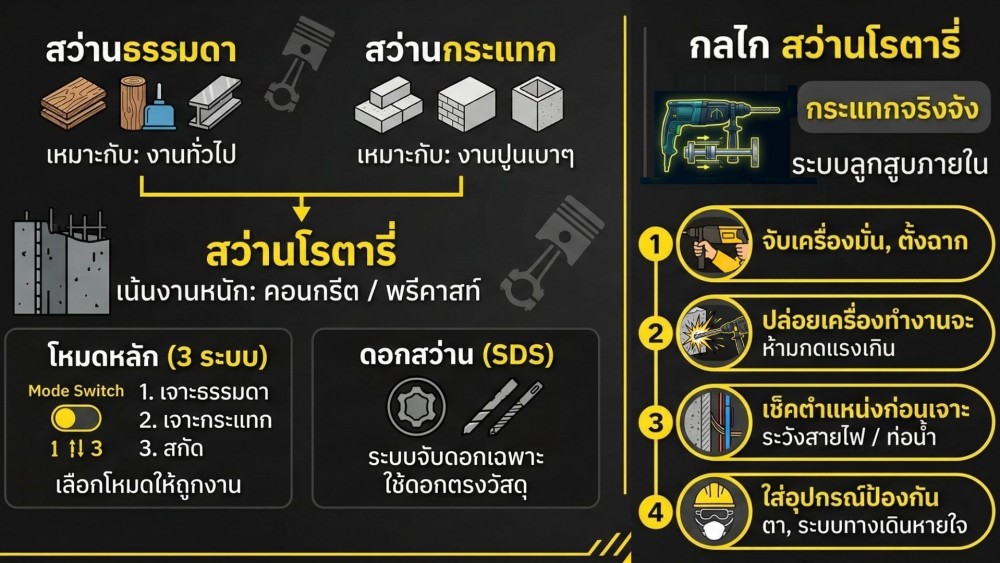
Quick summary of rotary hammers for beginners
- To sum it up as briefly as possible, here is what you should remember:
- Rotary hammers excel at drilling into masonry, brick, and concrete.
- They are quite different from standard drills and hammer drills.
- Using the correct mode makes the job much easier.
- The drill bit is just as important as the tool itself
- Do not push too hard; let the tool work at its own pace
- Always think about safety before drilling every time
Rotary hammers are not as intimidating as many people think. It's just a tool whose role we need to understand correctly. Once you know what jobs it suits, which mode to use, which bit to choose, and what precautions to take, getting started will be much easier.
For those who have never used one before, I think just understanding the basics is already more than half the battle, because it helps you not feel like Rotary hammer it is an unapproachable tool,
but rather a helper that turns heavy-duty work into something manageable.