EN
 ไทย


Customers Also Purchased


We might think that the working principle of Jigsaw and Shear each type is not that different: using a saw blade rotated or driven by a motor to cut through materials. However, if you observe how they are actually used, power saws have two distinctly different control methods: Moving the tool through the workpiece vs. Feeding the workpiece through the tool
This difference directly affects how controlling the tool feels. In one method, you must control the tool's weight, blade direction, and cutting line. In the other method, the power saw barely moves, but you must guide the workpiece smoothly through the saw blade.
When it comes to ease of control, precision, and usability for general users, between holding the power saw to the work and feeding the work into the blade, which one is easier to use? The answer does not depend solely on the type of power saw, but also on
- workpiece size
- type of cut
- workspace
- user experience
as well as what you expect from the cut.
The principle of power saws differs in "what moves"
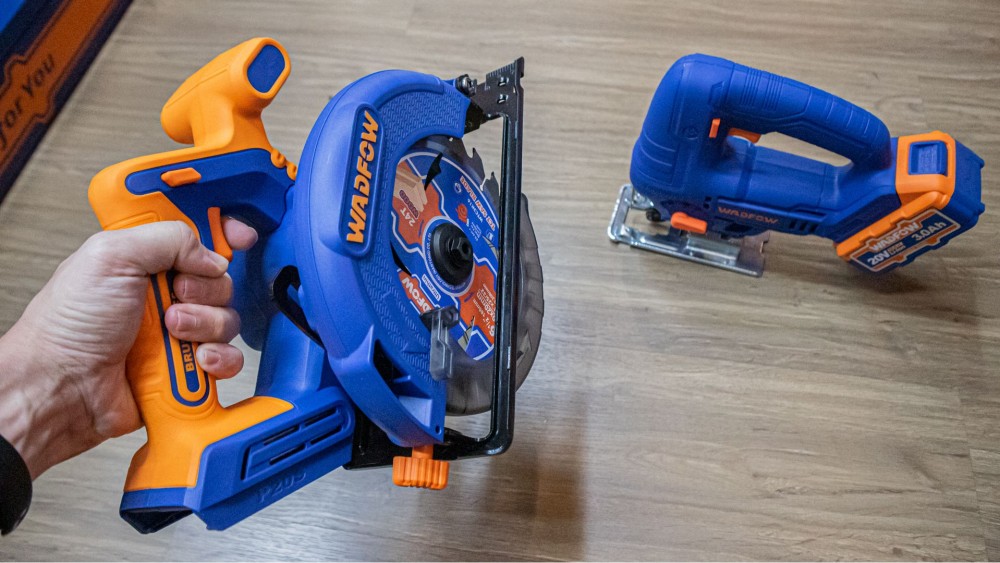
Handheld circular saws and electric jigsaws are clear examples of power saws. We keep the material stationary, place the saw base on the workpiece surface, then turn on the tool and guide the saw along the desired line. The user controls the tool's position, the cutting feed rate, and the direction of the blade throughout the entire operation.
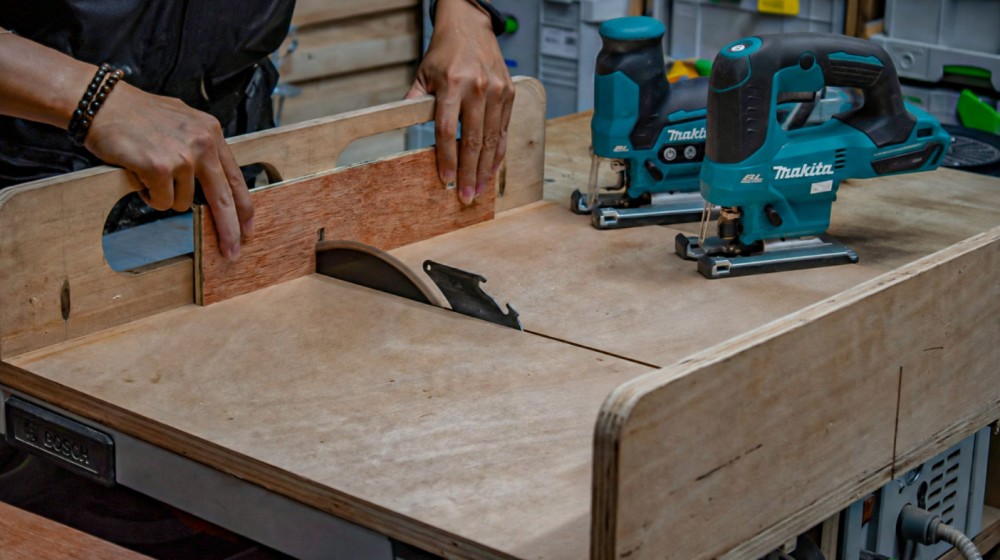
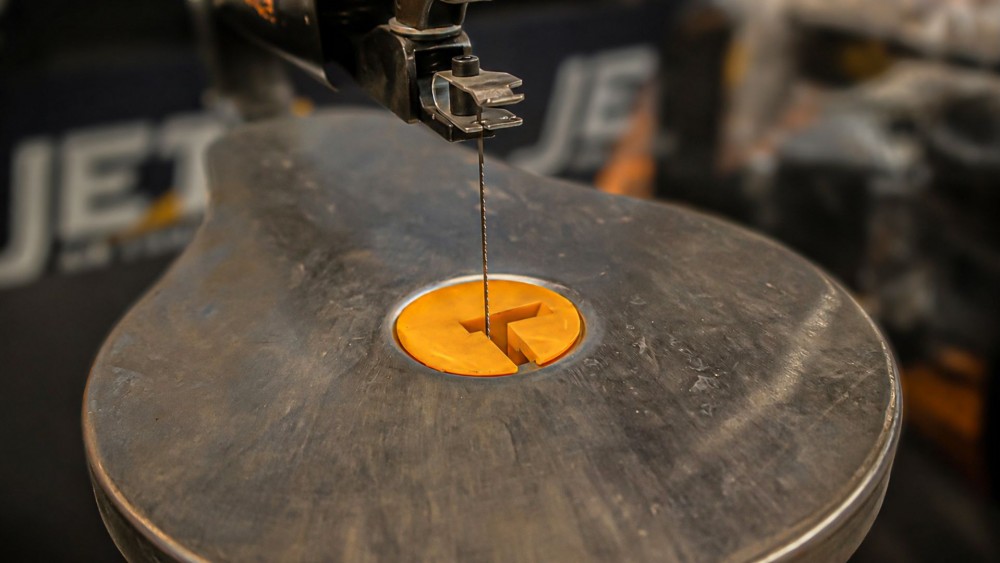
Table saws, benchtop band saws, or scroll saws are the opposite. The motor and saw blade are fixed to the machine. You place the wood on the table and gradually feed the workpiece through the blade, using a fence to set the distance. The concept of this type of power saw is therefore to keep the blade fixed in place and control the material instead.
When what you have to control is different, the feeling while using a power saw is also different.
Bringing the saw to the work: freedom, but requires controlling many things at once
"Carrying the tool to cut" means your hands must perform multiple tasks simultaneously: bearing the weight of the tool, keeping the saw base flush against the material, pushing the power saw forward, maintaining the speed, and watching to ensure the blade follows the cut line. Even a slight tilt of the hand can cause the tool to veer off course.
This is why some people feel like the tool is "pulling" or "trying to wander off the line" when trying a circular saw for the first time, even though there is nothing wrong with the power saw itself. This feeling usually stems from a combination of the motor's power, the tool's weight, the contact between the blade and the wood, and the user's posture.
The advantage is seeing the cut line and being able to adjust the direction at any time
On the other hand, bringing the power saw to the workpiece gives you a sense of direct control. If you notice the line drifting, you can adjust the tool's direction immediately. It is ideal for jobs that do not require repeated cuts of identical dimensions, or for workpieces that are too large to move easily.
Power saw accessories: choose the right one for the job to unlock much greater versatility When using a Guide Rail or using a straight edge as a guide, a handheld circular saw becomes noticeably easier to control because you do not have to strain your eyes constantly tracking the line. The tool's base slides along the set track, greatly minimizing issues with shaky hands or the saw drifting off course.
Therefore, in terms of maneuverability, power saws that you bring to the workpiece have the advantage. But if you ask whether it is the easiest way to maintain a long, straight line freehand, the answer is still no.
Feeding the workpiece into the blade: a more stable tool, making straight cuts easier to control
When switching from a handheld power saw to a table saw, here is what happens:
- No need to hold the motor
- No need to support the weight of the tool
- No need to constantly guide the blade's direction
- The blade stays in the exact same position at all times
All we need to do is control the material to move past the blade along the desired line.
For straight cuts, especially ripping wood along the grain (Rip Cut), a table saw clearly offers better repeatability and easier dimension control. Set the rip fence to the desired distance, then place the edge of the wood flush against the fence and push it forward. If the fence is straight and the machine is properly adjusted, the cut will be straight and uniformly sized.
The key advantage is that we are not guiding the cutting line entirely by hand directly; instead, the structure of the power saw or the tool itself helps guide it. For jobs requiring multiple pieces of wood cut to the same size, a table saw is a power saw that works faster and more consistently.
If the workpiece is very large, bringing the saw to the work is easier.
This point is crucial because ease of control doesn't depend on the power saw alone, but on what we are actually moving.
Imagine a full sheet of plywood that is both large and heavy. If you have to lift this sheet onto a table saw and try to keep its edge flush against the fence throughout the cut, you have to manage both the weight and the momentum of the sheet. In limited workspace, the job becomes even more difficult.
In the same situation, if you lay the sheet on a support table or foam insulation board and use a circular saw paired with a guide rail, or a track saw, you barely have to move the sheet at all. Simply move the power saw, which weighs just a few kilograms, across the material instead.
"A simple rule of thumb: between the tool and the workpiece, whichever is easier to move is usually what you should move."
Where should a beginner start?
For beginners, the answer still depends on the work being done. In-depth look at power saws and improper usage: Which type is most commonly mishandled?
Handheld circular saws, jigsaws, scroll saws, and reciprocating saws are power saws that are easy to use in terms of versatility because they take up little space, are highly portable, and can be brought directly to the workpiece.
Using guide attachments significantly reduces the effort required to control direction, allowing your hands to focus instead on keeping the base plate flat against the workpiece and advancing the saw at a steady pace. However, if you do woodworking regularly and need to cut many identical pieces, a table saw will begin to show greater advantages by reducing repetitive measuring and setup steps, making work faster and more accurate.
The feeling of ease of control also depends on the force you apply.
No matter what kind of power saw it is, one common rule is that you should never force the tool by pushing too hard. A power saw should cut material using motor power and blade sharpness, not through brute force from the user.
When using a circular saw, pushing the tool too fast can cause the motor RPM to drop, making the blade work harder and the tool harder to control. On the other hand, pushing too slowly can also leave burn marks on certain types of wood. The ideal pace is a steady feed, listening to the motor sound and observing the chips clearing from the cut line.
The same applies to stationary power saws. Pushing wood too fast does not get the job done quicker; instead, it requires more effort and makes it harder to control.
Saw blades affect power saw control more than you might think.
Sometimes users blame the tool for being hard to control, when the real issue is that the saw blade is not suitable for the job. A dull blade, teeth unsuitable for the material, or a tooth count mismatched to the cut type will increase resistance, making both the tool and the workpiece harder to control.
For example, a fast-cutting blade has fewer teeth, which helps clear chips efficiently and cut quickly, but the cut finish may be rougher. Conversely, a very fine-toothed blade delivers smoother cuts, but feeding it quickly through thick material can generate excessive resistance and heat.
Therefore, if using the saw feels like it requires more effort than usual, do not immediately assume it is solely due to the type of saw. Be sure to check the cutting blade as well, because the right saw blade definitely helps the power saw run smoother and remain easier to control.
Tool size and weight also change how it feels to control.
For handheld power saws, heavier weight does not always mean harder control. A tool that
- has a solid base
- has a good center of gravity
- has well-balanced weight distribution
can feel more stable than a lighter tool, especially when making long, straight cuts.
However, if working overhead, moving the tool frequently, or using it continuously for long periods, weight can cause fatigue and reduce control. That is why it is essential to choose a power saw size that fits the nature of the work, rather than looking only at wattage or blade size.
As for table saws, a rigid structure, flat and wobble-free table, and precise blade adjustment system contribute far more to ease of control than motor power ratings alone.
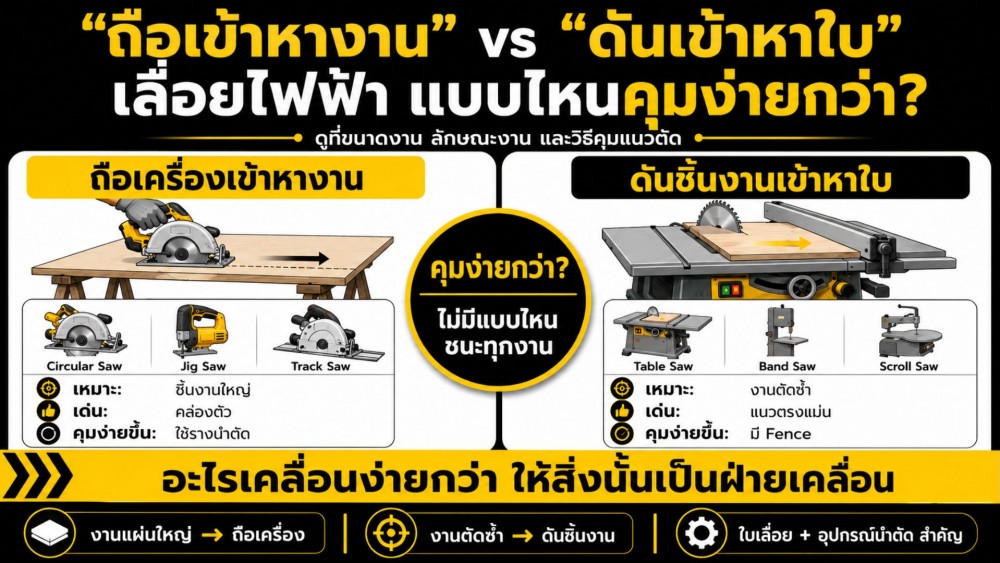
Conclusion: Bringing the saw to the work vs. pushing the work to the blade—which is truly easier to control?
When it comes to cutting medium-sized wood repeatedly with consistent dimensions, pushing the workpiece into the blade on a table saw is usually easier to control. Because the blade position is fixed, there is a guide, and there is no need to hold the tool while cutting. However, if the workpiece is large, heavy, difficult to move, or involves outdoor installation, bringing a handheld power saw to the workpiece, such as circular saws, scroll saws, jigsaws, and reciprocating saws, will offer a clear advantage.
Therefore, the question of which type of power saw is easier to control has no one-size-fits-all answer for every situation. The simplest principle to consider is: Between the tool and the workpiece, which one should be moving?
Ultimately, using Jigsaw and Shear tools easily and efficiently does not depend on whether you have to hold the machine or not, but rather on choosing the right tool for the job size, having sufficient support space, using the correct saw blade, and letting the tool's structure or cutting guides help control the line.