


 EN
 ไทย


Customers Also Purchased


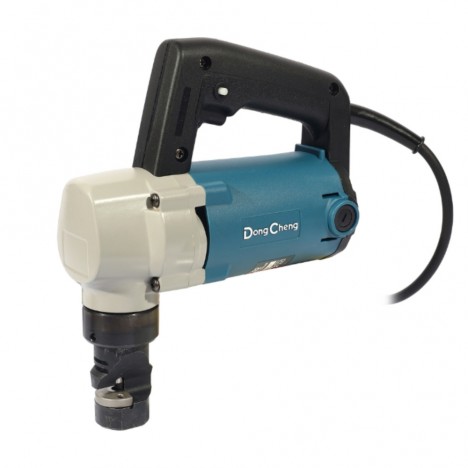


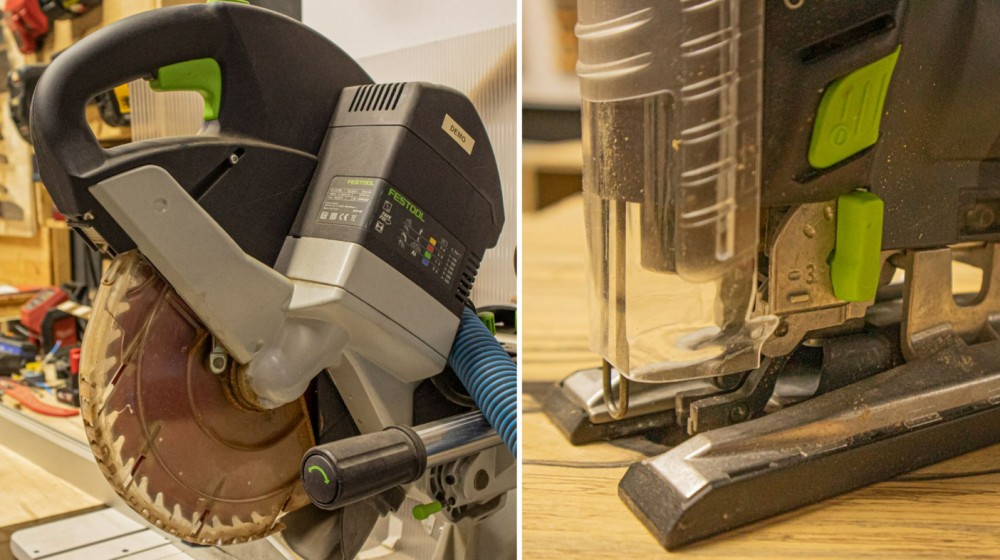
When talking about Jigsaw and Shear we usually think of a power tool that helps cut wood, various materials, or workpieces faster and seems simple to use, right? In reality, power saws are very easy to misuse, especially if we assume that all types of saws are interchangeable.
Some people use a circular saw for everything, use a jigsaw to cut materials too thick for its capacity, or use a reciprocating saw for cuts that require precise guiding. Ultimately, this can result in poor cut finishes, rapid blade wear, tool overload, or increased risk of accidents.
So, let's take a look at Where each type of power saw is most commonly misused including circular saws, miter saws, jigsaws, reciprocating saws, and band saws, to see what each type is suited for and what problems arise when used incorrectly. Power saws do not come in just one variety, and they are a group of cutting tools that must be matched to the specific nature of the task.
Why are power saws frequently misused even though they look so different?
The reason people frequently misuse power saws stems from the misconception that "a saw is just a saw"—if it cuts, it should be interchangeable. In reality, each type of power saw differs significantly in cutting direction, workpiece support method, blade characteristics, speed, and degree of control.
If you ask whether What types of power saws are there for woodworking? Does an all-in-one saw truly exist? The answer is: none. For example, circular saws excel at straight cuts, miter saws excel at repeated angled cuts, jigsaws are suitable for curved cuts, reciprocating saws are used for demolition work, and band saws are used for continuous cutting. When power saws are used outside their intended roles, issues with cut quality, accuracy, and safety inevitably follow.
The speed of a power saw is not the only answer to cutting tasks
Many people buy power saws just to cut faster, but speed is not the whole story. A quality cut requires straightness, smoothness, safety, and tool control. For example, when cutting corner molding, a circular saw might be able to make the cut, but holding repeated angles across multiple pieces is much harder than with a miter saw. Or if you need to cut curved cutouts, forcing a circular saw is simply unsuitable, as this type of power saw is not designed to turn along curved lines.
Key factors to consider before choosing a power saw
- Whether you need straight cuts, curved cuts, or angled/miter cuts
- How small, large, thick, or long the workpiece is
- How smooth the cut edge needs to be
- Whether the workpiece can be securely clamped or is prone to moving during the cut
- Does the chosen tool control the cutting line appropriately for the actual task?
Circular Saws: The Common Mistake of Assuming They Can Cut Any Angle or Curve
If asked which power saw people are most familiar with, circular saws are usually among the first answers because they quickly cut sheet goods, plywood, solid wood, and handle long rip cuts efficiently.
The pitfall is that some may view a circular saw as an all-in-one power saw—assuming it can cut straight, manage curves reasonably well, or handle corner cuts just by tilting the tool. In reality, this is a risky practice.
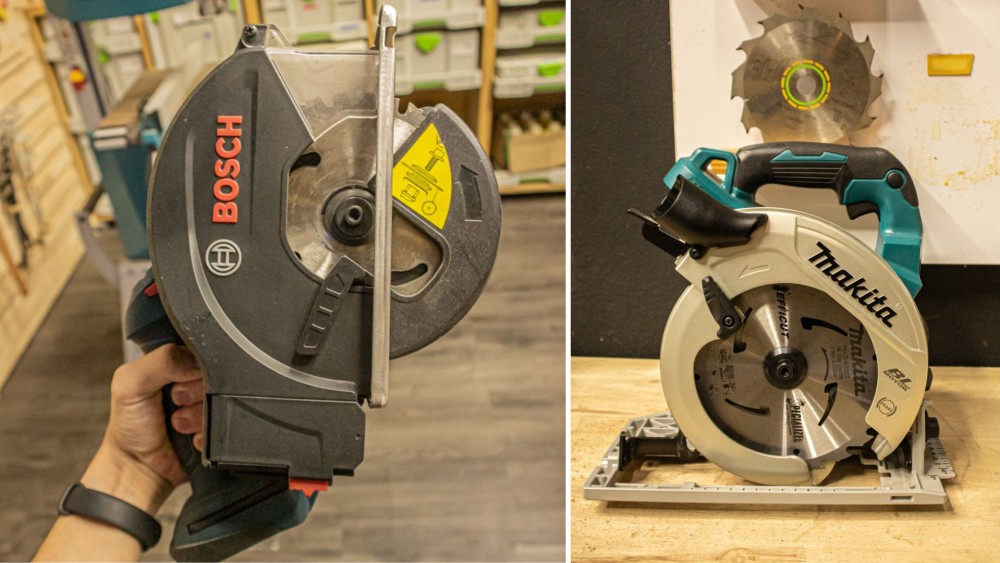
The truth is, a circular saw requires a stable base support, a clear cutting line, and space for the blade to move straight continuously. If the workpiece is small, poorly secured, or if you try to steer it through curves, it can lead to blade pinching, tool kickback, burn marks, accelerated blade wear, or dangerous kickbacks. Understand Kickback Before Choosing a Power Saw: Which Types Are Riskiest Ranked!
Tasks Where You Shouldn't Force the Use of a Circular Saw
Circular saws are not suitable for curved cuts, small workpieces that are difficult to clamp, intricate corner cuts, or areas where the base plate cannot lay flat. If you need to make curved cuts, use a jigsaw; for repetitive angled cuts, use a miter saw; and for demolition cuts in tight spaces, use a reciprocating saw.
Miter Saws: Using Them in Place of Circular Saws or Table Saws
A miter saw is a power saw that might seem easy to use because it has a base, an arm, and a blade that comes down from above. It is mostly used for cutting moldings, trim, framing lumber, or workpieces requiring repeated angles like 45 or 90 degrees. However, some people try to cut large panels, long lumber without proper support stands, or workpieces that cannot rest securely against the rear fence.
A miter saw is accurate when the workpiece rests flat, stays flush against the base, and leans securely against the back fence. If the workpiece is too long without support stands, the ends may sag, skewing the cut line. Or, if the workpiece is wider than the cutting capacity and requires flipping to finish the cut, the cut lines may not align. A miter saw is meant for crosscuts and miter cuts—not an all-around power saw for every type of cut.
A Power Saw Made for Precision, Not Freehand Cutting
The strength of a miter saw lies in repeatability and precision, but it is not suitable for large sheet goods, long rip cuts, curved profiles, or demolition work in tight spaces. To rip sheet goods, use a circular saw; for curved cuts, use a jigsaw; and for demolition cuts, a reciprocating saw is much more suitable.
Jigsaws / Scroll Saws: Expecting Straight, Clean Cuts Like a Circular Saw
A jigsaw or scroll saw is beginner-friendly because of its compact size, small blade, and excellent curve-cutting capability. Pocket cuts, intricate pattern cuts, thin sheet cuts, DIY projects, or freehand curved cuts can be done effortlessly. However, the mistake lies in expecting it to make long, razor-straight, clean cuts like a circular saw, or using it on materials too thick for the tool's capacity.
The nature of this type of power saw is that the blade moves up and down. When encountering thick materials, the blade can deflect or wander at the bottom—even if the top looks straight, the bottom may not be square. If you need strictly straight cuts, a circular saw paired with a guide rail or track saw system is much more suitable.
Jigsaw Blades Matter More Than Many People Think
This isn't just about using the wrong power saw, but about choosing the wrong blade for the material. Fast-cutting wood blades may produce rougher edges, while fine-tooth blades cut slower but leave cleaner edges. Metal-cutting blades are also distinct from wood blades. Using the wrong blade can lead to splintering, chipping, blade vibration, slow cutting, or excessive heat buildup. With a jigsaw, you must match the tool, blade, speed, and nature of the job together.
Reciprocating Saws: Using Them for Tasks That Require a Clean, Smooth Finish
A reciprocating saw is a rugged, fast-cutting power saw ideal for demolition, pipe cutting, cutting in-place lumber, pruning branches, or reaching spots where other saws cannot fit. Its key advantage is that the blade extends forward and reciprocates, making it easy to access tight spaces. However, problems arise if you try to use it for tasks requiring a clean, straight, and highly accurate cut.
A reciprocating saw is not built for precision like a miter saw or circular saw; it is a power saw meant for hard-to-reach situations. Long reciprocating saw blades can vibrate or flex under heavy pressure. Using it to cut furniture parts, trim, or exposed surfaces usually results in having to spend extra time sanding and fixing the finish.
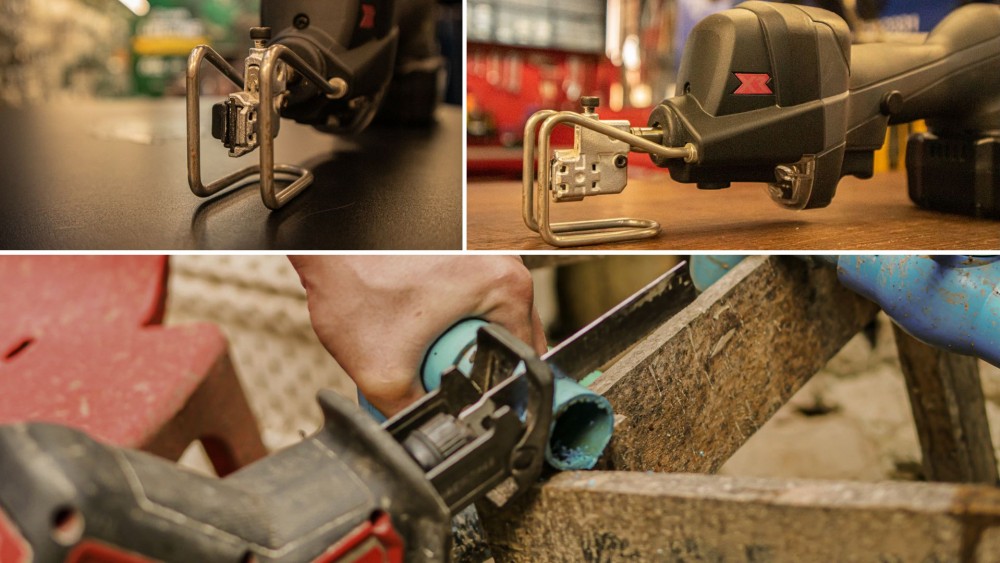
Reciprocating saws are suited for demolition rather than finish work
A reciprocating saw is suited for tasks where "getting the cut done" matters more than "making it look neat"—such as cutting old pipes, framing timber, pallets, tree branches, or materials in tight spaces. But if the job demands squareness, smoothness, or precision for joinery, a reciprocating saw is definitely not the first choice.
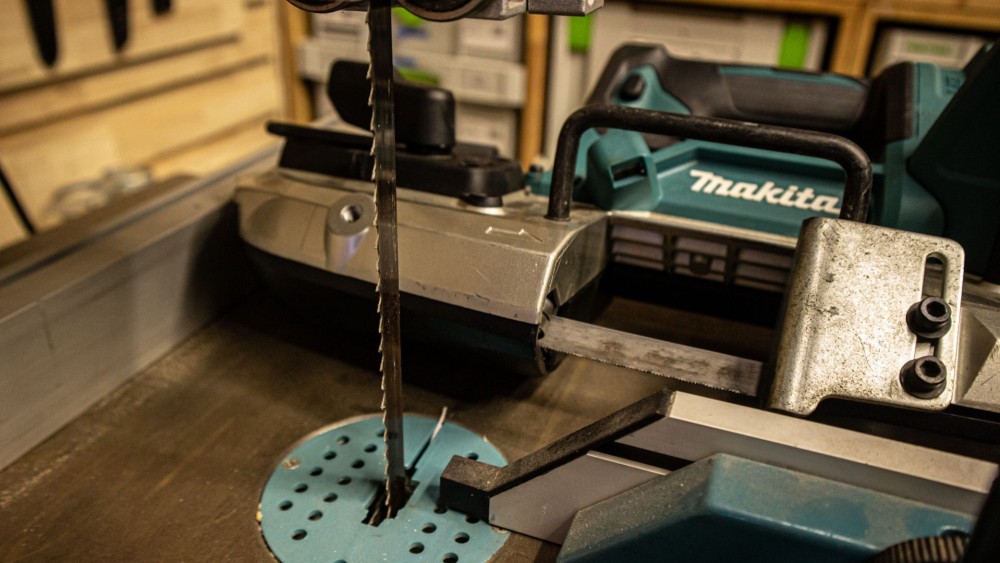
Bandsaw: Thought to be easier to use than other types of saws
A bandsaw is a power saw that many people may not be as familiar with compared to circular saws or jigsaws, but it is ideal for woodworking, metalworking, and continuous cutting tasks. The continuous loop blade delivers smooth cuts with minimal impact and is well-suited for resawing or cutting wide curves. The issue is that some people see the machine running steadily and assume it is always safe and easy to use.
In reality, a bandsaw is a power saw that requires proper machine setup Including blade tension, wheel tracking, blade type, guide spacing, speed, and feed rate. If the blade is loose, fed too quickly, or poorly chosen, cuts can wander, the blade can overheat, or cutting will be slow. In addition, you must control the workpiece firmly and avoid rushing it into the blade.
So, which power saw is the easiest to misuse?
If you ask professionals which power saw is the most prone to mistakes, the answer is often the circular saw and the reciprocating saw. Many people view circular saws as basic power saws that can cut almost anything, even though they require straight cutting lines and well-supported workpieces. Meanwhile, reciprocating saws are often seen as rugged, go-anywhere saws, leading users to inadvertently use them on jobs that require neatness or precision.
Jigsaws can also lead to mistakes when expected to make straight cuts like a circular saw. Miter saws can lead to errors when used with oversized workpieces or without secure clamping. Bandsaws lead to problems when blade setup is neglected. Therefore, the key question is not which power saw is best, but rather what kind of cut the job actually requires.
Before picking up a power saw
Before starting any cutting job, make sure you clearly identify the type of cut you need. Knowing this will help reduce the chance of using the wrong power saw far more than you might think.
- For long straight cuts on sheet materials, look to a circular saw with an edge guide or guide rail.
- For repetitive angled cuts on moulding or workpieces that rest securely against a fence, use a miter saw.
- For curved cuts, plunge cutouts, or shaped work, choose a jigsaw.
- For demolition, cutting in tight spots, or when severing matters more than neatness, use a reciprocating saw.
- For continuous cutting where you feed material past the blade and can properly configure the machine, use a bandsaw.
Remember that a powerful saw used for the wrong job might not perform as well as a moderately spec'd tool used for the right one.
Conclusion: Sometimes the saw isn't at fault—we just picked the wrong tool for the job
Ultimately, the issue of using the wrong power saw doesn't lie with any single type of saw. It's not that circular saws are bad, miter saws aren't worth it, jigsaws aren't accurate, reciprocating saws leave rough cuts, or bandsaws are hard to use. It comes down to whether we truly understand how each saw works.
Every type of power saw excels at specific tasks, and each has areas where it shouldn't be forced into use. When you match the saw to the job, your cuts improve, the blade lasts longer, the tool operates under less strain, and overall safety increases.
- Circular saws excel at straight cuts
- Miter saws excel at repetitive angle cuts
- Jigsaws excel at curved and shaped cuts
- Reciprocating saws excel at demolition and hard-to-reach areas
- Bandsaws excel at continuous cutting where the machine must be stationary and the workpiece carefully controlled
Simply distinguishing the roles Jigsaw and Shear of each type clearly turns tool selection from guesswork into a decision based on actual job requirements—the starting point for work that is neater, faster, and safer than ever.