


 EN
 ไทย


Customers Also Purchased


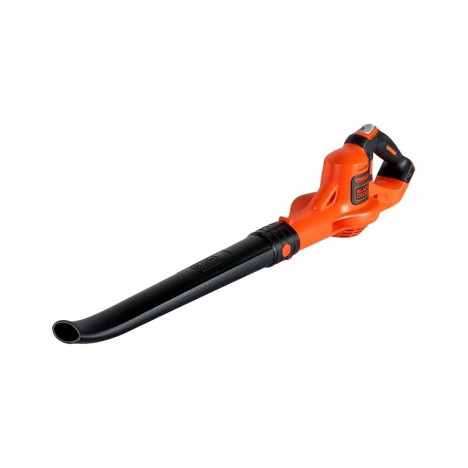

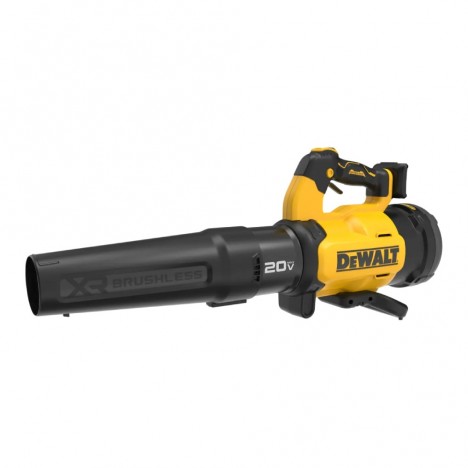
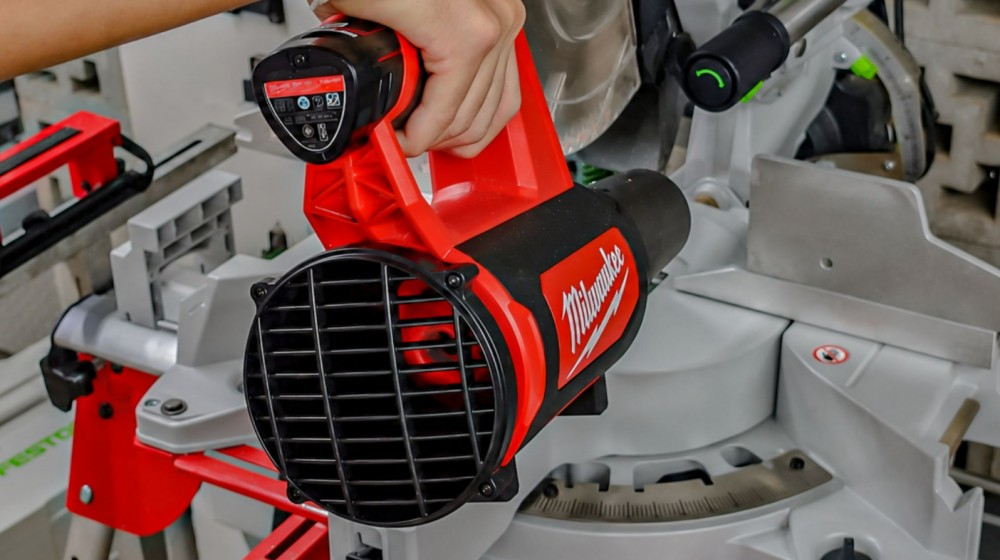
When doing workshop tasks, one thing that is very hard to avoid is "dust." Dust can accumulate on power tool bodies, air vents, switches, handles, casing grooves, and near the motor. Many people might choose to use Blowers a blower to clean tools after use because it's convenient, fast, and seems to get the tool clean immediately. But the crucial question is: "How should you use a blower correctly?"
Power tools feature both air inlets and outlets to help dissipate heat from the motor. If you blow directly into them with a blower, the dust that should come out may be forced deep inside the machine, increasing the risk of internal buildup. This can cause the tool to overheat easily, drop RPM, make abnormal noises, cause stiff switches, produce a burning smell, or shorten its lifespan.
We will look at how to use a blower to clean power tools more safely and help maintain them for longer service life—whether it's drills, grinders, various electric saws, or tools that deal with lots of fine dust like sanders.
Why Should You Be Careful When Using a Blower on Power Tools?
Besides Blowers Weighing Under 2 kg: Why Is Their Airflow Deceptively Powerful? Some might wonder: if dust is trapped and we blast it hard with a blower, won't it just disappear on its own? The direct answer is no, the dust does not entirely disappear. Some of it may simply relocate from the outer surface to the inside instead.
If we use a blower to blast air directly into the vents of a power tool—which are the pathways air flows through to cool the motor—dust may cling to the cooling fan, motor windings, carbon brushes, or electronic control boards.
Some types of dust are not just ordinary powder.
- Fine wood dust can combine with moisture and oil residues to become sticky grime.
- Concrete dust is extremely fine and can easily accumulate in small crevices.
- Metal dust or grinding swarf can be sharp and may sometimes be electrically conductive.
- Dust from sanding paint or coating materials may also contain contaminants that should not be inhaled and should not be allowed to accumulate inside tools.
Cleaning with a blower should focus on "expelling dust out of the tool", not "forcing air into the tool" without considering airflow direction.
Power tools have air inlets and air outlets.
Many types of power tools, including blowers, have ventilation slots around them. These slots allow air to flow through the interior to draw heat away from the motor and electronic components. Generally, there are both air intake and exhaust points, but you might not know which side is the inlet and which is the outlet, leading to blowing into every visible slot and sending dust swirling everywhere.
A simple way to tell is to gently check the airflow direction while the tool is operating in a safe state; this will give you an idea of which vents exhaust air. Air outlets are usually located near the motor or along the sides of the tool body, while air inlets are often at the rear or around the handle area, depending on each model's design.
Once you roughly understand the direction, whenever you use a blower for cleaning, try to blow in a direction that helps expel dust rather than forcing dust backwards into the air intake vents.
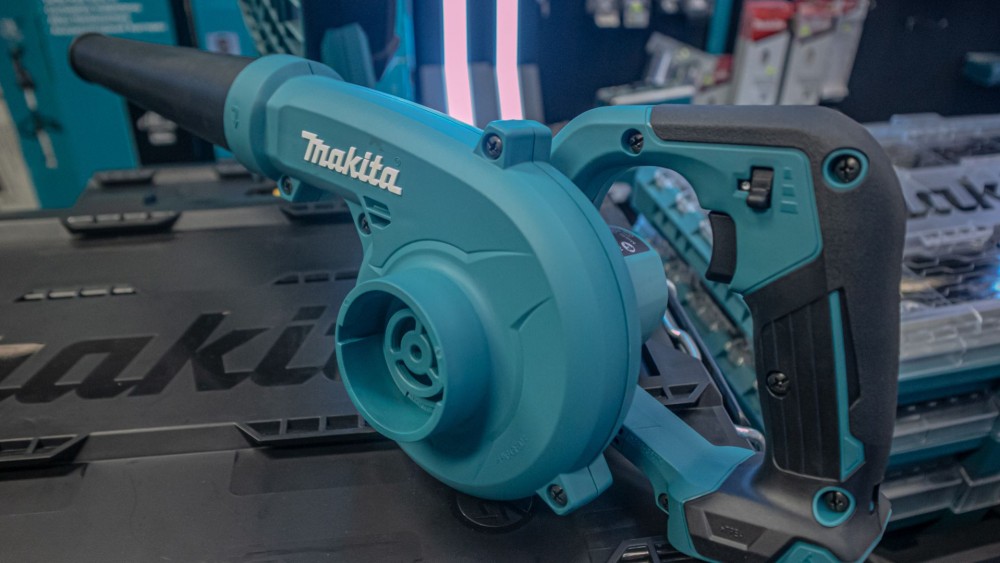
Use moderate air power; maximum power is not always necessary.
Many blower models feature adjustable airflow levels, which is extremely useful for cleaning power tools. This type of task does not always require maximum airflow; medium air power is sufficient for surface dust or general dry dust.
Using a blower at maximum airflow on tools with narrow vents can cause dust to scatter more wildly and make it harder to control, especially in enclosed spaces such as small workshops or home work corners.
The appropriate air power should be just enough to clear the dust out. For very fine dust, such as concrete dust, sanding dust, or fine wood dust, you should start with low air power and gradually increase it as needed. Using a blower to gradually dislodge dust layer by layer is better than a sudden burst of high pressure, because heavily built-up dust can break apart and disperse widely under excessive airflow. Controlling air power is extremely crucial when using a blower with power tools.
Choose the right blower nozzle; do not press a narrow nozzle directly against the ventilation slots.
The blower nozzle directly affects the airflow pattern. A narrow nozzle concentrates the air into a pinpoint stream, ideal for blowing into crevices or grooves. However, aiming it close to a power tool's ventilation slots can easily push dust deeper inside.
Conversely, a wide nozzle or a standard round nozzle delivers a more dispersed airflow that is easier to control, making it ideal for clearing dust from around the tool body and cleaning exterior surfaces.
- Start with a standard nozzle first, and adjust your distance and blowing angle to assist.
- If a narrow nozzle is necessary for clearing grooves or crevices, avoid pointing it directly into the motor vents.
- Blow at an angle rather than pointing straight in.
- Narrow nozzles should be used on exterior crevices such as rubber grips, handles, dust-collecting grooves around the body, or areas without direct passageways into the motor.
Use the blower from top to bottom and blow dust away in one direction
Another technique to help clean power tools more effectively is to define a clear blowing direction. Avoid blowing back and forth randomly, as dust might swirl back onto the tool or blow into ventilation slots from the other side.
An easy method is to place the power tool in a position where dust can easily fall away, such as on a table or hanging at a safe angle. Blow from top to bottom or from cleaner areas toward dirtier ones so the dust moves away from the tool in a single direction.
If the tool is heavily coated in dust, start by blowing dust off the housing first, then tackle the vents later. Blowing the vents first might cause surrounding dust to get sucked or pushed back inside. A sequential dusting approach is far more effective and reduces the chance of dust entering the motor compared to blowing everywhere simultaneously without direction.
Do not blow while the tool is still extremely hot after heavy use
After heavy tool usage, the motor and internal components may still be hot. Rushing to blow-clean them immediately while extremely hot can cause floating fine dust to stick easily to internal residues, especially if the tool has built-up oil, grease, or debris.
Let the power tool rest and dissipate heat for a while. Once it has cooled down sufficiently, use the blower to clean it; this makes controlling the dust much easier.
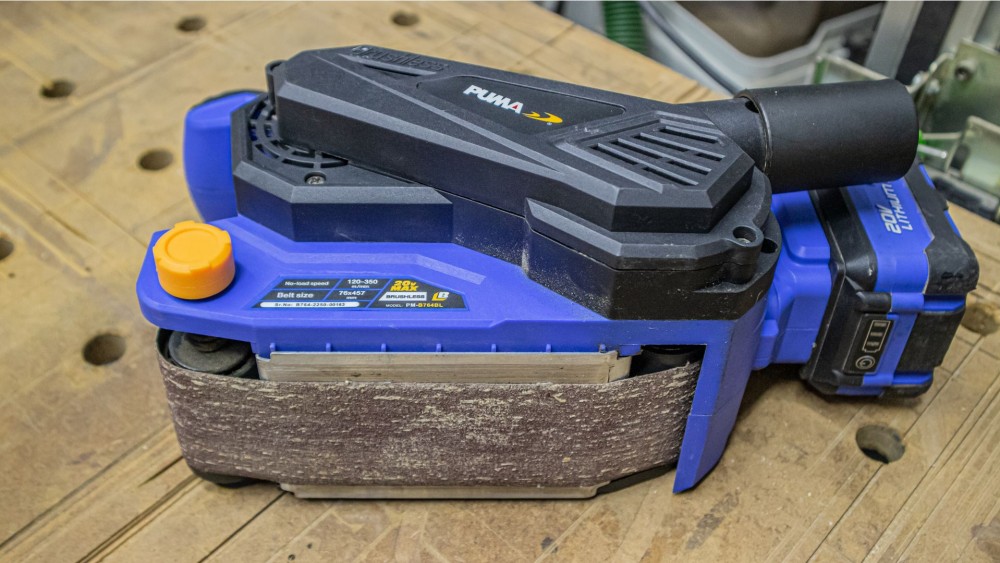
How to use a blower with each type of power tool?
Sander These require extra caution because fine dust can easily penetrate vents, baseplates, dust extraction ports, and around the motor.
Using a blower at close range with high force may push dust deeper inside. You should start by tapping out the dust from the dust bag or canister first, remove the sandpaper if necessary, and then blow along the outer surfaces and exhaust holes in an outward-clearing direction. Do not blow directly into the dust collection system or motor vents.
- Drills and hammer drills Dust tends to accumulate around the chuck, handle, switch, and ventilation slots. Blow dust off the chuck and housing first, then blow diagonally across the vents without pointing the nozzle too closely.
- Grinder Metal or masonry dust and debris often accumulate around the guard, grinding wheel, and vents. Always blow from the outside outward first, and beware of hard particles flying off.
- Circular saws or various saw types Sawdust accumulates along the blade guard, saw blade, baseplate, and underbody slots. Clear away large debris first, then use airflow to chase away the fine dust.
Using a blower together with a soft brush or dry cloth is safer
Using a blower alone may not be enough, especially for caked-on dust stuck in rubber grooves, switches, or oily surfaces. If you only blast strong air, some dust won't come off but will become airborne and easily enter various openings instead.
A preventative method is to use a soft-bristled brush or dry cloth to brush away exterior dust first, then use the blower to disperse the loosened dust. This reduces the amount of dust the airflow must move and makes directing the dust easier.
The brush should be soft, not stiff enough to scratch the tool body or push dust deeper into crevices. The cloth should be a dry or lint-free microfiber cloth. Never use a wet cloth to wipe around ventilation vents, switches, or any electrical components directly.
If it's necessary to wipe off stains, wipe only the outer surface and let it dry completely before storage. A combined cleaning method of brushing, wiping, and blowing produces better results than solely using a blower with high force.
Beware of fine dust from masonry, sanding, and metalwork
Why are blowers not suitable for fine dust? What should you do if you really need to use one? Different types of dust pose different risks. Common wood dust, though seemingly light, can easily accumulate inside power tools if it is very fine. Masonry or concrete dust is fine and tends to disperse heavily; when hit with strong air, it can spread throughout the area and blow back into the tool vents.
As for metal dust or grinding debris, it can be hard and sharp, potentially causing more damage to internal parts than normal dust. If you frequently use power tools for these jobs, you should clean them with extra caution.
Using a vacuum cleaner together with a blower—by using the vacuum to catch blown dust, vacuuming around vent openings, and then gently blowing again—reduces dust dispersion and the chance of dust entering back into the machine.
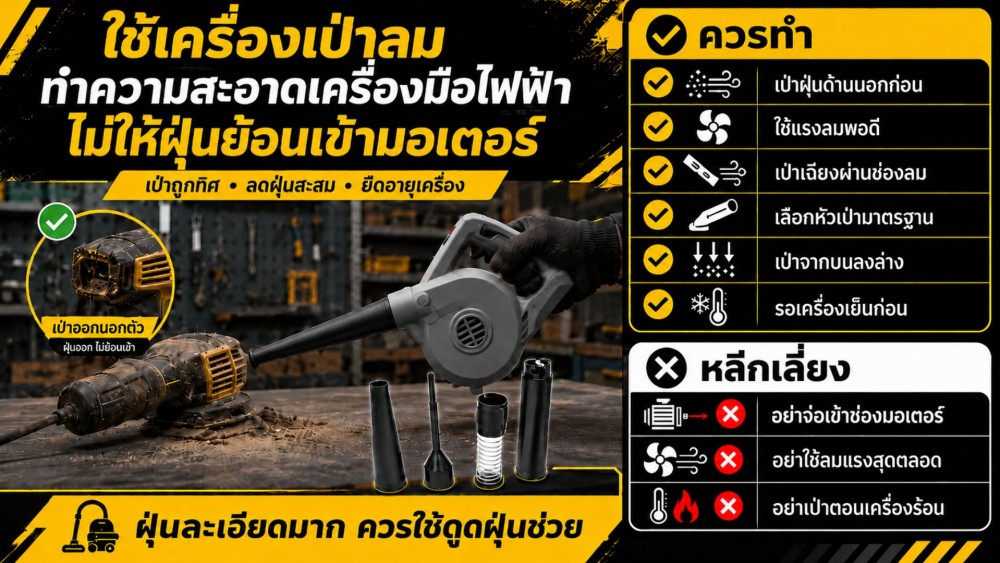
Conclusion: Proper blower use reduces dust blowback into motors
Using a blower to clean power tools is a convenient and time-saving method. However, it must be done properly, because blowing in the wrong direction, blowing with excessive force, or pointing directly into the motor vents can cause dust to blow back and accumulate inside the machine instead of being removed.
Start by blowing off external dust first, use moderate airflow, choose an appropriate nozzle, blow at an angle across the ventilation slots instead of aiming directly in, and guide the dust away in one direction. If the dust is heavy or fine, use a brush, dry cloth, or vacuum cleaner in combination to help reduce dust dispersion.
Using Blowers doing so with proper understanding is not just about cleanliness, but an essential part of correct tool maintenance.