


 EN
 ไทย


Customers Also Purchased
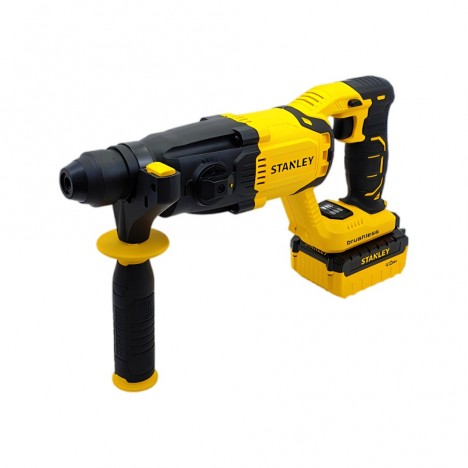
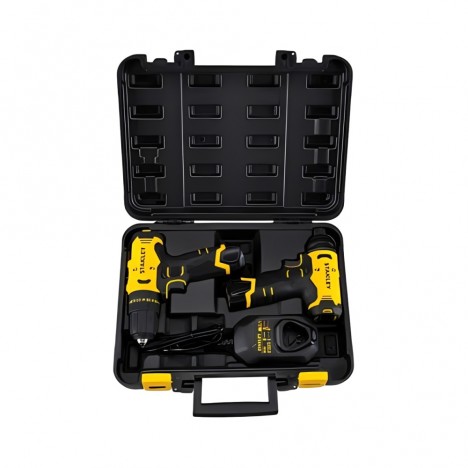
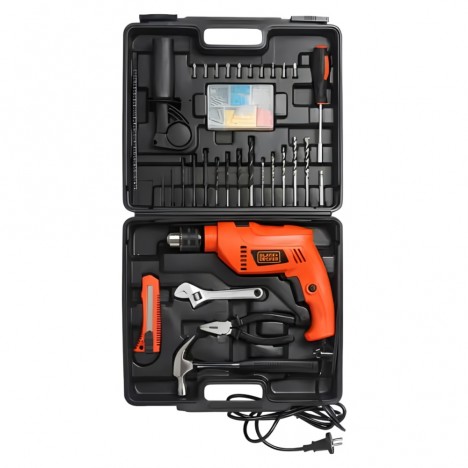


Did you know that Electric drills Some units may not break down due to a malfunction in the tool itself, but instead fail to turn on or receive power because of a minor issue like the "power cord"? Common problems include internal breaks, stiff or brittle cords, cracked insulation, or frayed cables at the base of the tool. These are frequently encountered issues across almost all types of corded power tools, carrying risks of electrical leakage, short circuits, or intermittent operation.
How powerful must a corded drill's "wattage" be to drill into your work (and drill into your heart)? Many people invest in a great electric drill, choose the right wattage for the job, and use the correct drill bits, yet once finished, tightly wrap the cord around the body and toss it into a box or pile it under other tools. Doing this, even if the tool itself is still in good condition, shortens its lifespan significantly.
Therefore, let's take a look at the proper way to store an electric drill. If you want your drill to last for years, care should start right after use through to storage. Storing tools after use is often done on autopilot—quickly coiling, stashing, and getting them out of the way—but these small habits gradually accumulate into long-term problems.
Why do electric drills "break" from power cords more often than you think?
Electric drill won't turn on: What are the causes? Summary of common issues and basic troubleshooting steps An electric drill's power cord not only supplies electricity but also continually withstands tension, bending, and friction against floors or edges of materials. On the job site, cords are dragged across the floor, exposed to dust, concrete debris, oil, sunlight, or accidentally crushed by heavy objects.
Many prioritize wattage, RPM, or torque in an electric drill, forgetting that the power cord is the vital link between electricity and the tool. If issues arise, the drill may not perform at its full potential or may become unsafe to continue using.
Common symptoms such as the drill turning on intermittently, requiring the cord to be wiggled to work, an unusually hot cord, or visible cracks in the insulation are warning signs that should never be ignored.
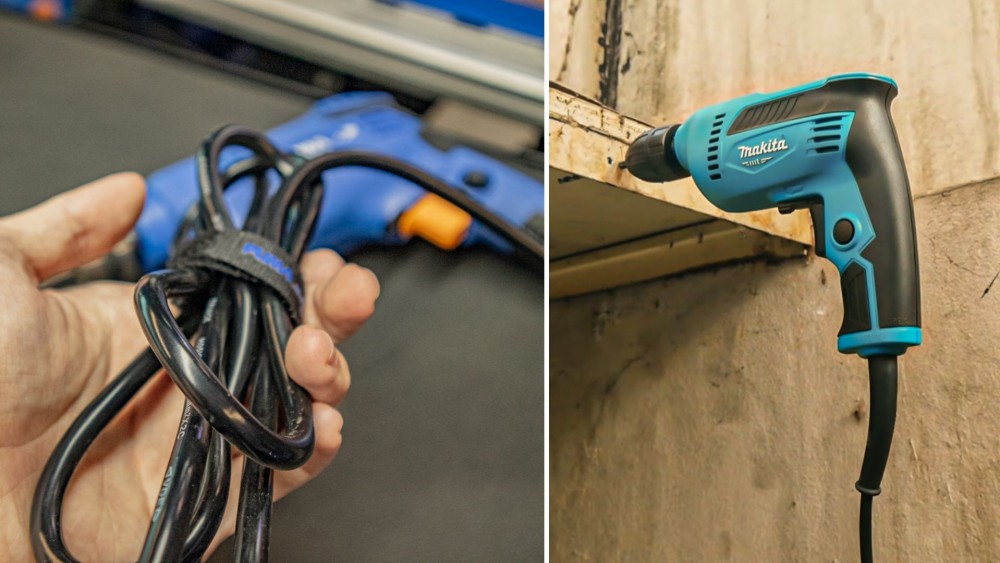
Do not store an electric drill by tightly wrapping the cord around the tool body
If you picture it, a power cord consists of multiple small copper wire strands bundled inside. While protected by outer insulation, the core remains metal with limits on how much it can bend. Especially near the base of the tool, the copper strands gradually fatigue—much like repeatedly bending a paper clip back and forth at the same spot until it finally snaps.
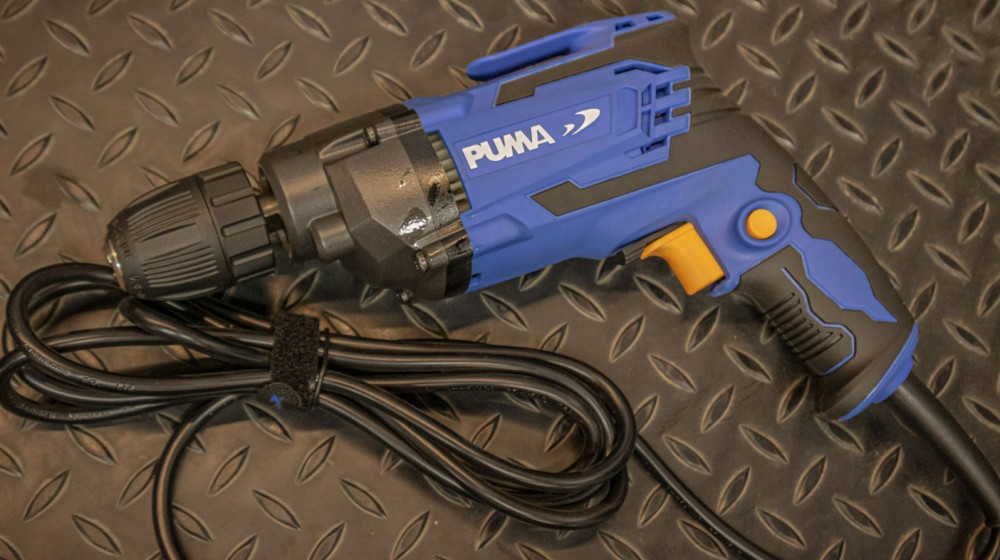
Wrapping the cord around the tool is therefore not the best method. If you truly must wrap it around the electric drill, wrap it very loosely without pulling it taut, avoid sharp bends, and allow the cord base to curve naturally. Better yet, coil the cord separately from the tool into large loops; this will preserve the cord much more effectively.
The most critical point to watch: The cord base
The base of an electric drill's cord is where the cable exits the tool, usually fitted with a rubber strain relief boot to absorb stress. However, this boot doesn't mean you can pull or bend the cord carelessly. Its purpose is to reduce bending stress, not to make the cord indefinitely resistant to sharp kinks.
When coiling the cord, allow the base section to curve freely. Do not begin coiling tightly right against the tool body, and never use the plug to hook and cinch the cord taut, as continuous tension during storage can ruin the cord base faster than you might think.
How to coil an electric drill power cord to minimize wear
A good cord-coiling method doesn't need to be complicated, but it requires shifting from "wrapping it as neatly as possible" to "coiling it with minimal stress." The key principles are coiling in wide loops, following the cord's natural lay, avoiding counter-twisting, and not pulling it tight. Once coiled, use a soft strap or hook-and-loop tie loosely instead of wrapping the cord tightly around itself.
When coiling an electric drill's cord, start by untangling and straightening it out first. Do not coil it while it's still twisted, as the cable will develop memory and easily kink, twist, or buckle in sections. Then, gently coil it into wide loops along its length. If the cord begins to twist, stop and untwist it first rather than forcing the coil.
Using a soft strap is better than tying a knot
After coiling the cord, many people tie it into a knot to keep it from unraveling. However, knotting creates localized pressure points and sharp kinks. Especially if tied tightly or pulled hard, the cord becomes compressed, deforming the insulation. Repeated over time, this can create permanent weak points in the cable.
A better way is to use Velcro strips, fabric straps, or rubber bands that aren't too tight—just enough to keep the cord from unraveling. The goal is to keep the cord neat without crushing it. Small care like this helps keep your electric drill's power cord in better condition in the long run.
Do not coil the cord while it is still hot or soiled with oil
After long, continuous use, the electric drill and its power cord may build up a bit of heat. Coiling the cord immediately while it's still hot might not damage it right away, but doing so repeatedly while the cord is pulled taut or tightly coiled can accelerate the deterioration of the insulation.
Another thing to watch out for is stains from oil, grease, paint thinner, or dirt from the job site. If the electric drill's cord gets soiled with these, wipe them off before storing, as some substances can make the cord jacket sticky, stiff, or brittle faster. Wiping with a dry cloth or a damp cloth and letting it dry before storing is a simple way to help extend the life of the power cord as well.
Where should you store an electric drill to keep the cord from becoming brittle?
Where you store your electric drill is just as important as how you coil the cord. Even if coiled properly, storing it in an extremely hot, damp, sunlit area or near chemicals will still cause the cord to degrade quickly. Cords with rubber or plastic insulation will lose their elasticity when exposed to accumulated heat over time. Once the cord stiffens, the chances of cracking or internal breakage increase significantly.
A suitable storage place for an electric drill should be dry, well-ventilated, out of direct sunlight, and away from heat sources—such as a metal toolbox left in the sun, the trunk of a car parked in the sun all day, or a corner near machinery with built-up heat.
Do not place heavy objects on the power cord
One habit that quickly ruins an electric drill's cord is tossing the tool into a box with other tools, leaving heavy objects pressing down on the cord—such as wrenches, hammers, sockets, or other power tools.
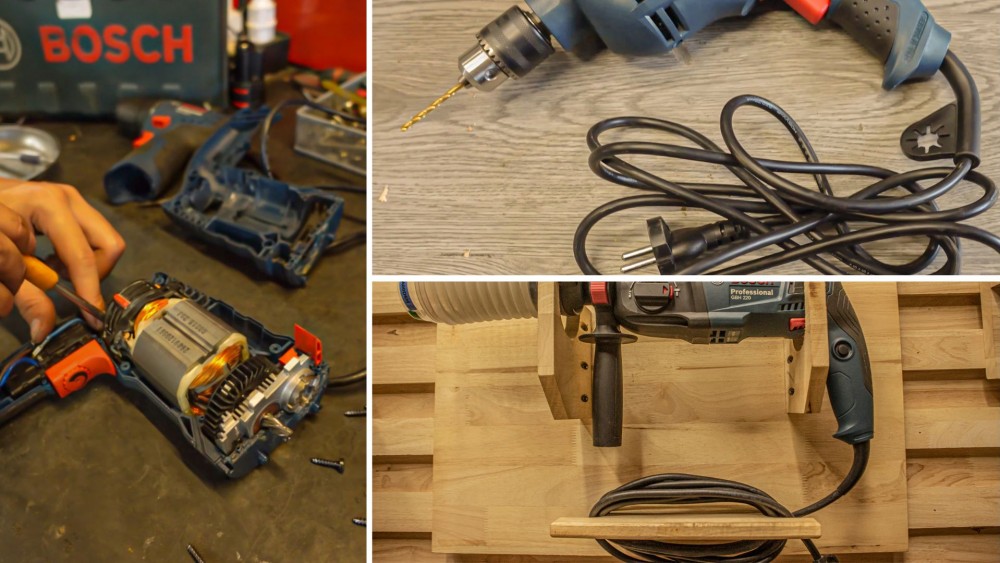
Points subjected to prolonged pressure can deform the insulation, and if that happens where the cord is already bent, it increases the risk of premature damage even further.
Avoid sunlight, moisture, and chemicals
Sunlight and heat accelerate material degradation. Moisture can cause some metal parts to rust or lead to long-term issues with plugs and electrical connections. Therefore, you should not store an electric drill in high-humidity areas, such as garage floors with standing water, musty storage rooms, or areas near walls with damp stains.
Chemicals such as paint thinner, motor oil, turpentine, or degreasers should be kept strictly separated from power tools. If they leak or evaporate onto the cord, they can accelerate jacket degradation—especially for electric drills that are not used frequently and are stored away for long periods.
What should you do after use before storing an electric drill?
Many people put their electric drill away immediately after finishing a job, thinking the work is done. But actually, post-use is a crucial time to extend the life of your power tool and cord. Spending just a few extra minutes inspecting, wiping down, and properly coiling the cord can reduce future problems, especially on jobs with cement dust, wood chips, metal shavings, or oil stains.
Always unplug the tool first after use, then gently wipe down the body and the cord. Check if the cord has abrasions, bulges, cracks, or unusual kinks. Then let the tool cool down for a bit before storing it away, especially if it was just used heavily and continuously.
Inspect the cord every time—don't wait for it to break
Inspecting your electric drill's cord doesn't take much time. Just visually check and run your hands along it from the base of the tool to the plug. Gently pinch the cord to see if any spots feel unusually stiff, swollen, spongy, or have cracked insulation. If there is any damage, stop using it and have a technician or service center inspect it; never wrap it in tape and force continued use as a permanent fix.
Clean the cord appropriately, avoiding harsh chemicals
Cleaning the power cord should be done moderately. For everyday dust, wiping with a dry cloth is enough. If there are stubborn dirt stains, wipe with a damp cloth and let it dry completely before storing. Do not use harsh chemicals, paint thinners, oils, or solvents not intended for power cords, as they can accelerate jacket degradation.
Warning signs that an electric drill is starting to have power cord issues
An electric drill with a developing cord issue often shows warning signs before failing completely, such as turning on intermittently, requiring the cord to be wiggled to work, or shutting off when the tool is tilted at certain angles. These symptoms should not be overlooked as minor issues, as they may indicate an internal wire break or a loose electrical connection.
If you notice any abnormalities, stop using the electric drill immediately. Do not force it to finish the job, as it directly involves your safety, such as:
- The power cord is abnormally hot or feels warmer than usual to the touch
- A burning smell around the cord, the tool body, or the plug
- A blackened plug, signs of melting, or burn marks
- Cracked, stiff, or brittle cord insulation, or exposed inner layers
- The tool intermittently cuts out when moving the cord or plug
If not used frequently, store the electric drill in a box or bag that helps protect against dust, but ensure it is not damp. When it's time to use it, inspect the cord, plug, and tool body before plugging it in.
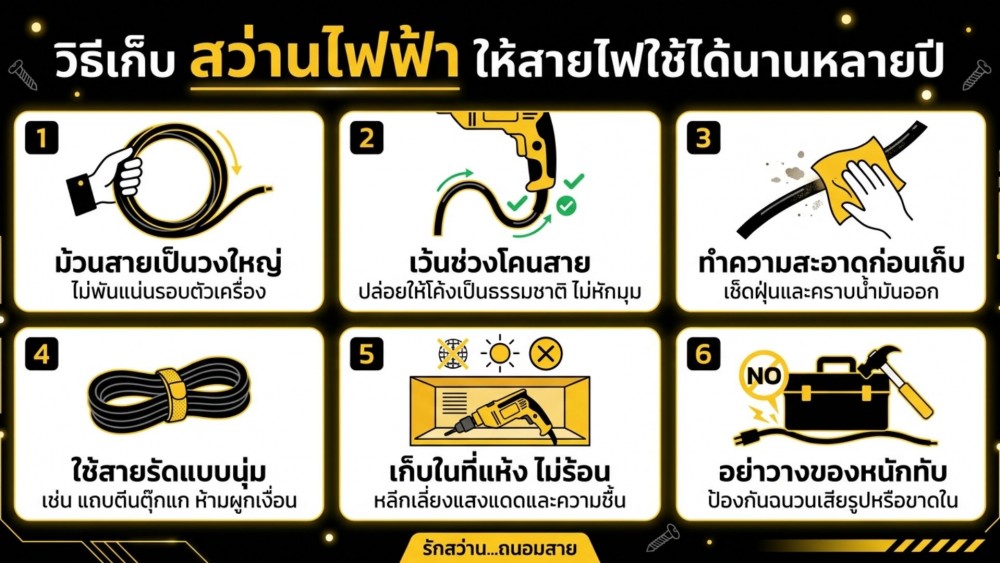
Electric drills last longer with proper storage
Extending the lifespan of an electric drill doesn't just depend on using it correctly for the right type of work, but also includes "storage after use." Cords can deteriorate from tight coiling, heat, sun exposure, or heavy objects pressing on them. Storing the electric drill in a dry, ventilated area, avoiding sharp bends in the cord, and periodically inspecting it will keep the tool ready for use and reduce the chances of internal wire breakage or premature brittleness.
Key points to remember are few, but they make a big difference in the long run, including:
- Coil the electric drill's power cord into large loops; do not fold or wrap it tightly around the tool body
- Leave slack at the base of the cord to allow a natural curve without tension or sharp bends
- Store in a dry place, away from sunlight, extreme heat, and chemicals
- Periodically inspect the cord and plug, especially before using after long periods of storage
- If the cord is cracked, internally broken, or the tool runs intermittently, stop using it and have a technician inspect it
Ultimately, Electric drills It will last longer if you coil the cord gently, store it properly, and check it regularly before use