


 EN
 ไทย


Customers Also Purchased
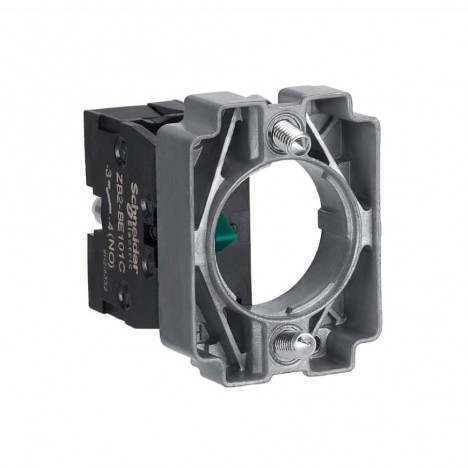
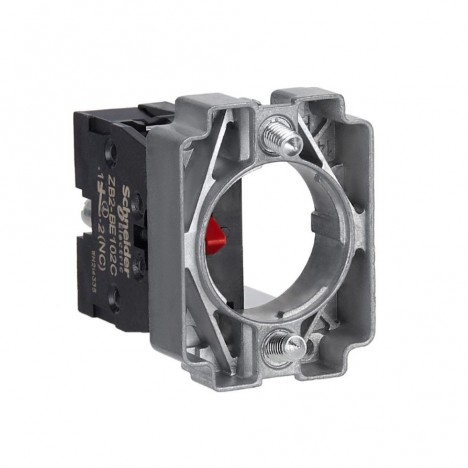
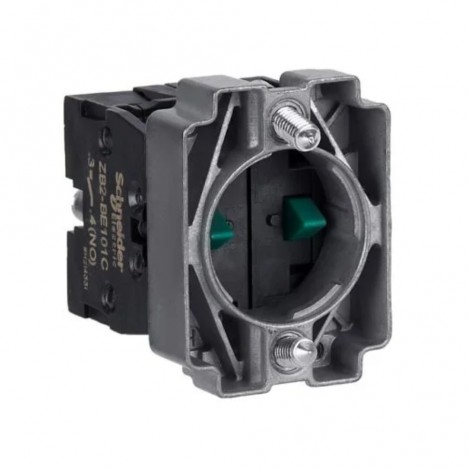
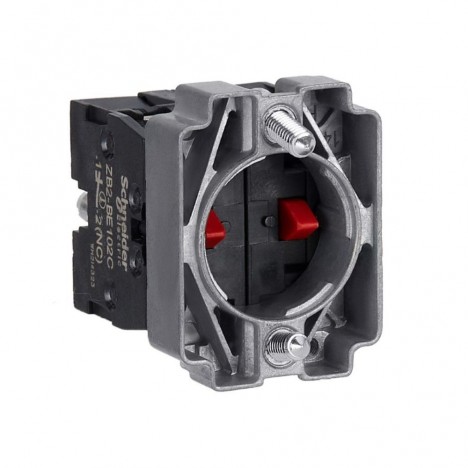
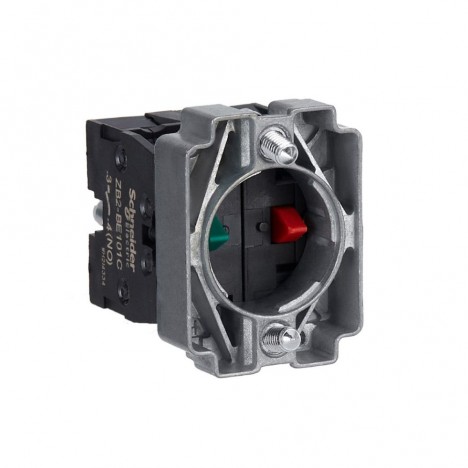
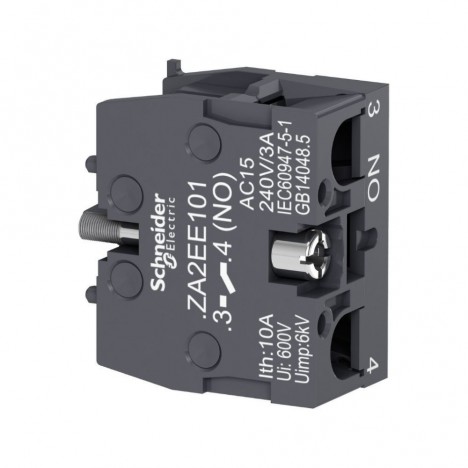
In electrical and control systems, there is a device that many people see and use frequently, but sometimes don't know what to call it. That is the "push button switches" or Push Button Switch is a simple device that uses a press as a command to operate, such as pressing to start, stop, call, reset, or send signals to other equipment. Although it looks like just a small button, in reality, push button switches are an essential part of many types of electrical systems, ranging from general household applications like doorbells and door release buttons to control cabinets, machinery, motor control systems, and industrial applications requiring precise operation.
A common issue is that many people choose push button switches based solely on appearance, color, or button size without considering the contact operating principles, such as NO, NC, Momentary, or Latching. Once installed, problems arise: pressing does not trigger an action, buttons stay locked incorrectly, machines run in reverse, or control systems fail to operate as designed. Therefore, to choose the right push button switch, you shouldn't just know that "it's a push button"; you must understand how it operates, which circuit it is used with, and what environment it is suitable for.
This article will introduce you to push button switches in an easy-to-understand manner, covering definitions, operating types, NO/NC contacts, button colors, and selection for household and system applications to help you choose properly, safely, and reduce the risk of buying the wrong model or misapplying it.

What is a Push Button Switch?
A push button switch is an electrical device that uses "pressing" to change the state of an electrical circuit. When a user presses the button, an internal mechanism connects or disconnects the electrical contacts, opening or closing the circuit according to its design. A simple example is a doorbell: when you press the button, the internal contacts close the circuit, sounding the chime. When released, the button springs back, breaking the circuit, and the chime stops.
In practical applications, push button switches do not always supply power directly to the load. Some applications only use them as signaling devices to control circuits, such as sending a command to trigger a relay, activating a magnetic contactor to start a motor, or sending an input signal to a PLC in automated systems. Push button switches are therefore found in both basic electrical setups and more complex control systems.
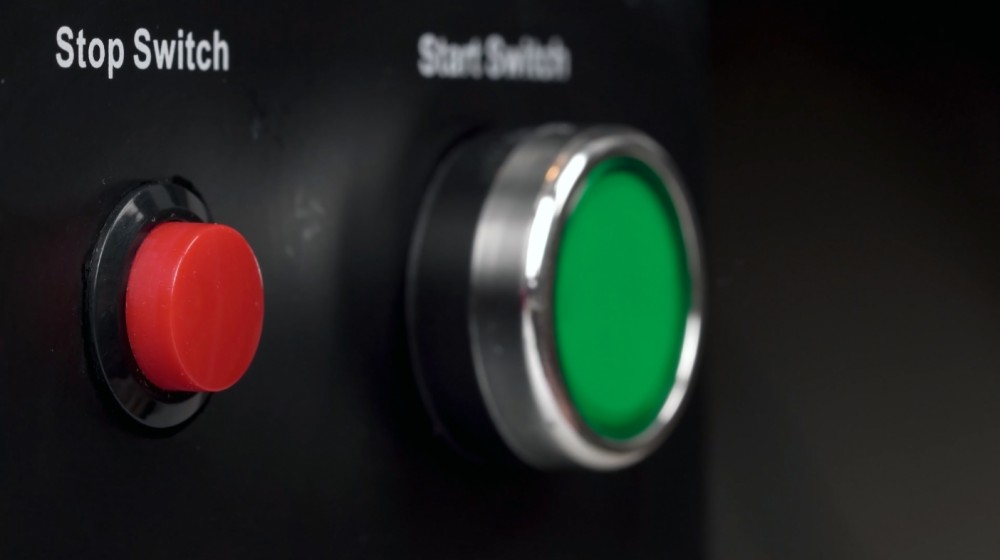
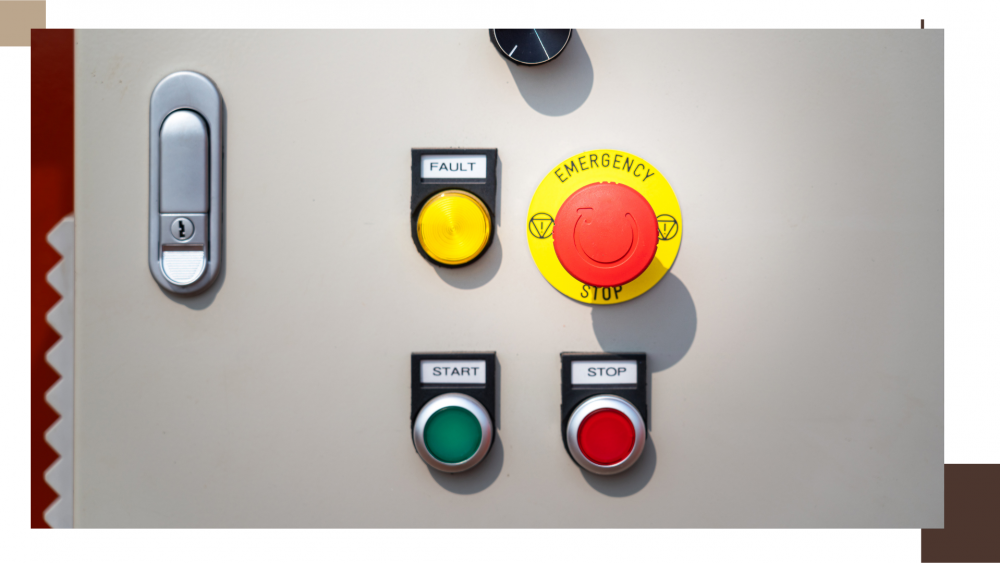
Key highlights of push button switches include ease of use, distinct actuation, fast response, and clear function separation—for example, green for start, red for stop, yellow for reset, or mushroom-head buttons for emergency stops. Proper design allows users to easily understand the system, minimizing confusion and enhancing safety on-site.
How does a Push Button Switch differ from a standard light switch?
Many people wonder: if both function to open and close circuits, how does a push button switch differ from a standard light switch? The answer lies in the "operating nature" and "behavior after pressing."
Standard light switches typically maintain their state (staying on or off). For example, turning on a bedroom light keeps it on until pressed again to turn it off, which is suitable for lighting control or devices requiring continuous operation. On the other hand, push button switches are often designed for momentary or sequential commands, such as operating only while pressed or sending an impulse command for other systems to execute.
Simply put, standard light switches are ideal for "turn on/turn off" control, while push button switches are suited for "commanding an action"—such as start, stop, call, reset, or confirm. This is why control cabinets, machinery, and automation systems predominantly use push button switches over standard residential light switches.
What types of Push Button Switches are there?
Push button switches can be categorized in several ways, including operating behavior, shape, color, material, ingress protection (IP) rating, and contact type. However, for buyers and practical users, starting with operating behavior is best, as it is the most common point of confusion.
1. Momentary Push Button Switch
A momentary push button switch operates only while pressure is applied. Once released, the button immediately returns to its original position. The clearest example is a doorbell button: press and it rings, release and it stops; or a start button on some control cabinets pressed briefly to trigger a start sequence without needing to remain depressed.
The advantage of a momentary switch is that it eliminates unintended sustained operation, making it ideal for temporary commands such as calling, starting, resetting, or sending signals to downstream systems. This type of button is widely used in homes, buildings, factories, and automated systems.
Examples of applications suitable for Momentary Push Buttons include doorbells, elevator call buttons, service call buttons, automatic door push buttons, machine start buttons, alarm reset buttons, and command input buttons in various control circuits.
2. Latching Push Button Switch
A latching push button switch changes its state on the first press and stays there; pressing it again reverts it to its original state. In simple terms: press once to turn ON, press again to turn OFF—similar to a standard light switch, but with the form factor and tactile feel of a push button.
This type of switch is suitable for applications requiring a maintained state, such as dedicated spot lighting, fans, specific equipment, or as a control button that needs continuous operation without holding it down. The benefits are ease of use without constant pressing, making it ideal for systems where users need a clear visual indication of whether the power is ON or OFF.
However, before choosing a latching type, you must make sure that the application genuinely requires a retained state. Using it for tasks that should be momentary commands—such as a doorbell or machine startup commands in certain systems—may cause the system to remain stuck on, failing its intended purpose.
3. Illuminated Push Button
An illuminated push button is a push button with a built-in status light, such as an LED or small indicator lamp inside the button. Its main advantage is that it instantly lets users know whether the system is running, whether the button has been activated, or if a particular status has occurred.
Illuminated push buttons are commonly used in control panels, machinery, control boards, building systems, or areas where clear status visibility is needed—such as lighting up when the system is ready, when equipment is operating, or as a warning indicator under certain conditions. The benefit is reducing confusion, especially in systems with multiple buttons or multiple operators.
When selecting an illuminated push button, you must ensure the indicator light voltage matches your circuit, such as 12V, 24V, 110V, or 220V according to your system design. You should not choose based on color or appearance alone; incorrect voltage can prevent the light from working or damage the component.
4. Mushroom Head Push Button or Emergency Push Button
A mushroom head push button is a large button, typically red with a convex head, designed for high visibility and quick pressing. It is widely used for Emergency Stop functions in machinery and control systems requiring immediate shutdown in the event of an abnormality.
A key feature of the mushroom head button is its easy-to-press design, even in urgent situations. Some models lock down when pressed and require twisting or pulling to reset, rather than springing back immediately. They are suitable for high-safety applications such as machinery, conveyor belts, motor systems, or equipment that could cause hazards if not stopped in time.
Keep in mind that mushroom head buttons should not be used indiscriminately as general switches, as their primary purpose is safety. Installation must be properly integrated with the control circuit and carried out by professionals for machinery or critical systems.
5. Waterproof and Dustproof Push Buttons
Certain push buttons are designed for environments with dust, moisture, water splashes, or outdoor use, such as entry gate buttons, outdoor doorbells, parking lot controls, or factory areas with harsher-than-normal conditions. These models typically feature rubber seals, tightly enclosed enclosures, or specific IP ratings as specified by the manufacturer.
If you plan to use a push button in wet, humid, or heavily dusty areas, you should not use standard indoor-rated models. Otherwise, you may encounter contact degradation, moisture ingress, sticky buttons, or circuit malfunctions. Choosing a switch suited to the environment is just as crucial as selecting the right operating mechanism.
What are NO and NC? Why You Must Know Before Buying a Push Button Switch
One of the most critical aspects of choosing a push button switch is the contact configuration, commonly labeled as NO and NC. While these two terms might sound technical, they are actually easy to understand—and misunderstanding them makes it very easy to buy the wrong switch.
NO stands for Normally Open, meaning the circuit is normally open or disconnected. When the button is pressed, the contacts close, allowing the equipment to operate. For example, with a standard doorbell, the chime is normally silent; pressing the button closes the circuit and rings the chime.
NC stands for Normally Closed, meaning the circuit is normally closed or connected. When the button is pressed, the contacts open to break the circuit. This is used in applications where pressing the button stops or cuts power, such as certain machine shutdown circuits or safety systems.
To explain it in the simplest way to remember:
- NO = Normally inactive; activates when pressed
- NC = Normally active; stops or breaks the circuit when pressed
Choosing between NO or NC must be based on the circuit design, not simply on the button's color. For example, a Start button typically uses NO contacts because pressing it is meant to start the operation, whereas a Stop button in many control systems often uses NC contacts so the control loop remains energized until pressed to cut the circuit.
Do push button switch colors have meanings?
In general applications, button colors may be chosen for aesthetics or to match the control panel. However, in system work, the colors of push button switches usually have specific meanings to help operators quickly understand each button's function, especially in control panels, machinery, or systems where multiple buttons are located close together.
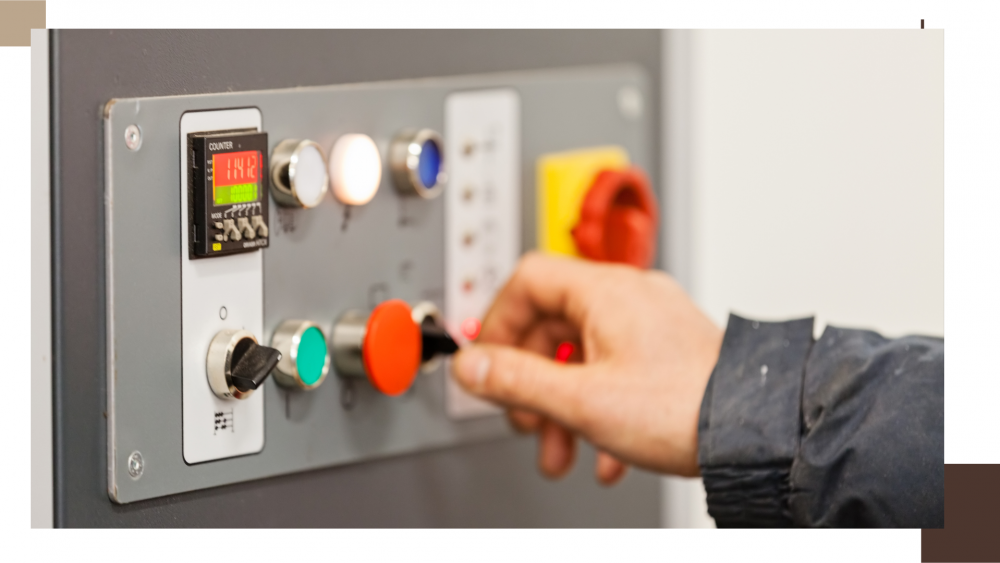
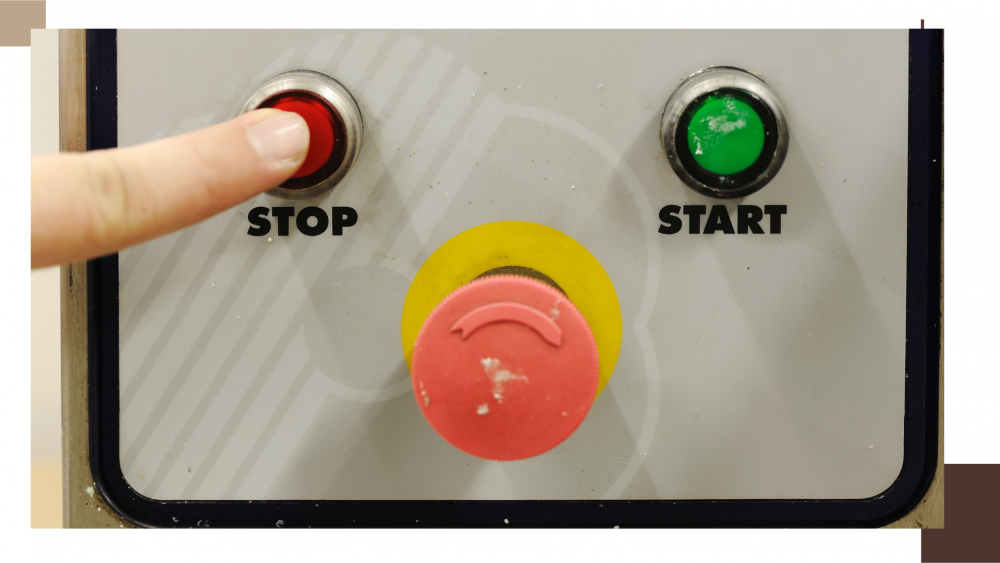
Generally, green buttons are typically used for start or turn-on commands, red buttons for stop or emergency stop, yellow or orange buttons for warnings, resets, or specific commands, and white or black buttons for general commands. While color coding is not a fixed rule for every application, aligning colors with functions greatly helps reduce confusion and enhances safety.
For residential applications, such as doorbells or door release buttons, color might not be as critical as in industrial applications. However, for control panels or machinery, button colors should be designed to be intuitive—for example, start buttons should be clearly distinguished from stop buttons, and emergency buttons should be prominent and not blend in with others.
What applications can push button switches be used for?
Push button switches are extremely versatile devices because their fundamental principle is sending commands by being pressed. As a result, they can be found in homes, buildings, commercial shops, factories, and various types of electrical systems.
In residential applications, push button switches are commonly used for doorbells, electric door release buttons, internal intercom/call buttons, or certain smart home systems that require a momentary push button for specific triggers. Their key advantage is ease of use—anyone immediately understands that pressing the button activates the system.
In buildings and commercial shops, push button switches can be used for staff call buttons, automatic door push buttons, magnetic door release buttons, elevator call buttons, or localized lighting controls. These applications often require durability and tactile feedback due to the high volume of daily users.
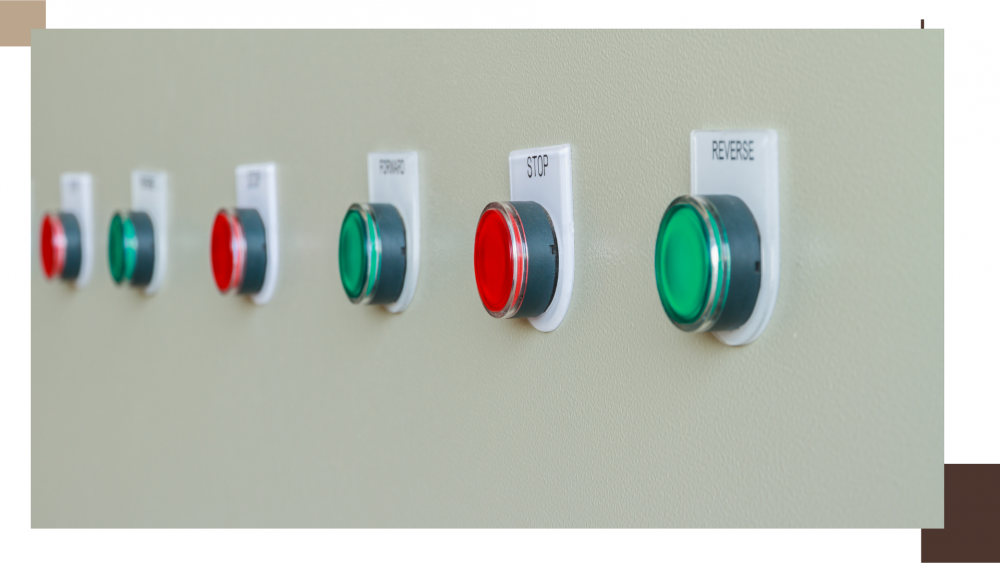
In industrial applications, push button switches are crucial components in control panels and machinery. They are used to command Start, Stop, Reset, Jog, Forward, Reverse, or other control functions, working in conjunction with relays, magnetic contactors, inverters, PLCs, or other automated control systems.
Common application examples include:
- Doorbells
- Door release buttons
- Staff call buttons
- Zone-specific lighting control buttons
- Machine Start / Stop buttons
- Alarm reset buttons
- Emergency stop buttons
- Control panel buttons
- Automation system command buttons
- Motor or water pump control buttons in certain systems
How to Choose the Right Push Button Switch for the Job
Choosing the right push button switch should not start with the question “Which model is the cheapest?”, but rather “What do we want this button to do?”. Different applications require different button behaviors: some need momentary action (spring-return), some require latching, some need indicator lights, and others demand resistance to dust, water, or frequent pressing.
Things to check before buying include:
- Do you need Momentary or Latching?
- Do you need NO, NC, or both contact types?
- What voltage and current ratings are required?
- Will it be used indoors, outdoors, or in a factory?
- Do you need an illuminated button with a status indicator?
- What button size and panel mounting type are required?
- Do you prefer plastic or metal material?
- Is a specific waterproof or dustproof rating required?
- Is it for general applications or safety-critical functions?
For general domestic applications, such as a doorbell or door release button, a momentary push button switch matching the system voltage is often sufficient. However, for control panels, machinery, or motor control systems, choose components meeting appropriate industry standards, and installation should be handled by an electrician or specialist.
Are illuminated push button switches good?
Illuminated push button switches are ideal for applications where users need clear visual feedback on system status—such as an illuminated light showing the machine is running, the system is ready, or simply to make the button visible in the dark. However, not every application requires an illuminated button; some are only meant for momentary signaling, like a doorbell or staff call button, where a standard button is sufficient.
The advantage of illuminated buttons is making the control panel easier to understand, especially on control cabinets with numerous buttons. The caution lies in matching the internal lamp or LED voltage to your system; for example, if the control system runs on 24V but you select a 220V illuminated button, the light may not turn on or operate correctly. Always check the specifications before purchasing.
Related Articles
- What are NO and NC in push button switches? Why do they matter in electrical work?
- Everything you need to know about push button switches, plus how to select them safely
Push button switches may be small, but never choose them carelessly
push button switches Although seemingly simple electrical components, they have a massive impact on system operation because they serve as direct user interfaces—whether for a doorbell, door release button, light control, machinery Start/Stop button, or an emergency stop on a control panel. Choosing the right type ensures the system operates as intended, remains user-friendly, and enhances safety. Selecting the wrong switch, on the other hand, can cause circuits to operate in reverse, stick continuously, or fail to respond properly.
Before choosing a push button switch, you should thoroughly review the operation type (Momentary or Latching), contact type (NO or NC), rated voltage and current, operating environment, materials, durability, and whether an indicator light is necessary. Especially for critical applications such as control panels, machinery, or key electrical systems, an electrician or specialist should assist with selection and installation to ensure proper operation and long-term safety.
Ultimately, a push button switch is not just a "button to press," but a command control device that helps electrical and machinery systems run in an organized manner. Understanding the fundamentals of push button switches will help you make accurate purchases, reduce rework, and get more value out of your investment.