


 EN
 ไทย


Customers Also Purchased
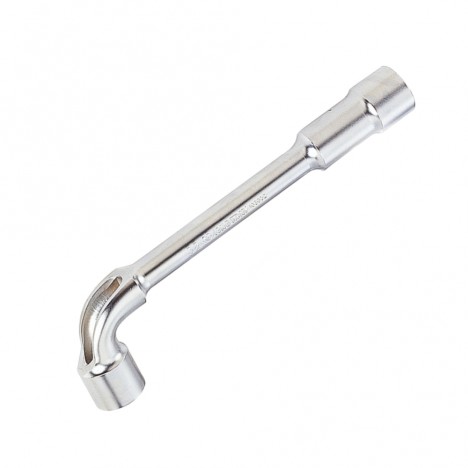
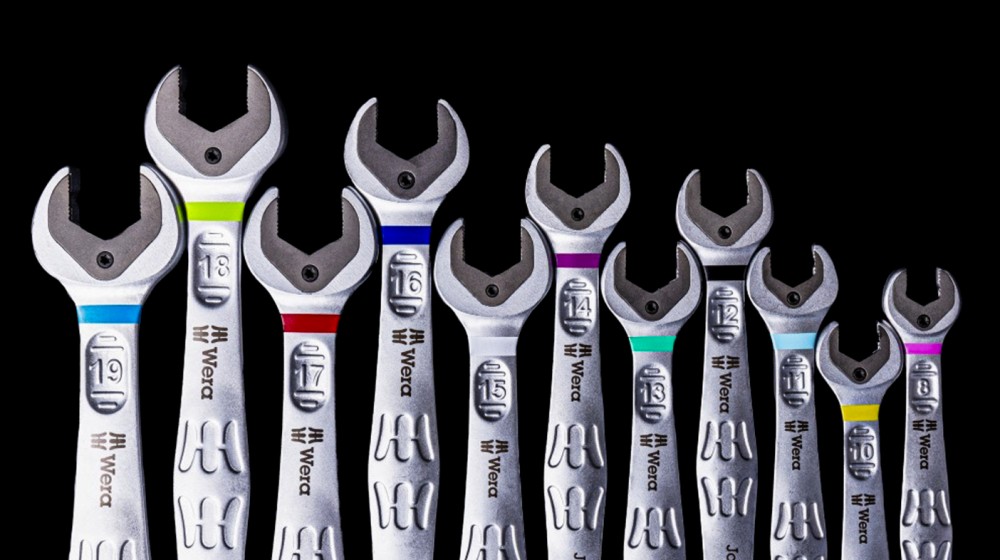
When talking about wrenches, they seem like basic tools that are easy to use—just grab one and tighten away. But in real-world use, many people often confuse wrench sizes with bolt thread sizes. Many beginners mistakenly think that an M8 bolt requires an 8 mm wrench or an M10 thread needs a 10 mm wrench, which is completely incorrect! Forcing the wrong wrench size not only fails to turn the bolt, but also risks stripping the bolt head, causing the wrench to slip, and easily leading to accidents.
In this article, we'll break it down into easy-to-understand terms: Wrenches Where are sizes 8, 10, 12, and 14 measured from? Which wrench size pairs with various M-threaded bolts? Plus handy tricks to accurately match bolt and wrench sizes without having to memorize them.
What is wrench size? What do the numbers on a wrench tell us?
Decoding the numbers on a wrench—a common beginner mistake! Before memorizing which bolt needs which wrench, the first rule to remember is: the number on the wrench = jaw opening size, NOT the bolt thread size. To visualize it simply: if you pick up a 10 mm wrench, it means the span between the wrench jaws is 10 mm wide, designed to fit a bolt head with an exact width of 10 mm across flats.
The classic pitfall that trips many people up: seeing a thread specification labeled M10 makes many instinctively grab a 10 mm wrench, which is a huge mistake! The letter "M" indicates the diameter of the threaded shank, not the size of the bolt head.
In reality, an M10 bolt has a head much larger than its threaded shank, and according to international standards, an M10 bolt typically requires a 17 mm wrench to turn, not a 10 mm wrench as many people assume.
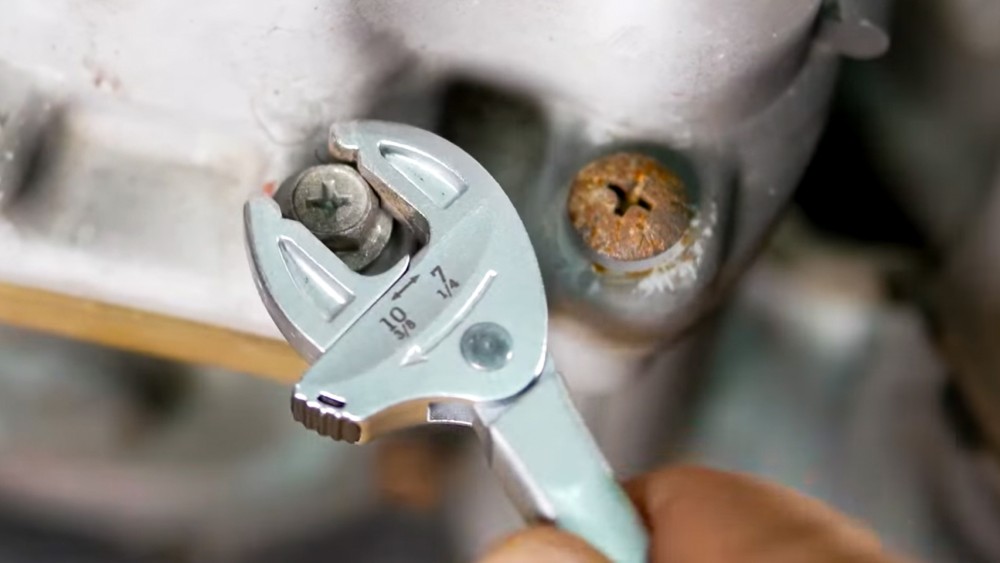
Wrench size and thread size are not the same thing
A classic beginner misconception is thinking an M8 bolt requires an 8 mm wrench. In reality, the letter "M" (such as M6, M8, M10) designates the outer diameter of the threaded shank, not the width of the bolt head.
For example, an M6 bolt has a 6 mm threaded shank, but the bolt head that the wrench grips is 10 mm wide. Therefore, you must use a "10 mm wrench," not a 6 mm one.
This distinction is crucial when shopping for spare parts. Hardware stores specify bolt sizes as M6, M8, etc., but when picking up a wrench to work, you must select one that fits the bolt head itself. For a clearer picture, check out the standard sizing reference guide below for the most common pairs.
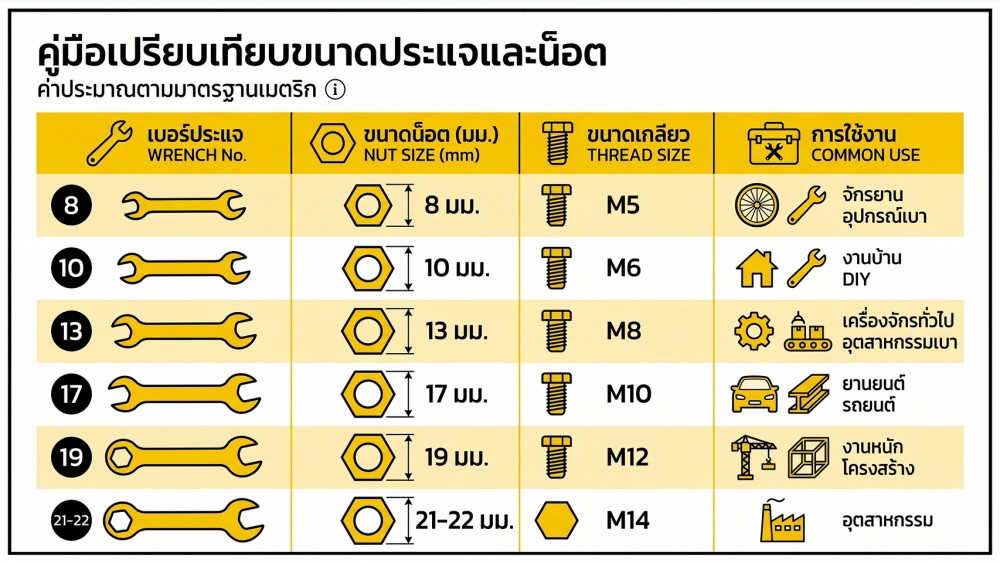
Size Matching Table: Which wrench size should you use for these bolt threads?
- M6 bolt: use a 10 mm wrench
- M8 bolt: use a 13 mm or 14 mm wrench (depending on manufacturer standard)
- M10 bolt uses a 17 mm wrench
- M12 bolt uses a 19 mm wrench
To sum up simply: 8, 10, 12, and 14 mm wrenches are not meant to pair directly with M8, M10, M12, and M14 threads. Always choose a wrench based on the "actual bolt head size"!
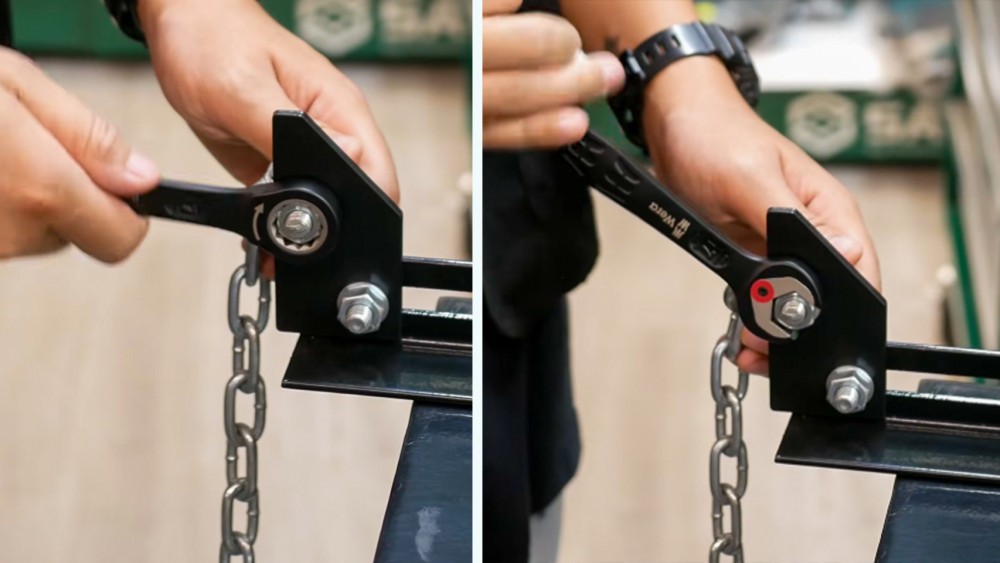
Quick Wrench Selection Guide: What are sizes 8, 10, 12, and 14 mm made for?
Size 8 Wrench: Small but Mighty (commonly found on M5 threads)
- Suitable for: Light and delicate tasks such as assembling small furniture, electrical appliances, bicycles, or certain motorcycle parts
- Caution: Because the bolt head is small, if the wrench is too loose or you apply excessive sudden force, the bolt head can easily strip and round off.
Size 10 Wrench: The Household Essential (commonly found on M6 threads)
- Suitable for: DIY tasks, furniture, motorcycles, and small machinery. It's a popular "must-have" size for every toolbox.
- Caution: Be careful not to confuse it with imperial bolt heads (such as 3/8 inch). If a 10 mm wrench feels slightly loose, never force it to turn—that is where stripped bolt heads begin.
Size 12 Wrench: The Tricky Size (commonly found on M7 threads or certain M8 standards)
- Suitable for: Motorcycle work (especially Japanese brands), steel frames, and medium-sized machinery
- Caution: To reiterate, size 12 is not used for M12 threads (standard M12 bolts typically use a 19 mm wrench). Also, some M8 threads may use a size 12, 13, or 14 wrench depending on the manufacturer's design. Therefore, always test-fit against the actual bolt head.
Size 14 Wrench: A Favorite for Vehicles and Steel Structures (commonly found on M8 threads)
- Suitable for: Automotive work, motorcycles, steel structures, and fasteners requiring high torque and secure fastening compared to smaller sizes
- Caution: Often confused with size 13, especially when bolts are old or rusted. If a size 14 feels abnormally loose, try fitting a size 13 first to prevent rounding off the edges.
Which wrench sizes should you have at home?
If you're not a professional mechanic but want wrenches for general household repairs, we recommend getting a set rather than buying individual pieces. In actual practice, you rarely use just one size, as bolts on household items or appliances come in various mixed sizes.
A solid basic set should include at least sizes 8, 10, 12, 13, 14, 17, and 19 mm, as these cover small to medium jobs quite well. For automotive, machinery, or steel frame projects, you might also add sizes 21, 22, and 24 mm, or use a socket set.
If you can only pick a few sizes, where should you start?
For general household tasks, sizes 10 and 14 are used very frequently, while size 8 is suitable for small jobs, and size 12 covers certain bolts that sizes 10 and 14 don't fit. Having these 4 sizes on hand will help solve quite a few minor tasks.
However, for serious use, we don't recommend buying only sizes 8, 10, 12, and 14 and calling it a day. When encountering an M10 or M12 bolt, you might additionally need size 17 or 19. Therefore, purchasing a set of 8-19 mm or 6-22 mm offers far more flexibility in the long run.
More Related Articles
- 7 Wrench Misconceptions That Unknowingly Ruin Your Bolts!- Heavy-Duty Wrenches: How to Choose One That Won't Break Easily?
Buying a Wrench: What to Look for Besides the Size?
When buying a wrench, many people focus solely on the size and forget about quality. Did you know that substandard wrenches whose jaws splay easily are the main cause of stripped bolt heads—and can lead to injuries when the wrench slips off under heavy torque? Before buying your next wrench, consider these 3 checklist items.
- The material must be truly tough. Good hand tools should be made from Chrome Vanadium (Cr-V) or Chrome Molybdenum (Cr-Mo) steel because they withstand high torque. However, beware: the label "Cr-V" on cheap tools often involves substandard heat treatment, leaving the steel soft so the wrench jaws still splay under heavy prying force. Choosing a reliable brand is crucial.
- The wrench jaws must fit precisely. Professional-grade wrenches are accurately forged (Fit & Finish); when placed over a bolt head, they must fit snugly with zero play. The surface finish should be smooth without sharp edges that cut into hands. Most importantly, box wrenches must be designed to grip the "flat sides" of the bolt rather than digging into the corners, which rounds the bolt head.
- Handle length saves effort and wrists. Choosing the right wrench length directly impacts your ergonomics. A long-handle wrench increases leverage and reduces tightening effort, preventing strain and reducing wrist fatigue on stubborn bolts. A short-handle wrench, on the other hand, provides optimal maneuverability in blind spots or tight spaces.
Conclusion
The most important takeaway to remember is: Wrench Size = Width Across Flats of the Bolt Head (measured across the flat sides, in millimeters). So you can completely forget the misconception that an M10 thread requires a size 10 wrench!
Quick Reference: 4 Popular Sizes for Every Toolbox
- Size 8: Light-duty, delicate tasks, assembling small components
- Size 10: The household staple! Most common in DIY projects and general appliances
- Size 12: Specialized applications, such as motorcycles and certain machinery
- Size 14: The mechanic's favorite; handles steelwork, assembly, and vehicle repairs with ease
Select Wrench here