


 EN
 ไทย


Customers Also Purchased
Has this ever happened to you?... You were simply tightening a bolt on an ordinary, light task, using Wrenches your trusty go-to wrench, but the moment you applied force, "the bolt head started to round off," the edges chipped, and the wrench began slipping as if it couldn't grip anything. Instead of getting it tightly secured, you ended up staring at it, thinking, "What am I supposed to do now?!" This happens more often than we care to admit! From auto repairs and machine installations to assembling furniture and simple home DIYs that look easy, a single misstep… and your bolt is ruined!
The truth is, stripped bolts aren't always caused by cheap bolts, nor do wrenches need to be super expensive to be good. Most of the time, it stems from minor misconceptions that we repeat out of habit, with the consequences creeping up so slowly that we hardly notice. That is why, in this article, we have compiled an easy, engaging read covering 7 wrench misconceptions that ruin bolts without you realizing it, along with practical solutions you can actually use.
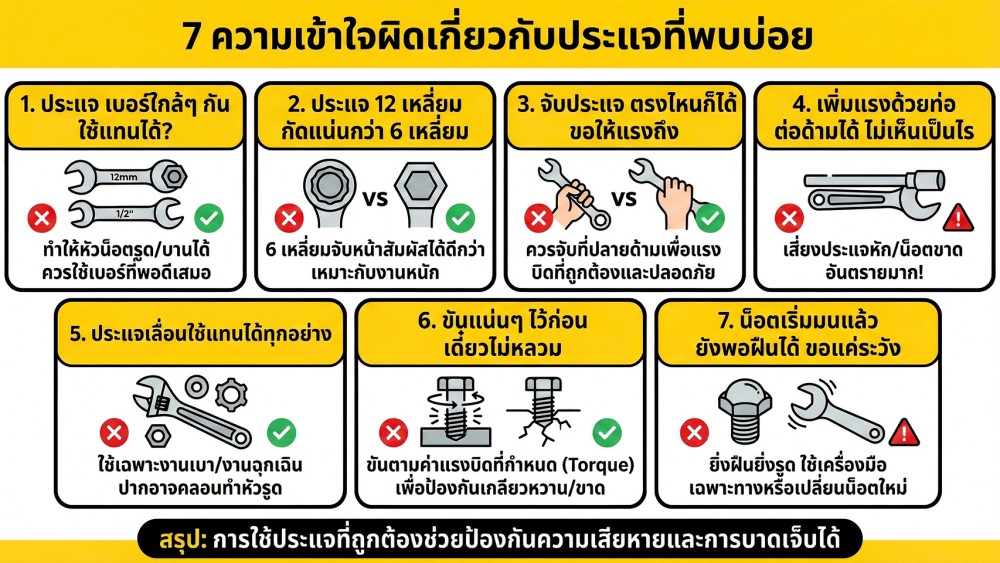
Misconception #1: Can wrenches of similar sizes be used interchangeably?
This is definitely number 1, and the most classic cause of "stripped bolt heads". Many people think that "close enough" is fine—like using a 3/8" wrench for a 10 mm bolt, or a 9/16" wrench for a 14 mm bolt. We'd say it might fit somewhat... but the problem is that it doesn't fit properly. This slight looseness is exactly what concentrates the torque on the corners rather than the flat contact surfaces. Then, once you apply real force, it gradually begins to round off the bolt head.
When a bolt is tight or slightly rusted, a wrench that has even the slightest slack will slip right at the peak of your effort. You end up with a chipped bolt head AND the wrench smashing into your fingers—a double whammy.
Solution
- Keep Metric (mm) and SAE (inch) sets clearly separated; do not mix them together in one box to avoid grabbing the wrong one.
- If you are in a pinch, use a "6-point socket" or the tightest-fitting wrench you can find; never force a loose fit.
- If there is even a slight "wobble" once seated, don't fool yourself—swap it out.
Misconception #2: 12-point wrenches grip tighter than 6-point wrenches
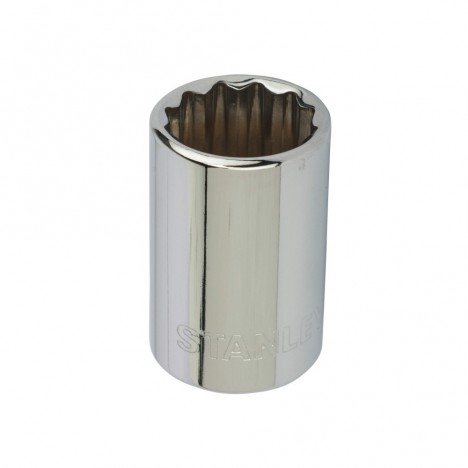
Many prefer 12-point box-end wrenches or sockets because they slip on easily, offer more engaging angles without precise lining up, and work great in tight spaces. That is completely understandable—they are very convenient. But when high torque is needed, or the bolt head is old, worn, or rusted... a 12-point is far more likely to strip the bolt head than a 6-point because it contacts the corners more. Put simply: a 6-point contacts more of the flat surfaces and distributes force evenly, while a 12-point contacts more at the corners—convenient, but risky for slipping when tight.
A bolt that was stripped and rounded by a 12-point socket will only be partly salvageable later even if you switch to a 6-point, because “the damage has already begun.”
Principles for choosing 6-point vs. 12-point sockets
- Tight/rusted bolts: Only use 6-point sockets for full-contact grip without slipping.
- General/confined space work: 12-point sockets can be used for speed and convenience.
- Bolt head starting to wear: Strictly avoid 12-point sockets; switch back to a 6-point immediately.
Misconception #3: Gripping a wrench anywhere is fine, as long as you apply enough force.
A small mistake that ruins bolt heads unknowingly: Many people do this out of habit or tight spaces—choking up on the wrench handle, gripping it at an angle/out of alignment, or applying leverage in the wrong direction. The consequences: when you grip the wrench shorter, you must exert much more force to achieve the same torque. When massive force combines with an off-axis angle, the wrench jaws will spread slightly—and this is where it begins to chew up the corners of the bolt head, just like using the wrong wrench size.
Solution
- Grip the wrench as close to the end of the handle as possible.
- Apply force at a 90-degree angle to the bolt, not diagonally. If space is too tight to grip properly, switch to a different tool, such as an offset box wrench, ratcheting wrench, or a socket with a drive handle.
Misconception #4: Cheater pipes/extending the handle with a pipe is fine and harmless.
This is many people's go-to trick: extending the handle with a pipe to increase leverage. It really does help loosen stuck bolts, but the misconception is thinking it's always safe and acceptable. There are 2 main issues: 1) the force exceeds what the bolt head/threads can handle, resulting in rounded corners, stripped threads, or a snapped bolt, and 2) wrenches are not designed to endure such excessive force—especially adjustable wrenches or low-quality wrenches—the handle will bend, the jaws will spread, and the bolt head will be stripped immediately.
Extremely tight bolts rarely come loose from extra force alone; they require technique, such as cleaning threads, applying penetrating fluid, tapping lightly to induce vibration, or using proper tools like a 6-point socket + ratchet/breaker bar.
Solution
- If extra force is truly necessary, use a 6-point socket and a handle rated for high torque.
- Apply penetrating oil/fluid and let it soak in first.
- Strictly avoid using cheater pipes with adjustable wrenches.
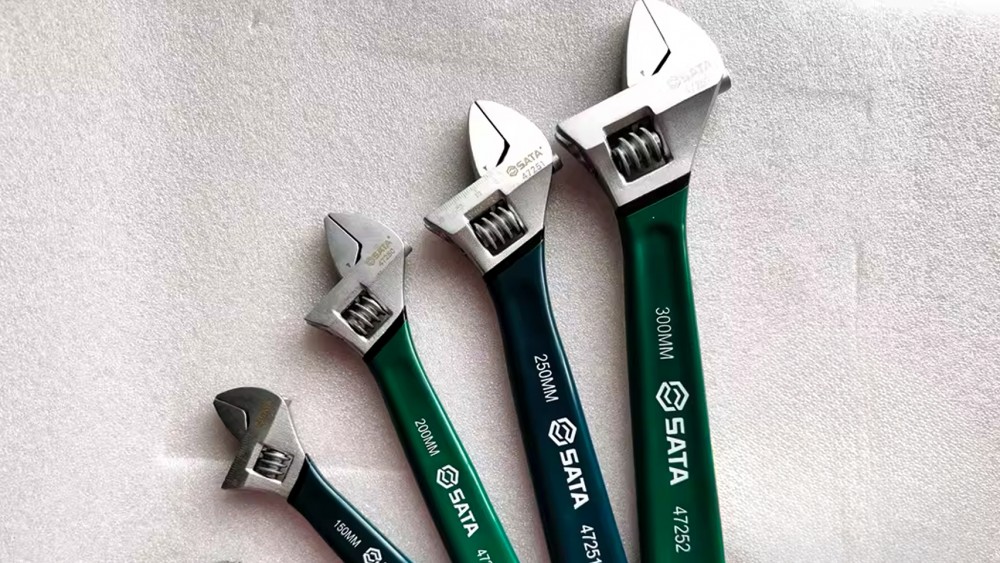
Misconception #5: An adjustable wrench can replace every other wrench.
There is one type of wrench that every household owns: the adjustable wrench. It's convenient—carrying one is like having an all-in-one tool. But used at the wrong time, it's one of the fastest tools to ruin a bolt head because the jaws can loosen slightly under heavy load, especially if not adjusted tightly enough or if the wrench is low quality. Another common mistake is the direction of force: an adjustable wrench has a "movable" jaw and a "fixed" jaw. If you pull in the wrong direction, the force will pry the movable jaw open, instantly stripping the bolt head.
Bolts stripped by an adjustable wrench usually end up needing locking pliers or being cut off, wasting far more time than simply grabbing the right-sized wrench in the first place.
Solution
- Use adjustable wrenches only for low-torque or temporary tasks.
- Set the jaws tightly and apply force so the load pushes toward the fixed jaw, not prying open the movable jaw.
- Heavy-duty, tight, or rusted jobs: Switch to a 6-point ring spanner or socket
Misconception #6: Tighten it as hard as possible so it won't come loose
This mindset is the most common cause of stripped threads, and broken bolts naturally follow. When you tighten a wrench beyond the proper torque, the damage isn't always immediate. Sometimes the bolt still looks fine, but the threads begin to stretch or the material starts deforming. When the day comes to remove it... the bolt head will feel as if it's welded stuck, requiring even more force and dramatically increasing the chances of ruining the bolt head.
"For certain types of work, over-tightening is actually worse than under-tightening, especially with aluminum, plastic, or furniture. This answers the question of why using a wrench still damages bolt heads even when the correct size was chosen. Because excessive torque will damage the corners of the bolt head or strip the threads."
Solution
- For critical jobs: Using a torque wrench is the ultimate solution.
- If you don't have one: Follow the simple rule of "snug and tight + double-check" instead of applying maximum force. For assemblies prone to loosening: Use spring washers, threadlocker, or appropriate locking methods rather than torquing until the threads cry.
Misconception #7: The bolt head is starting to round off, but you can still force it if you're careful
This is a trap—we've all been there! A bolt head that has started to round off means the wrench's contact area is already reduced. You are relying on luck rather than skill. The more you force it, the faster it ruins; every time it slips, it rounds off a bit more until it eventually turns into a completely circular head with nothing left to grip.
The moment you should stop is when "you first feel the wrench slipping." Don't wait for a second slip, because the second slip usually means permanent deformation.
Solution
- Switch to a 6-point tool immediately if there are still some edges left.
- If the bolt head is heavily worn, use locking pliers, bolt extractor sockets, or specialized removal methods (depending on the situation).
Conclusion
To keep bolts from getting damaged, it all starts with "moderation." To sum it up briefly: using a wrench without ruining bolts doesn't require expensive tools, but it starts with these 3 things:
- The size must fit properly (don't make do with approximations).
- Contact surface must be full (a 6-point profile is a lifesaver for heavy-duty jobs).
- The direction of force must be correct (no tilting, no prying, no forcing).
And most importantly... the moment you feel it "slip," stop and think. Pausing for 10 seconds to switch tools often saves hours of work dealing with a ruined bolt later.
Select Wrench to suit the application