


 EN
 ไทย


Customers Also Purchased


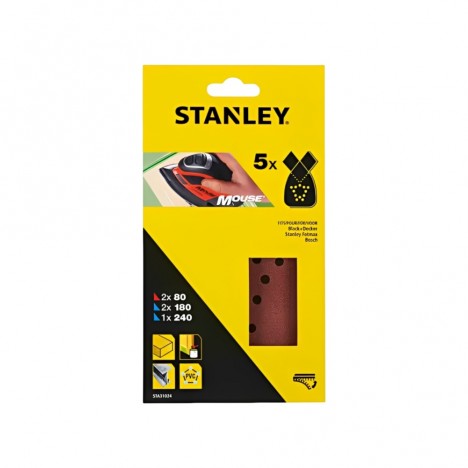
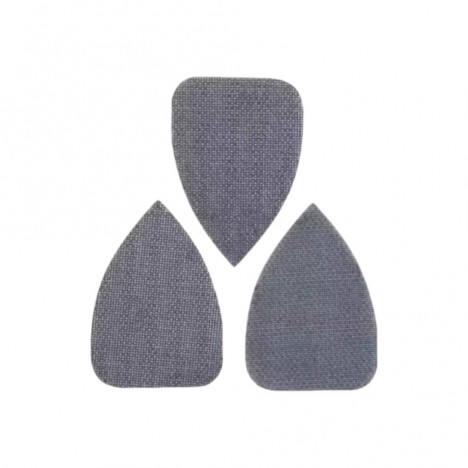


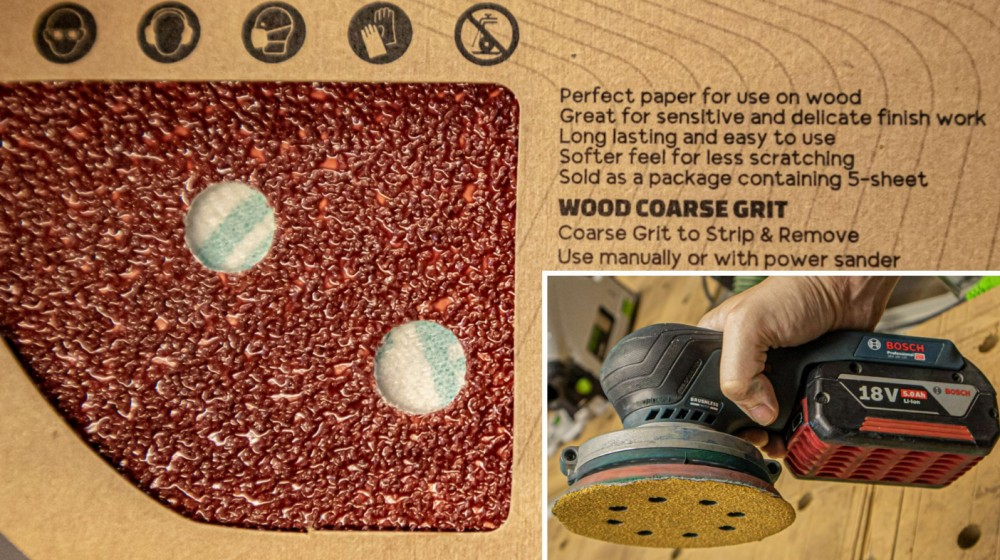
Think about it: when we see wood that is still rough or covered in saw marks, many people immediately think, "Let's just use Sandpaper the coarsest grit first to finish quickly," believing that the coarser it is, the faster it cuts and the more time it saves. But in actual practice, you find that the wood disappears much faster than expected.
The question is: how much wood does the coarsest sandpaper actually remove? Can it really replace planing or leveling? And why are experienced craftsmen far more cautious about using coarse grits than most people realize?
So, let's take a look at just how aggressively the coarsest sandpaper removes wood, and how to use it effectively without ruining your workpiece. Sandpaper isn't just meant to smooth surfaces—it can "remove material" extremely fast. If used incorrectly, a workpiece can be ruined by "just a little bit of sanding."
Sandpaper: Lower Grit Numbers, Drastically Different Results
Before answering how much wood it can remove, we need to understand the basics of sandpaper first. We might commonly think that sandpaper grit is just a number roughly indicating whether it's "coarse or fine." In reality, these numbers directly reflect the abrasive grain size, material removal capability, and the scratch pattern left on the workpiece surface.
Sandpaper Grit Ratings
Sandpaper grit rating is a value used to specify the fineness of the abrasive particles. The basic rule of thumb is simple: The lower the number, the larger the grains, and the coarser it is. Meanwhile, The higher the number, the smaller the grains, and the finer it is. Therefore, when talking about 24, 36, or 40 grit sandpaper, we are referring to sandpapers with relatively large abrasive grains that remove material quickly and leave significantly deeper scratches than medium or fine grits. How to compare sandpaper grit beyond just the grit number
24–40 grit sandpaper is what many consider the coarsest grit category, or at least extremely coarse in the context of woodworking. It is used for heavy-duty stripping, removing old paint, evening out significantly uneven wood, or removing heavy machine marks.
How much wood does the coarsest sandpaper remove?
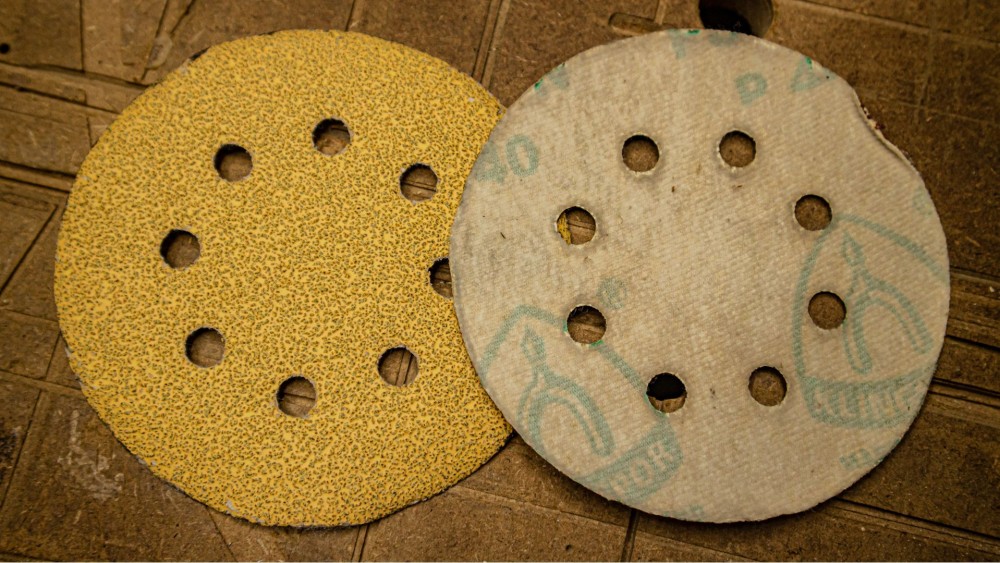
The most straightforward answer is that coarse grits remove far more material than most people realize, and fast enough to deform a workpiece in just a matter of seconds.
To make it easy to understand, think of it this way: when you use coarse sandpaper with a power sander, each abrasive grain isn't merely rubbing against the surface. It acts like numerous tiny cutting points that scrape, gouge, and tear away wood fibers and wood stock continuously. The larger the grain, the harder the pressure, the higher the RPM, and the more you sand in one spot, the faster the wood is removed.
However, in real-world work, you cannot specify the exact number of millimeters of wood removed, as it depends on the wood species, wood hardness, the tool used, applied pressure, the condition of the sandpaper surface, and sanding duration. But as a rough mental guideline to keep in mind, you can consider it like this:
Using 24–40 grit sandpaper with a power sander
Sanding continuously for just a few seconds on softwood or uneven surfaces can easily remove around 0.2–0.5 mm of material. If you pause in one spot, press down hard, or use a high-powered machine, it can reach or exceed 1 mm faster than you think.
When used for hand sanding
Material removal will certainly be slower than with a power sander, but it isn't always safe. Sanding repeatedly along the same line, pressing too hard, or dwelling too long on a specific spot can still leave deep scratches and noticeably alter the surface level in that area.
When used on veneered or laminated wood
This is an extremely hazardous area, as these surfaces usually have a top layer less than 1 mm thick. If you recklessly apply the coarsest grit sandpaper, sand-through can occur almost instantly.
So, if you ask: How much wood does the coarsest sandpaper actually remove? The answer is "Enough to reshape contours, alter surface levels, and sand right through thin veneer layers." And this is why it shouldn't be chosen as a consumable just because you want to finish the job faster. Sandpaper is a consumable: how to use it without wasting it?
Why does coarse grit sandpaper remove wood so quickly?
Many people simply conclude that bigger abrasive grains mean faster removal, which is true. But there is actually more to how sandpaper removes material rapidly, and understanding this will help you control your work much better.
The grains of coarse grit sandpaper are noticeably larger than those of fine grits. When pressure is applied, these grains dig deeper into the wood surface, removing significantly more material with each sanding pass or stroke.
- Fewer grains per area, higher pressure per grain, larger abrasive grains With fewer grains per unit area, the downward pressure from your hand or machine concentrates on each individual grain. As a result, the abrasive grains "work harder" and cut more aggressively.
- More space between grains, better swarf and dust clearance Many coarse sandpapers feature an open grain distribution that prevents wood chips and dust from clogging easily. With no clogging to cause slipping, cutting remains consistent and aggressive throughout the initial phase.
- The scratch pattern cuts rather than polishes Coarser grits leave deeper, more pronounced, and wider scratches. This means you aren't just "smoothing" the surface; you are effectively gouging and slicing through the wood fibers in multiple parallel tracks.
- Power sanders dramatically accelerate wood removal Results differ when using a belt sander, rotary sander, or random orbital sander. Machines with high continuous pulling force remove wood so aggressively and quickly that beginners can easily ruin a workpiece. Belt sanders and safety considerations you shouldn't overlook
What kind of work is extra coarse sandpaper suitable for?
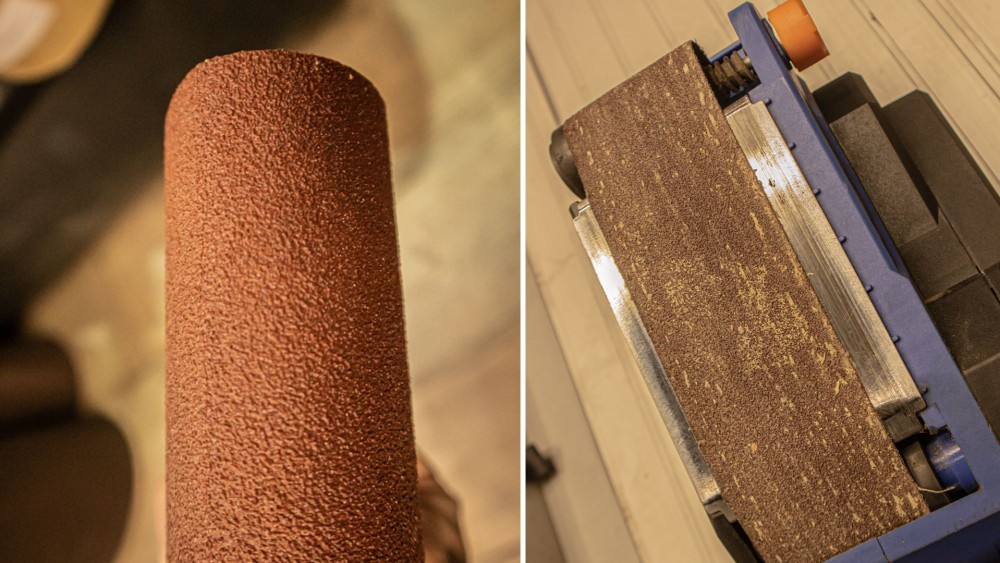
Although we have talked a lot about the precautions of coarse sandpaper, it must be emphasized first that when used for the right job, it significantly speeds up the work. This is especially true in the initial stages, such as stripping old paint, heavy buildup, or multiple layers of thick existing coatings—where starting with a medium grit could waste more time. It is also ideal when the wood surface is uneven, has machining marks, mismatched joints, or an extremely rough wood face.
Coarse sandpaper is great for reducing level differences in the early stages, as well as for restoring old wood where the surface is heavily damaged. Starting with a coarser sandpaper helps quickly remove damaged surfaces and exposes fresh wood layers ready for finer finishing.
Another case is when the workpiece is in the stage of shaping, flattening the face, or opening up the grain before moving on to fine finishing.
Coarse sandpaper is very useful as a tool for "initial surface preparation," not for "finishing." Understanding its role in this light helps us use it more cost-effectively, faster, and with fewer mistakes.
So what kind of work should extra coarse sandpaper not be used for?
Often, problems do not just come from improper sanding technique, but from using it on the wrong job from the start.
- Thinly veneered woodwork Veneered plywood, MDF, laminated wood, or pre-finished surfaces are not suitable for extra coarse sandpaper at all because the chance of sanding through or ruining the surface is very high.
- Work requiring precise dimensions Such as door edges, furniture joints, mortise and tenon joints, or parts that become loose if slightly oversanded. For this type of work, if you need to use sandpaper, it is better to start with a medium grit and control it patiently.
- Surface prep before spray painting or clear coat grain finishes If the goal is a beautiful, smooth, and sleek surface, scratches from coarse sandpaper will become more of a burden than a help, as you will waste time removing those scratches through several extra steps.
- Softwoods prone to denting and dishing Some wood species easily develop wavy or dished surfaces when exposed to coarse sandpaper. It might not be obvious to the naked eye at first, but once light hits it or a finish is applied, it becomes shockingly noticeable.
Many people don't realize they are using sandpaper that is too coarse until it's too late. Therefore, if you are unsure, check for these warning signs:
- Noticeable change in surface level after sanding for just a short time
- Deep scratch lines visible to the naked eye
- Needing excessive sanding to fix scratches after switching grits
- The workpiece gets hot, excessive dust is produced, and the tool is hard to control
How to progress through sandpaper grits effectively to minimize scratches?
If you really need to use coarse grit sandpaper, what is just as important as starting is "the progression of grits afterward." Many people make mistakes here. Think of it simply like this:
- If starting at grit 24–40, move next to 60 or 80
- Then go to 100 or 120
- Then move on to 150–180 or higher, depending on the job
Do not skip grits too widely, because the next sandpaper grit needs to be able to erase the scratches from the previous grit. If you skip too far, deep scratch marks will remain in the surface even if it looks smooth at a glance.

Summary: Extra coarse sandpaper can be used if you know what you are sanding
The coarsest grit sandpaper really eats away wood heavily and quickly—enough to change surface levels, alter edge profiles, leave deep scratches, and break through thin surface veneers, especially when used with power sanders or excessive pressure.
However, that doesn't mean coarse grit sandpaper shouldn't be used. On the contrary, it is a very useful abrasive for stripping, opening up surfaces, and initial leveling. We just need to use it at the right moment, on the right workpiece, and accept the reality that it is not meant for fine finishing, but rather for "rapid stock removal."
So the next time you reach for coarse grit sandpaper, try asking yourself first: "Do I want to reshape the surface right now, or finish it?" If the answer is that you just want it slightly smoother, you might not need the coarsest grit at all. But if you have heavy stripping, major corrections, or initial rough shaping to do, it is a great help—just use it mindfully, progress grits properly, and check the surface more often.
Understand coarse grits well, and you will use them Sandpaper more accurately, spoil fewer workpieces, and achieve noticeably more professional results.